





Inlaid Stationery Box
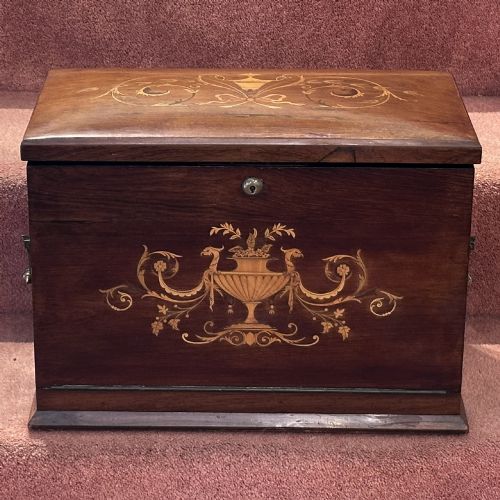
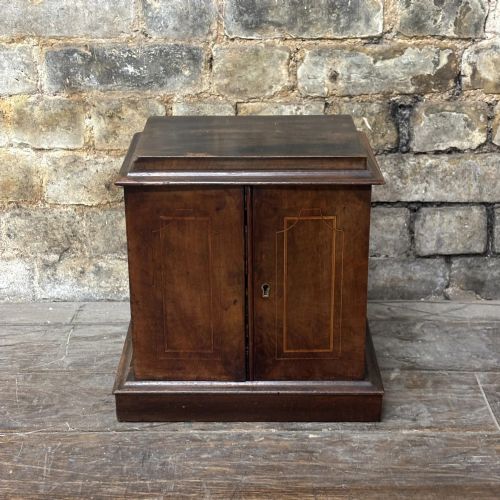
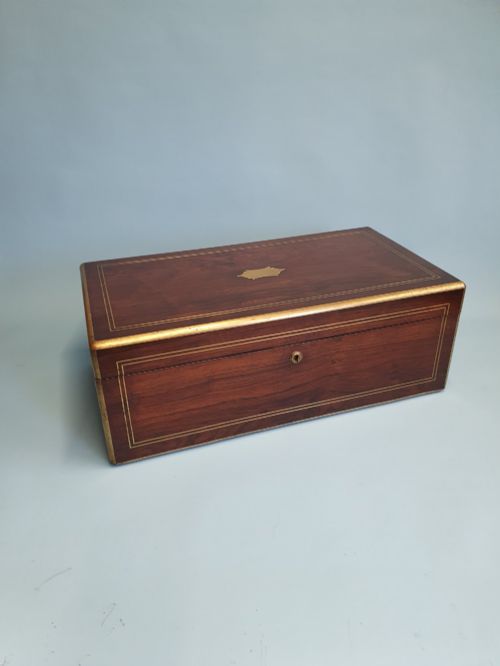
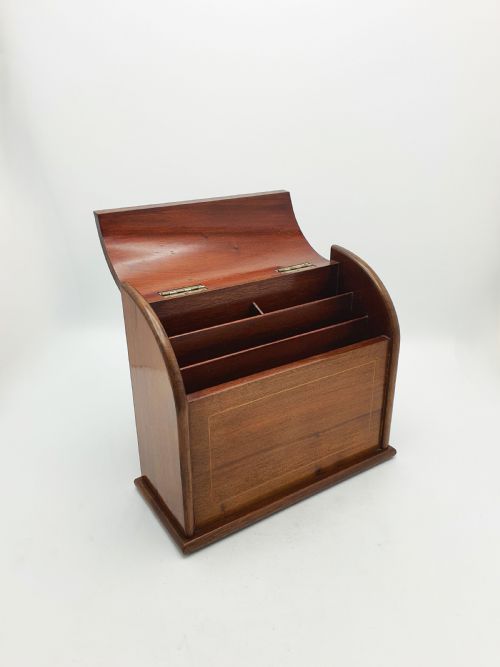
An inlaid stationery box sits upon the desk as a handsome method for keeping correspondence tidy, drawing the eye with contrasting timbers and meticulous craftsmanship.
Inlaid Stationery Box
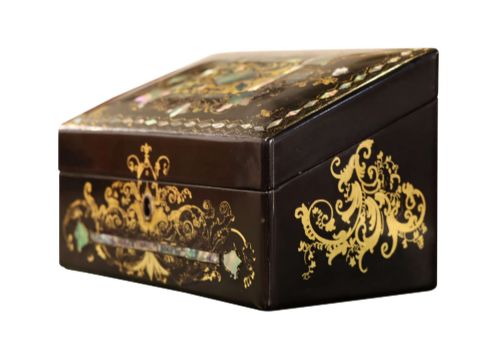
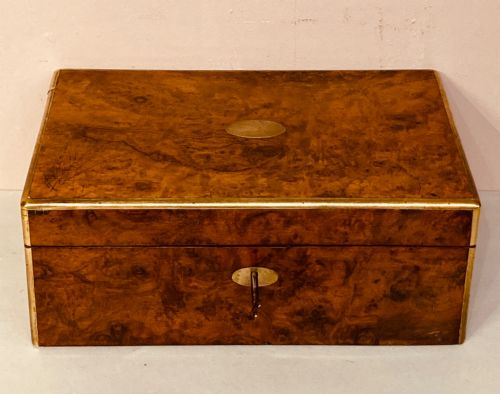
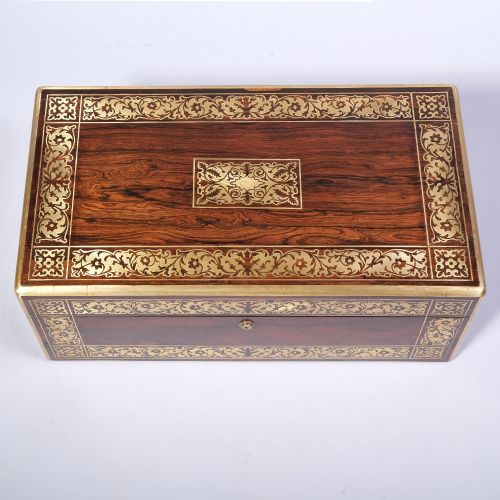
An inlaid stationery box unites practical desk organisation with ornamental woodcraft, originating chiefly in the Georgian, Regency, and Victorian eras. These tabletop pieces provide fitted compartments for letters, envelopes, and small writing implements.
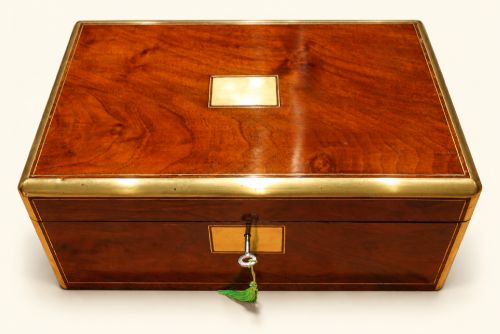
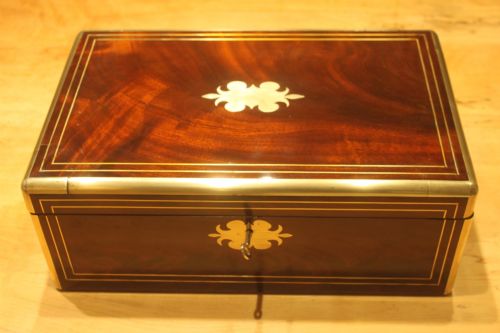
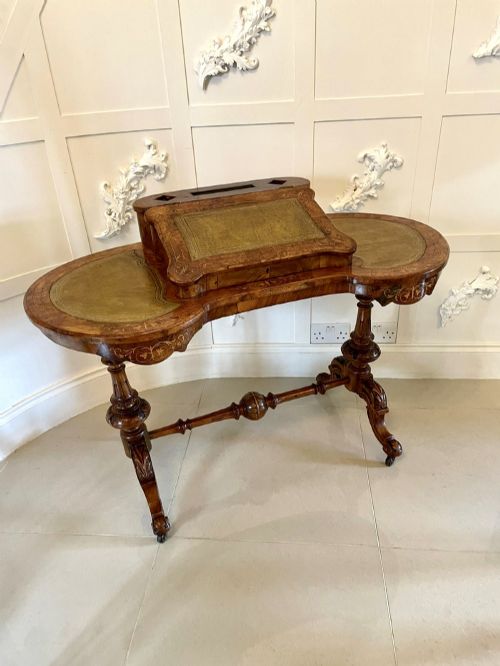
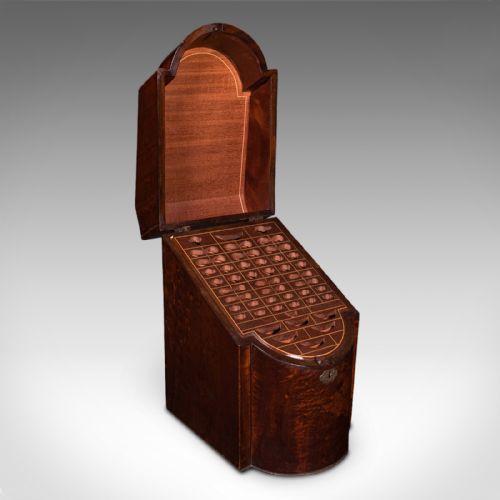
The selection here encompasses related desk furniture including writing slopes, correspondence cabinets, and document boxes. Rosewood, mahogany, and burr walnut dominate the forms, frequently enriched with brass banding or contrasting wood inlays.
Makers of the 19th century adapted traditional carpentry to suit the demands of the writing desk, producing everything from campaign boxes to slope-front cabinets. Tunbridge ware and Anglo-Indian examples demonstrate specialised regional traditions within the broader category.
Materials and Techniques
Cabinetmakers constructed the carcass from dense hardwoods such as mahogany or rosewood, often applying veneers of burr walnut or satinwood to the exterior surfaces. These figured timbers deliver natural pattern and depth.
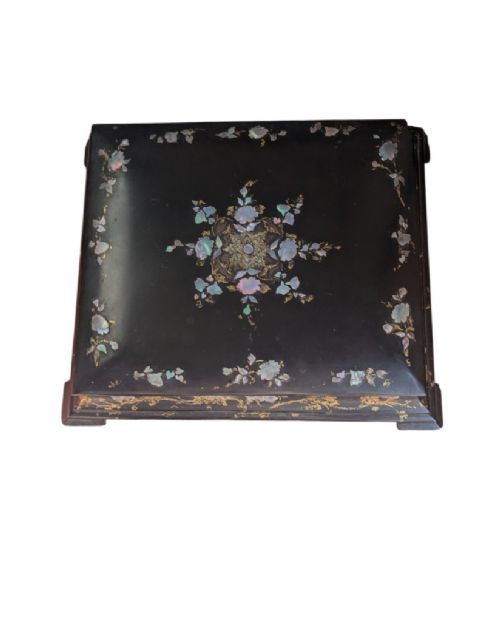
Decoration relied heavily on precise inlay work, incorporating brass, mother-of-pearl, and various contrasting woods to form geometric or floral motifs. Specialised techniques like Tunbridge ware utilised thousands of tiny mosaic wood blocks to build pictorial scenes.
Interiors reveal secondary woods like pine or cedar, alongside fitted partitions made for specific writing supplies. Robust brass hardware, including escutcheons and campaign handles, secured the heavy lids and provided functional longevity.
Inlaid Stationery Box Retail Price Guide 2026
Typical asking prices for inlaid stationery box among the pieces listed under this phrase on Sellingantiques today, from the lower quarter to the upper quarter. They describe what is for sale here now, not the wider market.
The listings here span the Georgian, Regency, Victorian, and Edwardian periods, demonstrating a century and a half of changing desk furniture design.
Distinctions in Quality
Superior examples display crispness in the execution of the inlay, where joints between contrasting woods remain tight and seamless. Inferior pieces often reveal minor gaps or filler within the decorative borders.
The choice of primary timber governs the baseline of quality, with heavily figured burr walnut and richly grained rosewood commanding greater attention than plain mahogany. Secondary woods inside the box should demonstrate equal care in selection and planing.
Hardware integrity separates standard production from high-grade commissions, particularly the presence of branded locks such as Bramah mechanisms alongside well-fitted hinges that support heavy lids without sagging.
Edmund Nye
The Inlaid Stationery Box Glossary
- Inlay
- The technique of inserting pieces of contrasting material into a recessed wood surface to form a decorative pattern. This differs from veneer by sitting flush within a cut-out channel rather than covering the whole ground.
- Writing Slope
- A desk accessory featuring an angled hinged lid that opens to reveal a slanted writing surface and interior compartments. These slope-front boxes often conceal secret drawers behind removable partitions.
- Tunbridge Ware
- A distinct form of decorative woodwork originating from Tunbridge Wells, characterised by mosaic designs built from tiny wood blocks. Each geometric or pictorial motif is assembled from numerous natural timber species.
- Escutcheon
- A protective brass plate surrounding a keyhole that prevents the surrounding wood from splitting through repeated use. Better examples feature engraved detailing that matches the surrounding hardware.
- Bramah Lock
- A high-security cylindrical lock invented by Joseph Bramah in the late 18th century, commonly found on superior 19th-century boxes. Collectors prize these mechanisms for their mechanical ingenuity and stamped maker details.
Inlaid Stationery Box: Frequently Asked Questions
How were stationery boxes used?
These boxes provided a dedicated tabletop repository for writing paper, envelopes, and sealing wax before the widespread adoption of manufactured envelopes.
Owners kept them on library tables or bureau desks to maintain order among daily correspondence.
How do I date an inlaid box?
Dating relies on timber choices, construction methods, and hardware styles, such as heavy brass inlay typical of the Regency period.
Later Victorian pieces often incorporate burr walnut veneers and stamped locks that help narrow the timeline.
How should I care for antique wood?
Keep wooden desk accessories away from direct sunlight and sources of artificial heat to prevent timber shrinkage and veneer lifting.
Apply a microcrystalline wax occasionally to nourish the polished surface without creating a heavy buildup.