
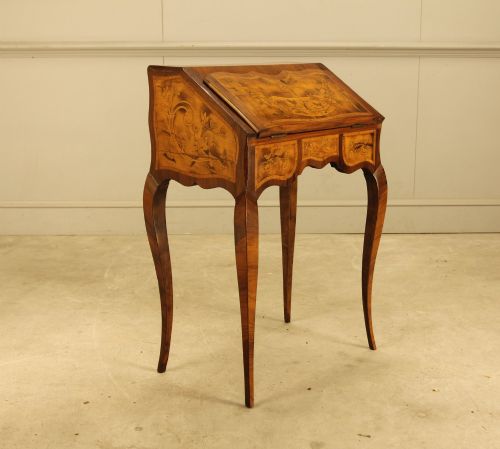
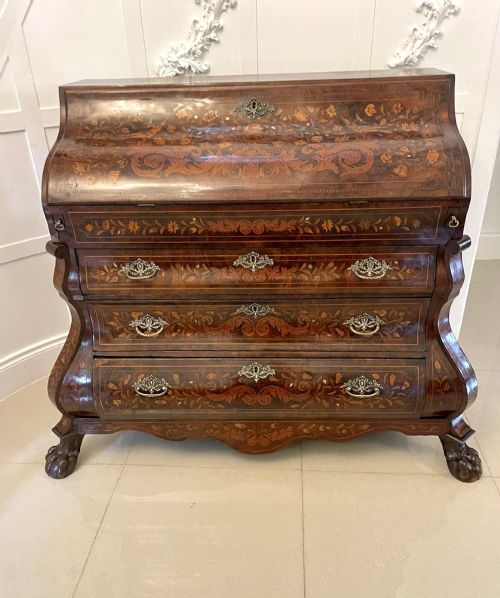

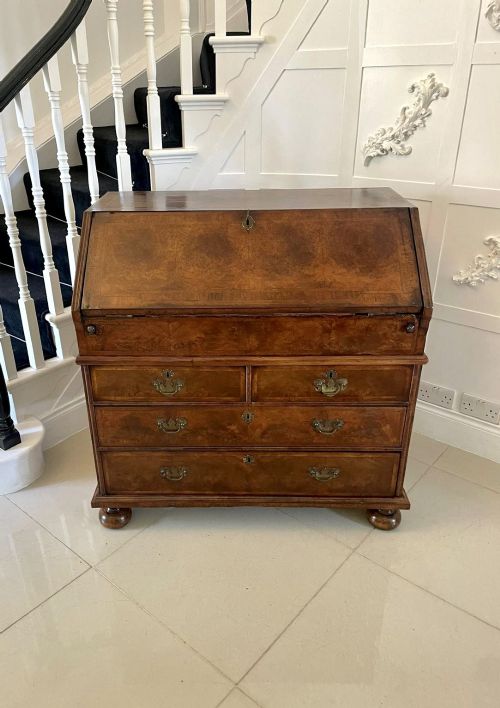
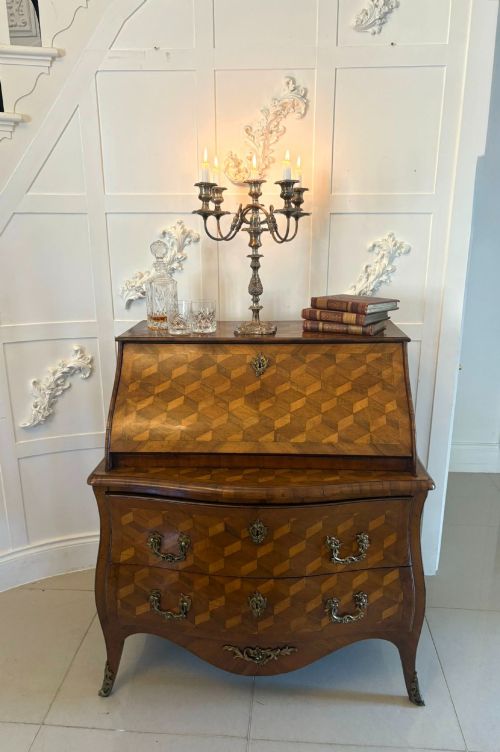
Inlaid Slant Front Bureau
An inlaid slant front bureau brings together fine cabinetmaking and a practical writing slope that conceals fitted drawers and pigeonholes.
Inlaid Slant Front Bureau
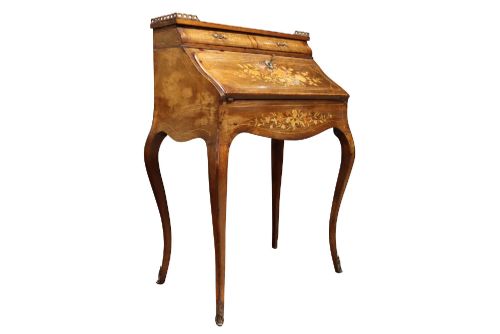
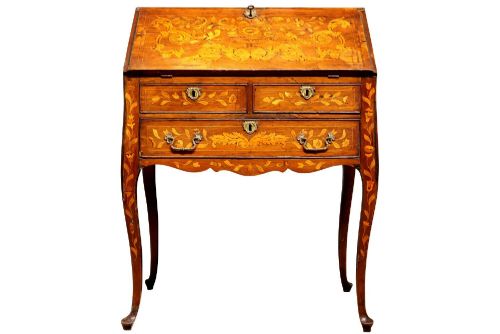
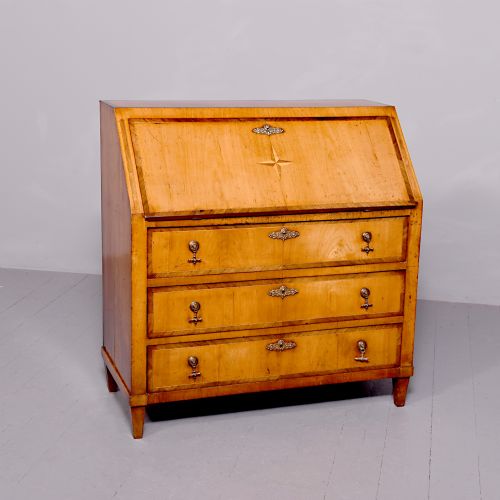
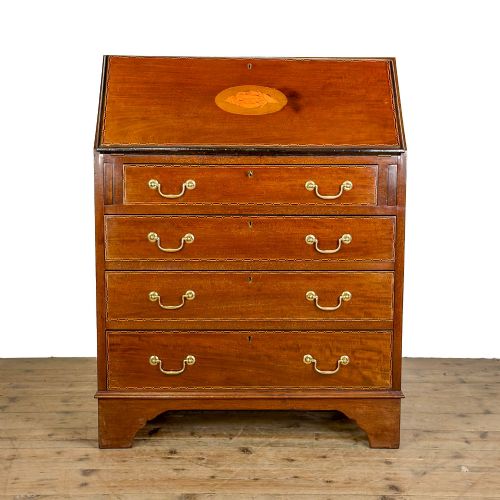
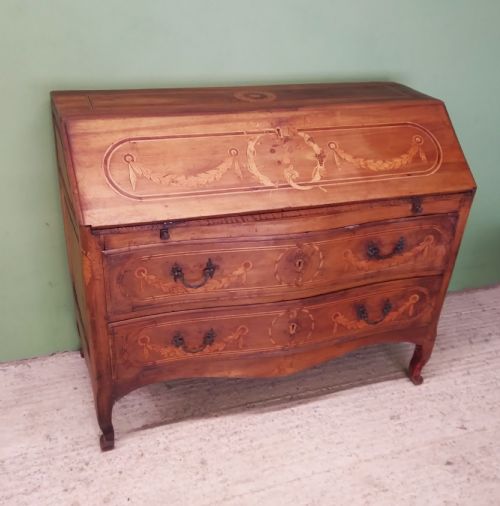
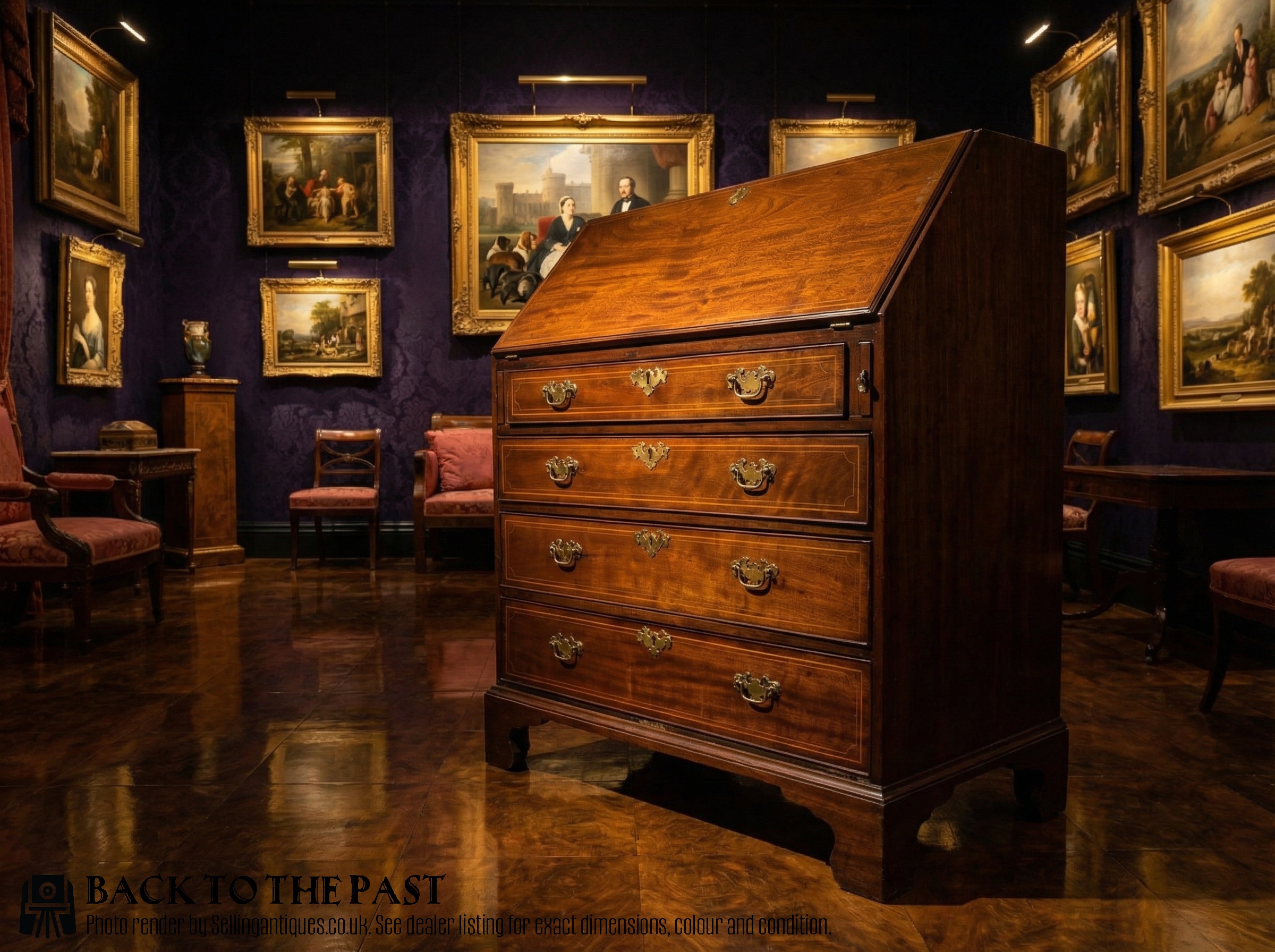
An inlaid slant front bureau is a writing cabinet featuring a hinged fall-front flap that opens to reveal an internal arrangement of small drawers and compartments. Pieces on this page span several centuries, with prominent examples originating in the eighteenth and nineteenth centuries, alongside Edwardian interpretations.
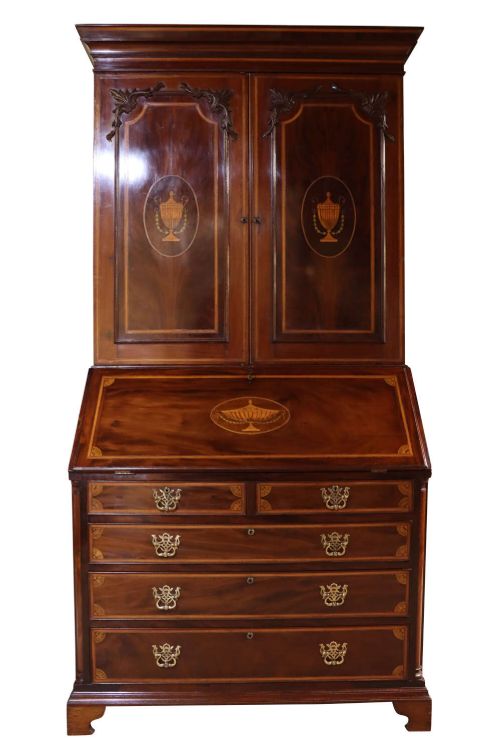
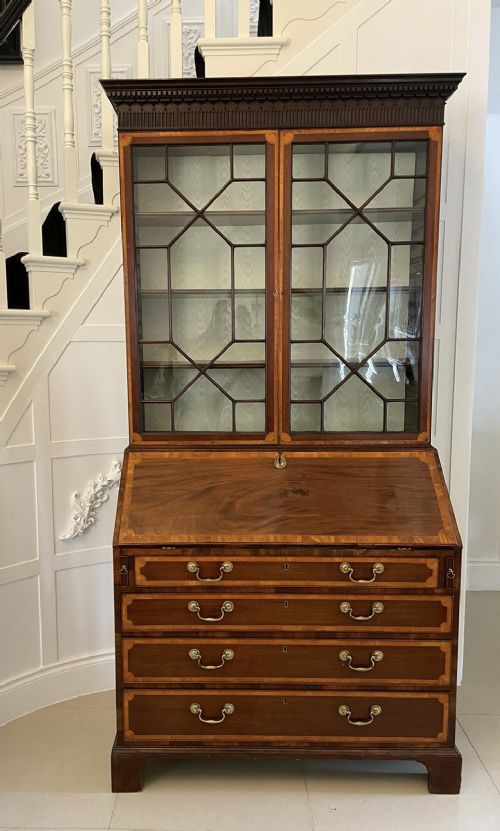
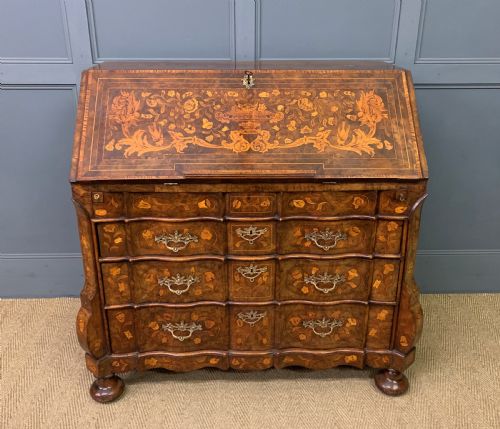
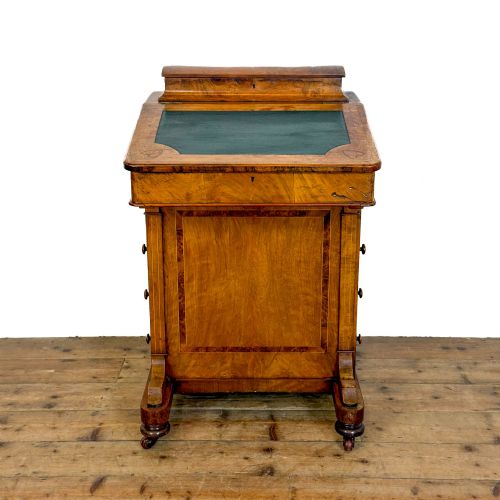
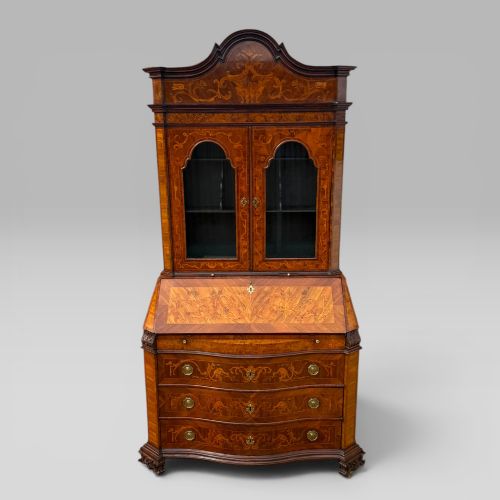
Forms vary from compact writing desks and Davenport desks to grand bureau bookcases crowned with upper display sections. Woods such as mahogany, walnut, burr walnut, and rosewood form the carcase, often enriched with floral marquetry or contrasting stringing.
How they were made
Cabinetmakers constructed these writing furniture pieces using solid timbers and decorative veneers applied to secondary woods. Elaborate surface decoration involved meticulous marquetry and parquetry, cutting floral or geometric motifs from fruitwood, satinwood, and walnut to fit precisely within contrasting grounds.
Structural integrity relied on dovetailed drawer construction and framed panels, while brass hardware such as escutcheons, drop handles, and hinges secured moving parts. Surfaces were finished with polishes that highlighted the natural grain patterns and varied tones of the timber.
What varies in quality
Quality rests in the precision of the cabinetwork, particularly the execution of the marquetry inlay and the careful matching of wood veneers across the fall-front and drawers. Superior examples display crisp botanical or geometric patterns with minimal filler, while lesser pieces rely on simpler surface decoration.
The sophistication of the internal fittings, including secret compartments, shaped pigeonholes, and finely turned small drawers, separates standard utility furniture from exceptional workshop production. Heavier carcase construction and original brass mounts further distinguish finer pieces.
The Inlaid Slant Front Bureau Glossary
- Marquetry
- Decorative veneer work forming pictorial or floral patterns using various coloured woods. This technique requires exceptional skill to fit pieces together tightly before gluing them to the carcase.
- Bombe
- A swelling, outward-curved contour found on the front and sides of certain case furniture. This curvilinear shape demands advanced woodworking expertise to construct successfully.
- Bureau bookcase
- A dual-purpose piece combining a sloping writing desk below with a shelved cabinet above. These tall structures often feature glazed or panelled upper doors.
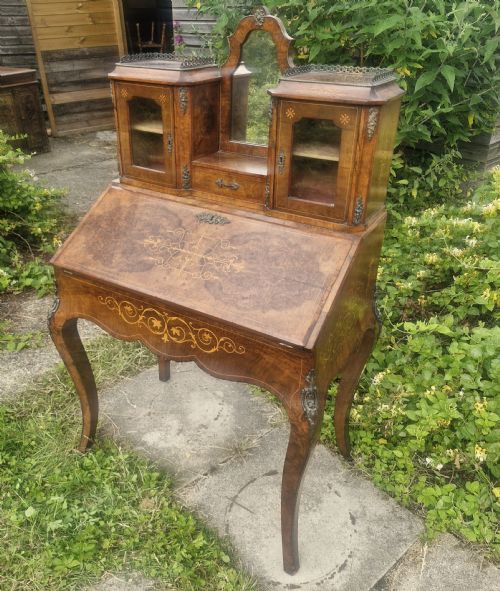
- Bonheur-du-jour
- A light lady's writing desk featuring a small set of drawers or shelves on the upper surface. Originating in France, these dainty desks became popular during the eighteenth and nineteenth centuries.
- Davenport desk
- A compact writing box featuring a sloping top and drawers opening to one side. They gained widespread favour during the Victorian era for domestic writing tasks.
Inlaid Slant Front Bureau: Frequently Asked Questions
What is a slant front bureau?
A slant front bureau is a traditional desk featuring an angled flap that drops down to create a writing surface. Inside, a collection of small drawers and pigeonholes organises correspondence and writing materials.
When closed, the sloping lid conceals the workspace and secures the interior contents. This design keeps writing tools hidden while presenting a clean cabinet facade.
How do I date an antique bureau?
Dating involves examining the construction methods, timber choices, and decorative styles visible on the piece. Secondary woods inside the drawers and the style of dovetailing offer clues to the period of manufacture.
Cabinetmaking trends shifted from walnut in earlier centuries to mahogany during the Georgian era, followed by rosewood and satinwood revivals later on. Comparing these materials against historical styles narrows down the decade.
Where should I place a bureau?
A bureau suits studies, living rooms, or bedrooms where its compact footprint provides both surface area and enclosed storage. The drop-front design requires clearance in front of the piece for a chair.
Keeping the wood away from direct sunlight and heat sources protects the delicate veneers and marquetry inlay from drying out or warping over time.
How do I care for inlaid wood?
Inlaid surfaces benefit from regular dusting with a soft, dry cloth to prevent dirt accumulation within the veneer joints. Conditioning the timber with appropriate wax preserves the polish and nourishes the older wood.
Avoiding excessive moisture and maintaining stable room humidity prevents the delicate fruitwood and satinwood inlays from lifting away from the carcase.