

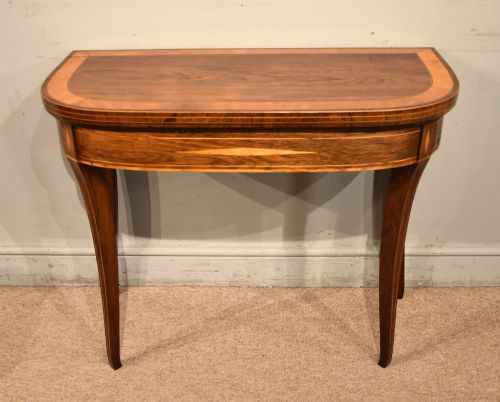
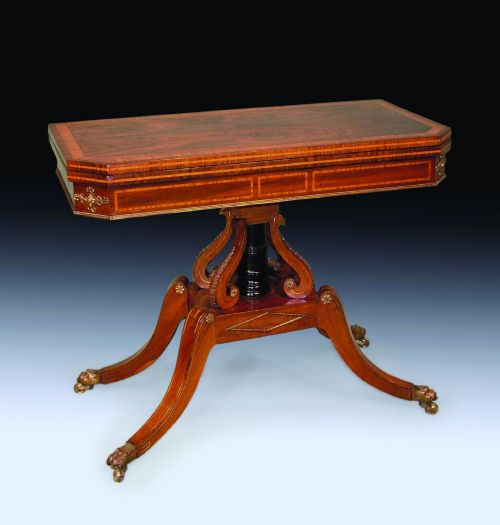
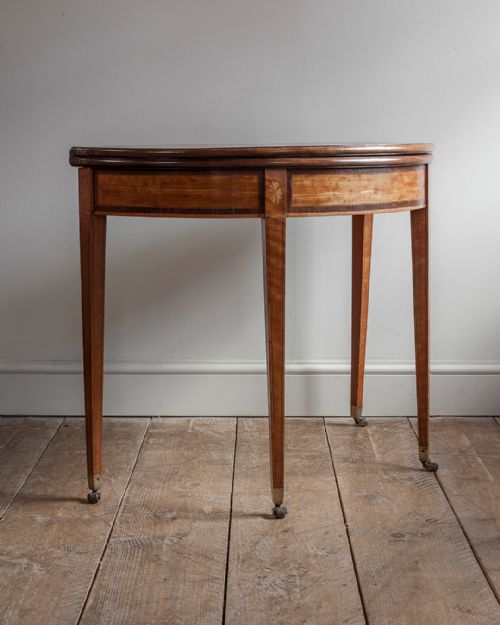
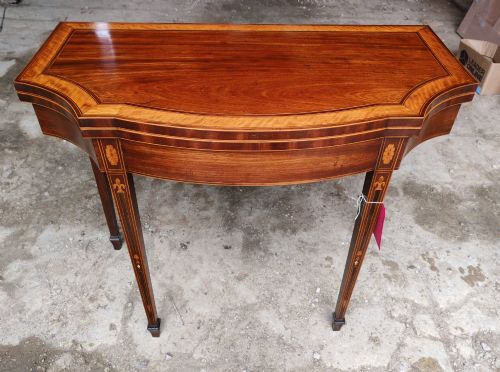


Inlaid Satinwood Games Table
An inlaid satinwood games table brings polished warmth and intricate marquetry to a room, offering a folding top for cards or social evenings.
Inlaid Satinwood Games Table
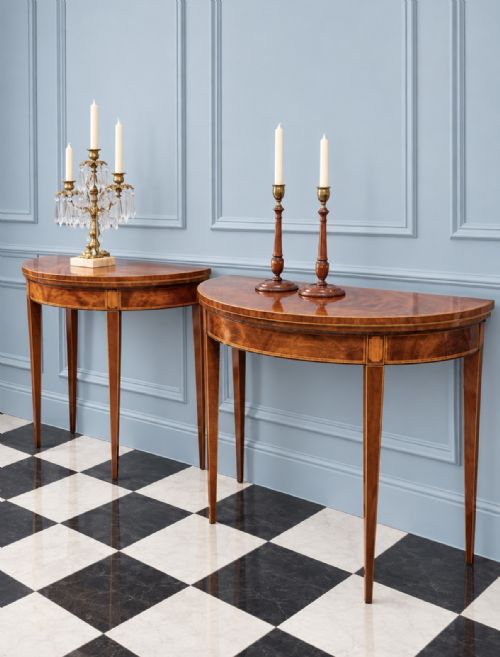
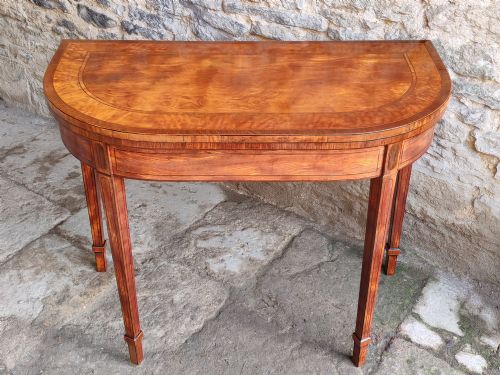
An inlaid satinwood games table combines practical folding surfaces with decorative timbers, spanning Georgian, Regency, and Edwardian eras. Buyers encounter demi-lune, rectangular, and envelope forms designed for card playing, chess, or general parlour use.
Georgian and George III pieces exhibit precise Sheraton influence, whilst later Edwardian and Victorian revivals utilise satinwood alongside mahogany and rosewood. The form remains adaptable, functioning as a console or side table when closed.
Materials and Technique
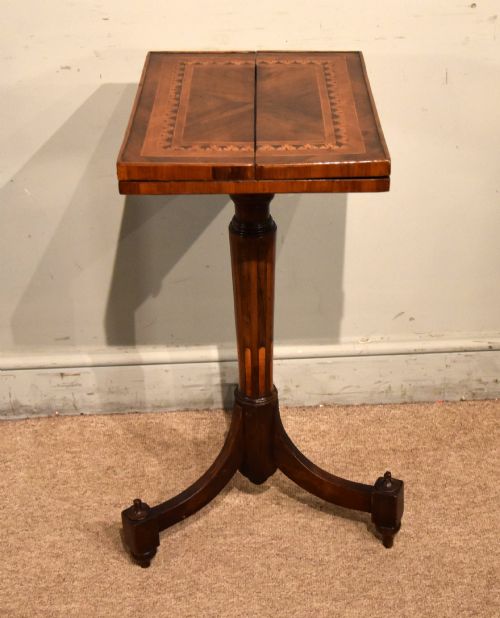
Craftsmen built these tables using a carcase of mahogany or pine veneered with figured satinwood, bordered with contrasting boxwood and ebony stringing. Marquetry inlay creates floral or geometric motifs across the fold-over tops.
Veneers were hand-cut and laid onto timber substrates, secured with traditional animal glues and polished to a reflective finish. Brass hinges, swing-leg supports, and sometimes subtle drawer mechanisms provide the functional framework for the folding leaves.
Inlaid Satinwood Games Table Retail Price Guide 2026
Typical asking prices for inlaid satinwood games table among the pieces listed under this phrase on Sellingantiques today, from the lower quarter to the upper quarter. They describe what is for sale here now, not the wider market.
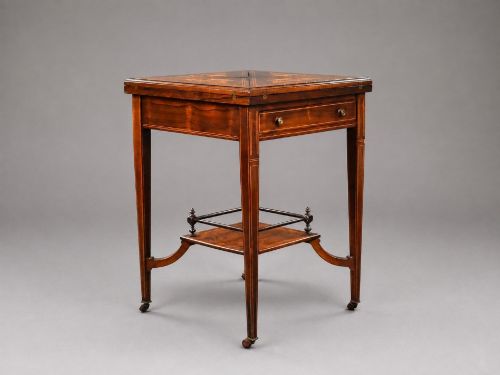
Some Edwardian envelope tables conceal small corner wells originally intended for holding counters or coins during evening card games.
Assessing Craftsmanship
Quality rests in the crispness of the marquetry and the choice of timber figures, where dense satinwood grain and precise boxwood contrast elevate a piece. Superior examples maintain flat, stable tops across the fold without warping at the hinge line.
The sophistication of the internal framing, such as smooth-action pivoting legs or well-fitted small drawers, separates standard production from workshop pieces built with greater attention to detail.
Howard And Sons·Maples Of London
The Inlaid Satinwood Games Table Glossary
- Demi-lune
- Having a half-moon shape with a flat straight back edge for placement against a wall. This format is common in card tables from the eighteenth century onwards.
- Envelope card table
- A square table featuring four triangular flaps that swivel open to reveal a baize-lined playing surface. Edwardian makers produced this ingenious configuration frequently.
- Marquetry inlay
- Decorative patterns formed by fitting contrasting wood veneers into a prepared background. Artisans use this technique to create floral swags and geometric borders on table tops.
- Stringing
- Thin strips of contrasting timber inlaid into channels around the edges of table tops and drawers. Boxwood and ebony are typical choices for this linear detail.
- Fold-over top
- A hinged wooden leaf that doubles the surface area when opened for games. Supporting gates or swing legs hold the extended leaf steady.
Inlaid Satinwood Games Table: Frequently Asked Questions
How do I use a games table today?
These tables work well as console or side surfaces in a hallway or living room during daily use. The folding top opens easily whenever extra surface area is needed for social gatherings or board games.
Placing them away from direct heat sources helps protect the antique veneers and polished timber finishes from drying out.
How can I tell a Georgian table from an Edwardian revival?
Georgian tables generally exhibit hand-cut veneers, subtle timber ageing, and construction methods characteristic of eighteenth-century workshops. Edwardian Sheraton revival pieces often show standardised machinery marks and lighter interior woods.
Examining the underside and the nature of the secondary timbers usually clarifies the manufacturing period.
What woods are used besides satinwood?
Makers combined satinwood with mahogany, rosewood, and plum pudding mahogany to create visual contrast on the tops and borders. Boxwood and ebony appear frequently as fine stringing lines framing the panels.
These secondary woods provided structural stability and enhanced the decorative geometry of the inlaid designs.