
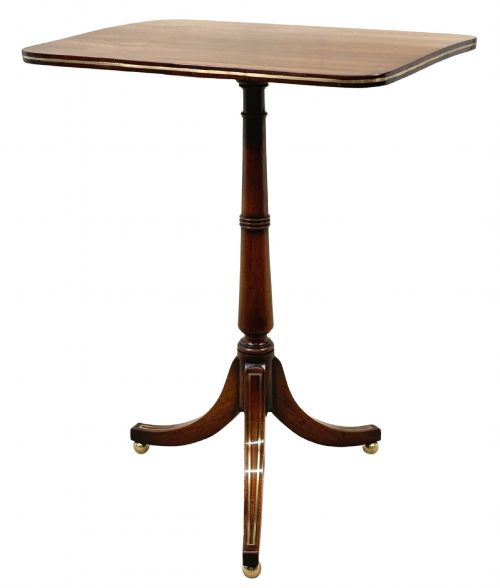


Inlaid Rosewood Wine Table
An inlaid rosewood wine table brings dark timber and sharp contrast into a room, offering a small surface designed for quiet hospitality.
Inlaid Rosewood Wine Table
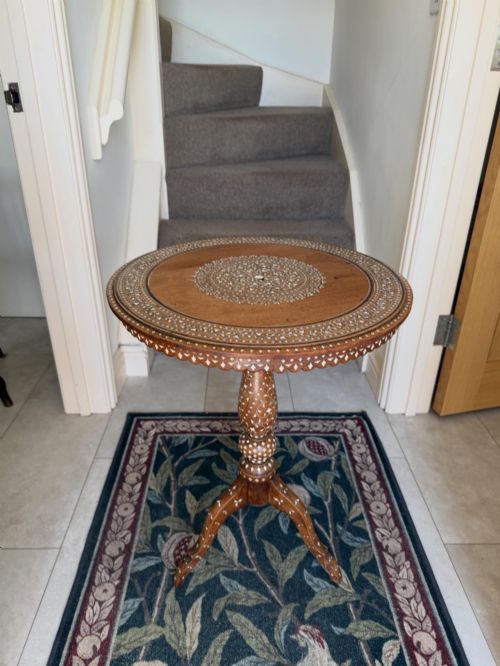
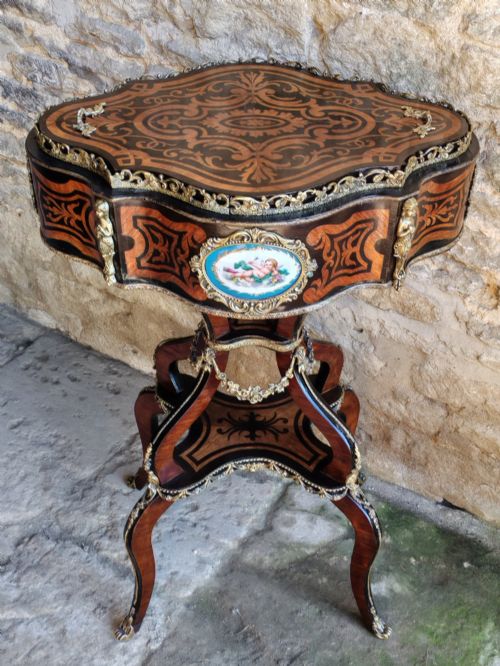
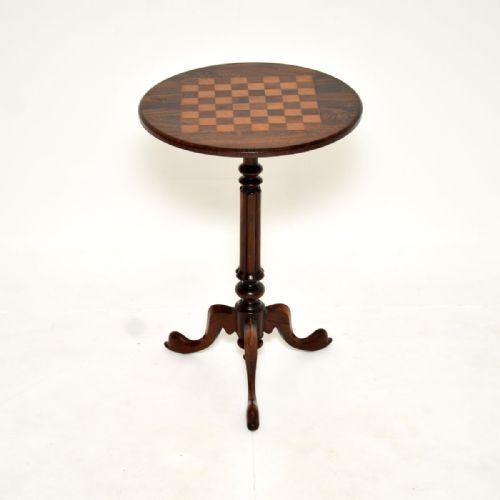
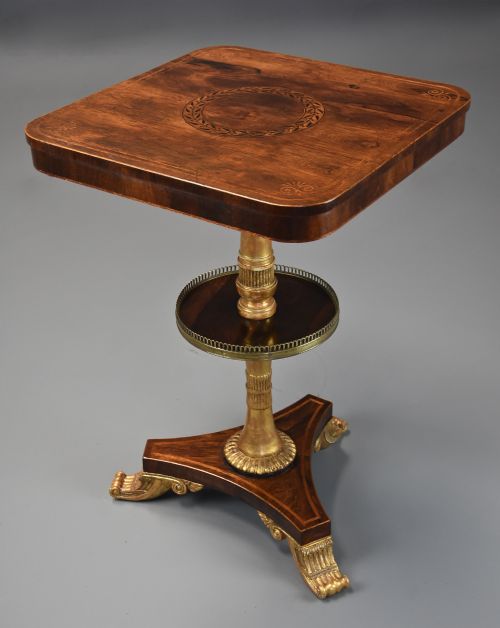
An inlaid rosewood wine table is a compact surface encountered primarily in Regency, Victorian, and Edwardian incarnations across these listings. These pieces function as occasional tables, lamp tables, and small side tables, frequently utilising tripod bases or pedestals. The forms range from simple circular tops to multi-tiered occasional designs and specimen tops.
The materials and styles span from strict English Regency brass-strung examples to elaborate Anglo-Indian Hoshiarpur productions and French Louis XVI style pieces. Walnut, satinwood, and mahogany appear alongside the principal dark rosewood ground. Buyers meet tilt-top mechanisms, parquetry, and marquetry on these smaller surfaces.
How they were made
Cabinetmakers constructed these tables using dense rosewood as a primary ground, often over secondary timbers like mahogany or pine. Brass stringing, bone inlay, and lighter woods such as satinwood were embedded directly into the timber surface to create geometric or floral motifs.
Turned pedestals and tripod legs provide the support structure, sometimes accented with tilt-top mechanisms or multi-tiered shelves. Joinery relied on traditional pegging and mortise techniques suited to small, portable occasional furniture.
Tables described as butterfly tables bring an insect motif into the parlour without requiring an open window.
What varies in quality
Quality rests in the crispness of the inlay work and the selection of the rosewood grain. Finer examples display precise brass stringing or intricate parquetry that remains flush with the surrounding dark timber.
The structural integrity of the pedestal and tripod base distinguishes better production. Substantial turning, stable joints, and well-fitted tilt-top mechanisms separate superior workshop output from simpler utilitarian pieces.
Collinson & Lock·George Bullock
The Inlaid Rosewood Wine Table Glossary
- Rosewood
- A heavy, dark timber with distinct figuring and a fragrant scent when freshly cut. It forms the primary dark ground for the finest inlaid tables.
- Brass stringing
- Thin filaments of brass inlaid into channels cut into the wood surface. This technique defines classical Regency styling.
- Marquetry
- The art of applying pieces of veneer to a structure to form decorative patterns. It creates pictorial or floral designs on the table top.
- Parquetry
- Geometric mosaic woodwork utilising contrasting timbers to form patterns like cubes or chequers. It provides the surface detail on several listed occasional tables.
- Tilt-top
- A mechanism allowing the table top to pivot to a vertical position for storage. This feature appears on nineteenth-century specimen tables.
Inlaid Rosewood Wine Table: Frequently Asked Questions
How do I spot a Regency period table?
Regency tables typically exhibit restrained classical proportions, dark rosewood surfaces, and precise brass inlay or stringing. The pedestals often feature crisp turnings supported by tripartite or quadrupartite sabre legs.
Later Victorian interpretations tend to incorporate heavier carving, burl-elm accents, or more crowded floral marquetry. Examining the construction of the underside and the sharpness of the brass work clarifies the period.
Can I use an antique wine table daily?
These small tables suit daily use as lamp stands or chairside surfaces for books and cups. Their compact tripod frames sit easily beside modern seating arrangements without dominating a room.
Care should be taken with moisture and direct heat to protect the delicate rosewood polish and inlaid details. Placing coasters on the surface preserves the historic finish.
Why choose a tilt-top mechanism?
The tilt-top function allowed nineteenth-century households to store tables flat against a wall when not in use. This practical feature demonstrates the space-saving utility designed into smaller domestic furniture.
Today, a functioning tilt-top adds mechanical interest and confirms the piece was built for versatile placement within a drawing room.