
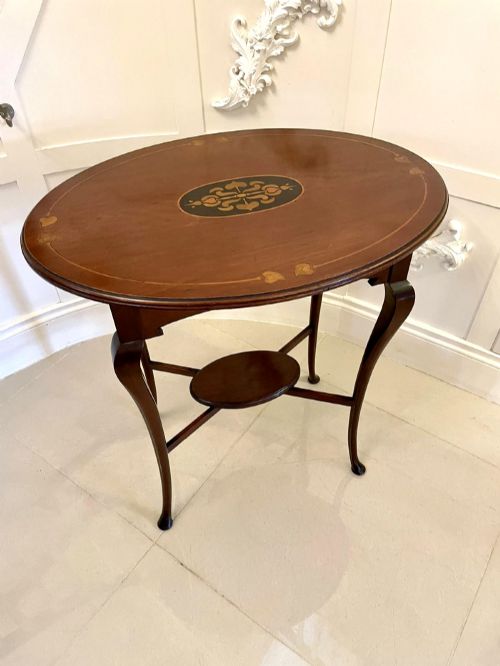
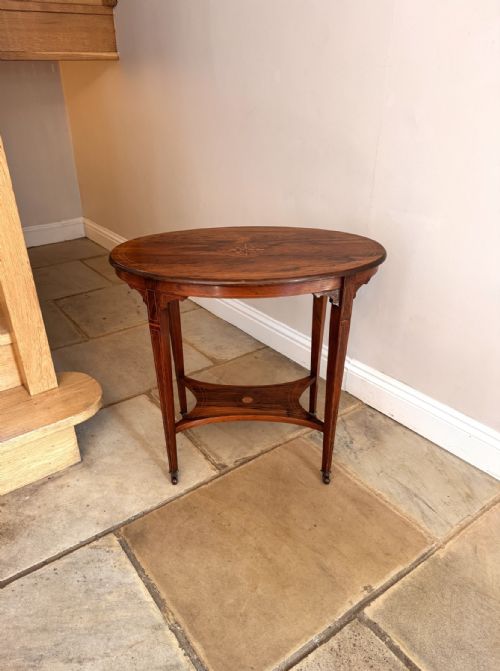
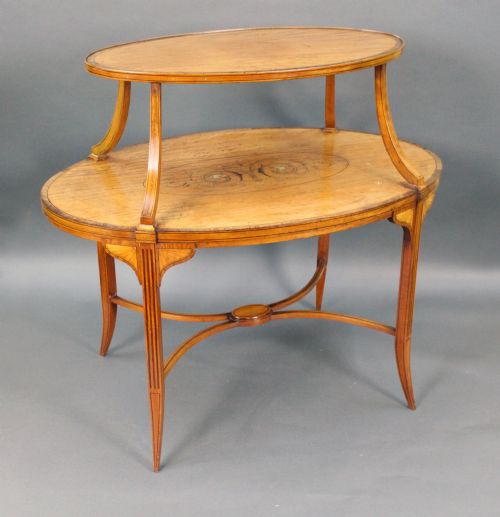

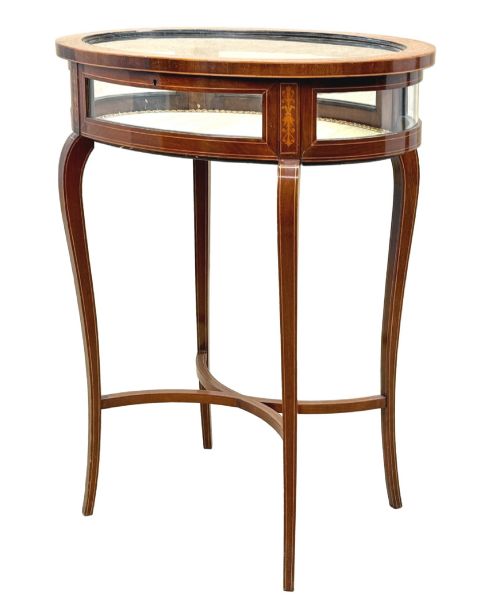


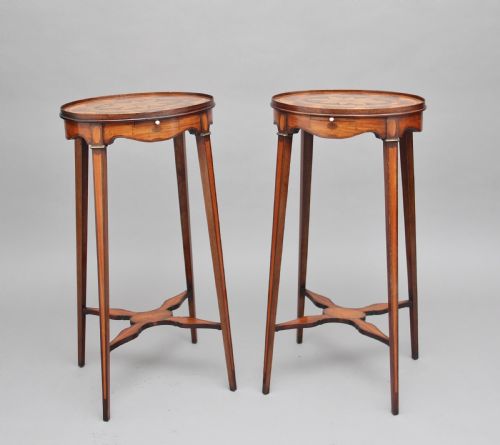


Inlaid Oval Display Table
An inlaid oval display table brings glass-topped refinement and delicate marquetry to a drawing room, offering a dedicated surface to present small treasures.
Inlaid Oval Display Table
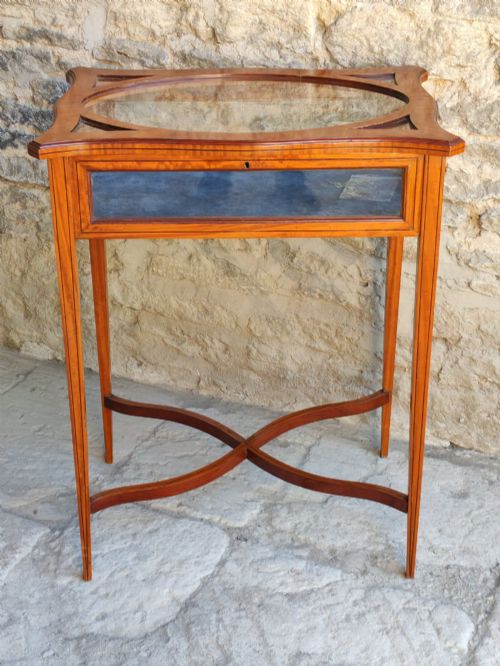
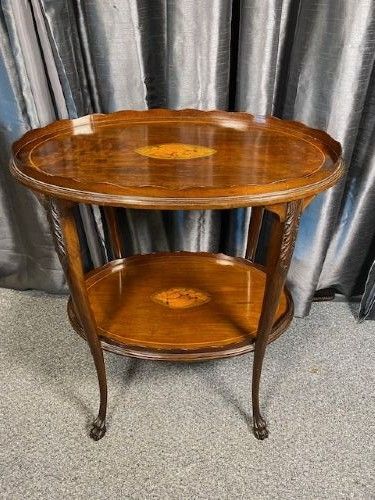
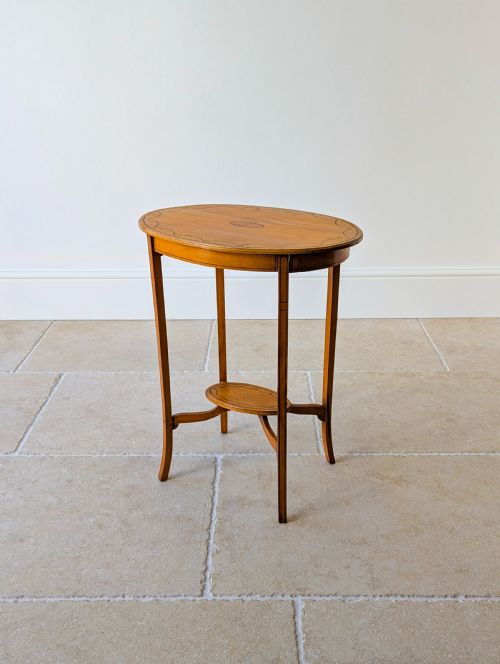
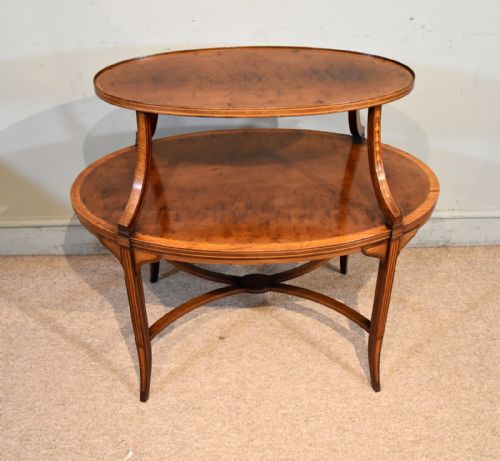
An inlaid oval display table serves as a functional centrepiece or side surface, frequently appearing across the Victorian and Edwardian periods. Buyers encounter these forms under various names, including occasional tables, bijouterie cabinets, and etageres with glass tops or multiple tiers designed for displaying objects.
The pieces on this page originate predominantly from the late nineteenth century and the opening decades of the twentieth century. Makers of these eras drew heavily on earlier design vocabulary, producing items in Sheraton Revival, Art Nouveau, and Neo-Classical styles that suited the formal entertaining spaces of their day.
Materials and construction
Cabinet makers utilised foundational timbers such as mahogany, walnut, and satinwood, shaping them into smooth curved rims and slender legs. These structural woods provide the necessary strength while maintaining a light silhouette suited to drawing room furniture.
Decorative surface work relies on contrasting veneers, boxwood inlay, marquetry, and occasional bone or ebony details. Brass mounts, glass panels, and multi-tiered arrangements further distinguish the construction of these display surfaces.
Selected tables incorporate hidden compartments alongside bone and ebony inlay for storing small keepsakes.
Distinctions in execution
Quality rests upon the precision of the marquetry and the crispness of the timber inlay. Stronger examples display tight botanical or geometric motifs executed in contrasting woods without gaps or crude filler.
The refinement of the structural frame, from turned legs to well-fitted glass tops and secondary display tiers, separates standard utility pieces from more ambitious cabinet work.
The Inlaid Oval Display Table Glossary
- Bijouterie table
- A glass-topped display table specifically designed for housing small valuables, medals, or curiosities within a glazed compartment.
- Etagere
- A set of open shelves or tiered stages used for displaying ornaments and small objects.
- Marquetry
- Decorative veneer work arranged in pictorial or geometric patterns using various coloured woods.
- Satinwood
- A lustrous, fine-grained yellow timber frequently utilised for banding and contrasting inlay on darker furniture bodies.
- Sheraton Revival
- A late nineteenth and early twentieth century design movement that reinterpreted the lighter, neoclassical furniture forms of the eighteenth century.
Inlaid Oval Display Table: Frequently Asked Questions
What is an inlaid oval display table used for?
These tables provide a surface for lamps, decorative items, or tea services, while glass-topped versions protect and showcase delicate collections beneath the surface.
They function equally well as standalone centrepieces or placed beside seating in a drawing room.
How do I date an inlaid oval display table?
Dating relies on identifying stylistic markers, timber choices, and construction methods characteristic of the Victorian or Edwardian eras. Pieces showing Sheraton Revival motifs typically date from the late nineteenth or early twentieth century.
Heavier proportions often point to mid-Victorian manufacture, while lighter satinwood framing aligns with later Edwardian production.
Where should I place an etagere table?
An etagere table suits reception rooms, hallways, or corners where multiple tiers add vertical display space without heavy floor footprints.
Positioning them away from direct sunlight protects vulnerable wood veneers and delicate interior contents.
How do I care for antique mahogany and satinwood?
Maintain the timber by dusting with a dry, soft cloth and avoiding moisture or silicone-based polishes. Keeping the furniture away from direct heat sources prevents the wood and inlay from drying out and warping.
Occasional application of appropriate wax helps preserve the natural lustre of the polished surface.