



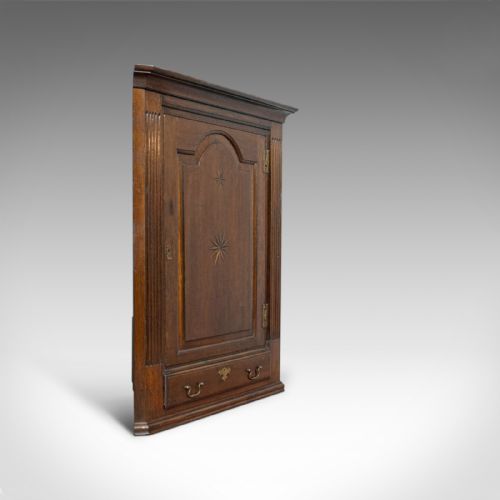
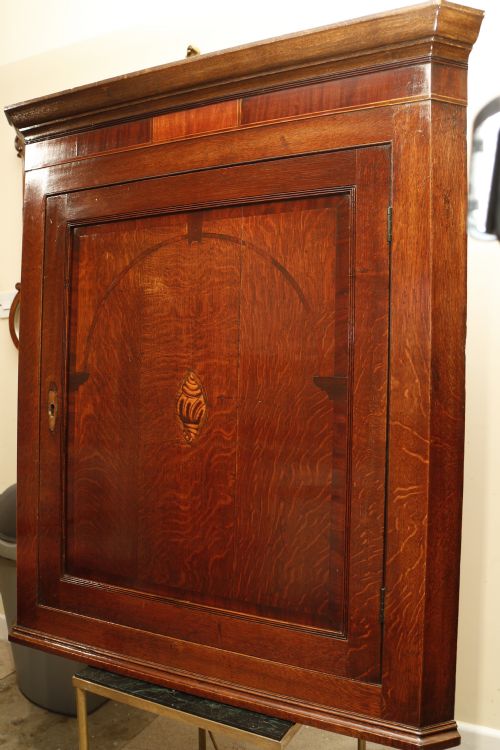


Inlaid Oak Wall Cupboard
An inlaid oak wall cupboard brings warmth and practical storage to a corner, combining sturdy timber with decorative detail.
Inlaid Oak Wall Cupboard
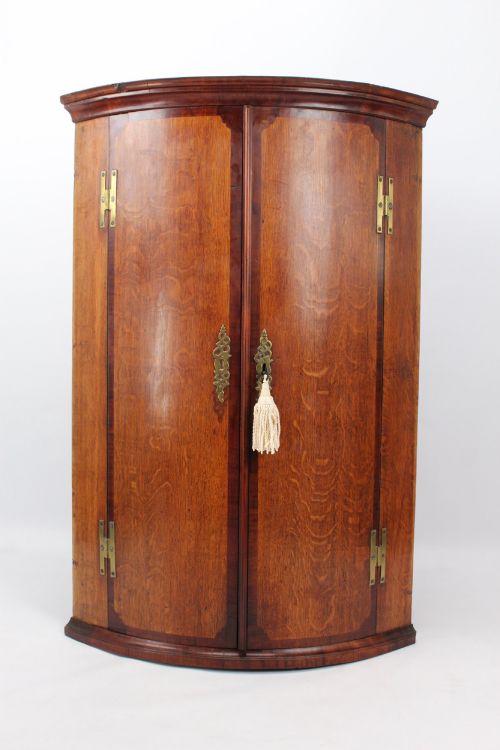
An inlaid oak wall cupboard is primarily found as a hanging corner cabinet or wall-mounted cupboard dating from the eighteenth century, particularly the Georgian and George III periods. These pieces are designed to utilise unused corner space in a room while providing enclosed shelving for display or storage. Provincial makers and continental workshops both produced variations, ranging from simple hanging cabinets to bow-fronted designs.
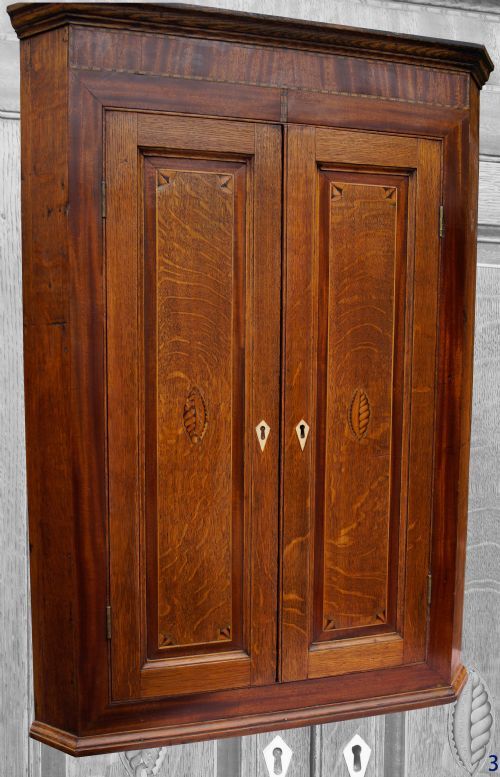
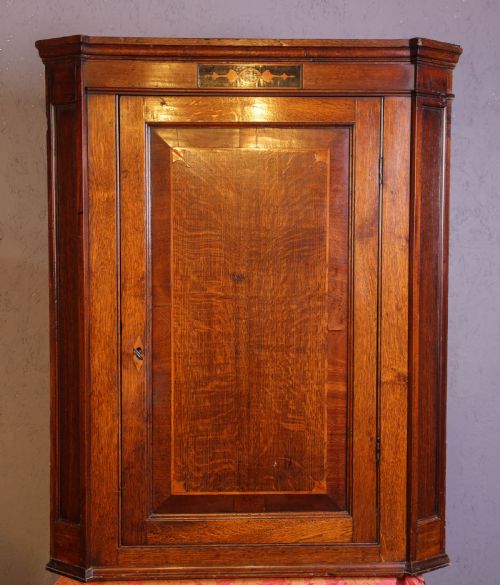
The most common version met on this page is the Georgian or George III oak corner cupboard featuring wall-hanging capabilities and decorative wood inlays. Many examples incorporate crossbanding in mahogany or contrasting fruitwood details to accent the door panels and cornices. They represent a functional domestic form that has survived from the seventeen-hundreds through careful adaptation for modern interiors.
What varies in quality
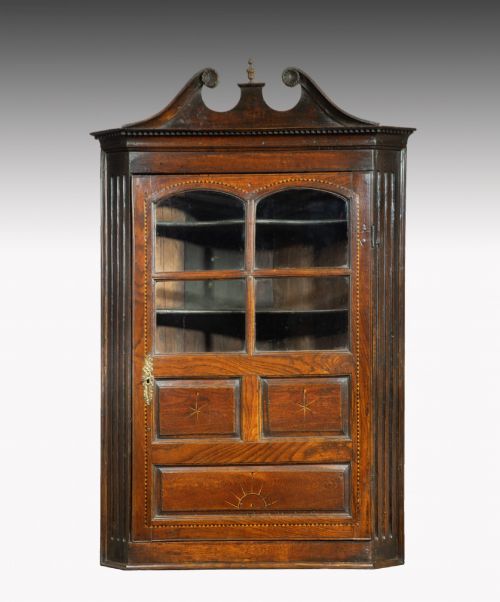
The sophistication of the timber selection and the precision of the inlay work separate pieces across the range. Finer examples display carefully matched oak grain alongside intricate fruitwood, mahogany, or satinwood crossbanding that frames the door panels and cornices. Simpler provincial versions rely on plain oak construction with minimal decorative detailing.
Hardware choice and interior configuration also contribute to the distinction between standard and superior pieces. Original brass fittings, distinctive door profiles such as bow fronts, and specialised inner shelving or decoration indicate a higher tier of cabinet making.
Inlaid Oak Wall Cupboard Retail Price Guide 2026
Typical asking prices for inlaid oak wall cupboard among the pieces listed under this phrase on Sellingantiques today, from the lower quarter to the upper quarter. They describe what is for sale here now, not the wider market.
One recorded cupboard bears an explicit carved date of 1763, giving us a precise historical anchor among the anonymous eighteenth-century makers.
The Inlaid Oak Wall Cupboard Glossary
- Crossbanding
- A border technique where veneer strips are laid perpendicular to the surrounding grain. This frames the main panel of the door.
- Bow front
- A convex, curved front profile popular in Georgian cabinet making. It softens the hard angles of a corner cabinet.
- Marquetry inlay
- Pieces of contrasting wood fitted together to form decorative pictures or geometric patterns. These are set directly into the surface.
- Escutcheon
- A protective brass plate surrounding a keyhole. It prevents the wood around the lock from splitting during use.
- Cornice
- The moulded projection that crowns the top of the cabinet. It provides a finished architectural transition to the wall.
Inlaid Oak Wall Cupboard: Frequently Asked Questions
How do I hang a wall cupboard safely?
These cupboards require secure fixing to solid wall studs or masonry using appropriate brackets that match the weight of the oak carcase.
Because original hanging fixings may be worn, inspect the internal backboards and hanging points before mounting the cabinet in a room.
Were these cabinets used for drinks?
Many eighteenth-century corner cupboards served multiple household storage purposes, including holding glassware and bottles.
While some archive pieces are noted for drinks storage, most functioned generally for display or household provisions.
How do I tell an 18th-century piece apart?
Eighteenth-century examples typically display pegged mortise and tenon joinery, hand-cut oak boards, and period brass hardware.
Stylistic markers like George III crossbanding and eighteenth-century provincial proportions further distinguish these early cabinets from later reproductions.
Where should I place a corner cupboard?
A hanging corner cabinet fits naturally into unused room angles, making efficient use of space in dining rooms or hallways.
Ensure the door swing has adequate clearance from adjacent walls or furniture before final placement.