



Inlaid Oak Press Cupboard
An inlaid oak press cupboard combines robust joinery with decorative marquetry, offering substantial storage and centuries of craftsmanship for a traditional interior.
Inlaid Oak Press Cupboard
The inlaid oak press cupboard category encompasses sturdy storage furniture originating primarily from British and European workshops across several centuries. Buyers searching for an inlaid oak press cupboard will encounter domestic storage pieces designed to house linens, provisions, or garments within panelled timber frames.
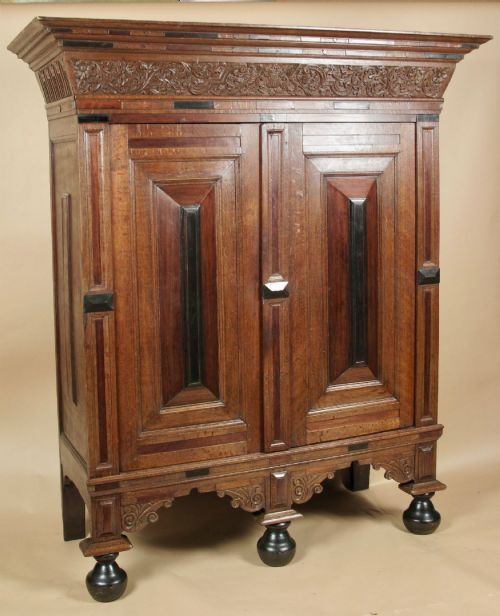
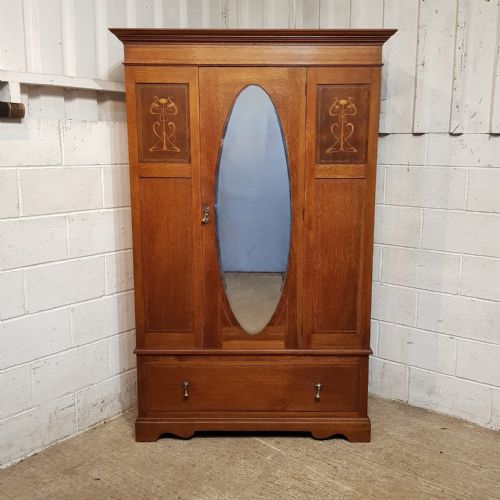
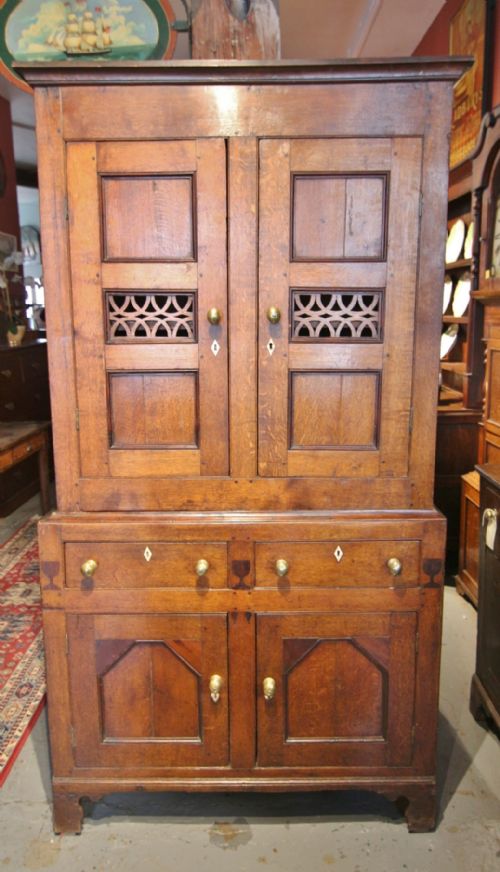
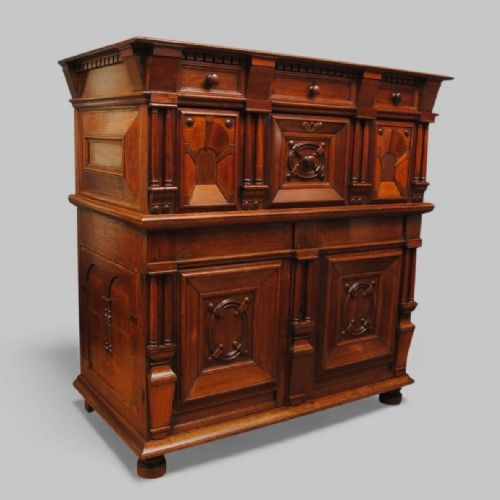
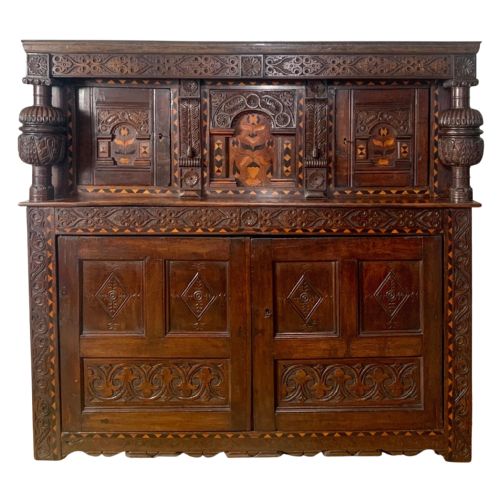
The pieces appearing in this selection range from early sixteenth and seventeenth-century court and livery cupboards to nineteenth-century Welsh vernacular food cupboards and Arts and Crafts wardrobes. Examples from the seventeenth century often display architectural cornices and carved details, whereas later nineteenth-century interpretations incorporate linear inlay and simpler storage layouts.
Regional variations span Welsh vernacular designs, Dutch Baroque armoires, and English Elizabethan or Jacobean standing pieces. These works utilise durable hardwoods combined with decorative contrasting woods to create functional focal points for traditional interiors.
Materials and Construction
Carpenters constructed these cupboards using solid timber frames, relying predominantly on oak for the primary structure due to its durability and abundant local supply. Panels were fitted into grooved framing to allow for natural wood expansion and contraction over changing seasons.
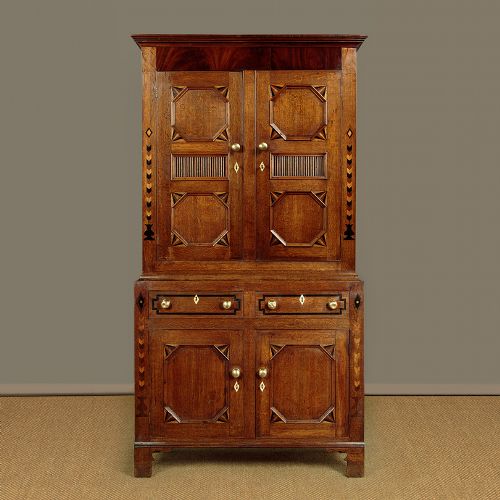
Decorative surface enrichment involved contrasting timbers such as ebony, rosewood, walnut, and fruitwood, alongside bone and holly for intricate marquetry or stringing. Metalwork components typically included brass hinges and escutcheons to secure heavy doors and drawers.
Inlaid Oak Press Cupboard Retail Price Guide 2026
Typical asking prices for inlaid oak press cupboard among the pieces listed under this phrase on Sellingantiques today, from the lower quarter to the upper quarter. They describe what is for sale here now, not the wider market.
Bread and cheese cupboards included pierced wooden ventilation holes so the local dairy could breathe inside the farmhouse.
Assessing Craftsmanship
The standard of a piece rests heavily on the crispness of the joinery and the precision of the timber selection. Finer examples display tightly fitted mortise and tenon joints alongside carefully balanced grain patterns in the primary oak panels.
Surface ornamentation also distinguishes standard utility pieces from high-status commissions. The intricacy and preservation of the inlaid wood, whether geometric banding or figurative floral motifs, indicate the skill of the original workshop.
Maple & Co
The Inlaid Oak Press Cupboard Glossary
- Press cupboard
- A large storage cabinet traditionally used for linen or clothing, typically featuring enclosed upper and lower sections.
- Court cupboard
- A specific form of open or enclosed sideboard popular in the sixteenth and seventeenth centuries for displaying plate and storing household items.
- Livery cupboard
- An early storage piece designed for food or drink, allowing ventilation through turned spindles or pierced wooden panels.
- Marquetry
- The art of applying decorative pieces of veneer to a structure to form geometric or pictorial designs.
- Vernacular
- Regional furniture built by local craftsmen using traditional methods and native materials rather than following high London fashions.
Inlaid Oak Press Cupboard: Frequently Asked Questions
What is an inlaid oak press cupboard?
An inlaid oak press cupboard is a heavy timber storage piece featuring decorative contrasting wood details. These cabinets served domestic households for storing garments, textiles, and household goods.
Today, they function as substantial statement storage items in dining rooms, hallways, or living spaces.
How do I date an antique oak cupboard?
Dating relies on examining construction methods, timber preparation, and stylistic motifs. Earlier pieces from the seventeenth century often show hand-split oak panels and pegged joinery.
Later nineteenth-century examples incorporate machine-sawn timber and different styles of brass hardware or veneer work.
Where were these cupboards made?
The pieces originate from various regions including English workshops, Welsh rural communities, and continental European makers. Regional vernacular styles often dictate the specific proportions and inlay patterns.
Local timber availability heavily influenced whether makers used solely native oak or incorporated exotic woods.
How should I care for antique oak furniture?
Maintain antique oak by keeping it away from direct heat sources and dramatic humidity fluctuations. These environmental controls prevent the timber from splitting or warping over time.
Apply a traditional beeswax polish occasionally to nourish the surface and maintain the natural lustre of the wood.