




Inlaid Mahogany Vitrine Table
An inlaid mahogany vitrine table combines display and surface utility, holding small treasures beneath glass while resting on elegant timber legs.

Inlaid Mahogany Vitrine Table
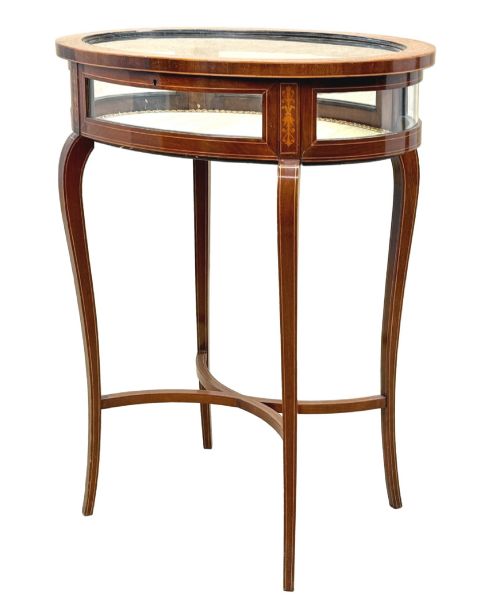
When you search for an inlaid mahogany vitrine table, you encounter specialised display furniture designed to showcase small treasures beneath a glazed top. These pieces combine a timber framework with glass panels, creating a secure compartment for jewellery, medals and curiosities. They date predominantly from the Edwardian period and the nineteenth century, reflecting an era that prized intimate display in drawing rooms and boudoirs.
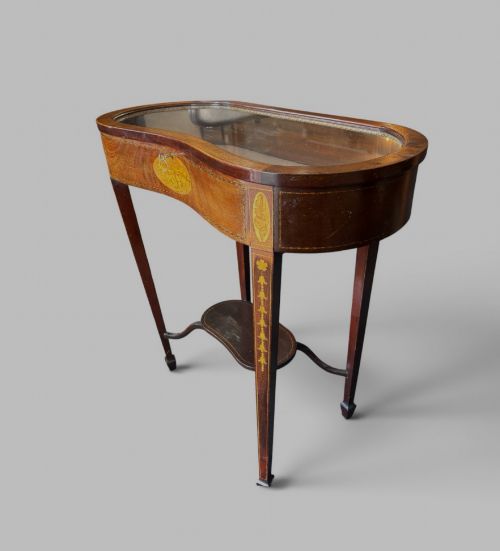
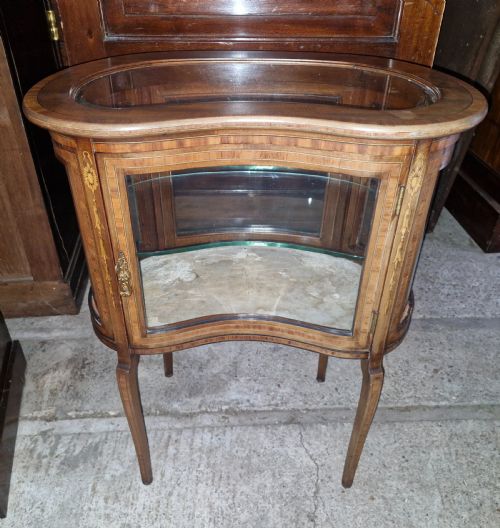
The version you are most likely to meet on this page is the Edwardian oval or kidney-shaped table, often featuring delicate satinwood inlay and slender legs. Formats vary from simple rectangular display surfaces to drop-sided tea trolleys and serpentine cabinets with brass mounts. These pieces draw on Sheraton Revival and French Louis XV styles, bringing refined proportions and glazed visibility to domestic spaces.
How they were made
Cabinet makers utilised solid and veneered mahogany as the primary timber body, providing a stable and rich dark ground for ornamentation. Artisans applied contrasting timbers such as satinwood and boxwood to create intricate marquetry and line inlay along borders, aprons and tapered legs. Glass panels were fitted into hinged lids or top frames, allowing light to enter the lined interior from above.
Brass fittings such as hinges, key escutcheons and mounts were incorporated to secure opening sections and reinforce structural joints. Interiors were traditionally lined with velvet, silk or similar fabrics to cushion displayed objects and enhance the visual contrast against the timber. Joinery methods relied on traditional mortise and tenon framing to support the weight of the glazed top without warping the delicate legs.
Several Edwardian tables were built narrow enough to slide neatly beside a drawing-room armchair for afternoon tea.
What varies in quality
The refinement of the timber and the precision of the contrasting inlay dictate the upper tier of these pieces. Fine examples exhibit crisp marquetry with tightly fitted boxwood and satinwood elements rather than simplified painted lines. The choice of timber grain, particularly figured mahogany on the top surface, signals the maker's attention to visual impact.
Structural integrity in the legs and hinges separates finer furniture from simpler utilitarian versions. Tables with substantial brass mounts, robust glass framing and original fabric linings retain greater integrity over time. The fluidity of serpentine or kidney-shaped curves also points to higher craftsmanship during the construction process.
Edwards and Roberts
The Inlaid Mahogany Vitrine Table Glossary
- Bijouterie table
- A specialised display table featuring a glass-topped compartment specifically designed for exhibiting small ornaments, jewellery and curiosities.
- Marquetry
- The decorative craft of applying small pieces of veneer to a structure to form intricate pictorial or geometric patterns.
- Satinwood
- A pale, lustrous timber native to India and Ceylon, frequently utilised in fine inlay work to create sharp contrast against darker mahogany.
- Serpentine
- A furniture outline characterised by a wavy line, curving outward then inward, demanding high skill from the cabinet maker.
- Vitrine
- A glass-pannelled cabinet or table designed for exhibiting fine objects while protecting them from dust.
Inlaid Mahogany Vitrine Table: Frequently Asked Questions
What is a vitrine table used for?
These tables served primarily to exhibit small collectables, jewellery and curiosities in formal reception rooms. The glazed top protected delicate items from dust while allowing visitors to inspect them closely.
At the same time, the solid wooden surrounds provided a stable surface for everyday domestic tasks or ornamental placement. They functioned as both display cases and refined pieces of parlour furniture.
How do I date an inlaid mahogany vitrine table?
Dating relies on observing structural characteristics, timber selection and stylistic revival influences. Edwardian pieces often display lighter satinwood marquetry and slender tapered legs, whereas nineteenth-century variants may incorporate heavier brass mounts and French influences.
Construction details inside the glazed compartment and the type of secondary timbers used underneath also provide clues to the decade of manufacture. Comparing the decorative motifs to known Sheraton or Louis XV revival patterns helps narrow the period further.
Where should I place a display table at home?
These tables suit drawing rooms, studies or hallways where natural light can illuminate the glazed compartment from above. Placing them away from direct sunlight protects both the internal fabric lining and the mahogany timber from fading.
Because many examples feature finished backs and delicate curved legs, they sit effectively away from walls as freestanding centrepieces. Their modest proportions allow them to occupy corners or spaces beside seating without dominating the room.
What is the difference between a bijouterie table and a whatnot?
A bijouterie table specifically incorporates a glazed compartment designed to hold and display small valuable items under glass. The focus remains on the enclosed top surface and its velvet or fabric lining.
By contrast, a whatnot consists of open tiered shelves intended for stacking books, ornaments or tea accessories without glass protection. While both forms appeared in nineteenth-century and Edwardian interiors, their functional purposes for storage and display differ entirely.