




Inlaid Mahogany Tabletop
An inlaid mahogany tabletop brings together dense dark timber and fine contrasting stringing, turning small functional items into objects of real presence.
Inlaid Mahogany Tabletop
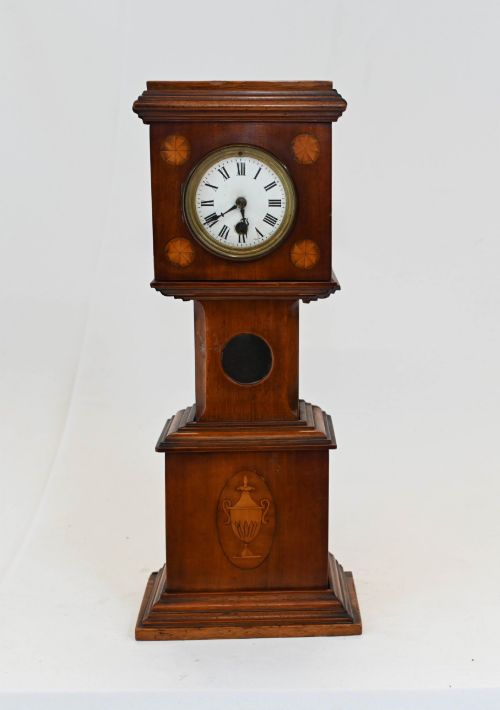
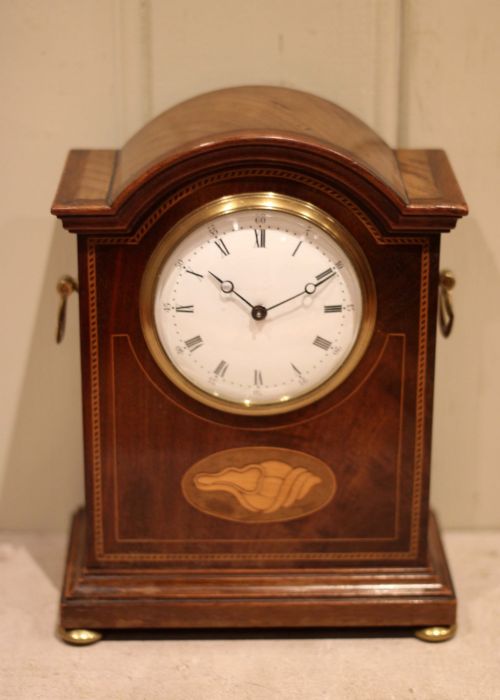
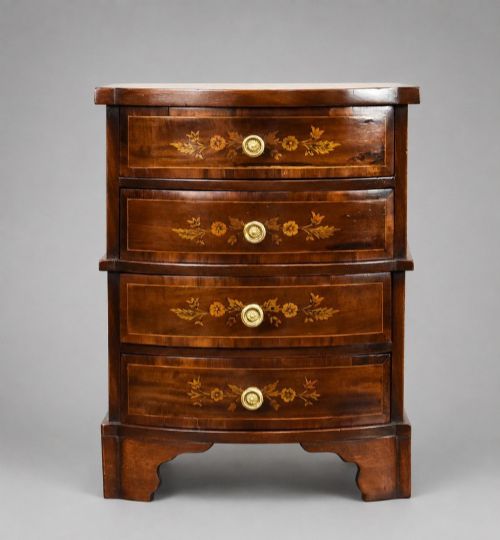
When someone searches for an inlaid mahogany tabletop, they are looking at compact items designed to sit upon larger surfaces, spanning dressing mirrors, mantel clocks, and miniature chests of drawers. These pieces appear across Georgian, Regency, and Edwardian periods, stretching from the eighteenth century into the twentieth.
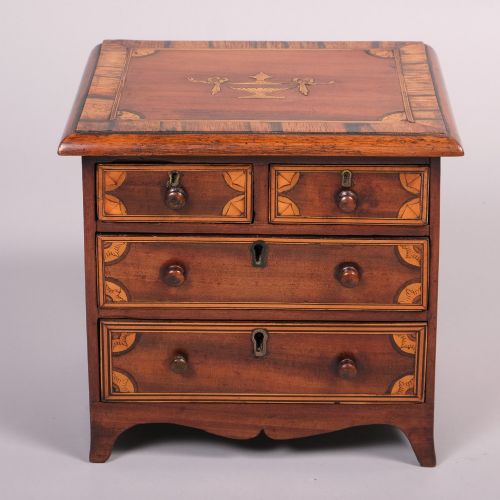
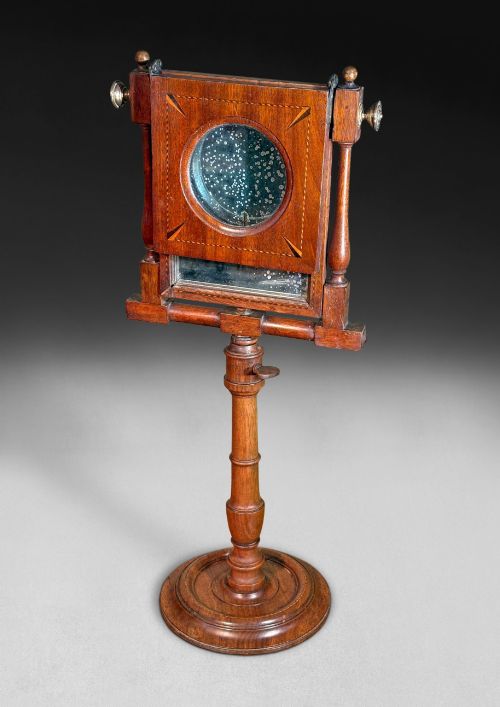
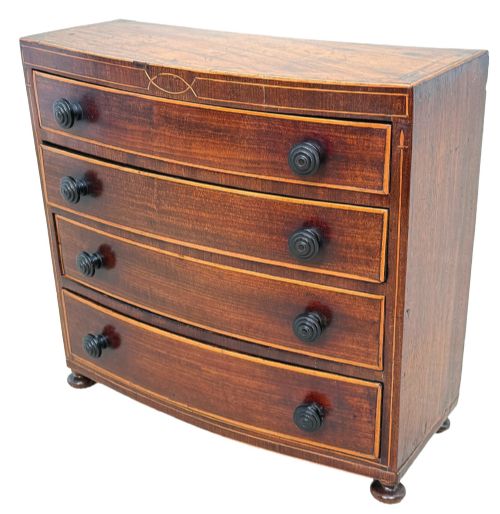
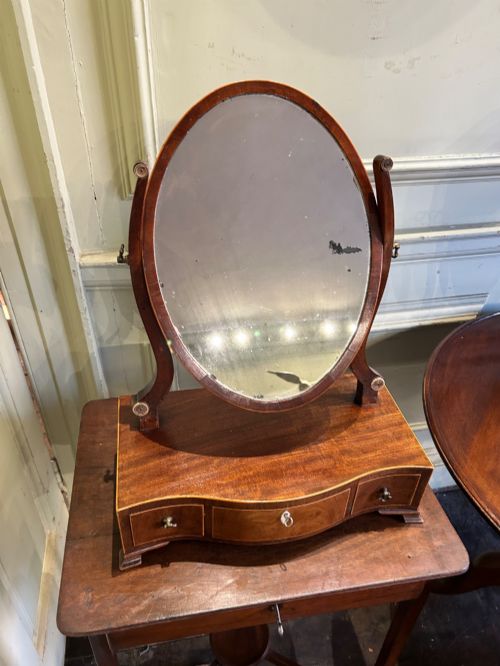
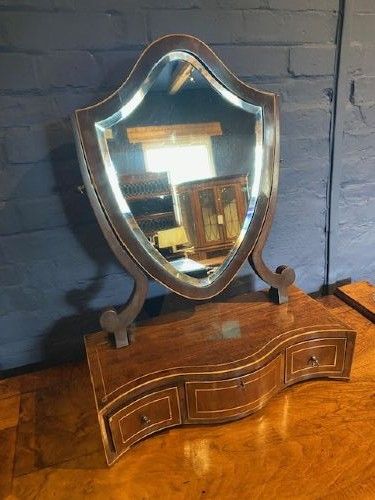
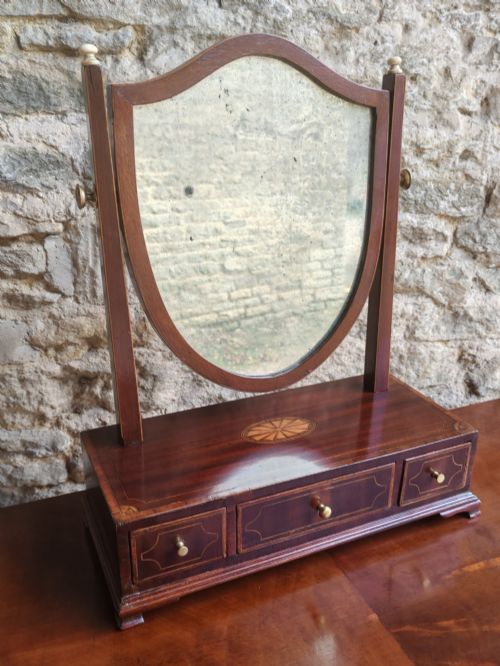
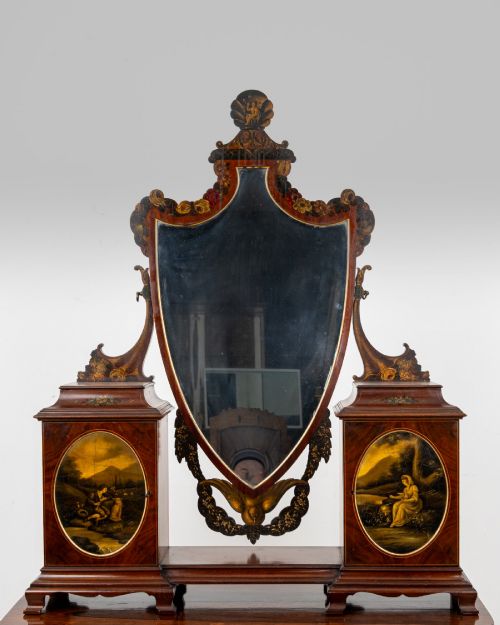
The most common version met on this page is the toilet mirror or dressing mirror, often constructed with a shield or oval plate swinging between upright arms above small drawer bases. Alongside these stand miniature furniture and timepieces, demonstrating how cabinetmakers applied principal furniture techniques to smaller domestic scales.
Materials and technique
Makers built these pieces primarily using solid mahogany and mahogany veneers over secondary timbers, selected for grain stability and rich natural colour. Surface decoration relied upon precision woodwork rather than applied ornament, integrating contrasting strips of boxwood, satinwood, and ebony.
Inlaid patterns were embedded directly into the primary surface by cutting channels into the mahogany and gluing contrasting light or dark woods flush before scraping and polishing. Brass fittings such as swing mirror pivots, small drawer pulls, and clockbezels provided functional contrast to the dark timber.
Inlaid Mahogany Tabletop Retail Price Guide 2026
Typical asking prices for inlaid mahogany tabletop among the pieces listed under this phrase on Sellingantiques today, from the lower quarter to the upper quarter. They describe what is for sale here now, not the wider market.
Craftsmanship and proportion
Quality rests heavily on the crispness of the inlay work and the restraint shown in the design, where sharp boxwood lines and balanced proportions separate refined work from routine production. The handling of secondary timbers inside small drawers and the weight of the cast brass elements show whether a maker spared expense.
Surface finish and the preservation of the original timber patina govern the visual impact of each piece. Items retaining their original mirror glass, subtle wood movement, and unpolished surfaces hold greater integrity than heavily stripped examples.
The Inlaid Mahogany Tabletop Glossary
- Boxwood
- A pale, dense hardwood frequently utilised for contrasting stringing and inlay lines against dark mahogany backgrounds. It takes a sharp edge and holds fine geometric shapes.
- Marquetry
- A decorative technique arranging thin veneers into pictorial or geometric patterns across a surface. It differs from simple stringing by forming complex pictures rather than straight lines.
- Serpentine
- A curved outline shape featuring a convex centre flanked by concave curves. This contour appears frequently on the front bases of eighteenth-century dressing mirrors and miniature chests.
- Stringing
- Thin inlaid lines of contrasting timber set into grooves around the edges of panels and drawer fronts. It frames the primary wood grain to define the geometry of the piece.
- Toilet mirror
- A small mirror designed to stand upon a dressing table or chest, typically supported by upright arms above a box base containing small drawers. These served personal grooming before full-length mirrors became common.
Inlaid Mahogany Tabletop: Frequently Asked Questions
What is an inlaid mahogany tabletop?
An inlaid mahogany tabletop refers to compact antique items designed for surface placement, including dressing mirrors, mantel clocks, and miniature chests of drawers decorated with contrasting wood inlays.
These pieces combine functional utility with decorative cabinetwork, utilising dense tropical timber highlighted by pale stringing lines.
How do I date an inlaid mahogany mirror?
Dating relies upon structural details, edge profiles, and the shape of the mirror frame, such as Georgian oval plates versus Edwardian rectangular formats.
Secondary woods inside drawers and the method of holding the mirror plate in its frame offer further clues to the period of construction.
Were miniature chests used by children?
Miniature chests of drawers were not toys for children, but served practical purposes as master samples for apprentices, salesman samples, or tidy storage for small valuables like jewellery.
Their exact joinery mirrors full-scale furniture of the same period.
How should I care for mahogany inlay?
Maintenance requires avoiding direct sunlight and excessive temperature swings that cause thin veneers and delicate boxwood stringing to lift or crack.
Regular dusting with a dry cloth and occasional application of traditional wax preserves the natural sheen of the timber.