


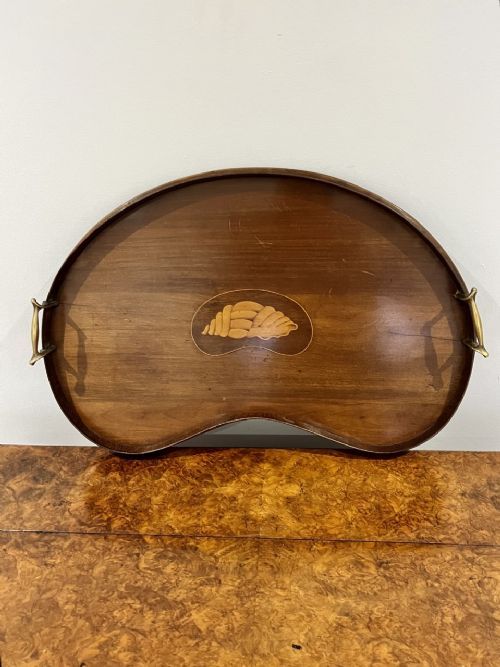


Inlaid Mahogany Serving Tray
An inlaid mahogany serving tray brings functional elegance to any room, combining rich timber with precise decorative detail.
Inlaid Mahogany Serving Tray
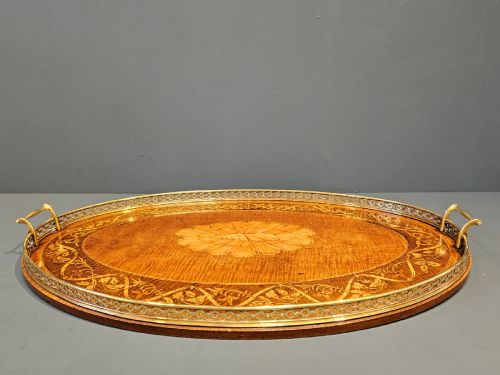
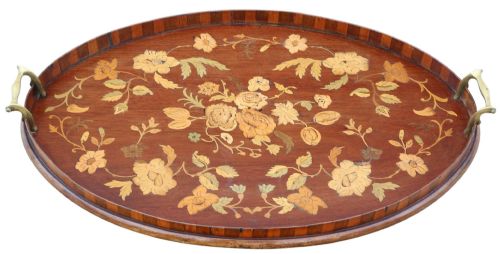
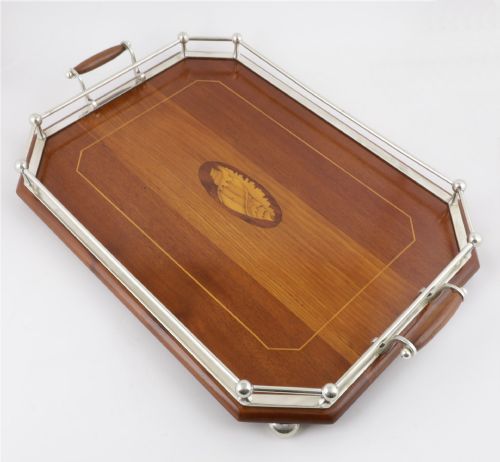
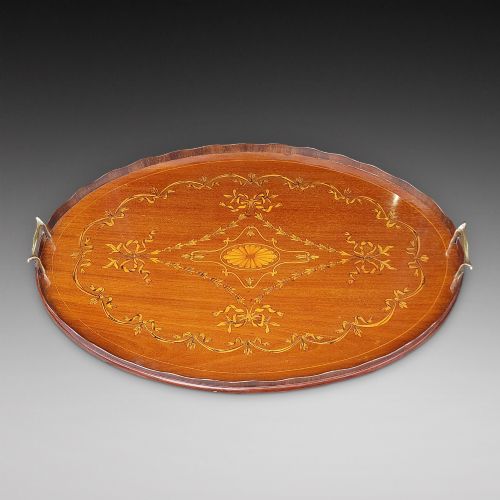
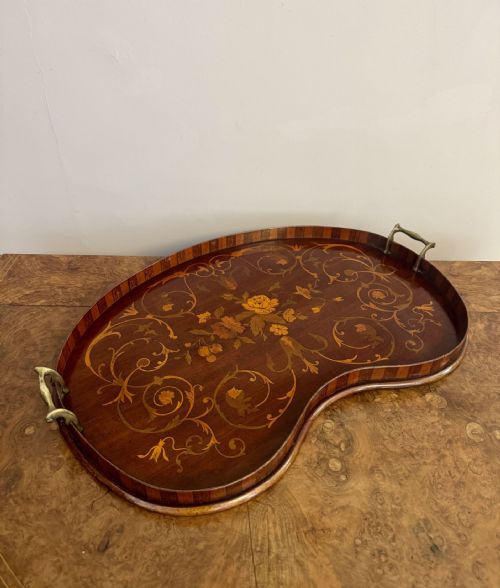
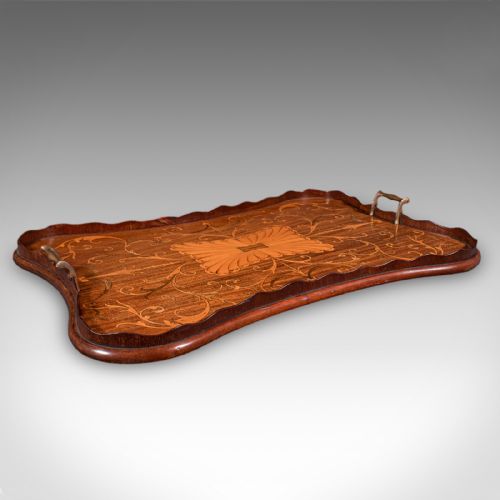
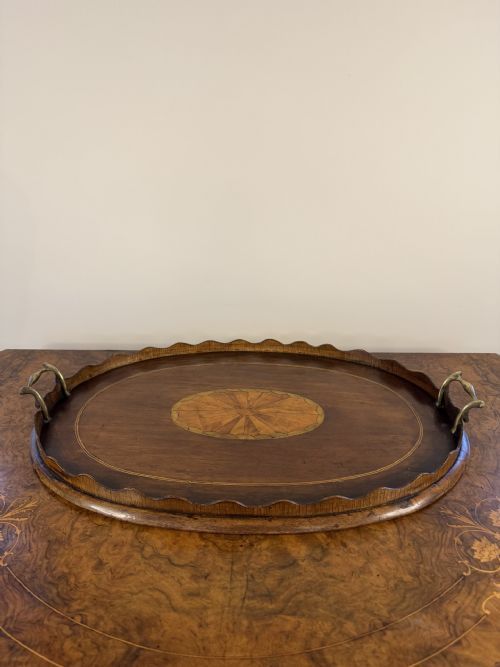
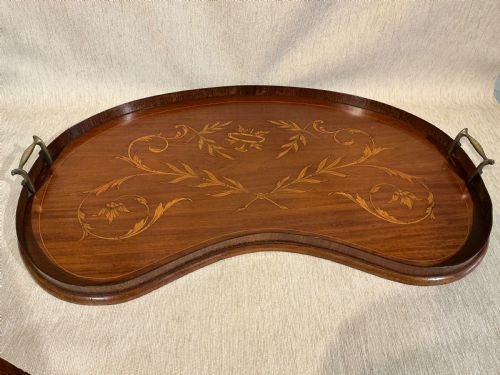
When you search for an inlaid mahogany serving tray, you encounter pieces spanning from the Georgian period through the Victorian and Edwardian eras, with notable examples originating around nineteen hundred. The forms vary from traditional oval tea trays and octagonal gallery designs to kidney-shaped platters and occasional tables with detachable serving surfaces.
The Edwardian pieces on this page frequently display delicate marquetry work and satinwood detailing, whilst earlier Georgian and Victorian examples favour robust proportions and classic oval formats. Most are designed for traditional hospitality uses, functioning as afternoon tea platters or drinks trays, though smaller miniature trays also appear.
These serving items reflect the prevailing decorative tastes of their respective decades, shifting from the restrained classical geometry of the late eighteenth century to the lighter, more ornate aesthetic of the Edwardian revival styles.
Quality Markers
The distinction between standard examples and top-tier pieces rests largely on the precision and complexity of the inlay work. Finer trays demonstrate tight, seamless joints where contrasting woods meet the mahogany ground, alongside sophisticated botanical or geometric marquetry rather than simple banded lines.
Material selection also dictates overall merit, with superior items employing exceptionally figured mahogany paired with select exotic veneers like burr yew and satinwood. Furthermore, the quality of integrated metalwork - such as substantial brass handles or heavy silver-plated galleries - separates utilitarian items from high-status presentation pieces.
Listings feature mahogany, satinwood, burr yew, and brass, spanning the Georgian, Victorian, and Edwardian periods.
The Inlaid Mahogany Serving Tray Glossary
- Marquetry inlay
- A decorative technique where small pieces of coloured wood, shell, or ivory are fitted into a veneer to form pictorial or geometric patterns on the surface.
- Gallery tray
- A serving tray featuring a raised pierced metal or wooden border around the edge, designed to prevent items from sliding off during carriage.
- Satinwood
- A pale, lustrous exotic timber native to India and Sri Lanka, frequently utilised in British furniture for contrasting stringing and inlay details.
- Edwardian
- Pertaining to the period of the reign of King Edward VII, spanning from nineteen hundred to nineteen ten, characterised by light and refined decorative styles.
- Georgian
- Relating to the reigns of the first four British monarchs named George, covering the eighteenth and early nineteenth centuries and noted for classical proportions.
Inlaid Mahogany Serving Tray: Frequently Asked Questions
How were these trays used historically?
These trays served primarily for carrying and presenting afternoon tea, wine, or spirits within affluent households. Staff brought them to drawing rooms or parlours, where the raised edges and handles ensured safe transit for heavy silver teapots and delicate porcelain.
Over time, many functioned as decorative tabletop elements or formed part of side table stands with detachable serving tops. Their dual role as both utility items and display pieces made them central to formal hospitality rituals.
How do I distinguish Edwardian trays from Georgian ones?
Georgian trays generally exhibit heavier timber construction with simpler, bolder geometric stringing or central shell motifs. They reflect a more restrained classical aesthetic typical of the late eighteenth century.
Edwardian pieces often embrace lighter framing, kidney shapes, and elaborate satinwood or boxwood marquetry inspired by Sheraton Revival tastes. The presence of delicate floral swags and lighter mahogany tones usually points towards the later period.
Can I use an antique tray for daily serving?
Most of these pieces remain structurally sound and capable of light functional use during social gatherings. However, moisture and heat from modern dishware can damage delicate nineteenth-century polish and vintage timber surfaces.
Using coasters or protective linens helps preserve the delicate marquetry inlay and silver-plated galleries. Many owners prefer to display them flat on side tables or etageres to protect the aged finish from daily wear.