
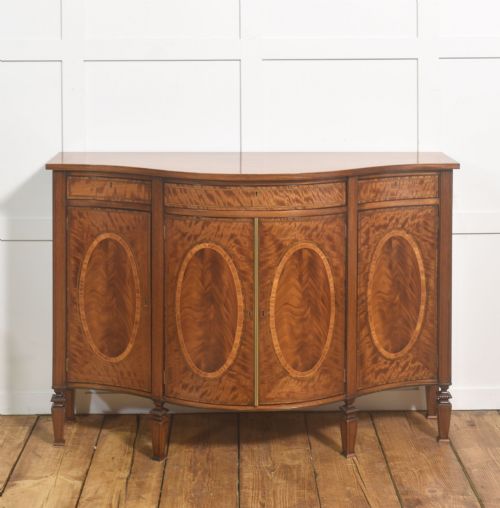
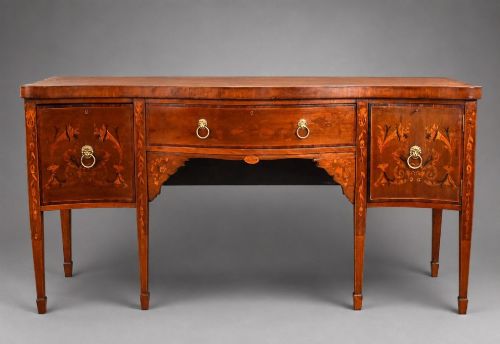
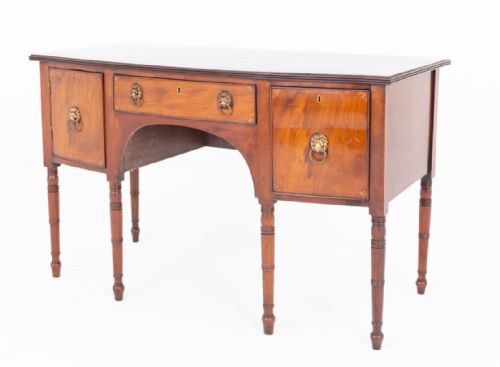

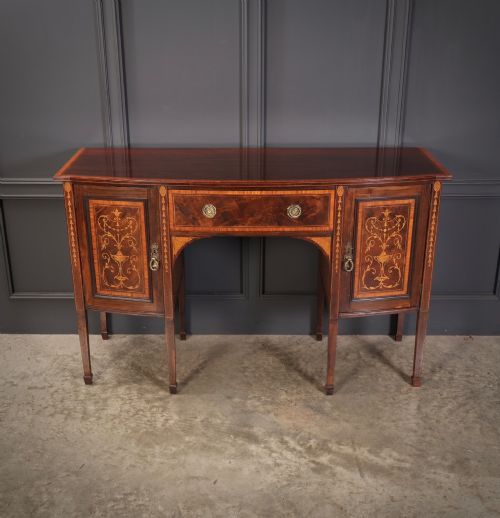
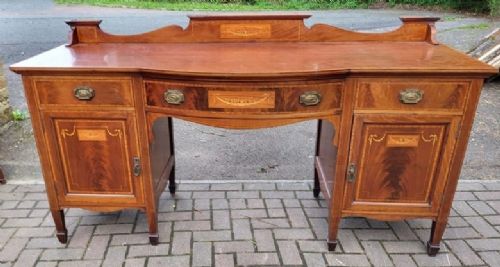


Inlaid Mahogany Dining Cabinet
An inlaid mahogany dining cabinet brings enduring presence to a room, offering both substantial storage and refined surface detail.
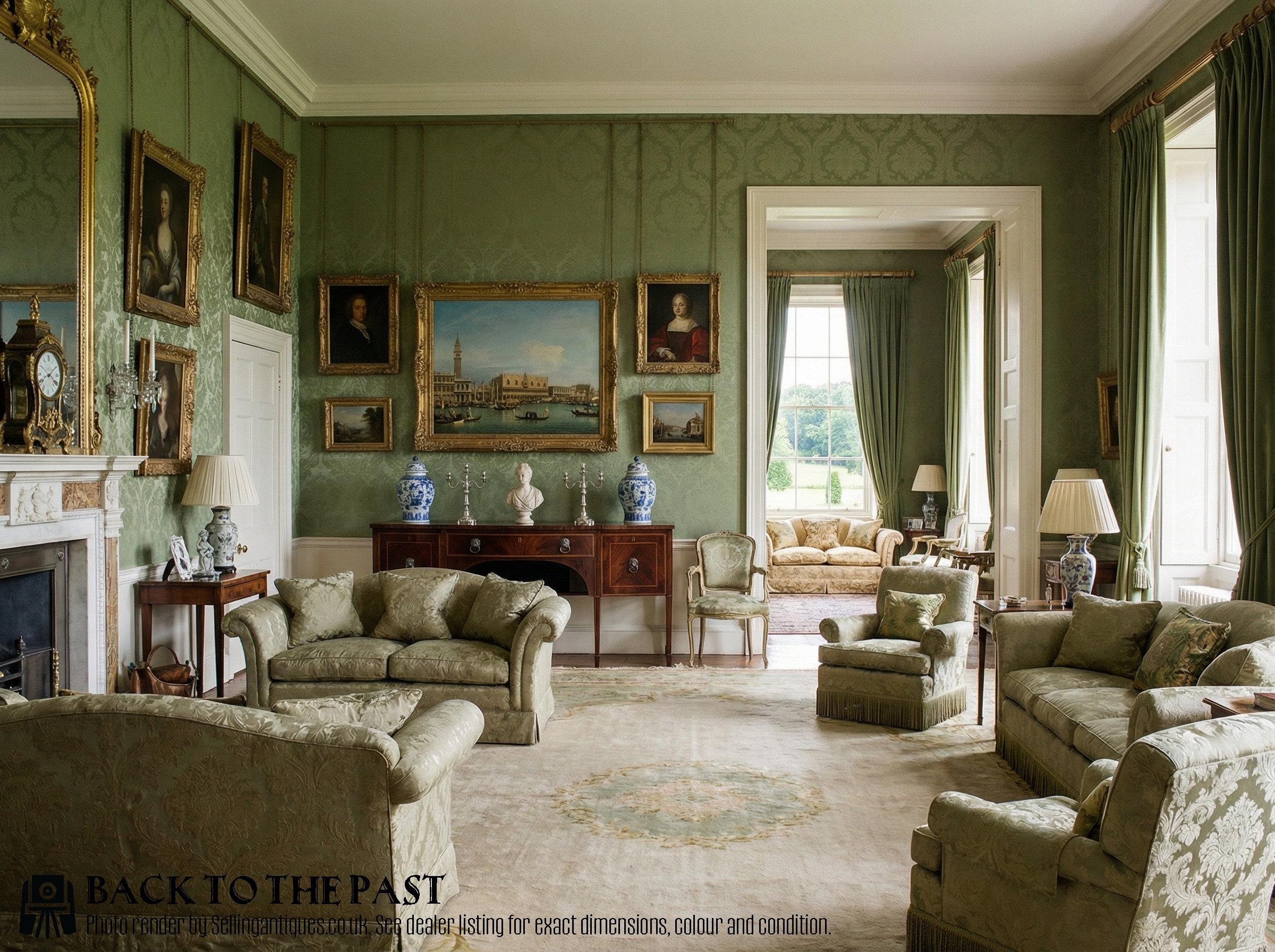
Inlaid Mahogany Dining Cabinet
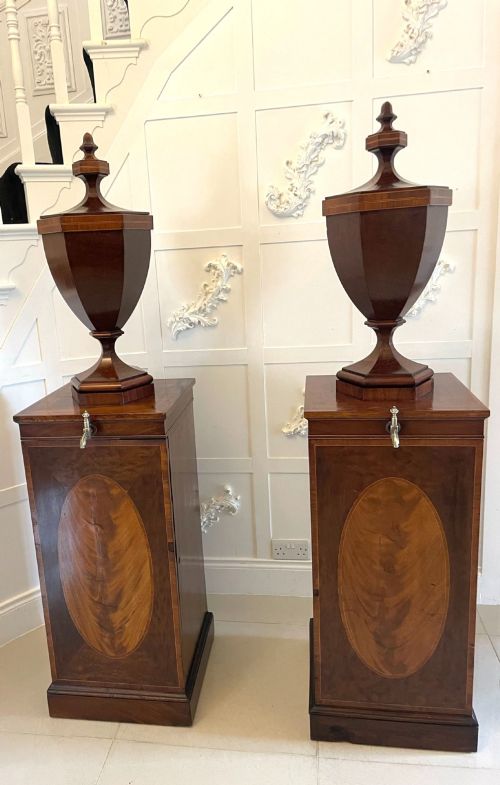
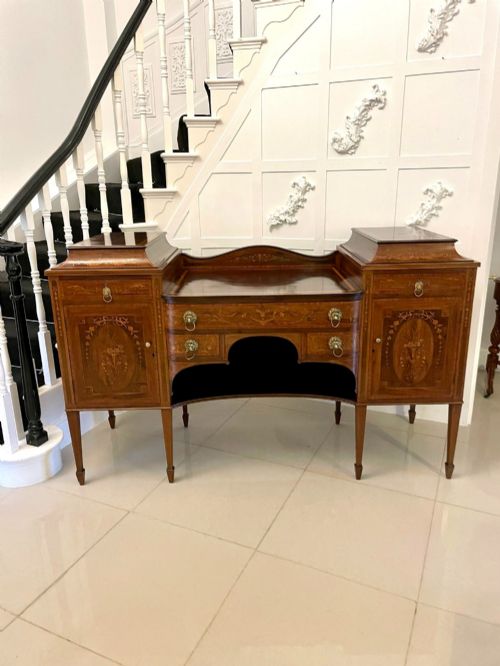
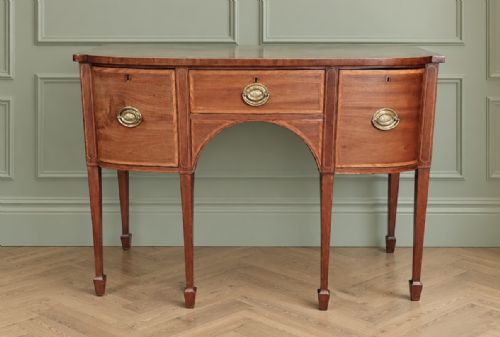
When you search for an inlaid mahogany dining cabinet, you encounter a variety of formal dining room storage forms. Sideboards dominate the selection, spanning periods from the eighteenth century through the Edwardian era, alongside cellarettes, pedestals, and side cabinets.
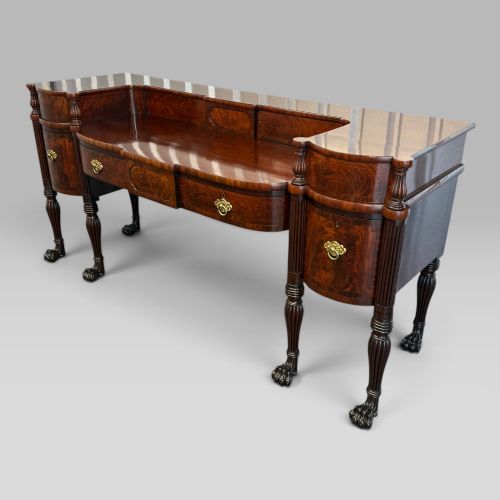
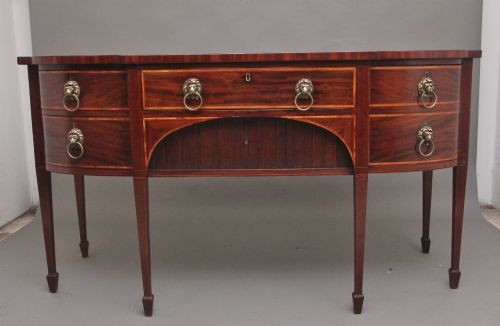
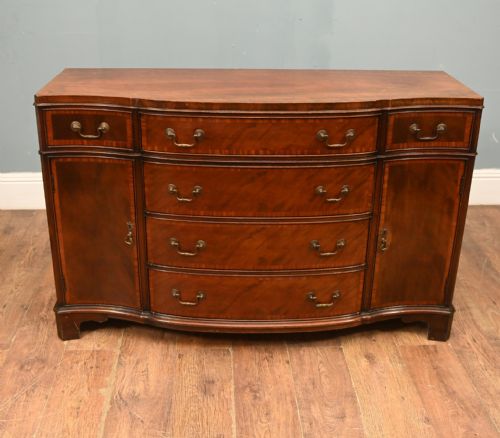
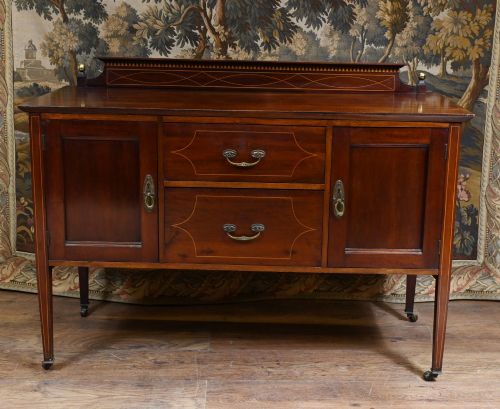
The pieces typically manifest as bow-front, serpentine, or breakfront server units designed to hold dining room service items. Georgian, Regency, and Sheraton Revival styles appear frequently, showing distinct attention to proportion and line.
Originating largely from British workshops and heritage periods, these items range from large George III stage-back servers to compact nineteenth-century sideboards resting on lion paw feet.
How they were made
Cabinetmakers utilised dense timbers, selecting figured and flame mahogany for primary surfaces to create rich depth. This was paired with contrasting secondary woods such as satinwood and boxwood for decorative detailing.
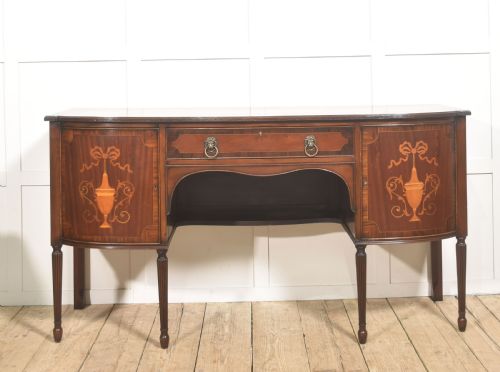
Inlay and marquetry techniques defined the surface ornamentation, integrating boxwood inlay, satinwood inlay, and intricate wood inlay into geometric or floral motifs. Brass elements, including lion paw feet or mounts, provided structural accents and secure finishes.
Listings feature periods spanning Georgian, Regency, 18th Century, 19th Century, and Edwardian, utilising materials including brass, flame mahogany, satinwood, and boxwood.
What varies in quality
The hierarchy of quality rests primarily in the selection of timber figures and the precision of the inlay work. Finer examples display intensely figured flame mahogany paired with crisp, perfectly fitted satinwood and boxwood banding.
Constructional nuance also separates standard pieces from the superior tier, seen in balanced proportions across serpentine or breakfront silhouettes and the inclusion of original hardware such as brass lion paw feet.
Hewetsons London·Edwards and Roberts
The Inlaid Mahogany Dining Cabinet Glossary
- Crossbanded
- A border technique where thin strips of veneer are laid across the grain of the primary wood to frame a panel. This creates a neat, contrasting perimeter on drawer fronts and tabletops.
- Serpentine
- A front profile shaped with a convex centre flanked by concave curves, creating a gentle undulating line. It demands exceptional skill from the cabinetmaker to fit drawers smoothly.
- Bow-front
- A convex curved front configuration that projects outward in a smooth arc. This form softens the rigidity of traditional dining room cabinetry.
- Marquetry
- The art of forming decorative patterns using fitted pieces of various veneers applied to a wooden structure. It elevates plain surfaces into pictorial or geometric displays.
- Cellarette
- A dedicated lockable container or cabinet designed for holding bottles of wine and spirits near the dining table. They frequently appear as freestanding pedestals or under-server compartments.
- Breakfront
- A cabinet front where the central section projects forward from the flanking outer sections. This architectural arrangement adds depth and visual rhythm to larger sideboards.
Inlaid Mahogany Dining Cabinet: Frequently Asked Questions
What is an inlaid mahogany dining cabinet?
An inlaid mahogany dining cabinet refers to formal dining room storage furniture, primarily sideboards and servers, constructed from mahogany and decorated with contrasting timber inlays.
These pieces emerged during the Georgian and Regency periods and saw revivals through the Edwardian era, functioning as practical storage for dining utensils and serving ware.
How do I identify a Georgian sideboard?
Georgian sideboards typically exhibit clean architectural lines, often featuring straight, bow-front, or serpentine configurations supported by tapering legs or multiple sturdy pillars.
They utilise figured mahogany combined with subtle boxwood or satinwood stringing rather than the heavier marquetry common in later revival styles.
Where were these dining cabinets placed?
These cabinets stood against the main dining room walls, serving as functional staging surfaces during large meals and formal gatherings.
They held decanters, silver service items, and linens within their cupboards, drawers, and associated cellarette compartments.
What distinguishes Sheraton Revival pieces?
Sheraton Revival furniture draws heavily on the classical lightness and symmetry popularised in the late eighteenth century, frequently dating to the Edwardian period.
They are characterised by delicate satinwood crossbanding, refined proportions, and precise wood inlay motifs.
How should I care for mahogany and inlay?
Maintain these surfaces by keeping them away from direct sunlight and fluctuating heat sources, which can dry out the timber and veneer.
Apply natural beeswax periodically to nourish the mahogany grain and preserve the delicate contrast of the boxwood or satinwood inlay.