
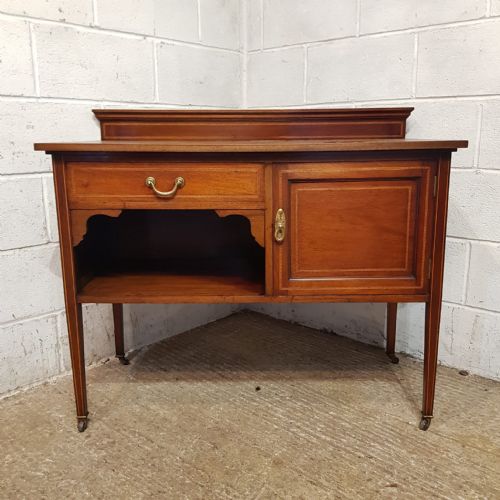
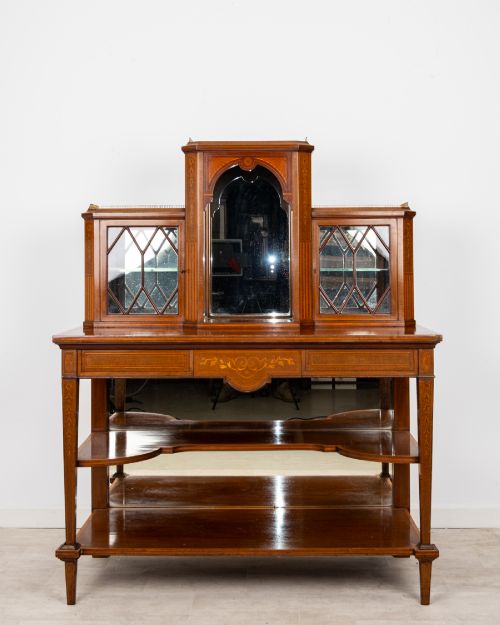


Inlaid Mahogany Console Cabinet
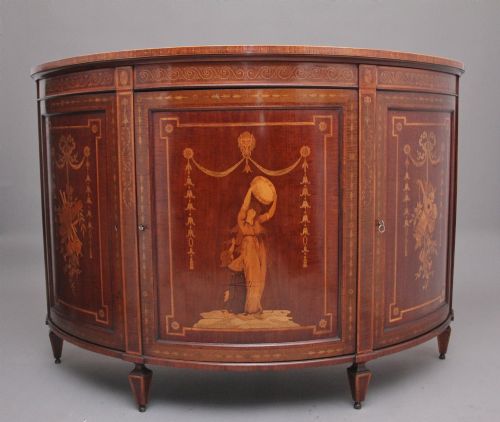
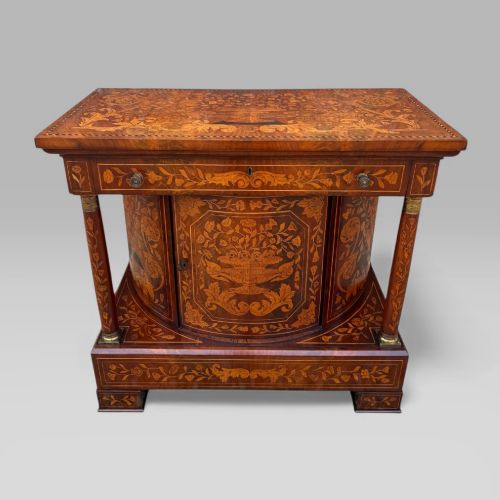
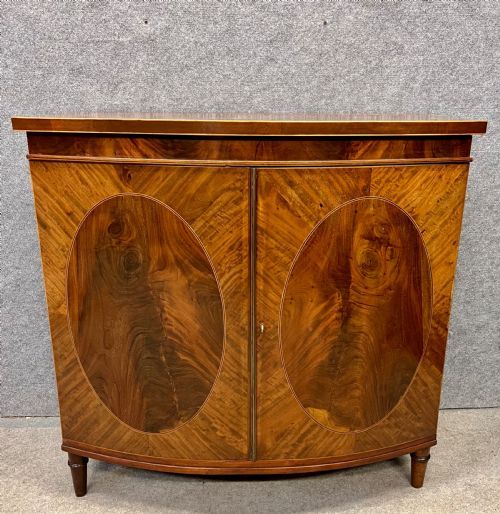
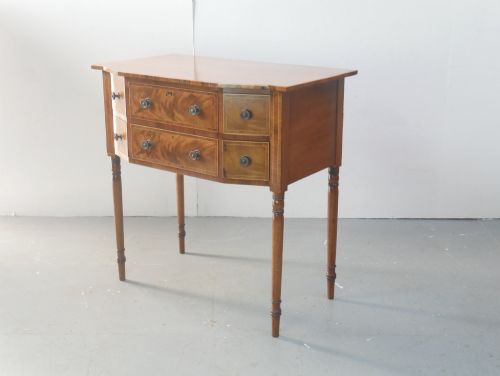
These inlaid mahogany console cabinet examples bring refined classical proportions and crisp marquetry into a room, offering both surface display and discreet storage.
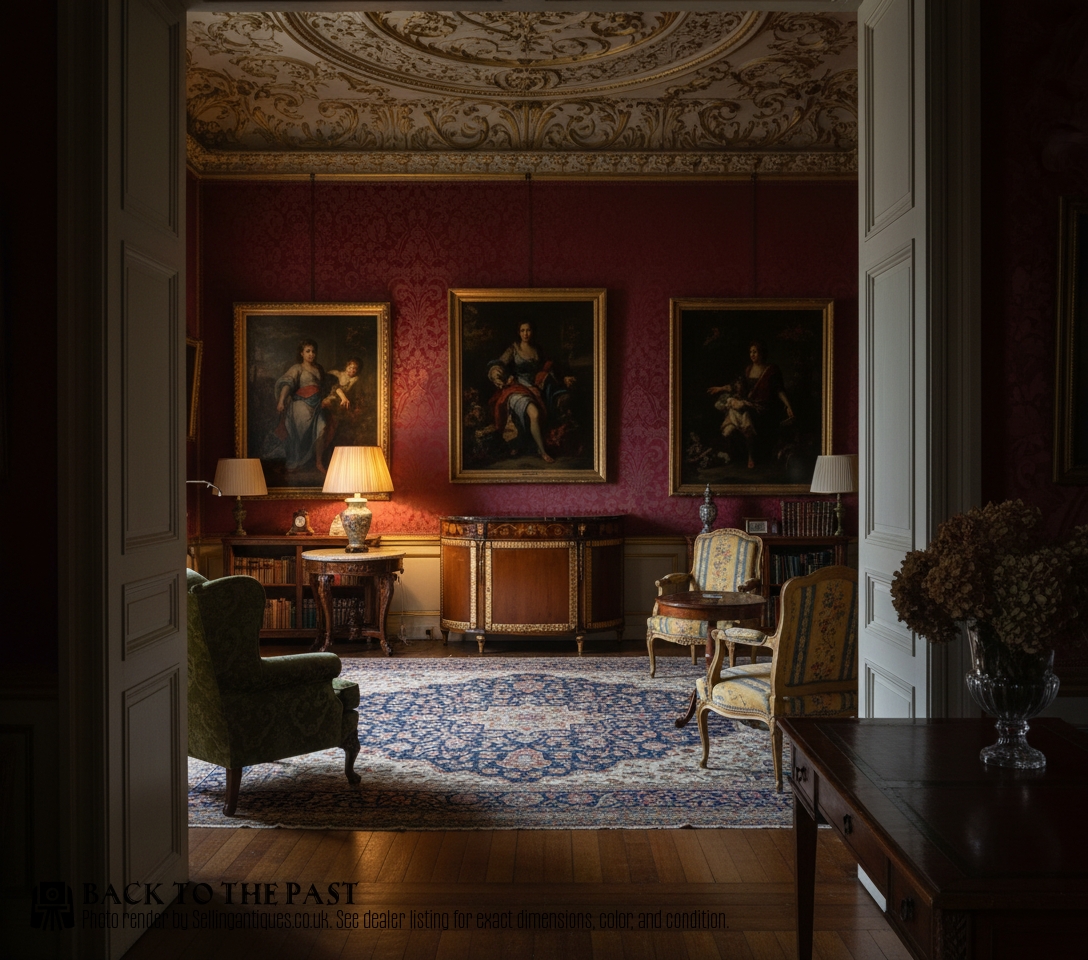
Inlaid Mahogany Console Cabinet
An inlaid mahogany console cabinet sits against the wall, taking the form of semicircular commodes, bowfront sideboards, and neat side cabinets from the eighteenth and nineteenth centuries. You will most frequently meet Edwardian pieces on this page, alongside earlier Georgian and Sheraton Revival examples.
The assortment spans diverse silhouettes, from demi-lune tables with marble tops to tambour front cupboards and writing desks. Each variation provides a flat surface for display while concealing storage behind panelled doors.
These items originate from various historical periods, touching upon Regency elegance and Dutch baroque flourishes. The shared thread remains the use of rich timber combined with decorative surface ornament.
How they were made
Makers constructed the primary carcase in mahogany, applying contrasting timbers such as satinwood, boxwood, and fruitwood to create detailed marquetry panels. Brass hardware, glass elements, and occasionally parcel gilt details complete the construction.
Cabinetmakers employed precision cutting for intricate inlay work, fitting delicate lighter woods into recessed channels within the darker mahogany ground. Selected pieces incorporate marble tops to add weight and a polished classical finish.
Listings span periods from the 18th century through the Edwardian era to the 1930s, using materials like marble, brass, and satinwood inlay.
What varies in quality
The distinction lies in the crispness of the marquetry and the choice of secondary timbers used in hidden areas. Superior execution shows seamless integration of satinwood and boxwood without gaps around the perimeter.
Proportion and the handling of curved fronts separate standard production from exceptional examples. Finer items exhibit balanced grain selection and precise matching of veneers across the primary doors and top.
The Inlaid Mahogany Console Cabinet Glossary
- Demi-lune
- A half-moon shape used for console tables and cabinets designed to stand flush against a wall. This profile became particularly popular during the Sheraton Revival period.
- Marquetry
- Decorative patterns formed by inserting pieces of coloured wood, shell, or ivory into a veneered surface. Fruitwood and satinwood are typical contrasting elements.
- Bowfront
- A convex curved cabinet or sideboard front that softens room angles and adds visual depth. It requires advanced carpentry to curve the drawers and doors correctly.
- Tambour
- A sliding door made of narrow vertical strips of wood glued to a canvas backing. This mechanism allows access to tight spaces where swinging doors are impractical.
Inlaid Mahogany Console Cabinet: Frequently Asked Questions
Where should I place a console cabinet?
These pieces suit entrance halls, drawing rooms, or dining spaces where floor depth is at a premium. Their flat backs allow them to anchor securely against walls while providing a surface for lamps or ornaments.
Because many feature curved demi-lune or bowfront shapes, they soften linear room layouts. They function well beneath mirrors or tall artwork.
How do I care for mahogany furniture?
Keep mahogany timber away from direct heat sources and strong sunlight to prevent the rich reddish-brown tone from fading. Dust regularly with a dry, soft cloth and avoid silicone-based polishes.
Apply a traditional wax periodically to nourish the wood and maintain the natural sheen of the polished surface.
What is Sheraton Revival style?
Sheraton Revival refers to late nineteenth and early twentieth-century furniture inspired by the neoclassical designs of Thomas Sheraton. These pieces often feature delicate satinwood inlay and tapered legs.
Master makers of this era revived classical proportions, applying lighter decorative motifs onto sturdy mahogany carcases.
How do I distinguish Edwardian pieces?
Edwardian items, built around the turn of the twentieth century, frequently display bright mahogany framing paired with elaborate marquetry. They often incorporate revival styles from earlier Georgian eras.
Examining the interior construction and secondary woods helps confirm this period of manufacture.