
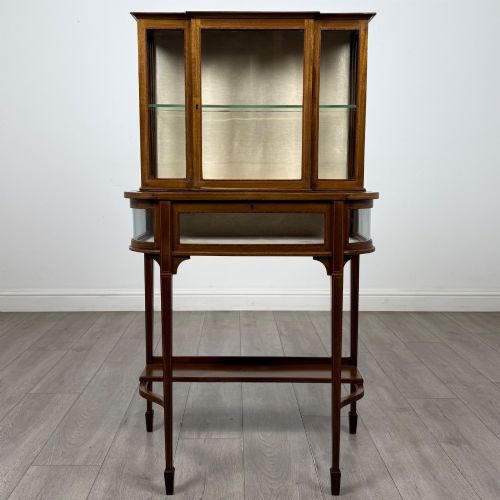
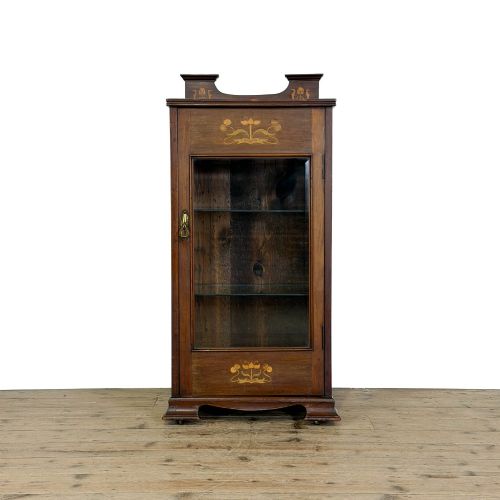
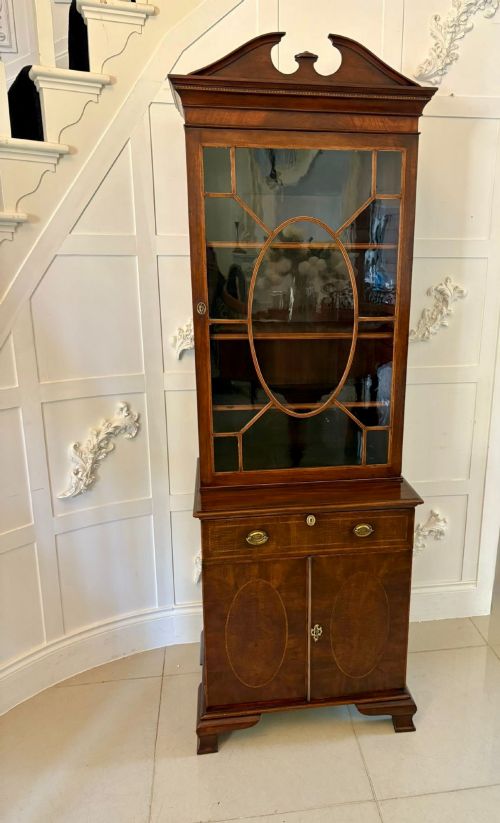
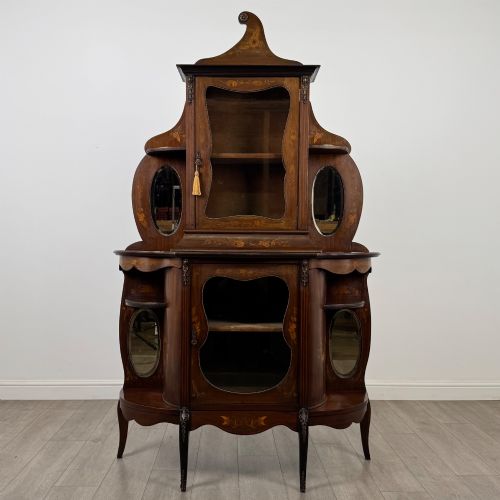

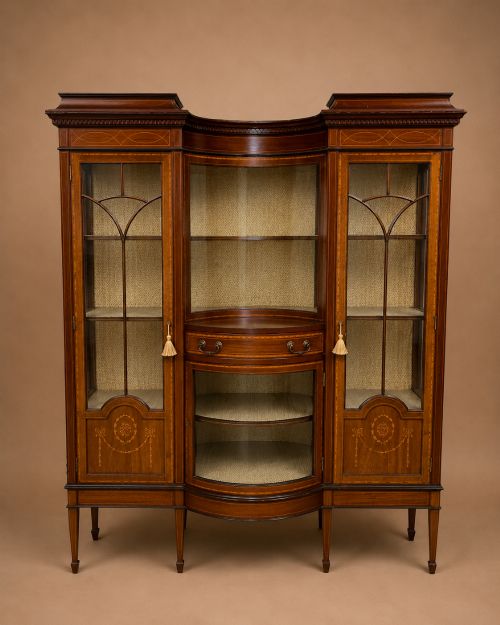
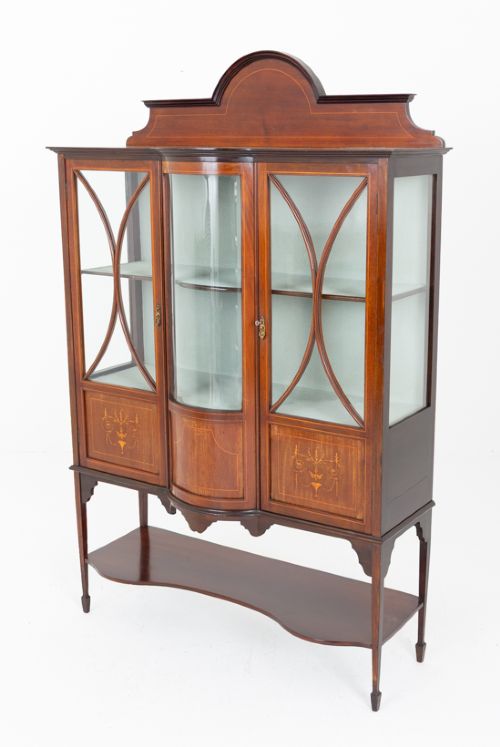
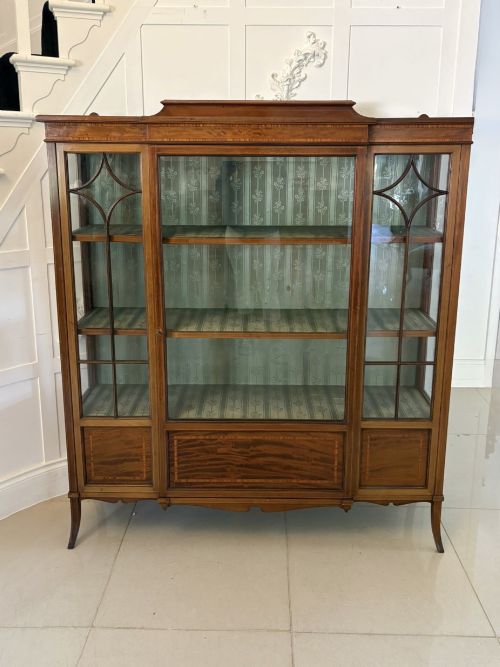
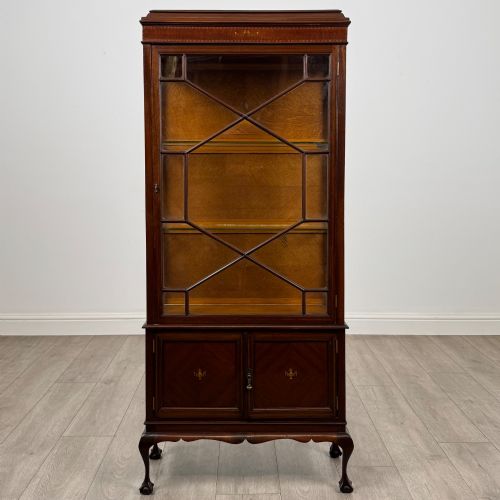
Inlaid Mahogany China Cupboard
An inlaid mahogany china cupboard organises porcelain and glass behind glazed panels while bringing rich timber grain and crisp contrasting stringing to a room.
Inlaid Mahogany China Cupboard
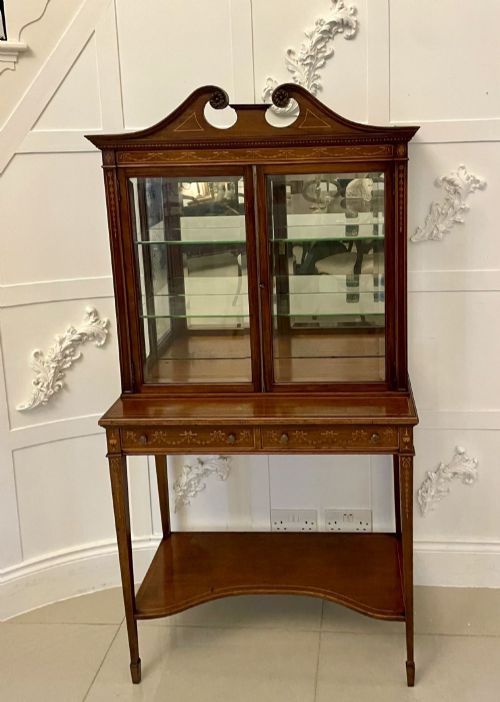
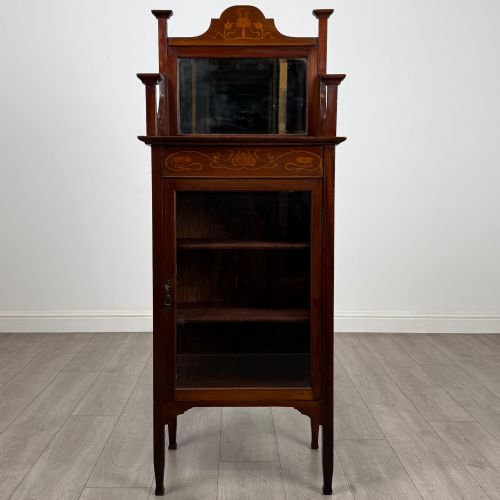
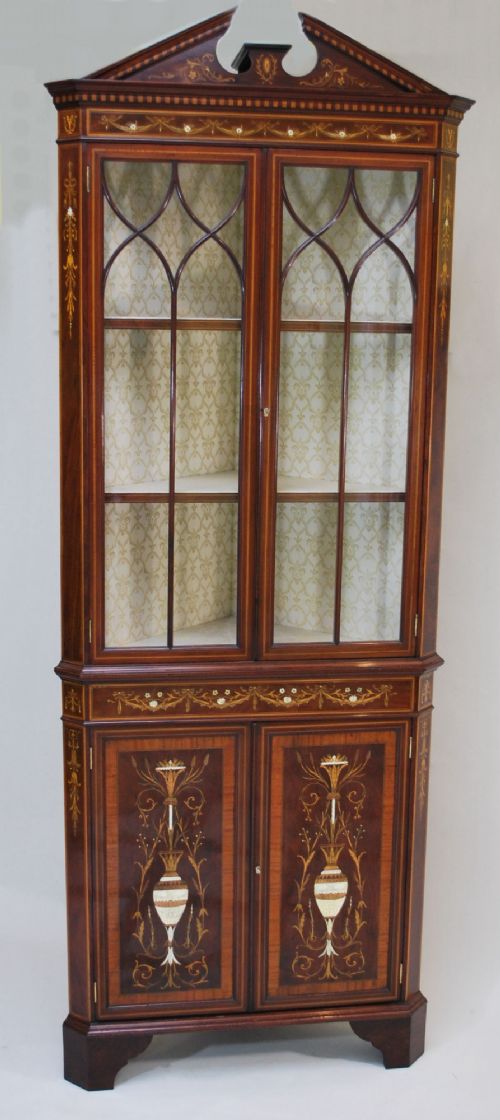
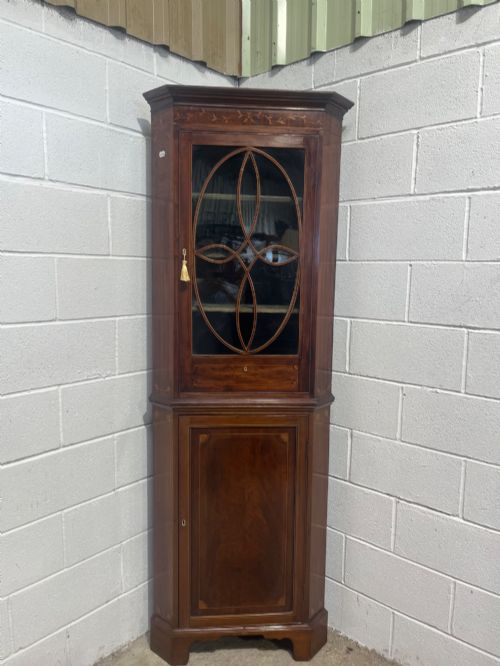
An inlaid mahogany china cupboard is a display piece designed to hold and exhibit ceramics, glass and precious objects behind glass doors. The listings on this page span several decades from the late nineteenth century through the early twentieth century, capturing both freestanding floor cabinets and corner cupboards.
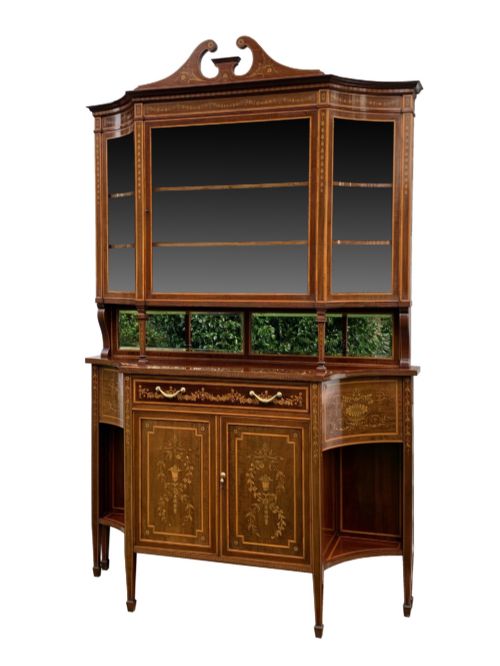
Most pieces encountered here date from the Edwardian era and the late nineteenth century, frequently showing Sheraton Revival influence through balanced proportions and classical motifs. Alongside standard vertical display cabinets, the selection includes breakfront bookcases, side cabinets and corner units tailored to make use of awkward wall spaces.
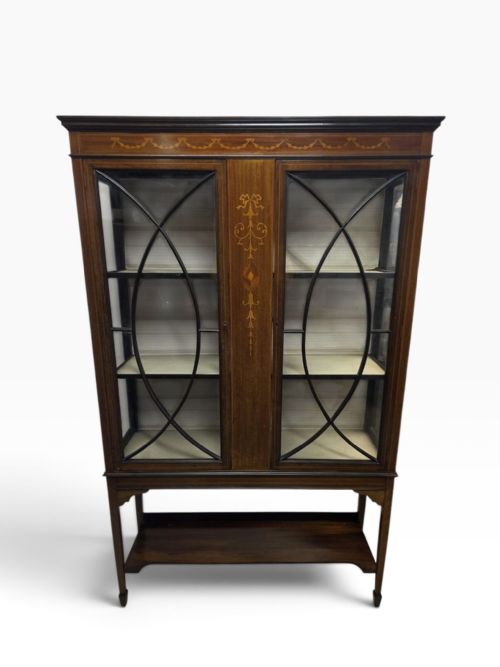
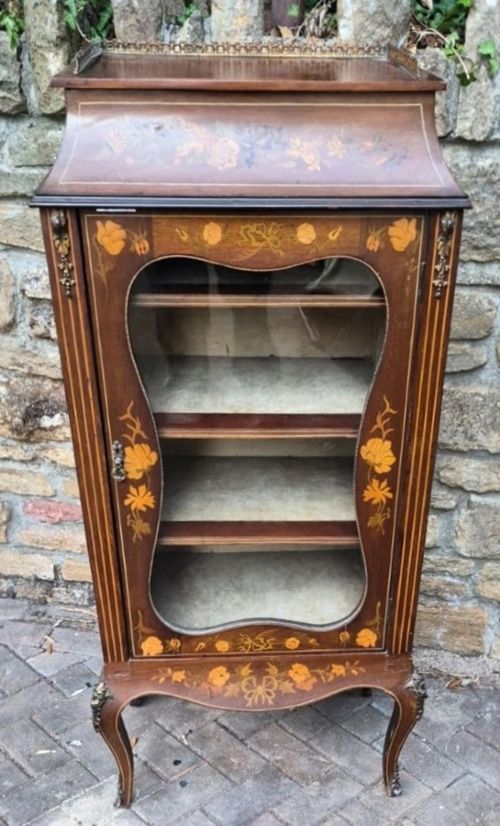
The primary structural timber is mahogany, often highlighted with satinwood inlay and marquetry panels depicting floral or classical motifs. Glazing takes various forms, from simple rectangular panes to intricate astragal bars that divide the glass into geometric patterns.
How they were made
Cabinet makers constructed these pieces using solid mahogany and carefully selected veneers applied to stable secondary timbers. The dark reddish-brown body of the mahogany provides a deep, warm background for lighter contrasting inlays.
Satinwood inlay and marquetry form the decorative highlights, cut and fitted by hand into recessed channels on the doors, friezes and cornices. Fine lines of light and dark stringing frame the panels and drawers, delineating the structural geometry of each cabinet.
Glazing is held in place with wooden astragal bars, while brass hardware secures the doors and mirrors often line the interior backs to reflect light through the displayed porcelain.
Several Edwardian cabinets include slender bijouterie compartments beneath the main display tier, originally intended for showing small portable treasures.
What varies in quality
The standard of an inlaid mahogany china cupboard depends heavily on the crispness of its marquetry and the precision of its inlay work. Finer examples display tightly fitted satinwood without gaps or heavy filler around the joints.
Timber selection distinguishes the upper tier of pieces, featuring rich flame mahogany veneers and evenly figured grain across the primary visual surfaces. The delicacy of the astragal glazing bars and the weight of the brass fitments further indicate the level of craftsmanship invested in the construction.
Edwards and Roberts
The Inlaid Mahogany China Cupboard Glossary
- Astragal glazing
- Wooden mouldings that divide a glass window into smaller panes. They form structural grids across the front doors of display cabinets.
- Marquetry
- Inlaid patterns formed from fitted pieces of various coloured woods and veneers. It creates pictorial or floral designs on cabinet doors and friezes.
- Satinwood inlay
- Contrasting yellowish timber used for banding and stringing. It provides sharp visual borders against the darker mahogany body.
- Sheraton Revival
- A late nineteenth and early twentieth century design style reviving the classical geometry of the eighteenth-century designer Thomas Sheraton. It relies on symmetrical layouts and delicate marquetry.
Inlaid Mahogany China Cupboard: Frequently Asked Questions
What is an inlaid mahogany china cupboard?
An inlaid mahogany china cupboard is a glazed display piece used for storing and showing ceramics, glassware and ornaments. These cabinets combine dark mahogany structures with lighter satinwood inlays and marquetry.
Most surviving examples date from the Victorian and Edwardian periods, reflecting prevailing tastes for revival styles such as Sheraton Revival. They range from tall floor-standing breakfront bookcases to compact corner units.
How do I date an inlaid mahogany china cupboard?
Dating relies on stylistic clues, construction methods and timber characteristics. Late nineteenth-century pieces often show heavier proportions and Victorian influences, while Edwardian examples tend towards lighter frames and refined Sheraton Revival detailing.
Examination of the interior woodwork, drawer construction and glass types also helps establish the era of manufacture. Many pieces from the Edwardian era carry design traits from around nineteen hundred.
Where should I place a corner display cabinet?
A corner display cabinet fits neatly into ninety-degree room angles that standard rectangular furniture cannot occupy. This makes them practical for smaller rooms or alcoves while still offering full visibility through glazed doors.
Positioning them away from direct sunlight protects the mahogany timber from fading and prevents temperature fluctuations from affecting the antique glue and joints.
How do I care for mahogany and satinwood inlay?
Maintain the timber by keeping the cabinet in a stable environment away from excessive moisture and direct heat sources. Regular dusting with a soft, dry cloth preserves the finish without building up residue.
Avoid using modern silicone-based polishes, which can penetrate porous historical finishes and damage delicate satinwood inlays over time.