
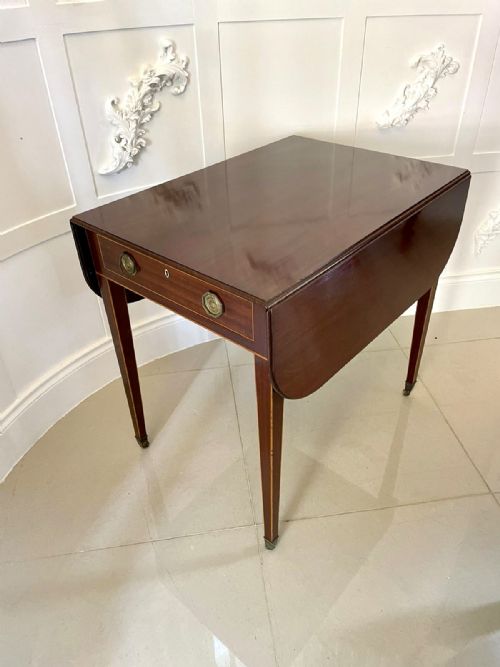
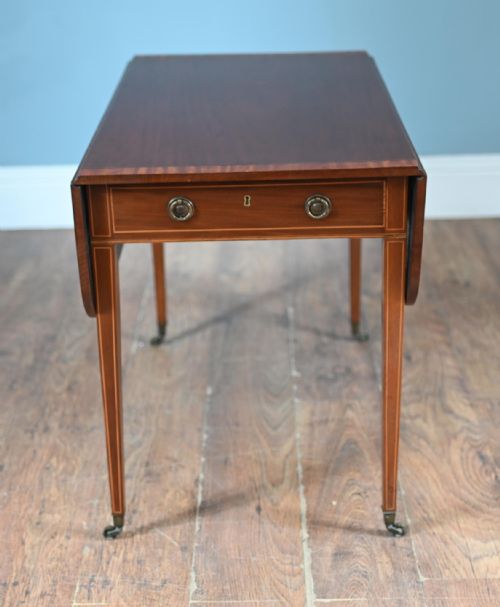


Inlaid Mahogany Breakfast Table
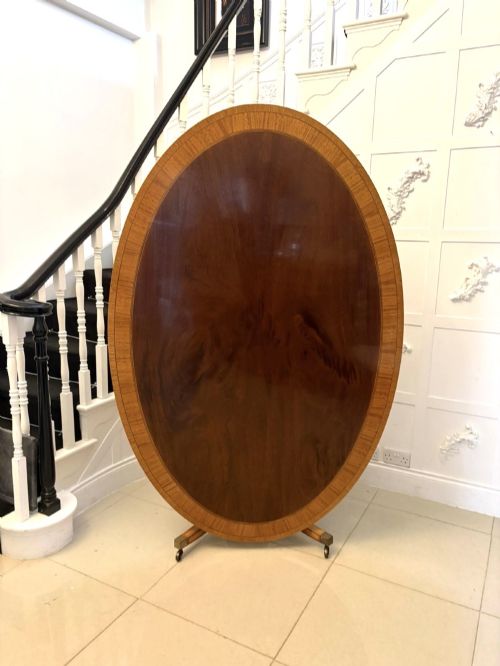
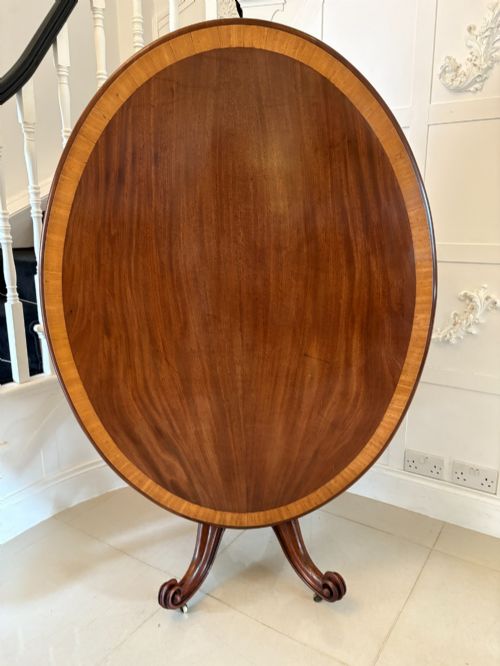
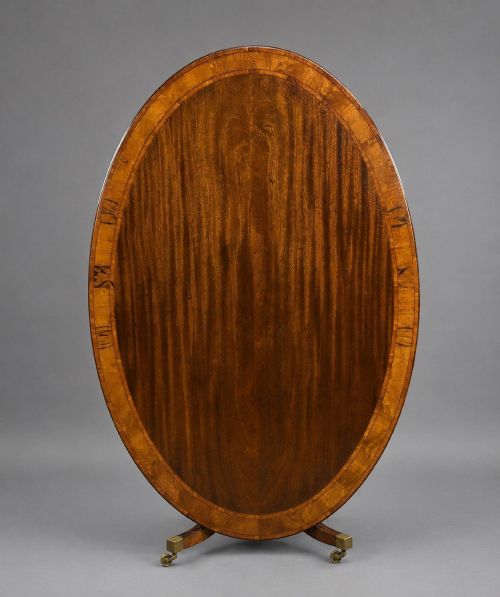
An inlaid mahogany breakfast table brings timber warmth and fine decorative banding to a room, offering a sturdy surface designed for morning dining.
Inlaid Mahogany Breakfast Table
An inlaid mahogany breakfast table stands as a versatile centrepiece in period interiors, appearing most frequently in Pembroke, pedestal, and tilt-top formats across this selection. These pieces date principally from the Georgian, Regency, and Victorian eras, alongside later revival iterations.
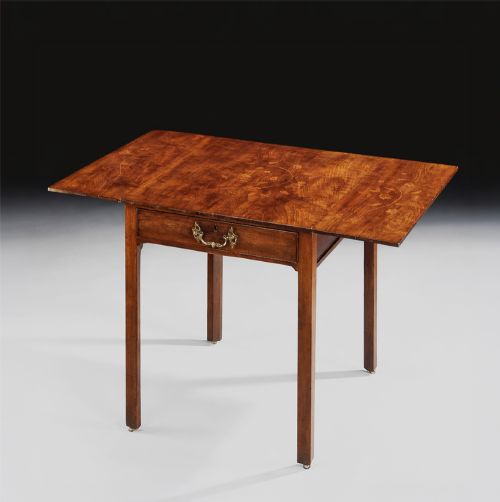
The inventory shows a strong representation of Pembroke and centre tables sitting alongside the breakfast tables proper, often sharing similar timber framing and inlay techniques. Buyers seek these forms for their practical proportions and rich grain patterns, which suit both formal dining and everyday domestic use.
Materials and construction methods
Cabinet makers utilised solid and figured mahogany for the primary structure, applying contrasting timbers such as satinwood, boxwood, and lacewood for decorative banding and stringing. Brass inlay also appears, adding linear definition to tabletops and pedestal bases.
Joinery methods rely on stable framing, with tilt mechanisms and pedestal supports engineered to bear weight while allowing the top to pivot where specified. Timber selection prioritised rich figuring, particularly on oval and circular surfaces.
Early breakfast tables often doubled as supper tables, ready to tilt vertically out of the way the moment the port was finished.
Distinctions in craftsmanship
The finesse of the inlay work separates standard examples from superior pieces, with crisp, tight mitres in the boxwood or satinwood banding indicating skilled handiwork. The choice of figured mahogany for the primary surfaces also dictates the visual depth of the table.
Structural integrity in the pedestal base and the smooth operation of tilt mechanisms determine the daily usability of the piece. Superior examples maintain balanced proportions and secure joints without relying on replacement elements.
William Trotter of Edinburgh
The Inlaid Mahogany Breakfast Table Glossary
- Pembroke table
- A small, versatile table with hinged drop leaves on two opposing sides, frequently fitted with a drawer. This form emerged in the 18th century and remains popular for flexible living spaces.
- Tilt top
- A tabletop mounted on a catch and pivot mechanism that allows the surface to be folded vertical when not in use. This clever design saved valuable floor space in period rooms.
- Stringing
- A narrow strip of contrasting wood inlaid into a channel on the furniture surface to create linear decoration. Makers often used boxwood against dark mahogany for high visual contrast.
- Banding
- A decorative border applied to tabletops, formed by veneer laid across the grain or in geometric patterns. Lacewood and satinwood frequently appear in these borders.
- Pedestal table
- A table supported by a central pillar rising from a platform or splayed legs rather than four corner posts. This construction allows generous legroom around the perimeter.
Inlaid Mahogany Breakfast Table: Frequently Asked Questions
What is an inlaid mahogany breakfast table?
An inlaid mahogany breakfast table is a dining or centre table featuring rich mahogany timber accented with contrasting wood or brass inlay.
These pieces typically date from the Georgian and Regency periods, constructed to serve morning meals or general domestic use.
How do I use a tilt top table?
A tilt top table operates via a catch mechanism beneath the surface, allowing the top to swing upright against the central pillar.
This design enabled owners to store the table flat against a wall when the room required open floor space.
What is a Pembroke table?
A Pembroke table is a compact design featuring drop leaves on two opposite sides supported by hinged brackets.
These tables often include one or two small drawers and function easily as side or breakfast tables in smaller rooms.
How do I tell Regency from Georgian pieces?
Regency pieces often incorporate bolder brass inlay, sabre legs, and architectural pedestal forms influenced by classical antiquity.
Georgian examples tend to display more restrained lines, simpler banding, and traditional pillar-and-claw supports.