


Inlaid Mahogany Bed
An inlaid mahogany bed brings refined timber grain and delicate contrasting woodwork to the bedroom.
Inlaid Mahogany Bed
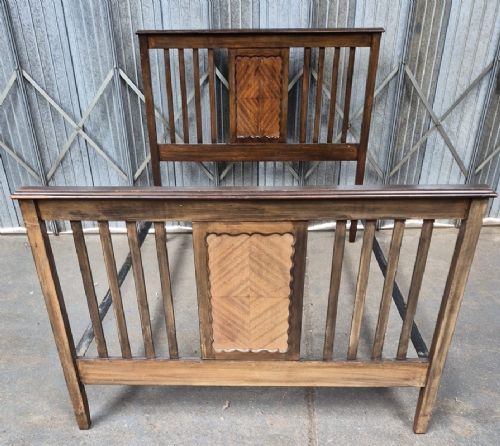
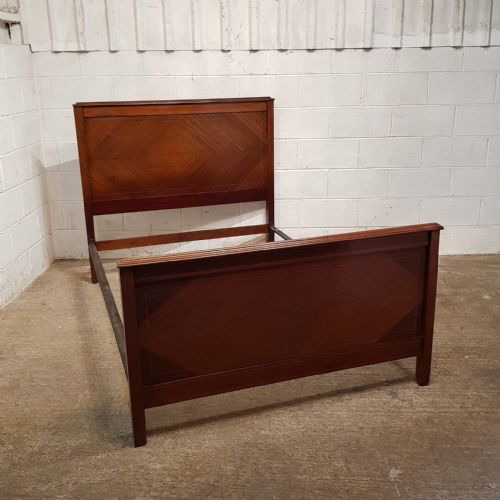
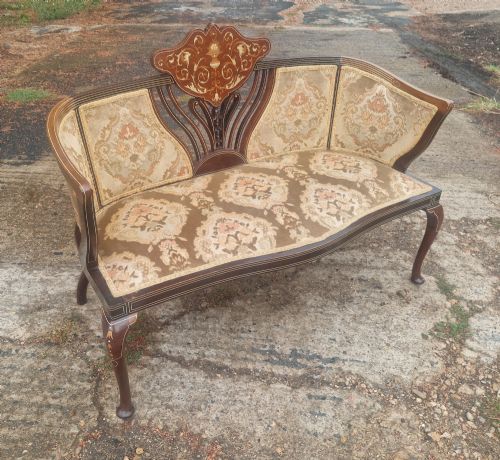
When you search for an inlaid mahogany bed, you encounter a selection spanning the Edwardian period, the nineteenth century, and the Georgian era. The pieces you meet most often on this page are Edwardian double and single bedsteads incorporating satinwood or bone stringing and panel details. Alongside full bed frames, the category embraces related bedroom pieces such as bedside cabinets, lamp tables, and end-of-bed sofas.
The construction typically involves sturdy timber frameworks designed to support standard mattresses while showcasing decorative veneers. Makers utilised various scales, from compact single frames to generous king-size beds, often echoing French Louis styles or simpler domestic designs. These items reflect a historical preference for matched bedroom suites where timber tones harmonised across every piece of furniture.
Materials and construction
The primary timber is dense and rich in tone, frequently augmented by contrasting light veneers such as satinwood and fruitwood for inlay and marquetry motifs. Cabinetmakers combined solid sections for structural posts with stable panels of veneered timber to display figured grain patterns without warping. Metal elements like brass details, castors, and iron brackets appear on certain frames to provide structural reinforcement and functional adjustment.
Inlaid decoration relies on precision cutting, where contrasting woods, bone, or mother-of-pearl are fitted into recesses carved directly into the mahogany surface. Surface finishes historically involved shellac-based polishes that built up a warm, protective gloss over the natural reddish-brown timber. Joinery methods combined traditional tenon and mortise framing with sturdy iron fixings to allow the large bedsteads to be dismantled for transport.
Several bedside cabinets incorporate pull-out steps, allowing weary eighteenth-century occupants to ascend into towering four-poster beds with dignity.
Factors that define quality
The distinction between ordinary and superior examples rests upon the depth of the timber's grain and the crispness of the inlaid details. Finer pieces demonstrate meticulous hand-cut marquetry where contrasting woods fit flush into the surface without filler, creating sharp geometric patterns or floral designs. The calibre of the underlying construction, from heavy mahogany rails to substantial brass fittings, determines the enduring structural integrity of the frame.
Design ambition also separates standard commercial production from bespoke or branded workshop output. Pieces bearing attribution to notable makers or exhibiting sophisticated stylistic influences, such as French revival curves or intricate burr walnut and fruitwood contrasts, command greater appreciation. Preservation of the original polished surface without heavy over-finishing remains central to an item's retained character.
Heal's·Louis Majorelle·Shoolbred and Co·Maple and Co·Vono
The Inlaid Mahogany Bed Glossary
- Bedstead
- The complete wooden or metal framework of a bed, including headboard, footboard, and side rails. This term distinguishes the structural support from modern mattress and base combinations.
- Inlay
- A decorative technique where pieces of contrasting material are inserted into a recessed matrix on a solid wood surface. In these pieces, satinwood and bone frequently form the decorative lines.
- Marquetry
- Elaborate veneer work arranged to form pictorial or geometric designs across large wooden surfaces. Unlike simple inlay, marquetry covers the entire plane with patterned wood veneers.
- Satinwood
- A durable, lustrous yellow timber imported from the tropics and used extensively for contrasting stringing and banding. It provides a bright visual counterpoint to dark mahogany.
- Stringing
- Thin lines of contrasting wood or light-coloured material inlaid into cabinet fronts and bed panels to create borders. This linear detail defines the geometric panels characteristic of the era.
Inlaid Mahogany Bed: Frequently Asked Questions
Will an antique bed fit modern mattresses?
Many older bed frames were built to historical sizing conventions that differ slightly from contemporary standard mattress dimensions. Buyers frequently need to check internal length and width measurements carefully before pairing the frame with a modern mattress.
Custom mattress makers can often supply appropriately sized mattresses to fit older wooden frames without altering the historic side rails or footboards.
How do I assemble an antique bed?
These bedsteads generally rely on iron side rail brackets and bolt systems that lock the headboard and footboard together securely. Assembly typically requires two people to align the heavy mahogany components and tighten the internal fixings evenly.
Care must be taken not to over-tighten metal bolts into aged timber threads, ensuring the structural joints remain firm without splitting the surrounding wood.
How do I clean inlaid mahogany furniture?
Routine maintenance involves gentle dusting with a soft, dry cloth to prevent particulate accumulation on the polished timber surfaces. Avoid using modern silicone sprays or abrasive cleaning agents that can degrade the historic polish.
Occasional application of traditional beeswax helps nourish the mahogany grain and maintain a soft, natural lustre across the decorative panels.
How do I date an inlaid mahogany bed?
Dating relies on examining stylistic indicators such as the profile of the headboard, the complexity of the inlay, and the construction hardware. Edwardian examples often feature lighter satinwood stringing and simpler panel forms compared to heavier Victorian or Georgian counterparts.
Makers' stamps, patent marks on iron brackets, and the presence of specific brass details provide further chronological clues.