



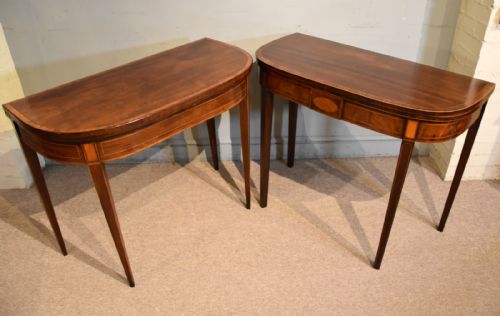

Inlaid Foldover Console Table
An inlaid foldover console table combines ingenious mechanical transformation with refined surface decoration, serving as a dual-purpose piece for the drawing room.
Inlaid Foldover Console Table
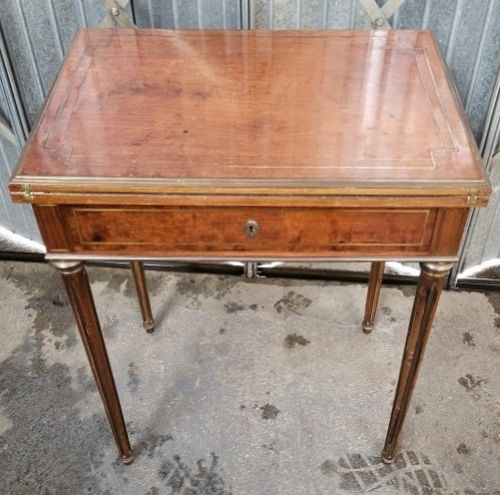
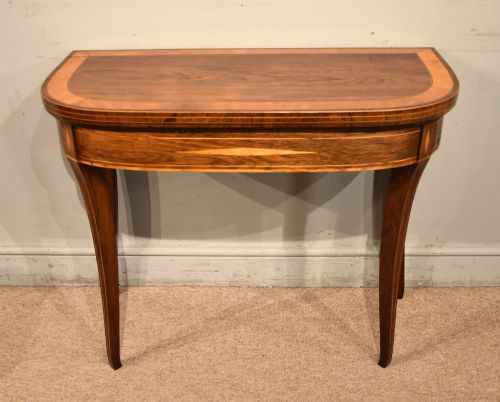
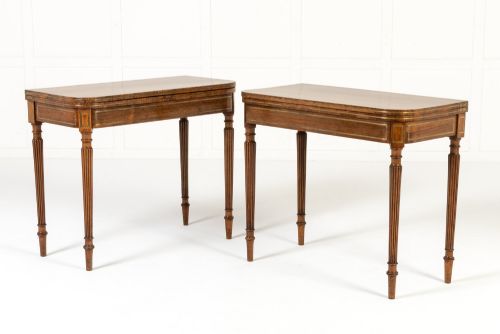
When you search for an inlaid foldover console table, you encounter a versatile class of furniture spanning the Georgian, Regency, and Victorian eras. These pieces typically function as compact side or console tables against a wall before opening via a hinged top to reveal a larger surface for cards, tea, or games.
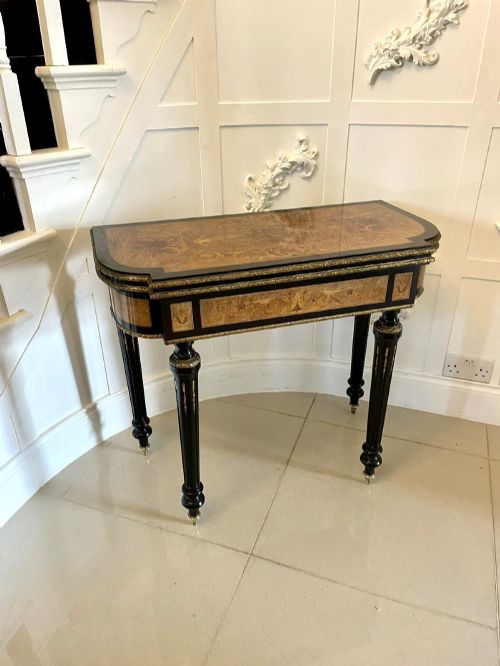
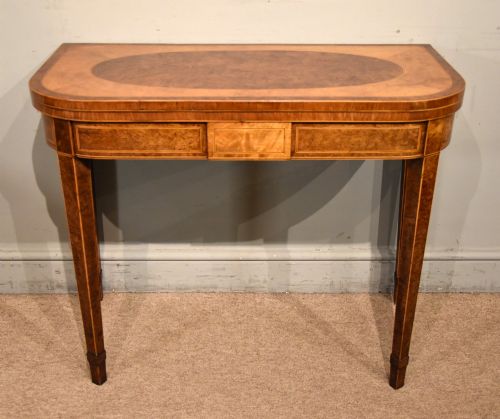
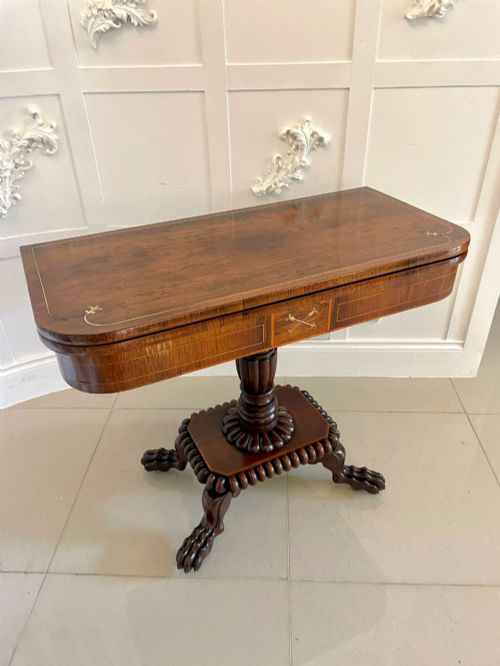
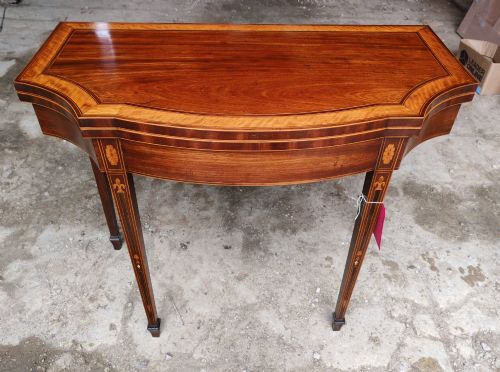
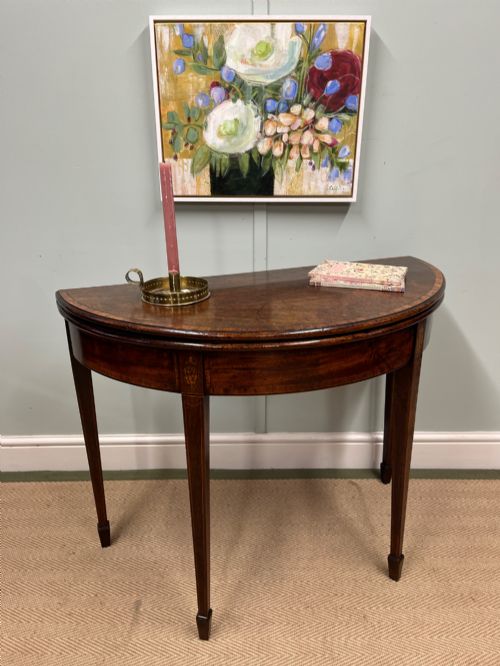
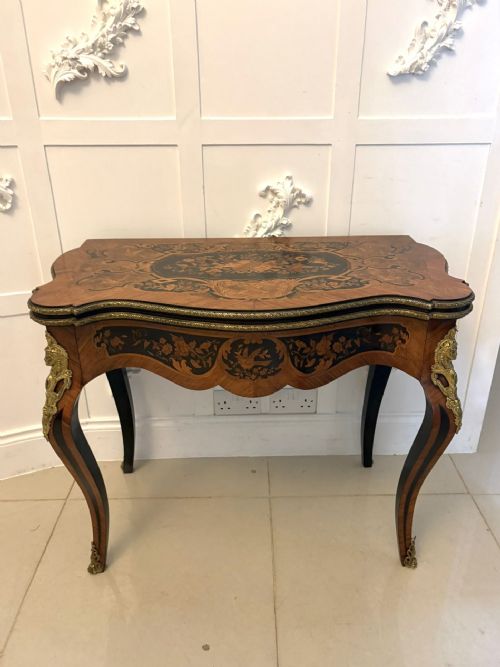
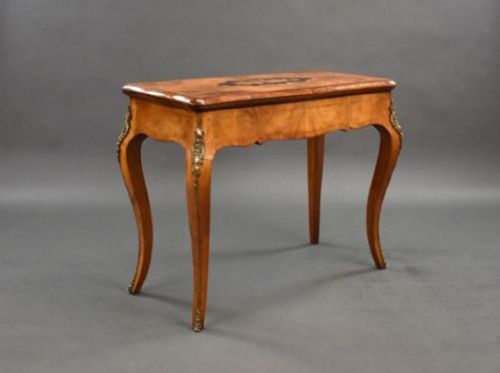
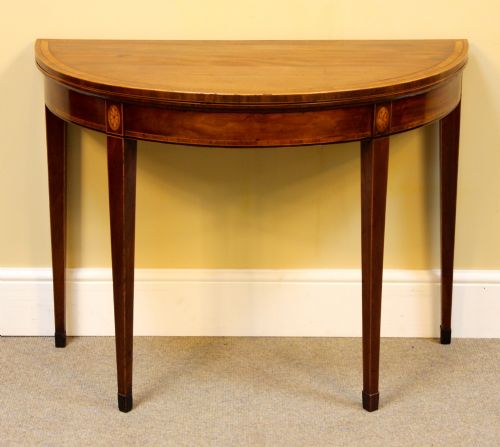
The versions most frequently met on this page date from the eighteenth and nineteenth centuries, taking forms such as D-shaped, demi-lune, and rectangular tables. Cabinetmakers constructed them in mahogany, rosewood, and walnut, often embellishing the foldover tops with contrasting satinwood, boxwood, and intricate marquetry or parquetry.
Originating in periods that prized both hospitality and formal entertainment, these tables adapted easily to changing household needs. A buyer today acquires them for their combination of architectural presence when closed and practical utility when opened.
Materials and construction
Cabinetmakers built the structural carcases of these tables using dense timbers such as mahogany, walnut, and rosewood, applying fine veneers of satinwood, burr yew, and kingwood to the visible surfaces. They utilised contrasting woods like boxwood for delicate stringing and inlaid geometric or floral marquetry patterns into the foldover tops.
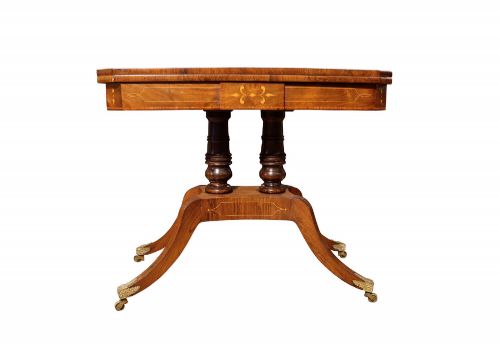
Many Regency and Victorian examples incorporate cast brass mounts, sabots, and original castors to facilitate movement. The hinged leaves required precise joinery to ensure the two halves aligned flush when opened.
Inlaid Foldover Console Table Retail Price Guide 2026
Typical asking prices for inlaid foldover console table among the pieces listed under this phrase on Sellingantiques today, from the lower quarter to the upper quarter. They describe what is for sale here now, not the wider market.
Listings feature woods including mahogany, satinwood, rosewood, walnut, burr walnut, and kingwood, alongside brass and ormolu.
Judging execution and materials
The distinction between ordinary and exceptional tables rests in the depth of timber selection and the crispness of the inlay. Pieces featuring figured timbers like burr walnut or dense rosewood, paired with hand-cut marquetry rather than simpler stringing, represent superior craftsmanship.
Hardware details also signal quality, such as substantial brass sabots, finely cast castors, and original hinges that allow the foldover leaf to operate smoothly without sagging.
George Bullock
The Inlaid Foldover Console Table Glossary
- Demilune
- A half-moon shape popular for console and card tables designed to sit flush against a wall. This profile allowed tables to occupy minimal floor space when closed.
- Marquetry
- Decorative veneer work forming pictorial or geometric patterns using various coloured woods. Artisans meticulously fitted these pieces together before applying them to the table top.
- Parquetry
- A geometric mosaic of wood pieces used for decorative surfaces. It differs from marquetry through its strict reliance on repeating angular shapes.
- Sabot
- A metal sleeve or mount fitted to the foot of a table leg. They protect the timber and frequently incorporate brass casting.
- Stringing
- Thin inlaid lines of contrasting wood used to outline panels and edges. This linear detail defines borders on satinwood and mahogany surfaces.
Inlaid Foldover Console Table: Frequently Asked Questions
What is a foldover table used for?
These tables served primarily as side or console furniture when closed against a drawing room wall. Opening the hinged top doubled the surface area, transforming the piece for card games, tea service, or general social gatherings.
In period interiors, they provided flexible utility without dominating the room permanently. Owners cleared the surface and folded the top back down once the evening concluded.
How do I distinguish Georgian from Regency tables?
Georgian tables often feature understated mahogany surfaces with clean architectural lines, simple stringing, and tapered or spade feet. Regency examples frequently incorporate bolder rosewood grains, brass inlay, and heavier classical elements like lion paw feet or sabots.
Proportions and secondary woods also help separate the periods, with Regency pieces leaning toward dramatic contrast and visible brass mounts.
Where should I place a console table?
A console table sits flat against a wall, making it ideal for entryways, hallways, or behind sofas in larger reception rooms. Their shallow depth when closed ensures they do not obstruct foot traffic.
Positioning them beneath a mirror or painting creates a balanced focal point in a traditional room scheme.