


Inlaid Fold Top Table
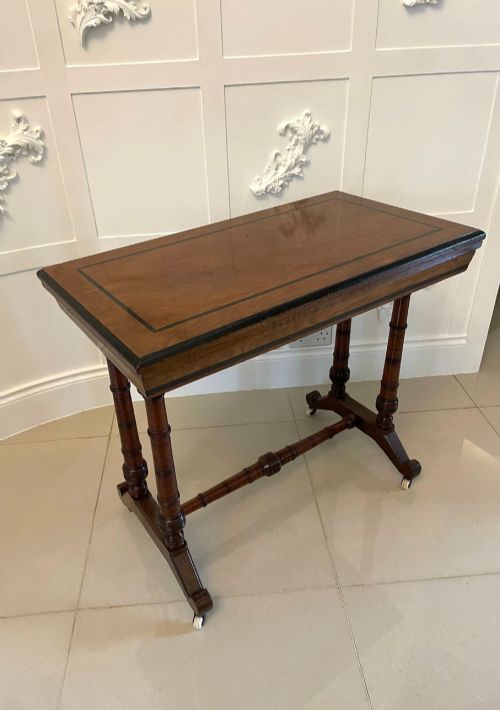
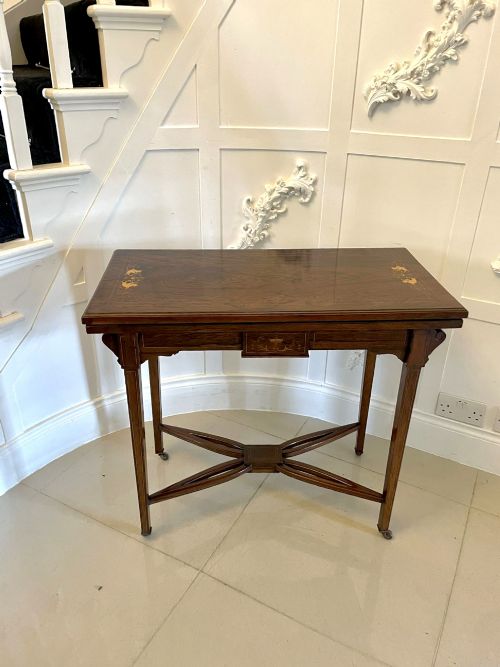
An inlaid fold top table opens from a compact console or side piece into a full surface for cards, tea or writing, offering clever function alongside period cabinetwork.
Inlaid Fold Top Table
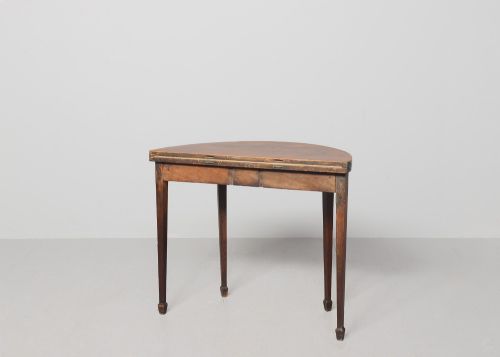
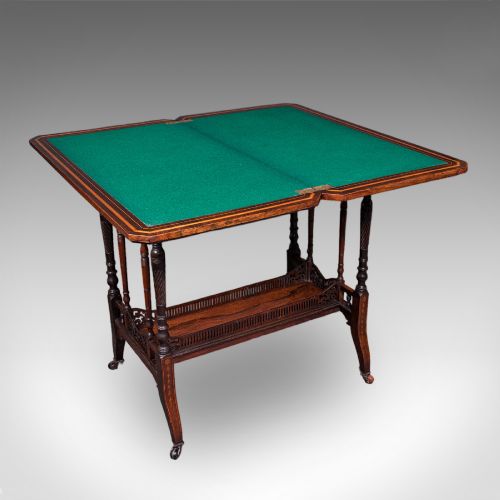
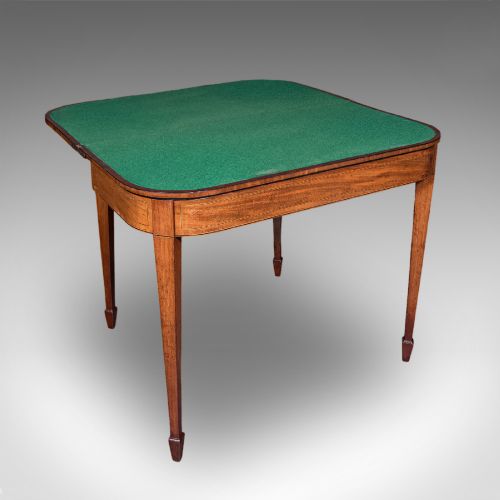
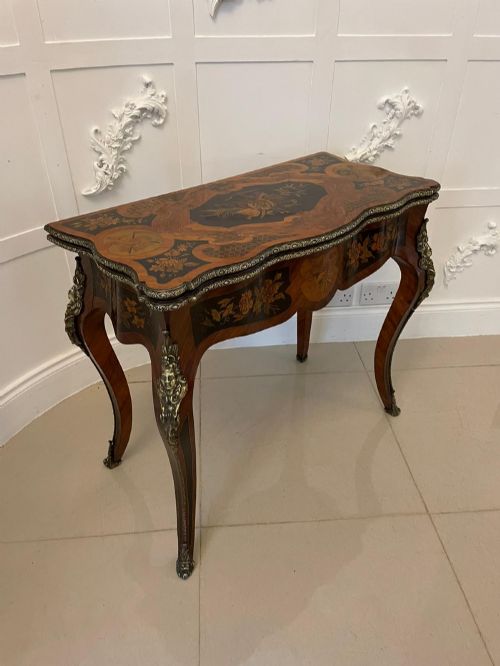
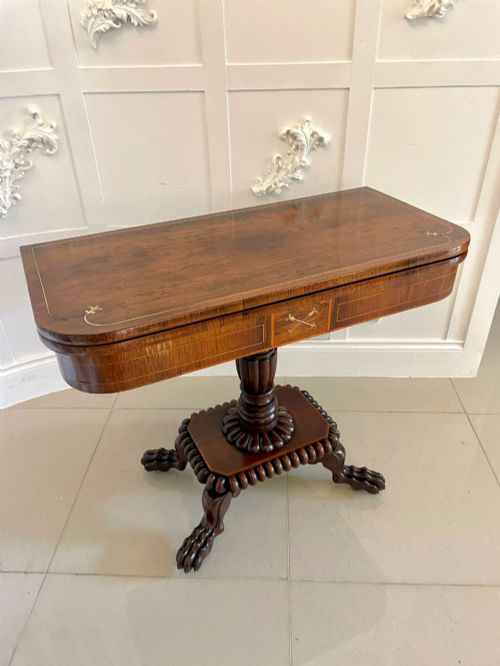
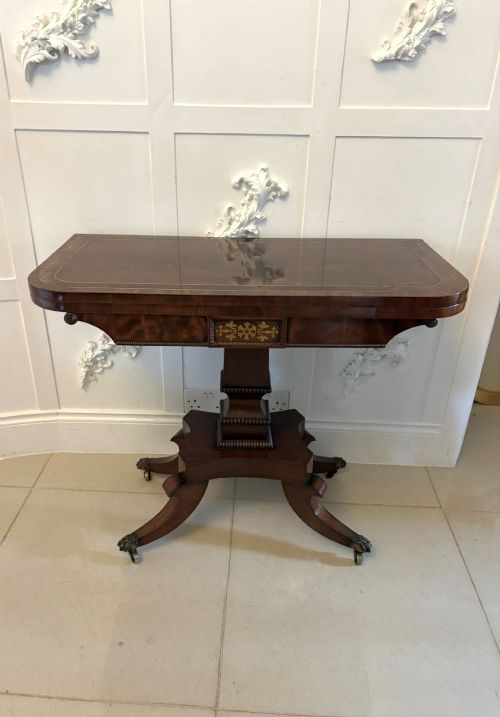
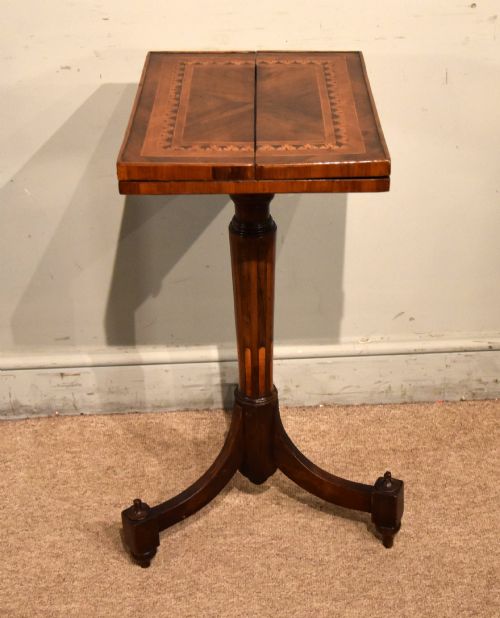
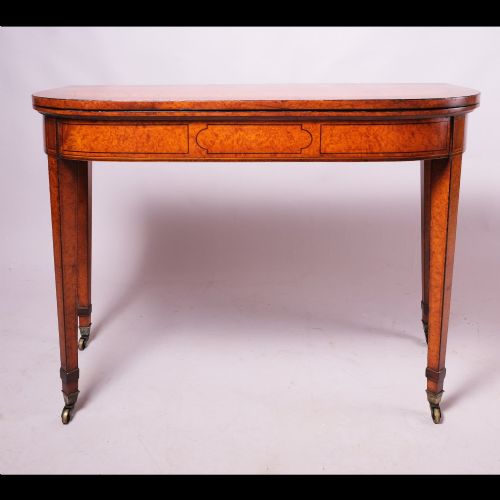
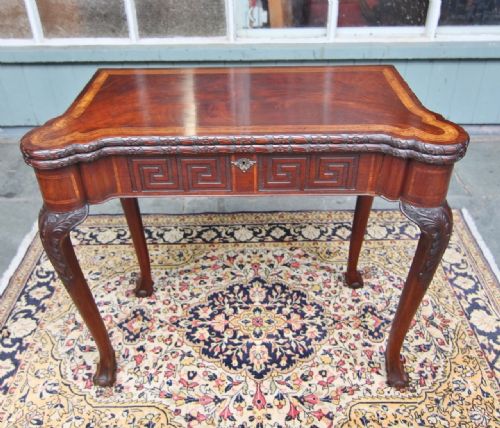
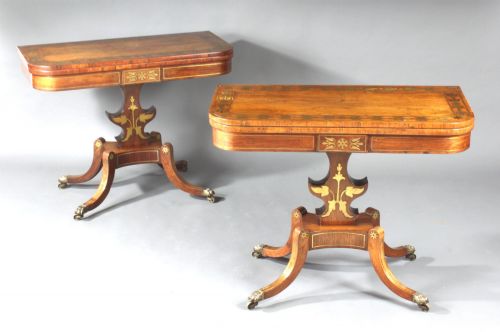
An inlaid fold top table is most commonly met in card, games and tea formats originating from the Georgian, Regency and Victorian eras. These pieces function as console or side furniture until the hinged top swivels, folds or rotates outward to reveal a baize-lined playing surface or a polished timber top for social gatherings.
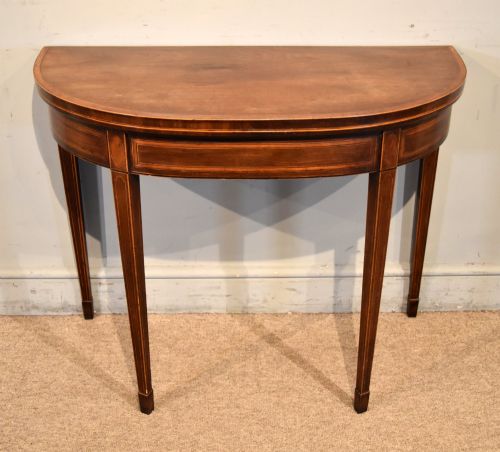
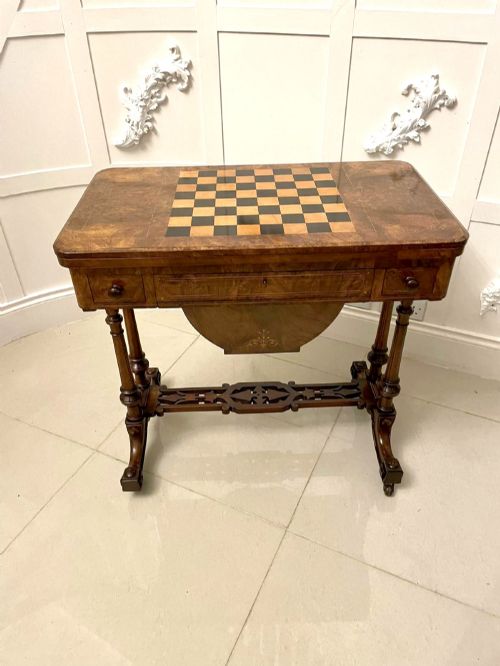
The selection ranges from George III demi-lune designs in mahogany and satinwood to substantial Victorian burr walnut marquetry examples and Edwardian envelope tables. Makers adapted the folding mechanism to suit various domestic spaces, producing square, rectangular and octagonal shapes.
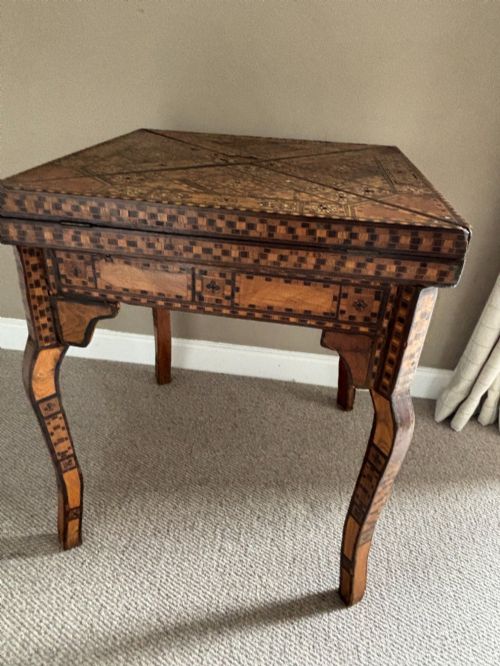
Origin variations include English workshops, Irish makers, French revival pieces and Syrian or Moorish interpretations utilising mother of pearl and brass inlay. Each regional tradition employs distinct timber choices, from Honduras mahogany to amboyna and rosewood veneers.
Timber, brass and marquetry technique
Cabinetmakers constructed these tables using solid timber frames and applied veneers of mahogany, satinwood, rosewood, burr walnut and kingwood to stability panels. The secondary woods support complex hinged mechanisms that allow the top leaf to pivot and rest securely upon the base frame.
Ornamentation relies heavily on wood inlay, boxwood stringing, brass marquetry and occasional mother of pearl details set flush into the primary surface. Brass mounts, ormolu accents and carved pedestals further define the structural integrity of the piece.
Inlaid Fold Top Table Retail Price Guide 2026
Typical asking prices for inlaid fold top table among the pieces listed under this phrase on Sellingantiques today, from the lower quarter to the upper quarter. They describe what is for sale here now, not the wider market.
The listings feature mahogany, rosewood, satinwood, walnut and burr walnut across Georgian, Regency and Victorian periods.
Distinctions in construction and decoration
Quality rests in the crispness of the timber figuring, the precision of the wood inlay and the stability of the folding mechanism. Superior examples display carefully matched veneers across the rotating leaves and refined carving on the pedestal or leg supports.
Finer pieces maintain original hinges, intact brass or satinwood stringing and well-executed floral marquetry without excessive restoration. The weight and balance of the folding top dictate how smoothly the table transitions from a side console to a games surface.
Edwards and Roberts
The Inlaid Fold Top Table Glossary
- Demi-lune
- A half-moon shape popular for console and card tables designed to sit flat against a wall when closed. This form allows the top to unfold into a full circle or square.
- Envelope table
- A square table with four triangular flaps that fold inward and overlap like an envelope to cover the interior. The mechanism typically rotates on a central pillar with drawer storage beneath.
- Marquetry
- Decorative patterns formed by fitting together thin slices of various coloured woods and materials onto a ground panel. This technique creates pictorial floral or geometric motifs across the top.
- Stringing
- Thin lines of contrasting wood or light-coloured inlay set into channels around the edges of table tops and legs. It provides a sharp border to panel sections.
- Swivel top
- A table top design where the upper leaf pivots on a central pin before folding open. This movement uncovers a hidden well for storing cards or counters.
Inlaid Fold Top Table: Frequently Asked Questions
What is an inlaid fold top table used for?
These tables served primarily for social card games, tea service and general display in domestic drawing rooms. The folding top saved valuable floor space when not in active use.
When opened, the interior often featured baize for playing cards or polished wood for serving refreshments during evening gatherings.
How do I tell a Georgian table from a Victorian one?
Georgian examples often favour clean mahogany or satinwood surfaces with restrained stringing and tapered legs. They reflect classical proportions and lighter construction.
Victorian pieces frequently utilise heavier burr walnut, elaborate floral marquetry, and complex pedestal bases or ormolu mounts. The decorative intensity increased noticeably toward the middle of the nineteenth century.
How does the folding mechanism work?
Most folding tops utilise a hinged leaf that either flips over on swinging wooden brackets or pivots on a central swivel joint. Some designs incorporate a gateleg action to support the open leaf.
Envelope variants use four triangular flaps operated by a synchronized pivoting mechanism that opens all sections simultaneously.
Where should I place this table in a room?
A closed demi-lune or rectangular console fits neatly against a hallway or living room wall as a side table. It occupies minimal space while displaying figured timber grains.
Positioning the piece with clearance on all sides allows the top to open fully for display or occasional use without obstructing room traffic.