

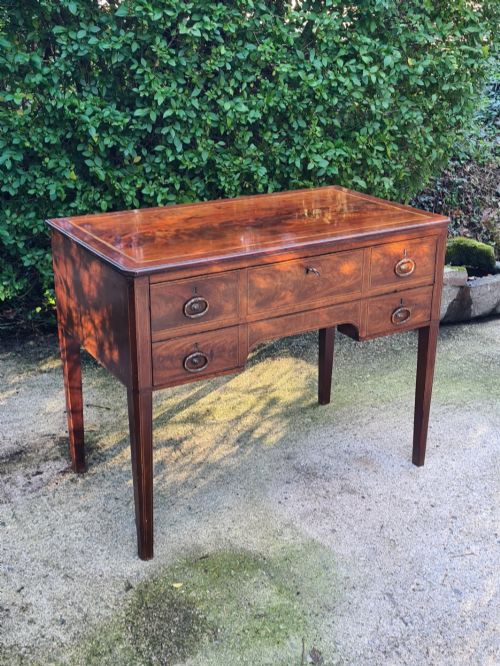
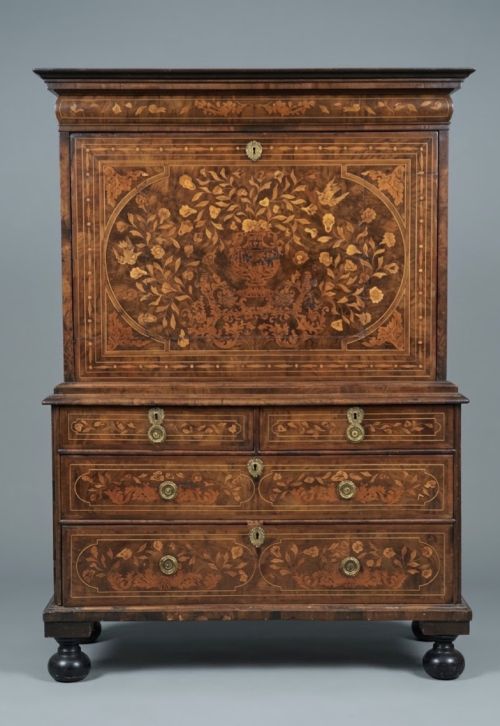
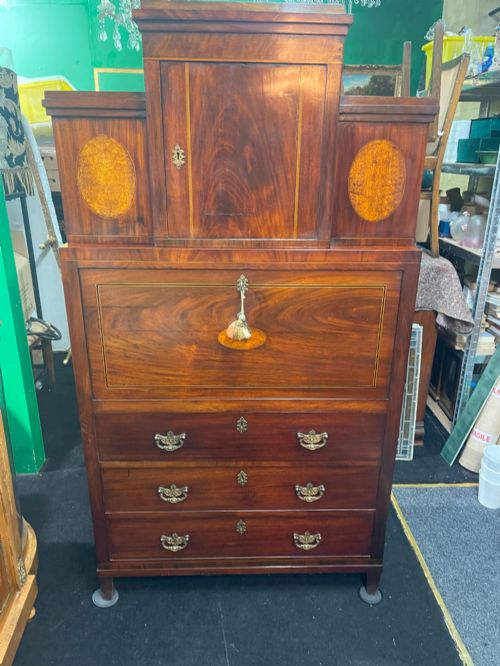
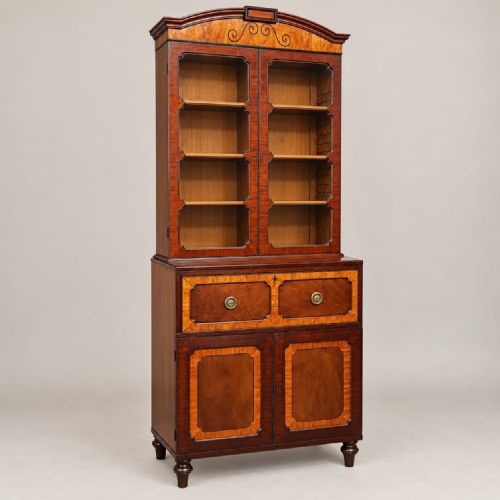
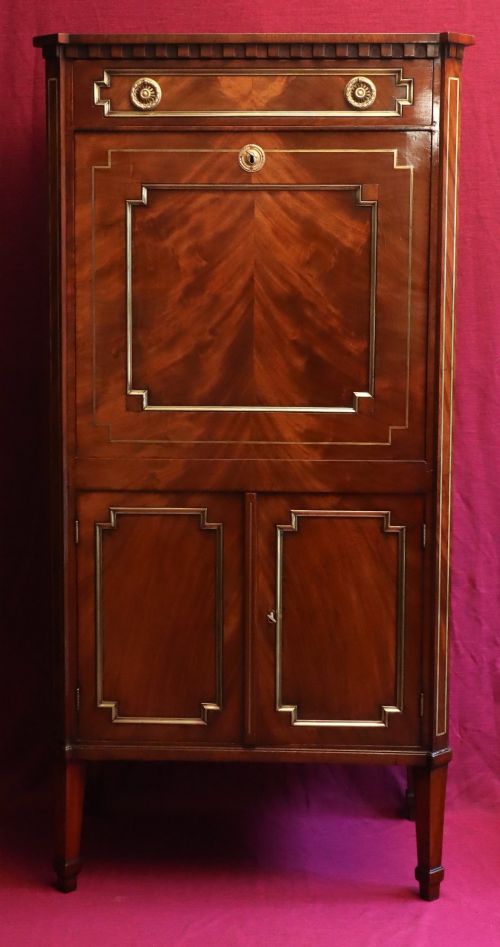


Inlaid Drop Front Desk
An inlaid drop front desk places timber craftsmanship and secret compartments directly under your pen, offering a writing surface that folds away when the work is done.
Inlaid Drop Front Desk
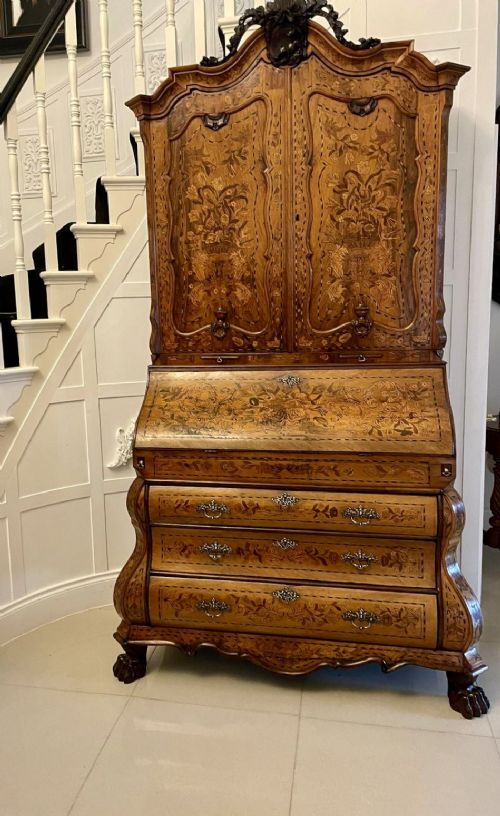
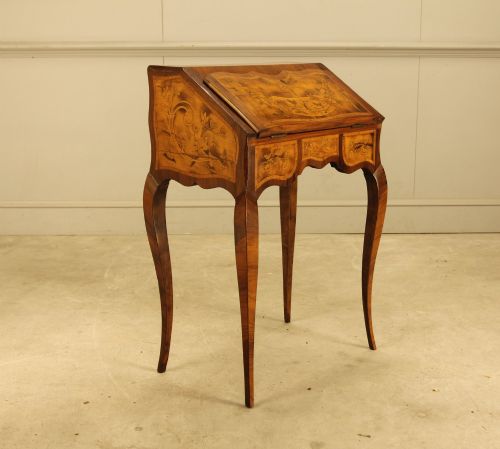
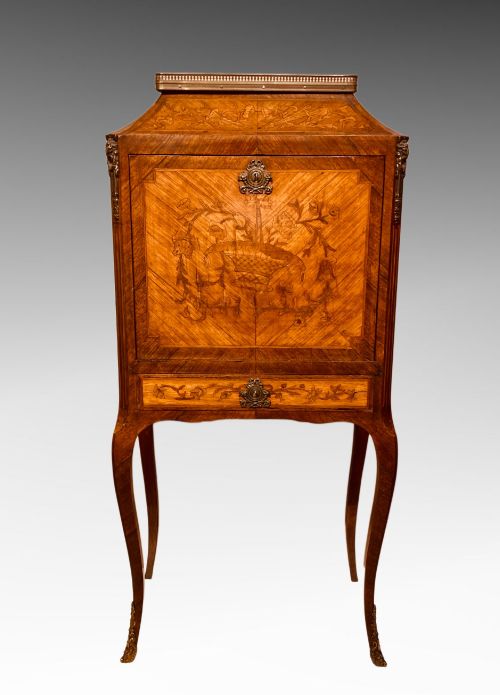
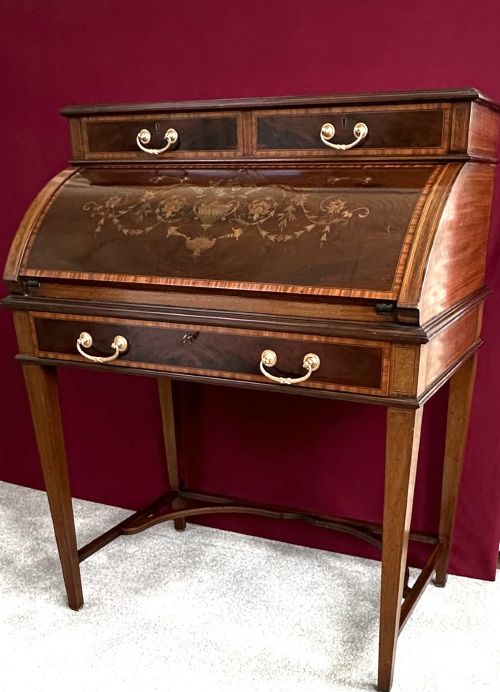
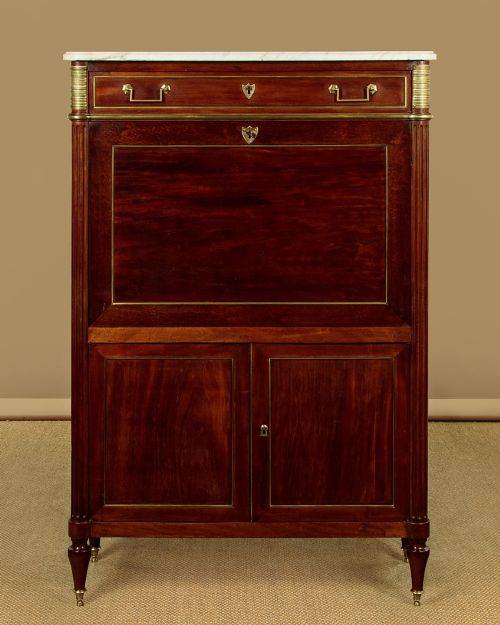
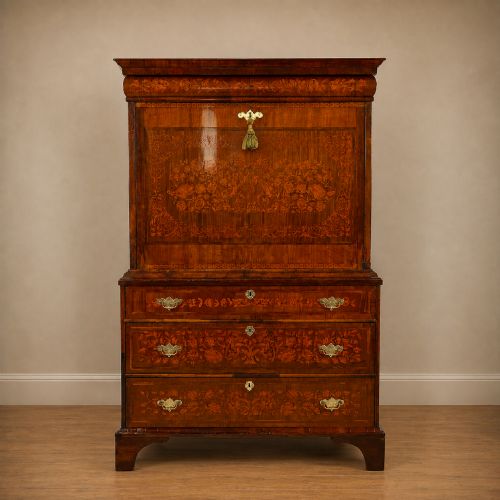
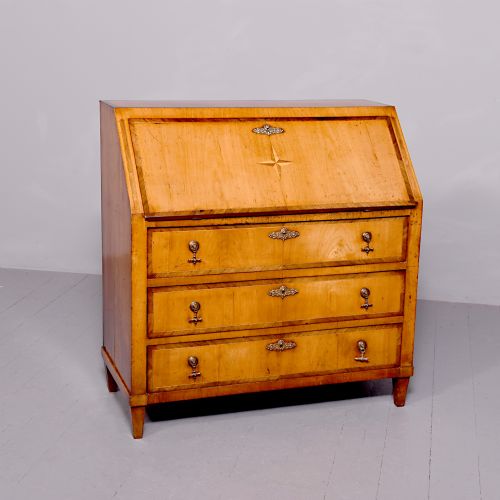
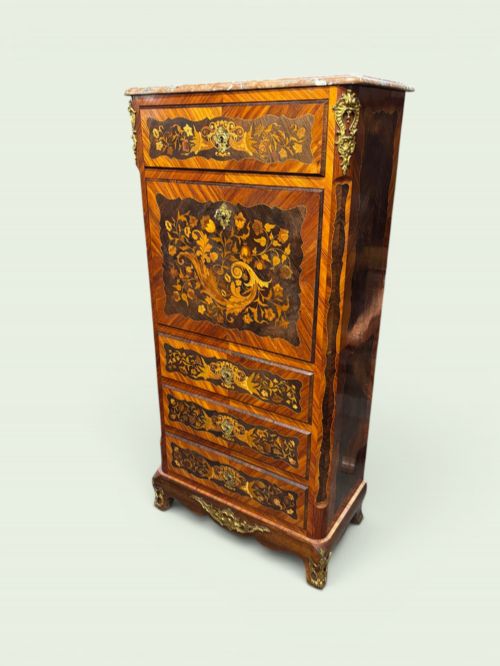
An inlaid drop front desk takes several forms across this selection, appearing as standard bureaux, towering bureau bookcases, upright secretaire abattants, and petite ladies writing cabinets. These pieces serve as practical workspaces that conceal fitted interiors behind folding or falling writing slopes.
The prevailing examples on this page date from the Georgian and 19th Century periods, alongside Edwardian creations. Mahogany forms the backbone of these pieces, frequently enriched with satinwood, walnut, or rosewood veneers.
Makers across England, France, Italy, and the Netherlands produced these writing surfaces in styles ranging from Georgian restraint to Dutch Baroque and French Revival. Buyers encounter everything from modest oak-lined writing drawers to elaborate marquetry cabinets finished with ormolu mounts.
How they were made
Cabinetmakers constructed carcass frames in solid timbers like mahogany, walnut, or oak, applying contrasting veneers of satinwood and rosewood to exterior surfaces. Marquetry panels utilise precision-cut floral or geometric motifs inlaid directly into the wood.
Makers integrated brass hardware, glass panel doors, and occasionally marble tops or gilt bronze ormolu mounts to accent the woodwork. Interior compartments feature small drawers, pigeonholes, and secret recesses assembled with dovetail joints.
Inlaid Drop Front Desk Retail Price Guide 2026
Typical asking prices for inlaid drop front desk among the pieces listed under this phrase on Sellingantiques today, from the lower quarter to the upper quarter. They describe what is for sale here now, not the wider market.
Many writing desks conceal tiny hidden drawers behind secret spring-loaded panels, built specifically to guard love letters and small fortunes.
What varies in quality
The standard of an inlaid drop front desk rests on the crispness of the marquetry and the choice of primary timbers. Fine examples display tight grain patterns, harmonious veneer matching, and retained depth within floral or pictorial inlay work.
Interior execution separates standard pieces from superior examples. High-grade construction shows meticulous small-scale joinery within the fitted pigeonholes and secret compartments, alongside well-fitted hinges and smooth-running drawer action.
The Inlaid Drop Front Desk Glossary
- Secretaire abattant
- An upright writing cabinet featuring a vertical drop front that pulls down to form a writing surface. These pieces typically conceal numerous internal drawers and pigeonholes.
- Marquetry
- Decorative veneer work formed by fitting pieces of various coloured woods, and sometimes other materials, into a background veneer to create pictorial or floral patterns.
- Ormolu
- Gilt bronze mounts applied to furniture for decorative effect. This technique gained widespread use on continental cabinetwork.
- Bureau bookcase
- A dual-purpose piece combining a writing bureau at the base with a glazed or panelled bookcase section above. These tall units provide both storage and a fold-down desk.
- Escritoire
- A writing cabinet or desk. The term covers various forms of slope-front and fall-front writing furniture from the 18th and 19th centuries.
Inlaid Drop Front Desk: Frequently Asked Questions
What is the difference between a bureau and a secretaire?
A bureau generally describes a desk with an angled slope that folds down toward the user. A secretaire usually refers to a vertical cabinet with a fall-front panel that drops into a horizontal position.
Both forms conceal fitted interior compartments for writing materials and correspondence. The distinction rests primarily on the verticality of the cabinet housing the writing surface.
How do I distinguish Georgian from Edwardian pieces?
Georgian pieces rely on substantial proportions, heavy timber construction, and restrained decorative elements such as simple stringing or brass handles. Edwardian examples often feature lighter framing, satinwood crossbanding, and Sheraton Revival motifs.
Construction methods inside the drawers also reveal age, with Georgian work typically showing hand-cut dovetailing and oak linings.
What are the common woods used in these desks?
Mahogany serves as the primary structural timber for a large portion of these writing desks. Walnut and rosewood appear frequently in both solid forms and figured veneer panels.
Satinwood and various exotic hardwoods provide contrast for inlay work, while oak frequently forms the secondary linings of internal drawers.
How were fall front desks used historically?
Owners used these desks for private correspondence, record keeping, and managing household accounts. The drop front provided an immediate, stable writing surface when lowered.
When closed, the sloping or vertical front kept papers and private documents concealed from view, maintaining a tidy appearance in a parlour or study.