





Inlaid Display Pedestal
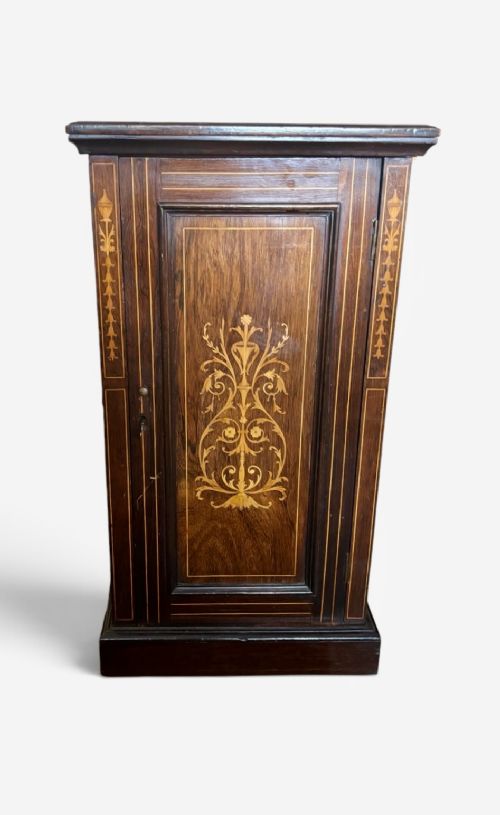
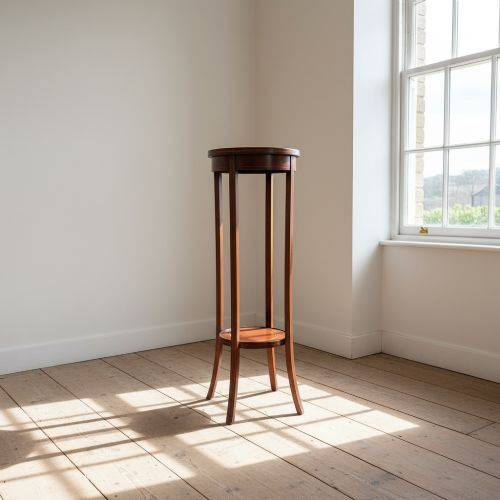
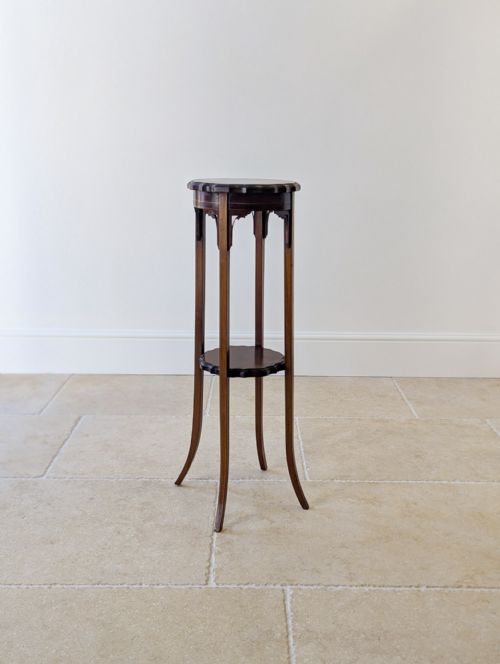
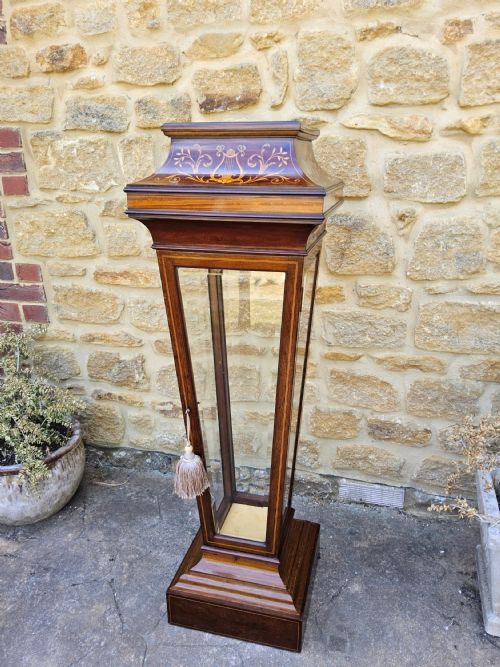
An inlaid display pedestal elevates your chosen objects, uniting fine timber with delicate decorative banding.
Inlaid Display Pedestal
An inlaid display pedestal serves to showcase decorative objects, plants, or small art pieces by raising them above floor level. When you search for an inlaid display pedestal, you encounter tall stands, column supports, and upright glazed cabinets designed for vertical presentation.
The pieces appearing on this page span several distinct periods, with Edwardian and Victorian examples forming the bulk of the selection. Alongside British domestic cabinet-making, the inventory includes pieces from Chinese export workshops, Italian studios, and French makers.
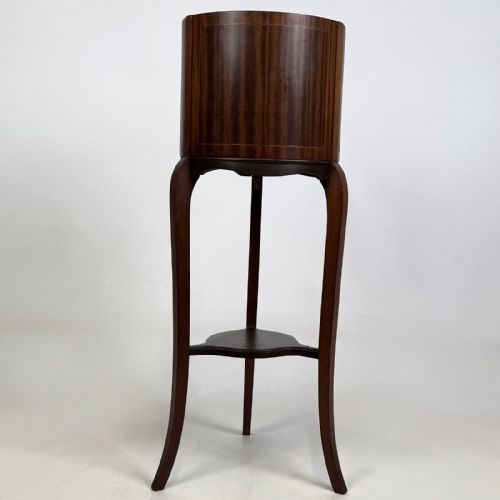
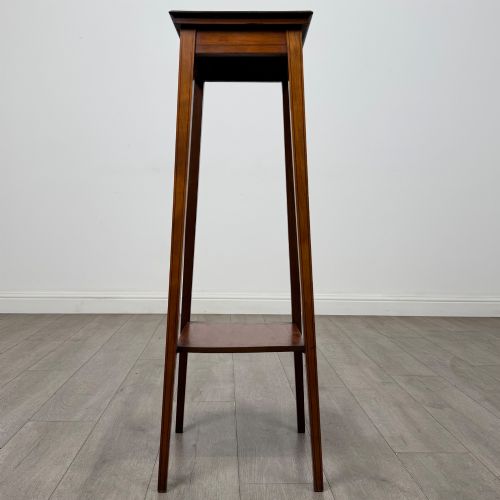
Forms vary significantly across the records, ranging from narrow glazed vitrines and torchères to urn stands and plant pedestals. Mahogany dominates the structures, frequently enriched with satinwood, rosewood, and boxwood details.
Materials and construction methods
Cabinet-makers built these supports using dense hardwoods such as mahogany, rosewood, walnut, and burr elm. These strong timbers provided a stable foundation capable of supporting heavy marble tops, glass cabinets, or bronze planters.
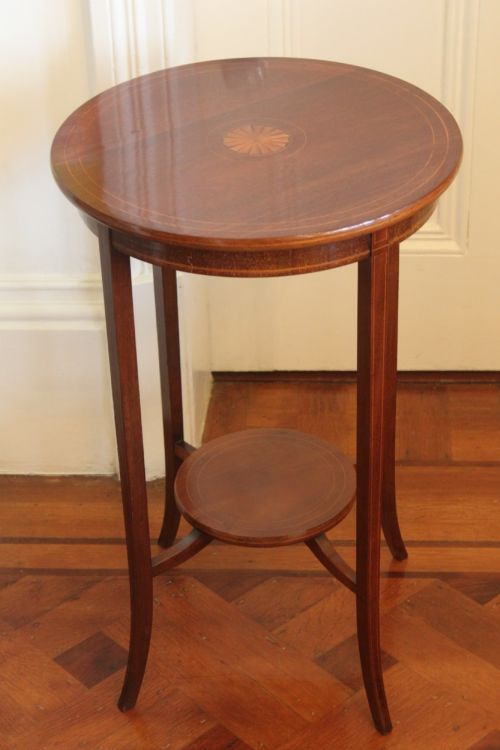
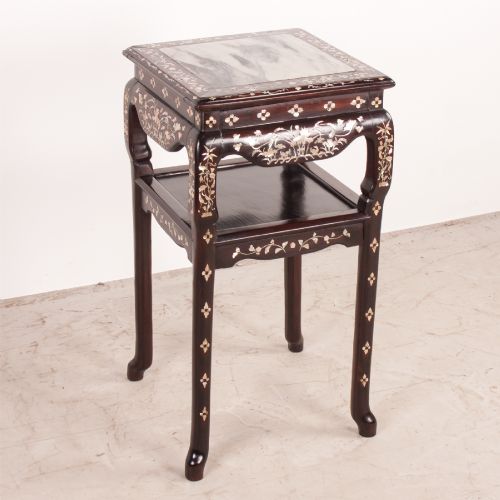
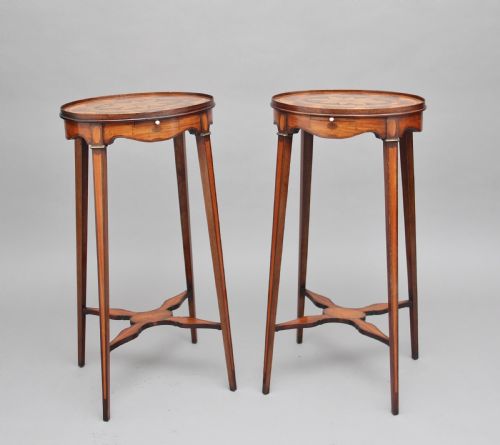
Decoration relied heavily on contrasting timber veneers and fine stringing. Craftsmen utilised satinwood, boxwood, and mother-of-pearl inlay to create geometric borders, floral motifs, and neoclassical panels across the surfaces.
Inlaid Display Pedestal Retail Price Guide 2026
Typical asking prices for inlaid display pedestal among the pieces listed under this phrase on Sellingantiques today, from the lower quarter to the upper quarter. They describe what is for sale here now, not the wider market.
The listings span the Georgian, Victorian, Edwardian, and 1930s periods, incorporating mahogany, rosewood, marble, glass, and mother-of-pearl.
Judging the standard of execution
Quality rests upon the crispness of the timber selection and the precision of the inlay work. Finer examples display tightly fitted contrasting stringing and carefully chosen wood grains that enhance the overall silhouette.
The structural integrity of the column, tripod base, or glazing framework dictates durability. Superior pieces maintain balanced proportions between the narrow footprint and the display surface above.
The Inlaid Display Pedestal Glossary
- Vitrine
- A glass-fronted cabinet designed for displaying delicate objects and curiosities. These upright cases protect contents from dust while allowing all-around visibility.
- Torchère
- A tall, slender stand originally intended to hold a candle or light source. Today these elevated columns frequently support urns, vases, or small sculptures.
- Jardinière
- A decorative container or stand designed to hold plants and flowers. French examples often incorporate metal liners or specialised waterproof wells.
- Stringing
- Narrow strips of contrasting wood inlaid into channels cut into the primary surface. This linear decoration frames drawer fronts, tabletops, and pedestal shafts.
- Specimen marble
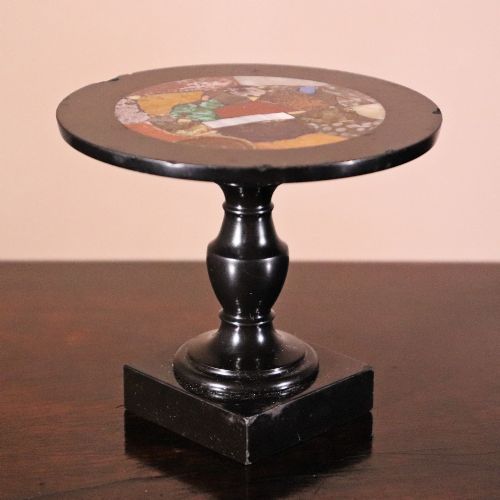
- Multi-coloured marble fragments arranged in geometric or pictorial patterns. These polished stone surfaces frequently appear on miniature tables and decorative stands.
Inlaid Display Pedestal: Frequently Asked Questions
What fits on a pedestal?
These tall stands accommodate potted plants, bronze figures, ceramic urns, and decorative bowls. The elevated surface draws the eye upward and highlights individual decorative objects within a room.
Narrower vitrine versions enclose small collectibles, pocket watches, and jewellery behind glass panels. This keeps delicate items protected while maintaining clear visibility from multiple angles.
How do I place one?
Place tall stands in corners, beside seating, or flanking doorways where they utilise vertical space without blocking walkways. Ensure the floor surface is level so the narrow footprint remains entirely stable.
Keep wooden pieces away from direct heat sources and strong sunlight to protect polished finishes and delicate veneers. Rotating objects periodically prevents uneven fading on the display surface.
Are these Edwardian or Victorian?
Edwardian pieces generally feature lighter mahogany timbers with delicate satinwood inlay and refined Sheraton Revival influences. Victorian examples often employ heavier rosewood or walnut with deeper tones and denser ornamentation.
Construction details, timber choices, and decorative motifs help separate these decades. Examining the secondary woods and interior framing provides further clues regarding exact age.
What is export furniture?
Chinese export pieces combine traditional Asian hardwoods like huanghuali or dense blackwood with forms tailored for Western drawing rooms. These items often feature mother-of-pearl inlay and intricate openwork carving.
Such pieces reflect cross-cultural design exchanges during the nineteenth and early twentieth centuries. They introduce distinct regional carving techniques alongside standard European pedestal forms.