
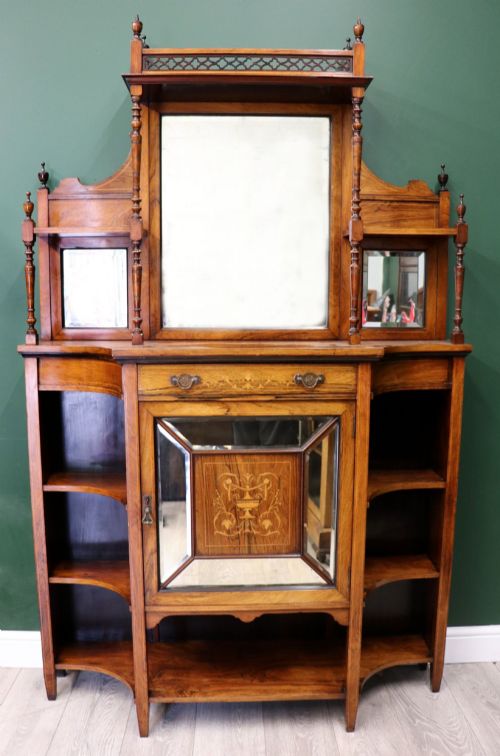
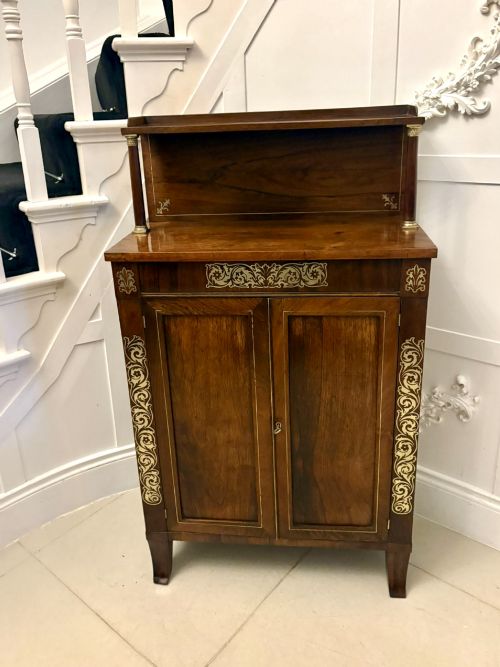
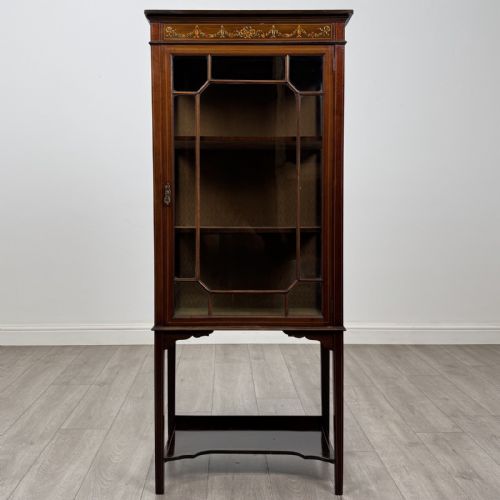
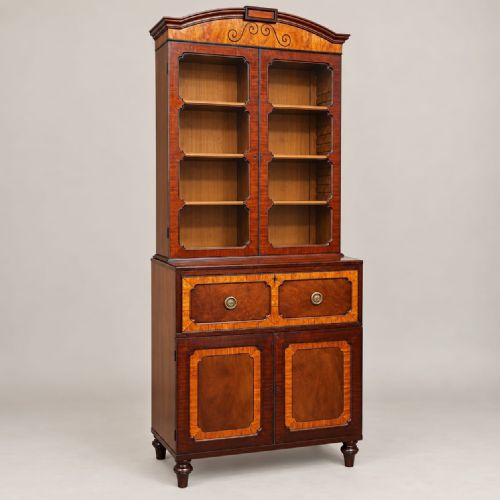
Inlaid Dark Wood Cabinet
An inlaid dark wood cabinet brings rich timber and crisp decoration together, offering a practical storage piece that anchors a room with period character.
Inlaid Dark Wood Cabinet
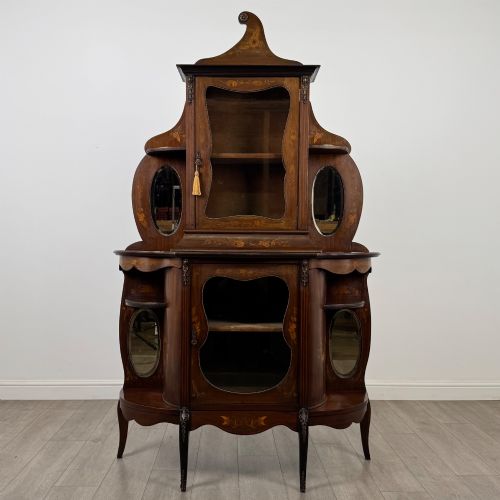
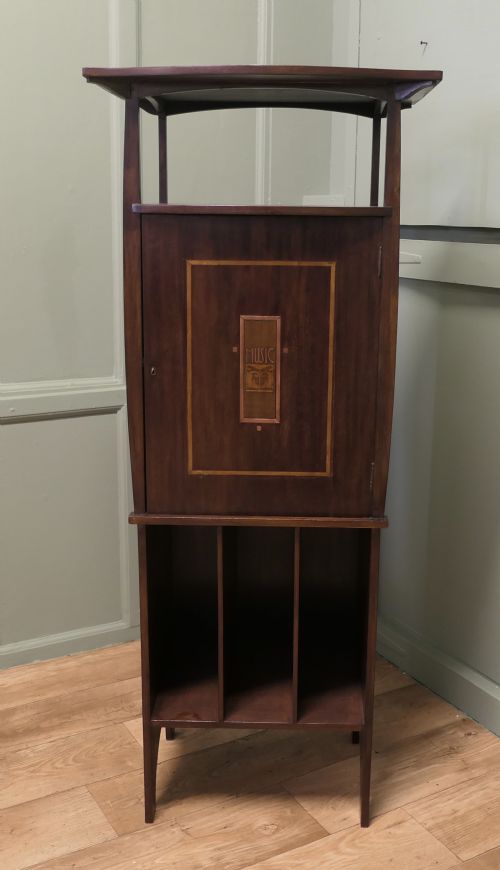
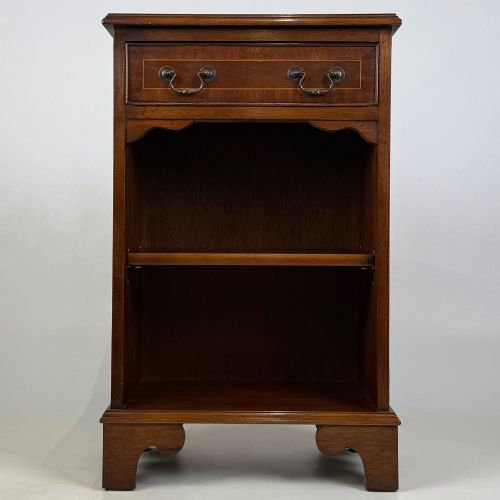
When searching for an inlaid dark wood cabinet, a buyer looks at a diverse group of storage furniture spanning several centuries, ranging from early oak and walnut pieces to refined Georgian and Victorian examples. The selection includes display cabinets, sideboards, bookcases, and side cabinets, alongside specialised forms such as music cabinets and linen presses.
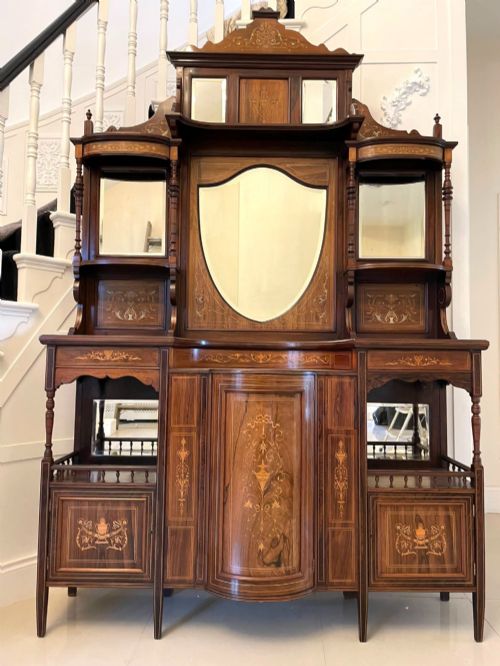
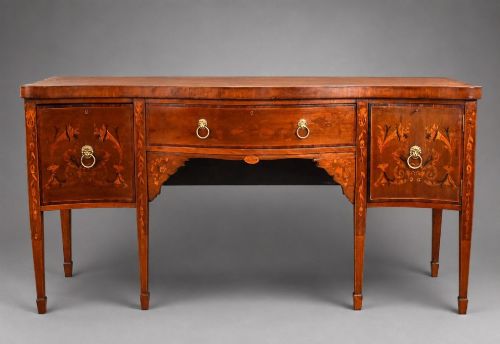
The version a buyer meets most frequently on this page is a mahogany or rosewood piece dating from the 19th century or the Edwardian era, often detailed with contrasting satinwood or boxwood inlay. These items reflect the dominant cabinet-making traditions of the Georgian, Victorian, and Edwardian periods, encompassing styles from Sheraton Revival to Art Nouveau.
Beyond standard cupboards and sideboards, the evidence records distinct regional and global forms, including Dutch marquetry cabinets, French secretaires, Japanese shodonas, and Indian dowry chests. Each variation provides a specific storage function, whether that involves housing books, displaying porcelain, or securing table silver.
Materials and technique
Makers constructed these pieces using dense dark timbers such as mahogany, rosewood, and oak as the primary structural bodies. These foundations provided the strength necessary for large sideboards, bookcases, and tall linen presses.
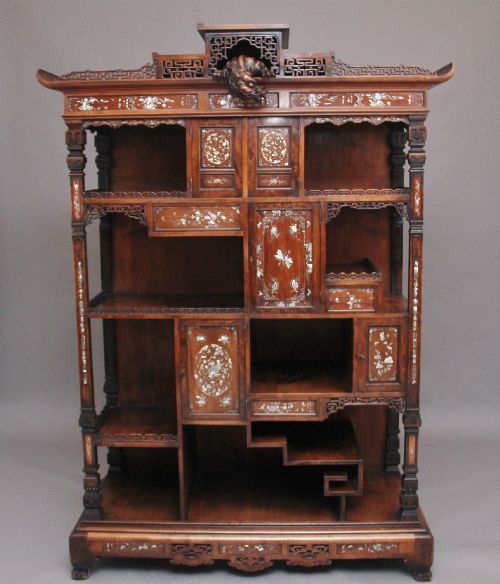
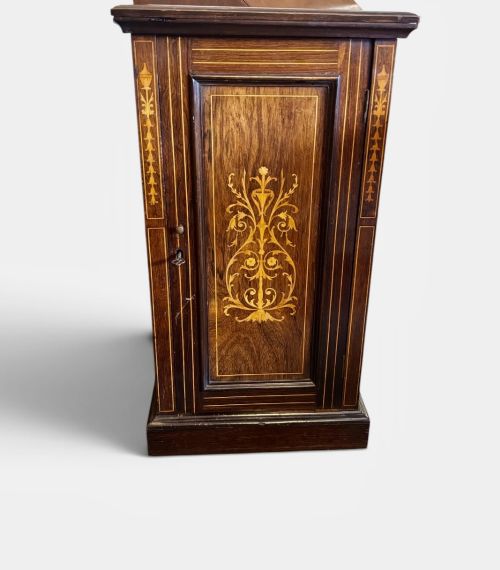
Decoration relied heavily on contrasting woods and metals, incorporating satinwood, boxwood, and pewter inlay alongside brass mounts and mother-of-pearl accents. Marquetry and delicate stringing techniques formed intricate geometric or floral patterns across the surfaces of doors, friezes, and drawer fronts.
One listed piece is an Indian dowry chest in carved teak, demonstrating that dark wood storage travelled far beyond European parlours.
Distinctions in quality
The standard of execution in the inlay work separates ordinary production from superior pieces, particularly in the precision of the fit between the dark ground and the lighter contrasting woods. Finer examples display crisp, unbroken lines and complex pictorial marquetry rather than simple linear stringing.
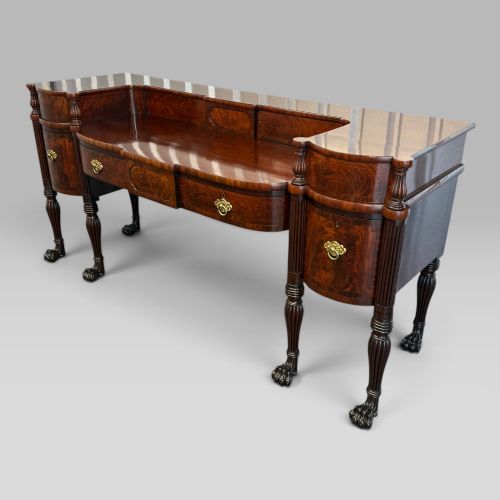
Timber selection and grain matching dictate the visual weight of a piece, with figured flame mahogany or richly grained rosewood elevating the overall appearance. Structural integrity in the carcase, original hardware such as brass handles and lion paw feet, and the survival of glass panes further distinguish the top tier of pieces.
GM Elwood for JS Henry·Collinson & Lock·Louis Constantin Le Gaigneur·Maison Krieger
The Inlaid Dark Wood Cabinet Glossary
- Inlay
- A decorative technique where pieces of contrasting wood, metal, or shell are set into recesses flush with the surrounding surface. This method creates geometric borders or pictorial scenes on cabinet doors and drawer fronts.
- Marquetry
- The art of applying fitted pieces of veneer to a structure to form elaborate decorative patterns. It differs from simple inlay by covering the entire surface of the carcase in a mosaic of wood veneers.
- Linen Press
- A tall storage piece featuring upper sliding trays or shelves enclosed by doors, traditionally used for storing flat textiles. Lower sections typically incorporate a chest of drawers.
- Secretaire
- A cabinet incorporating a pull-down writing flap that conceals small drawers and pigeonholes. This hybrid form combines desk functionality with enclosed cupboard storage.
- Stringing
- A narrow strip of contrasting timber inlaid into the surface of furniture to form delicate linear borders. It defines the edges of panels and tabletops on neoclassical and revival pieces.
Inlaid Dark Wood Cabinet: Frequently Asked Questions
What periods do these cabinets come from?
The listings encompass furniture spanning from the seventeenth century through the Georgian and Victorian eras, extending into Edwardian production and the early twentieth century.
Most pieces belong to the nineteenth and early twentieth centuries, reflecting revivalist styles like Sheraton Revival alongside Art Nouveau and Japonisme designs.
How were these cabinets used originally?
These pieces served varied domestic functions, ranging from the display of fine porcelain in drawing rooms to the storage of books, stationery, and household linen.
Specialised forms like music cabinets and secretaires catered to specific parlor activities, while sideboards and serving pieces managed dining room hospitality.
How do I identify a display cabinet?
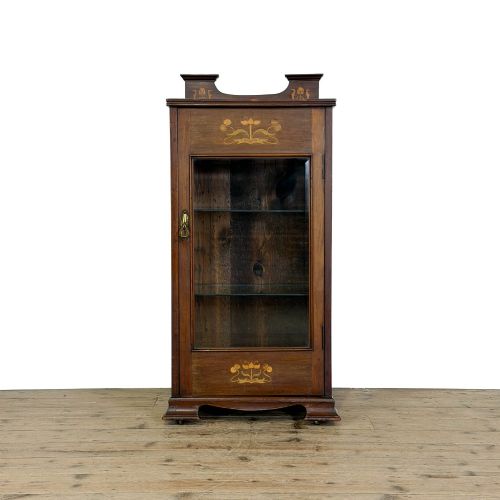
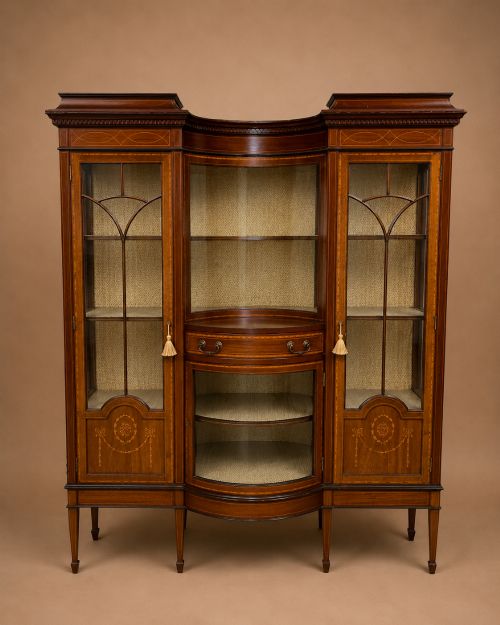
Display cabinets feature glazed doors or glass panels designed to showcase collected objects, ceramics, and books while protecting them from dust.
They frequently appear in rosewood or mahogany from the Victorian and Edwardian periods, sometimes incorporating mirrored backs to enhance the internal light.
What woods were used for inlay?
Cabinet makers utilised lighter contrasting timbers such as satinwood and boxwood to create visible patterns against dark grounds like mahogany and rosewood.
Additional materials included pewter, brass, and mother-of-pearl, which provided metallic sheen and iridescent contrast within the marquetry designs.