



Inlaid Cylinder Cabinet
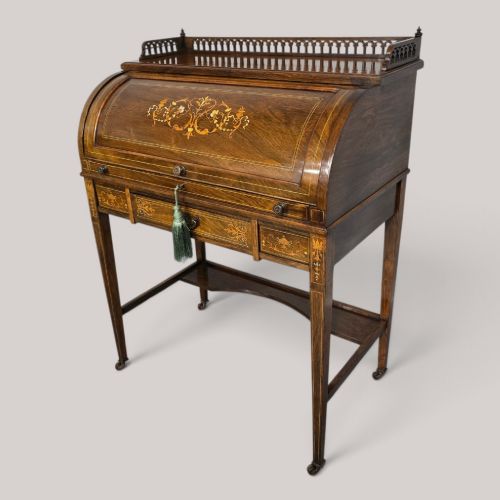
An inlaid cylinder cabinet combines a curved roll-top lid with intricate wood decoration to conceal a fitted writing surface.
Inlaid Cylinder Cabinet
An inlaid cylinder cabinet brings together functional writing furniture and decorative surface artistry, centred around a rounded mechanical shutter that rolls back to reveal pigeonholes and small drawers. When you search for an inlaid cylinder cabinet, you encounter pieces designed for private correspondence and the storage of documents.
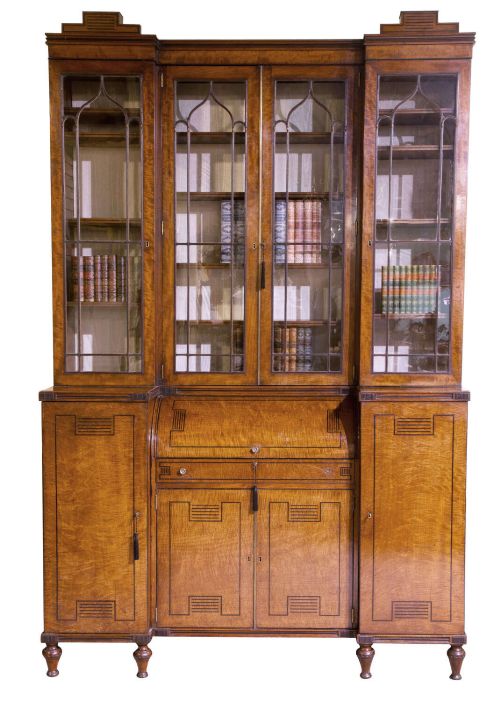
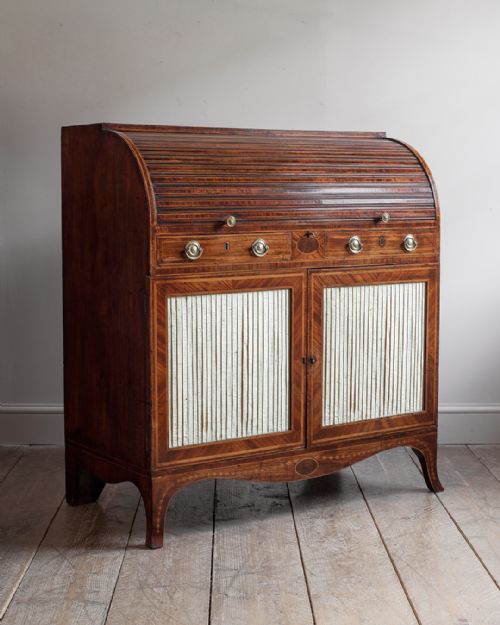
The examples found here span several distinct periods including the eighteenth century, the Regency era, and the Edwardian epoch. These pieces frequently appear in forms such as compact ladies desks, tall bureau bookcases with glazed upper sections, and freestanding pedestals.
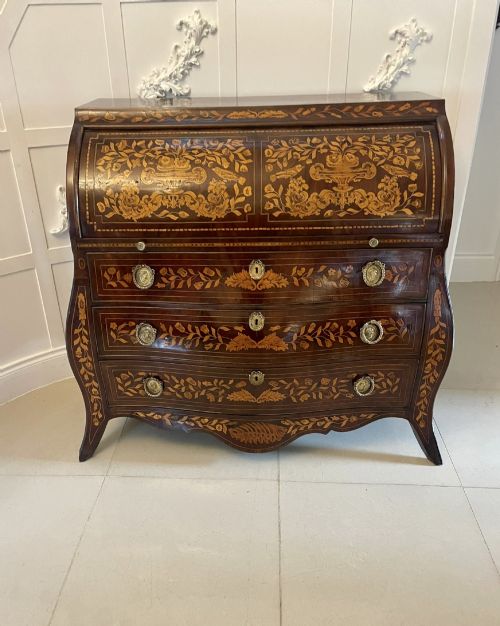
Makers from various stylistic traditions shaped these forms, incorporating influences from George III designs, Dutch floral marquetry, and Sheraton revivals. The resulting furniture ranges from miniature display desks to breakfront secretaire bookcases built on a grand architectural scale.
How they were made
Cabinetmakers constructed the primary carcasses of these pieces using dense hardwoods such as mahogany, walnut, and rosewood, ensuring structural stability for the moving shutter mechanism. Secondary timbers provided internal support for the bank of small drawers concealed behind the cylinder.
To achieve the decorative surfaces, artisans applied contrasting veneers of satinwood and fruitwood, often embellishing the panels with floral marquetry. Brass mounts, escutcheons, and stringing lines completed the detailing across both Regency and Georgian iterations.
Inlaid Cylinder Cabinet Retail Price Guide 2026
Typical asking prices for inlaid cylinder cabinet among the pieces listed under this phrase on Sellingantiques today, from the lower quarter to the upper quarter. They describe what is for sale here now, not the wider market.
Some miniature cylinder desks were made as salesman samples, allowing makers to demonstrate complex rolling mechanisms in miniature.
What varies in quality
The refinement of the cylinder mechanism dictates the mechanical success of the piece, where smooth travel of the roll-top shutter and precise alignment of internal compartments separate superior examples from rigid ones. The fluidity of this action depends entirely on the initial accuracy of the joinery.
Surface execution also defines the hierarchy of these cabinets, seen in the density of the marquetry and the choice of satinwood or mahogany veneers. Finer pieces demonstrate meticulous hand-cut inlay work that maintains crisp edges and harmonious wood grain selection across curved surfaces.
Edwards and Roberts·John Mclean
The Inlaid Cylinder Cabinet Glossary
- Cylinder
- A curved wooden shutter that rolls back in a quarter-circle track to conceal a writing slide and pigeonholes. This mechanism replaced the fold-down flap of traditional bureaus.
- Marquetry
- A decorative technique where small pieces of tinted or natural wood veneer are arranged into pictorial designs. Floral motifs and urns appear frequently on eighteenth-century examples.
- Secretaire
- A piece of furniture containing a concealed writing drawer or pull-out desk surface. It often combines bookcase storage above with functional writing space below.
- Satinwood
- A durable hardwood with a lustrous, golden-yellow sheen used extensively for fine veneer work. Cabinetmakers prized it during the Georgian and revival periods for contrasting borders.
- Tambour
- A flexible shutter made from narrow strips of wood glued to a fabric backing. It operates on a similar principle to a cylinder but travels within vertical or horizontal tracks.
Inlaid Cylinder Cabinet: Frequently Asked Questions
What is a cylinder desk?
A cylinder desk is a form of writing furniture featuring a rounded, quarter-circle wooden shutter that rolls upward to uncover a fitted interior. This design allows the user to leave correspondence spread out while concealing the desktop by simply pulling the shutter down.
The mechanism relies on internal tracks that guide the curved panel smoothly out of sight. Such desks often incorporate pull-out writing slides lined with leather or fabric alongside small banks of stationary drawers.
How do I identify Georgian pieces?
Georgian pieces display restrained proportions, classical architectural motifs, and high-grade timbers such as figured mahogany or satinwood. The construction prioritises structural integrity and subtle decorative stringing over heavy ornamentation.
Examination of the secondary woods inside the drawers often reveals native timbers consistent with eighteenth-century workshops. The joinery technique utilises hand-cut dovetails with irregular spacing typical of period hand tools.
Where were they placed?
These cabinets served as private writing desks for correspondence and estate management in domestic interiors. Owners typically positioned them in libraries, private withdrawing rooms, or ladies boudoirs.
Because the cylinder mechanism protected sensitive documents from dust and prying eyes, these pieces functioned as secure storage units for personal ledgers and letters. Their finished backs sometimes allowed them to stand away from the wall in larger rooms.
How do I care for the wood?
Maintaining these surfaces requires stable indoor humidity levels and protection from direct sunlight to prevent the veneers from drying out. Periodic application of appropriate wax polish preserves the lustre of mahogany and satinwood without building up heavy residues.
Avoid placing damp items or heavy heat sources directly onto the polish finish of the cylinder or writing slide. Gentle dusting with a soft, dry cloth keeps the marquetry and brass mounts clear of particulate accumulation.