
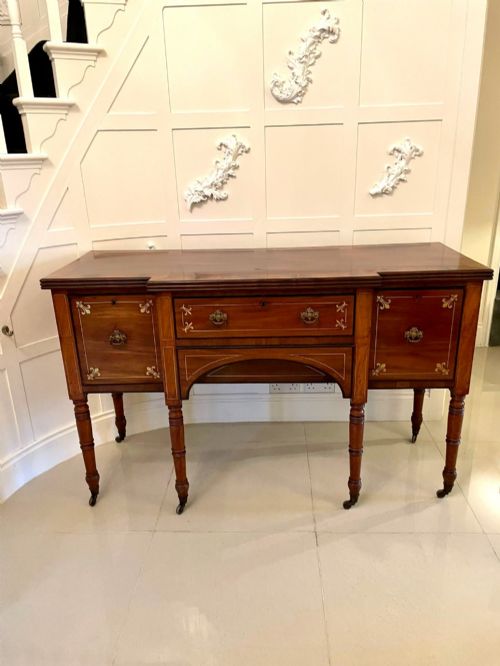
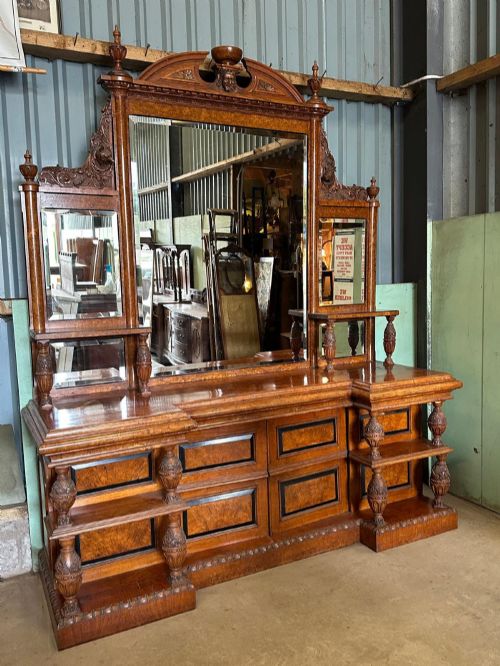
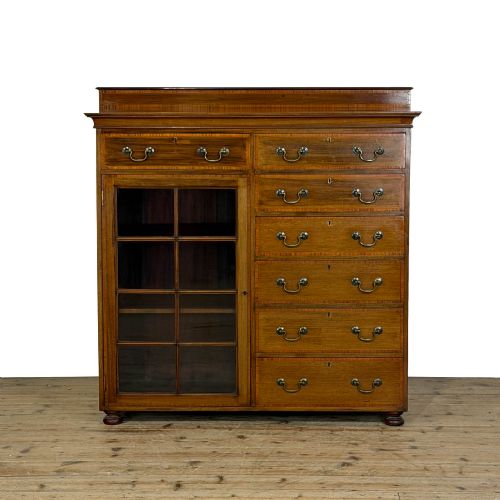
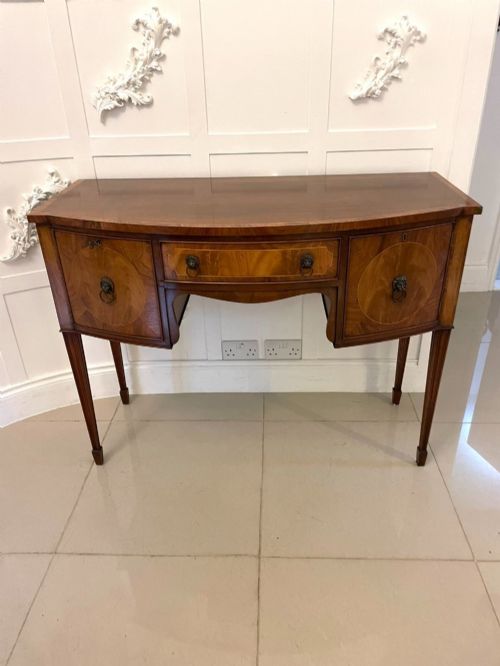
Inlaid Credenza Sideboard
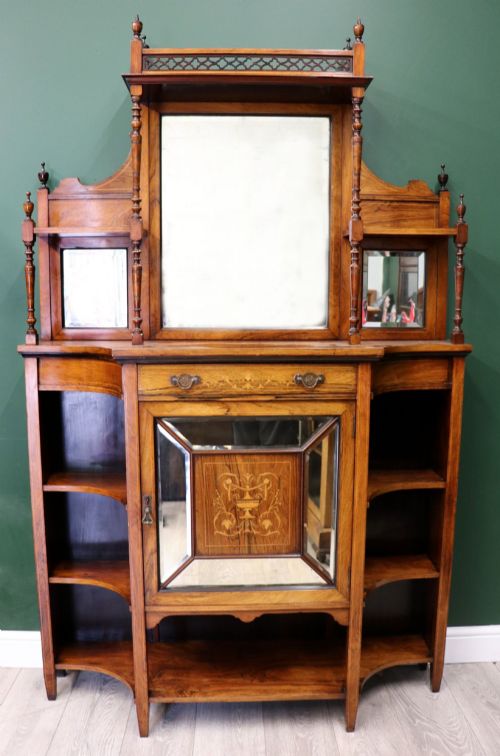
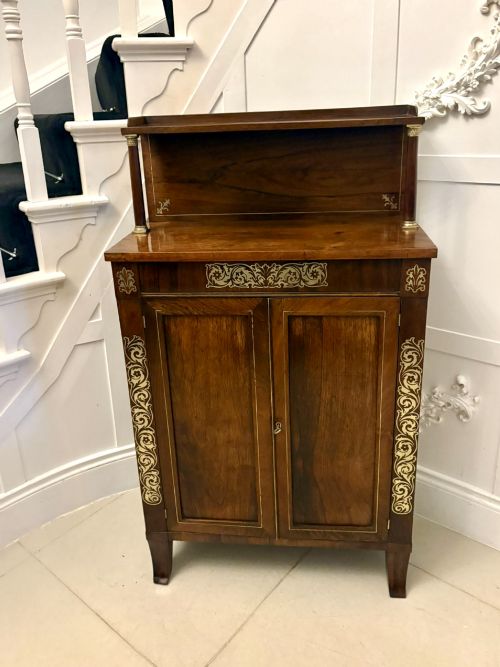
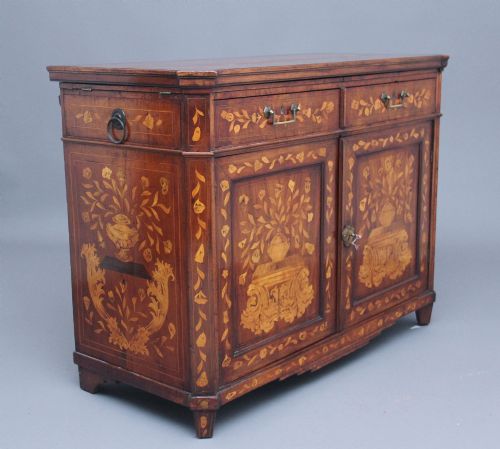
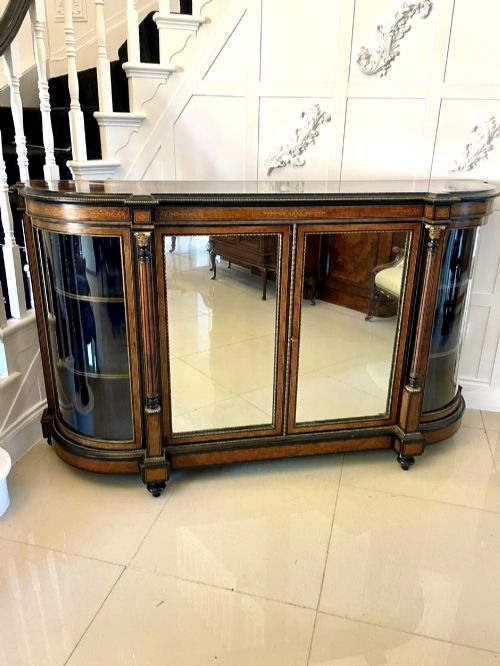
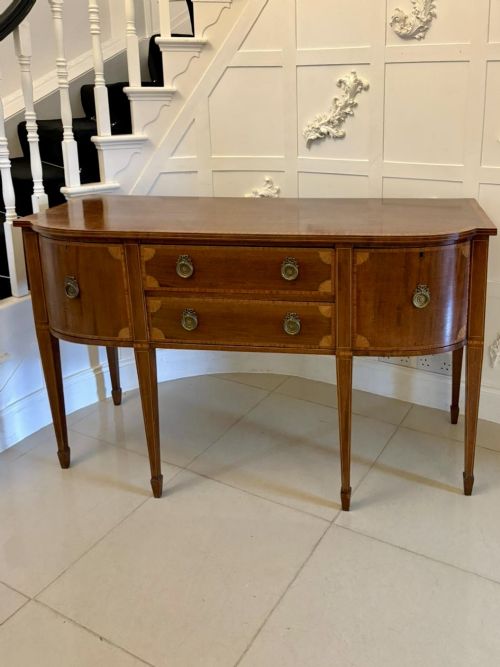
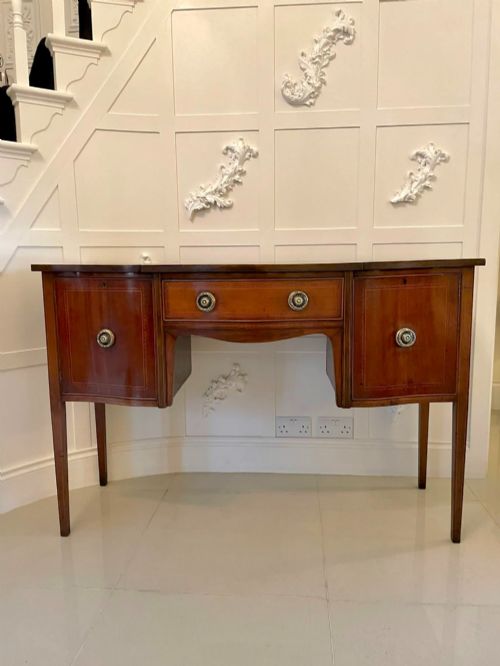
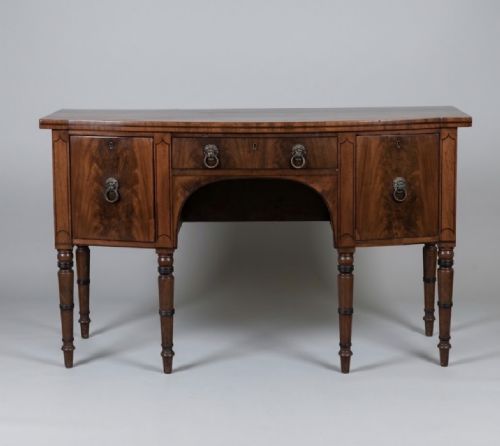
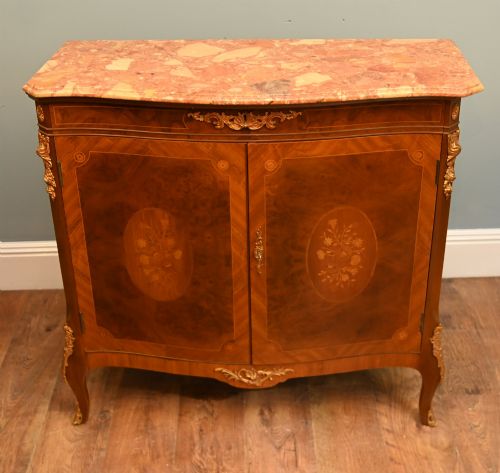
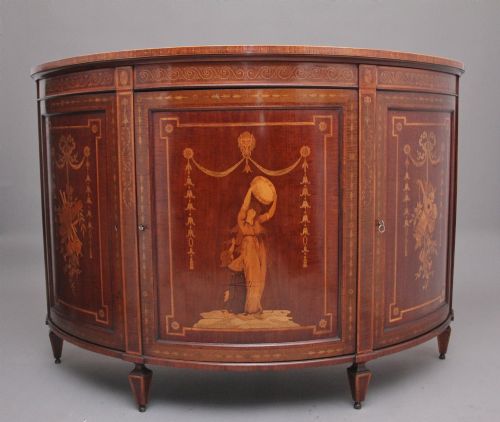
These inlaid credenza sideboard pieces combine fine timber work with decorative marquetry, offering both storage and grand presence for a formal dining room or drawing room.
Inlaid Credenza Sideboard
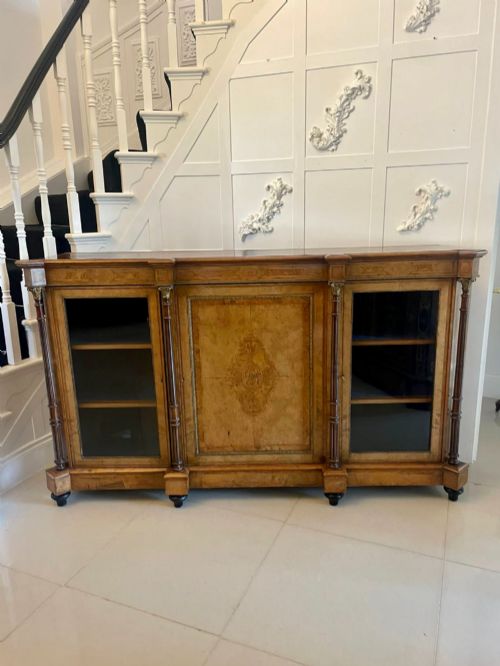
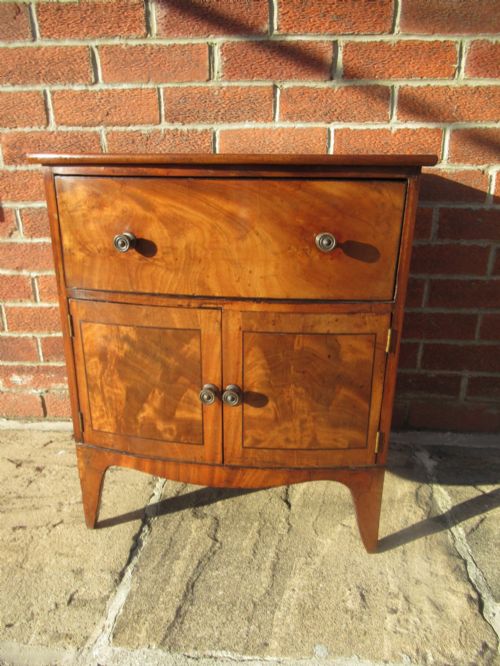
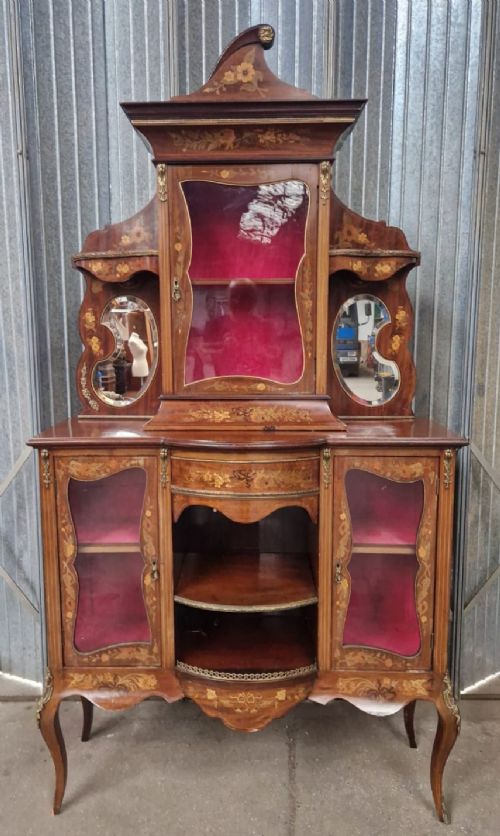
When searching for an inlaid credenza sideboard, buyers encounter a range of nineteenth-century Victorian walnut designs alongside earlier Georgian mahogany forms and later Edwardian variations. The Victorian burr walnut examples mounted with ormolu and porcelain panels represent the most frequent style on this page.
Makers utilised various forms from serpentine fronts to breakfront configurations and mirror-back side cabinets. These pieces served primarily to display ornaments and store dining silver within formal entertaining spaces.
Materials and Construction
Cabinet makers constructed carcass frames in solid mahogany, oak, or walnut, applying choice veneers such as burr walnut, amboyna, and satinwood to primary surfaces. Wood inlay, boxwood stringing, and floral marquetry provide the characteristic surface ornamentation across these periods.
Metal mounts in cast ormolu and brass details frequently accent the primary timbers, particularly on nineteenth-century pieces. Glass panels feature in display doors, while specialised hardware secures the doors and drawers of each cabinet.
Some nineteenth-century cabinets hide secret compartments behind decorative marquetry panels for storing household valuables.
Assessing Quality and Execution
Superior examples display crispness in the floral marquetry and precision in the wood inlay, where contrasting timbers meet without visible gaps. The selection of figured veneers on primary surfaces also indicates the standing of the original workshop.
Heavier ormolu mounts with refined chasing and robust internal framing separate finer pieces from more utilitarian workshop production. The structural integrity of serpentine or bowfront shapes requires precise carpentry that sustains the form over centuries.
Hewetsons London·Epstein
The Inlaid Credenza Sideboard Glossary
- Marquetry
- Decorative patterns formed by fitting together thin slices of various wood veneers onto a structural ground. This technique creates pictorial or floral designs across the cabinet front.
- Ormolu
- Gilded bronze mounts applied to furniture for decorative enrichment. These metallic elements highlight corners, borders, and central panels on Victorian pieces.
- Serpentine
- A furniture front configuration curved in a concave-convex-concave wave shape. This contour demands advanced woodworking skill to execute properly.
- Crossbanding
- A border strip of veneer laid around the perimeter of a panel with the grain running perpendicular to the centre. It creates a defined frame for the main timber surface.
- Breakfront
- A cabinet facade where the central section projects forward from the flanking wings. This architectural arrangement adds depth and shadow to large sideboards.
Inlaid Credenza Sideboard: Frequently Asked Questions
Where should I place an inlaid credenza sideboard?
These large cabinets suit formal dining rooms, grand hallways, or spacious drawing rooms where their length and decorative fronts can be viewed properly.
Ensure adequate floor space prevents obstruction, and keep the wood away from direct sunlight and heat sources to protect the veneers.
How do I care for burr walnut and marquetry?
Dust the surfaces regularly with a soft, dry cloth and apply a quality beeswax sparingly to nourish the timber when necessary.
Avoid liquid polishes and silicone sprays, which damage historic veneer finishes over time.
What is the difference between a credenza and a sideboard?
A sideboard traditionally serves dining rooms for storing tableware and serving food, often featuring drawers and cupboards.
A credenza typically incorporates glass doors and central display sections designed for showing porcelain and ornaments.
How do I identify a Victorian piece from a Georgian one?
Georgian pieces generally rely on understated mahogany construction with geometric stringing and clean architectural lines.
Victorian examples frequently introduce burr walnut, elaborate floral marquetry, ormolu mounts, and mirror backs.