




Inlaid Corner Bookcase
An inlaid corner bookcase turns an awkward junction of walls into a display of figured mahogany and delicate woodwork.
Inlaid Corner Bookcase
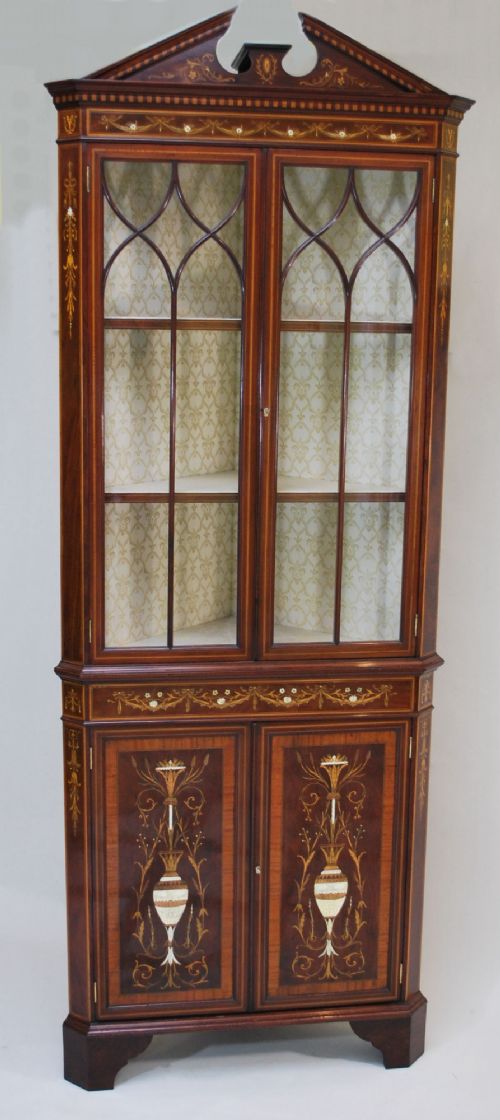
An inlaid corner bookcase is a fitted or standing piece designed to occupy ninety-degree room angles while holding volumes or displaying curiosities behind glass. These pieces range from compact tabletop cupboards and tiered whatnots to towering double-height architectural cabinets that reach towards the ceiling.
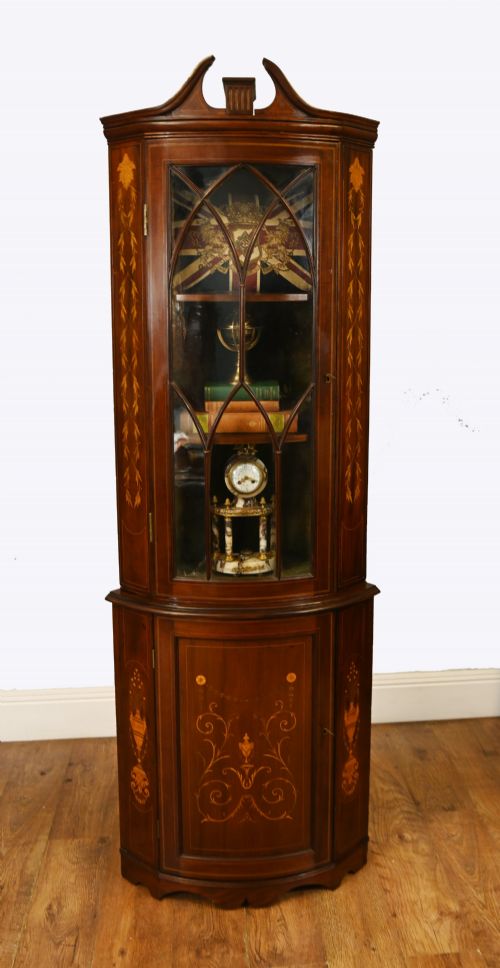
The Edwardian era provides the largest share of examples seen here, particularly standing mahogany cupboards finished with satinwood inlay and glazed upper doors. Earlier Georgian and Victorian iterations also appear, spanning from the nineteenth century into the mid-twentieth century.
Makers utilised various formats including open corner bookcases, bow-fronted display units, and serpentine-shaped standing cabinets. Each form maximises dead wall space by bringing curved or canted shelving into the room.
How they were made
Carpenters built these cabinets primarily from solid mahogany and walnut, frequently selecting burr walnut or figured veneers for the main exterior surfaces. Satinwood and contrasting darker timbers were cut into delicate ribbons for marquetry motifs and linear stringing.
Glass panels were fitted into wooden tracery doors to protect books and ceramics from dust while maintaining visibility. Brass hardware such as hinges, escutcheons, and keyplates completed the assembly of these fitted corner structures.
Some corner cupboards include tiny hidden drawers tucked away behind glazed display doors for secret correspondence.
What varies in quality
The distinction between standard workshop output and superior cabinet making rests in the complexity of the timber selection and the precision of the marquetry. Dense, highly figured mahogany veneers paired with intricate satinwood inlay indicate elevated craftsmanship.
Structural ambition separates modest single cupboards from double-height standing bookcases or serpentine-fronted display cabinets. Elaborate glazing bars and well-integrated architectural cornices further distinguish the upper tiers of production.
Edwards And Roberts
The Inlaid Corner Bookcase Glossary
- Inlay
- A technique where contrasting pieces of wood or other materials are inserted into a recessed wooden surface to form a decorative pattern. This method creates flat ornamental designs across doors and friezes.
- Marquetry
- Elaborate veneer work arranged to form pictorial or geometric designs using various coloured woods. Craftsmen cut multiple thin wood layers together to assemble complex floral or symmetrical motifs.
- Whatnot
- A set of open shelves supported by slender pillars, designed for displaying ornaments and small books. These tiered pieces fit neatly into room corners.
- Serpentine
- A gently curved shape resembling a snake's movement, featuring a convex centre flanked by concave ends. This contour adds considerable cost and skill to cabinet fronts.
- Stringing
- Thin, narrow lines of contrasting wood inlaid around the edges of panels and drawers. It outlines the geometric boundaries of cabinet doors.
Inlaid Corner Bookcase: Frequently Asked Questions
Where should I place an inlaid corner bookcase?
These cabinets fit precisely into unused right-angled room junctions, making them ideal for drawing rooms, studies, or hallways where floor space is limited. Their angled backs hug the walls while the projecting fronts draw the eye into the room.
Ensure the chosen corner receives balanced light to highlight the wood grain and marquetry details without exposing fragile veneers to direct, damaging sunlight.
How do I distinguish Edwardian pieces from Georgian ones?
Edwardian examples, frequently dated around nineteen hundred, often combine bright mahogany with delicate satinwood inlay and lighter structural proportions. Georgian pieces from around eighteen hundred typically display heavier architectural proportions and more restrained timber choices.
Examining the internal construction methods, secondary woods, and backboards helps clarify the manufacturing era when styles overlap.
Can these cabinets safely support heavy books?
Standing models and full-height bookcases feature sturdy internal shelving capable of holding standard volumes, though open shelf versions suit display purposes best. Built-in or heavy standing iterations distribute weight across solid corner brackets.
Distributing heavier volumes on lower shelves maintains stability and prevents long-term warping in older wooden boards.
What maintenance do mahogany and walnut veneers need?
Maintain stable indoor humidity levels to prevent the timber veneers and delicate satinwood inlay from lifting or splitting over time. Gentle dusting with a dry, soft cloth preserves the polished finish.
Avoid placing these cabinets near direct heat sources or damp exterior walls to protect the nineteenth-century glue and structural joints.