

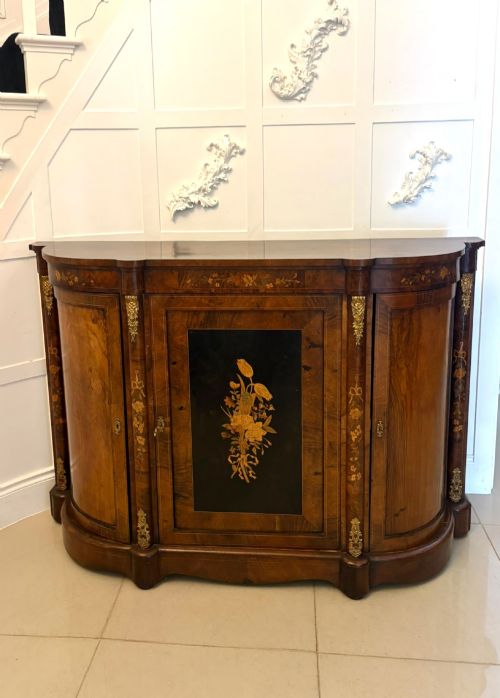
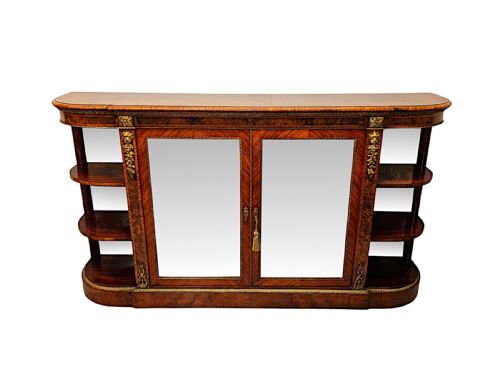
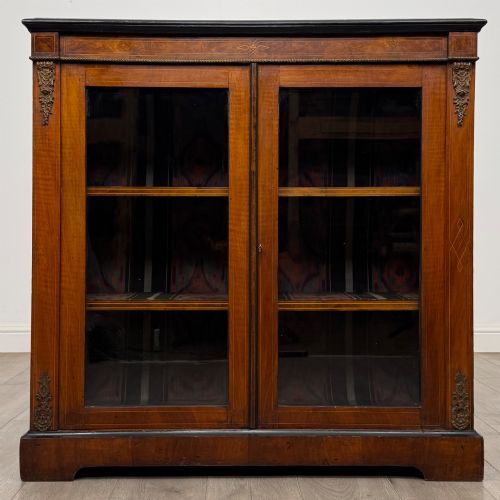
Inlaid Burr Walnut Credenza
An inlaid burr walnut credenza offers rich figured timber and fine marquetry, serving as a striking focal point for a formal interior.
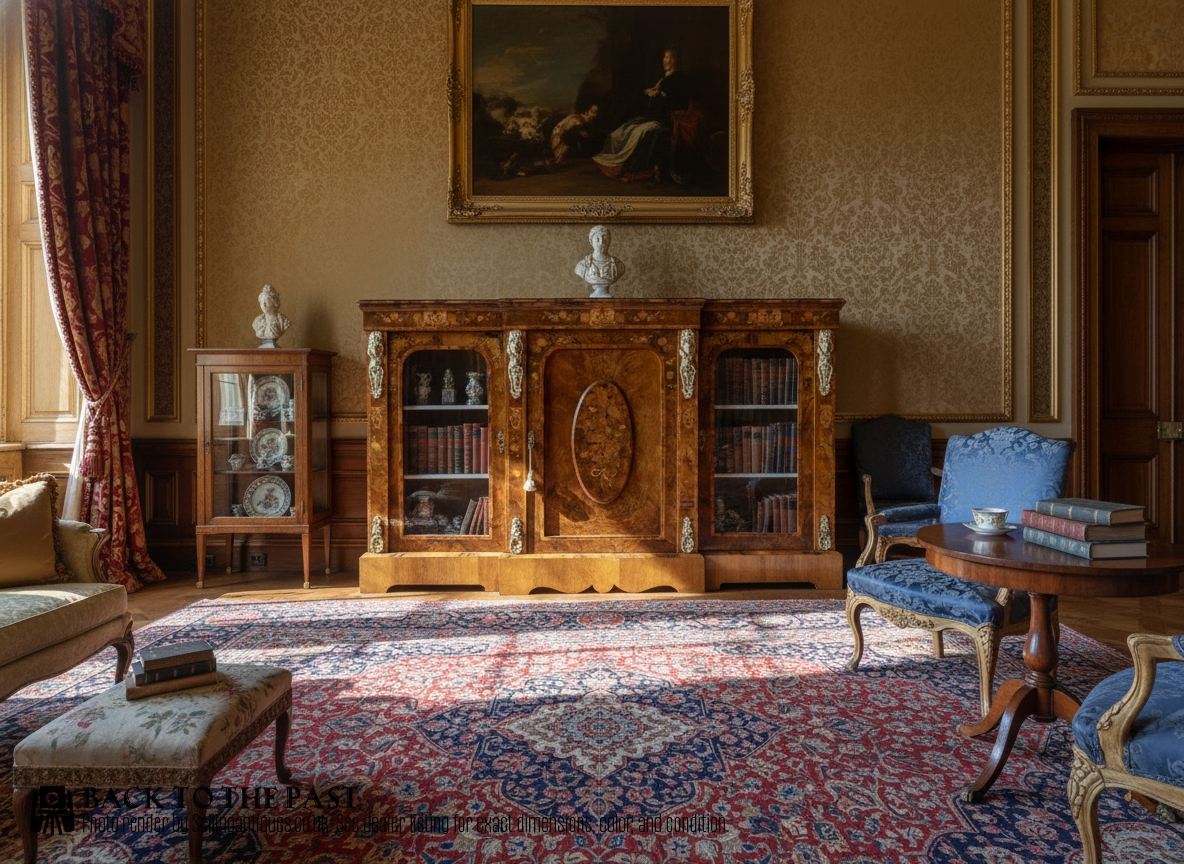
Inlaid Burr Walnut Credenza
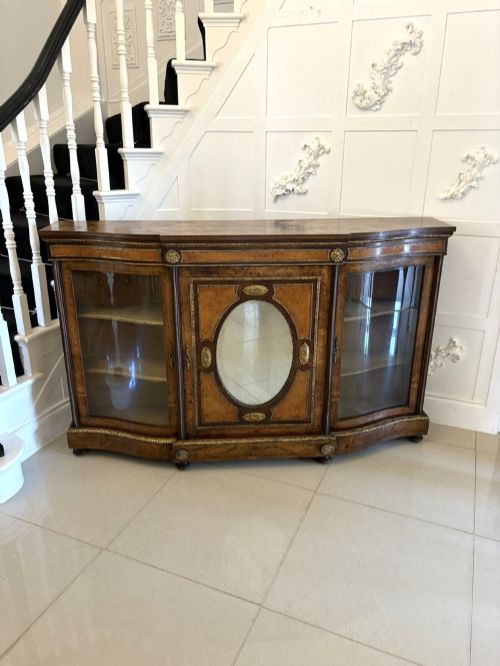
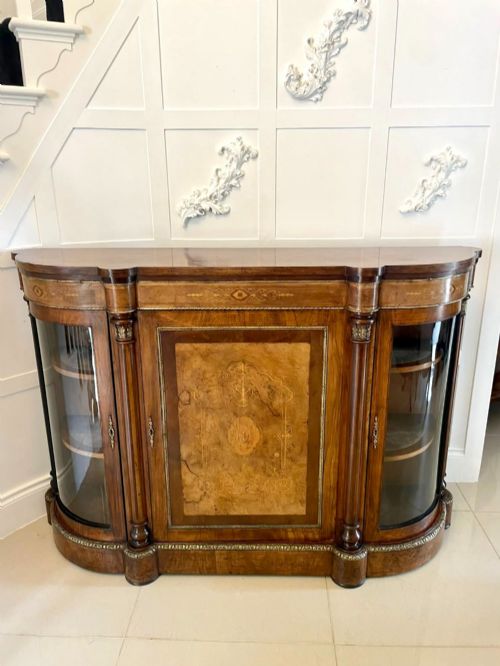
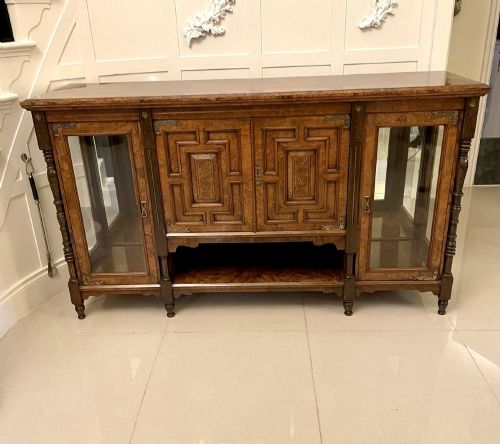
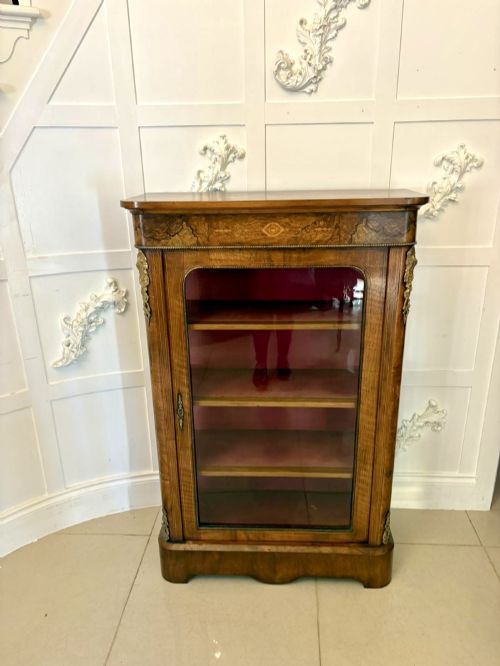
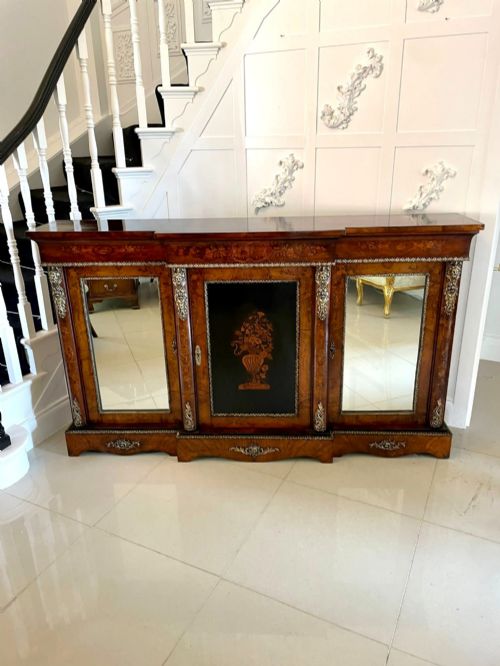
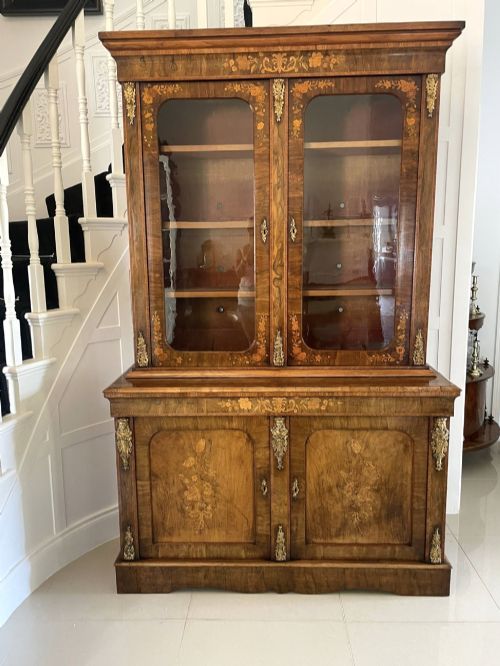
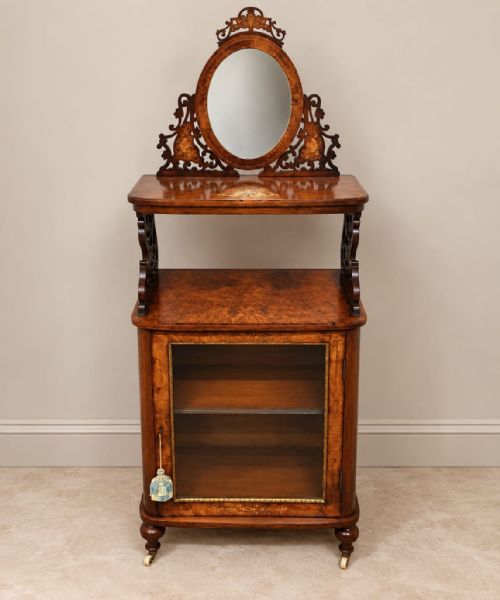
An inlaid burr walnut credenza is a sophisticated nineteenth-century low cabinet designed for display and storage in formal reception rooms. These pieces predominantly date from the Victorian era, spanning the decades between eighteen-fifty and nineteen hundred, with styles encompassing standard Victorian, Aesthetic Movement, and French Revival.
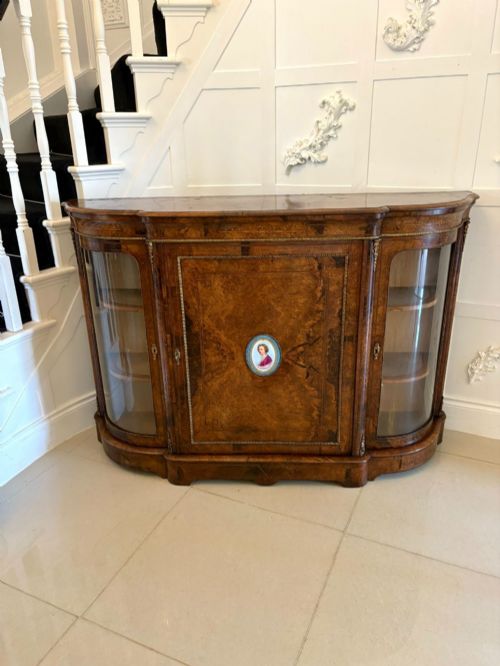
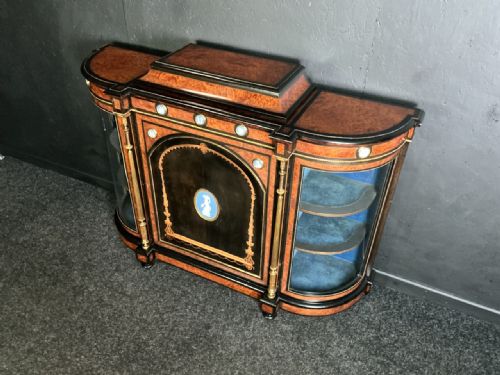
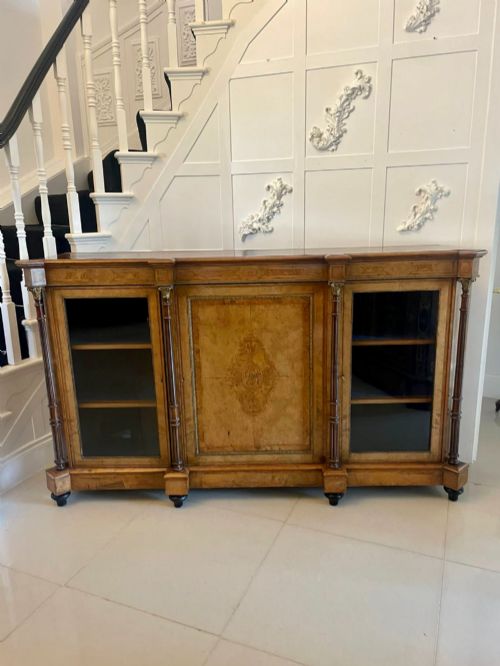
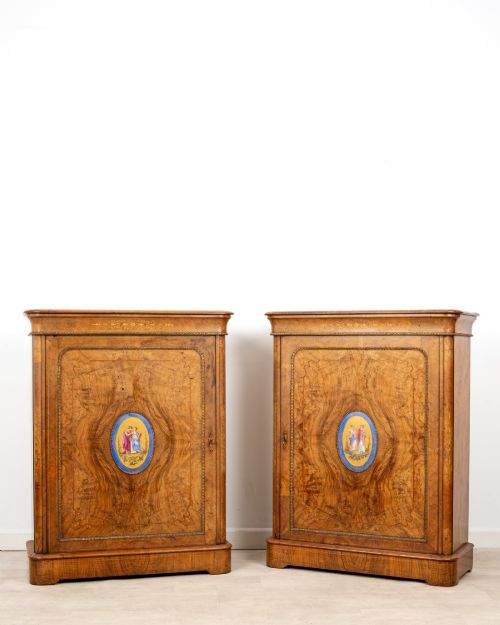
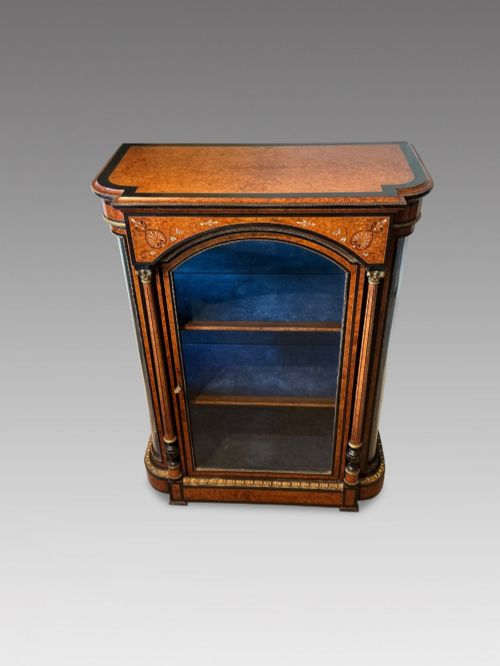
The primary form encountered on this page is the serpentine or straight-fronted credenza featuring glazed central or side doors, frequently accompanied by narrower freestanding pier cabinets and side cabinets. Walnut and burr walnut form the structural and decorative core of these furnishings, often enriched with delicate boxwood and contrasting timber inlay.
What varies in quality
The standard of an inlaid burr walnut credenza rests primarily on the selection and matching of the burr veneer across the principal surfaces. Superior examples display dense, symmetrical grain patterns that flow harmoniously across doors and drawer fronts without jarring interruptions.
Execution of the marquetry and the crispness of the cast ormolu mounts further distinguish finer pieces from standard production. Master workshops invested greater precision in the fit of the doors, the quality of the internal velvet linings, and the intricacy of the boxwood detailing.
Some nineteenth-century makers cleverly concealed velvet-lined shelves behind curved glass, hoping guests would admire the porcelain just as much as the swirling burr grain.
Gillows·Edwards and Roberts
The Inlaid Burr Walnut Credenza Glossary
- Burr walnut
- A figured timber obtained from the gnarled growths of walnut trees, prized for its swirling, highly decorative grain patterns. Cabinetmakers sliced this wood into thin veneers to cover large flat surfaces.
- Credenza
- A low nineteenth-century sideboard or display cabinet, typically featuring a glazed central compartment flanked by smaller side cupboards or curved glass doors. It served both decorative and functional purposes in Victorian drawing rooms.
- Ormolu
- Gilded bronze mounted onto furniture as decorative embellishments and protective edging. It added metallic contrast to the dark walnut surfaces.
- Marquetry
- The art of creating decorative patterns and floral motifs by applying thin pieces of wood veneer to a structural foundation. Boxwood was frequently utilised for this contrasting inlay work.
- Pier cabinet
- A narrow freestanding display cabinet designed specifically to fit the wall space between windows. These pieces often match the aesthetic of larger credenzas within the same interior.
Inlaid Burr Walnut Credenza: Frequently Asked Questions
What is the difference between a credenza and a pier cabinet?
A credenza is typically a long, low cabinet featuring a combination of central and side doors designed to stand against a primary wall. A pier cabinet is a narrower, taller single unit built specifically to occupy the wall space between windows.
While both utilise burr walnut and similar decorative inlays, the credenza offers substantially more surface area and storage capacity.
How do I care for burr walnut furniture?
Burr walnut requires stable indoor humidity and protection from direct sunlight to prevent the delicate veneer from drying or fading. Regular dusting with a soft, dry cloth maintains the finish without needing harsh polishes.
Applying a traditional beeswax occasionally helps nourish the wood and preserve the depth of the grain.
Were these cabinets always used for display?
These cabinets served a dual purpose in nineteenth-century homes, functioning as both storage units and display cases for valued possessions. The glazed doors protected delicate ceramics and glassware from dust while keeping them visible to guests.
Internal velvet-lined shelves provided a suitable backdrop for prized ornaments and tableware.
How can I tell a Victorian piece from a later revival?
Nineteenth-century construction methods leave distinct indicators such as hand-cut dovetails on internal drawers and traditional timber shrinkage patterns. The integration of authentic ormolu mounts and hand-cut boxwood marquetry rather than stamped substitutes also points to the period.
Examining the secondary woods inside the cabinet helps confirm the age and manufacturing origin.