




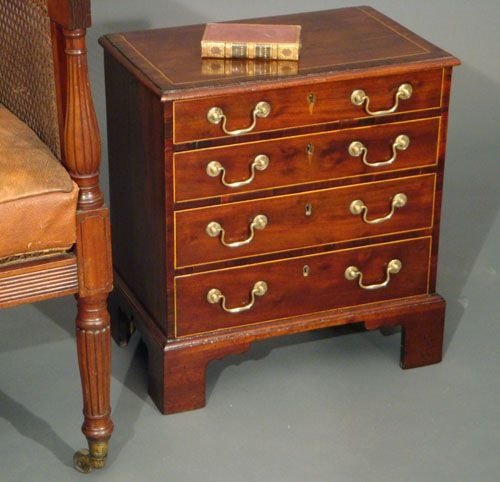


Inlaid Apprentice Chest
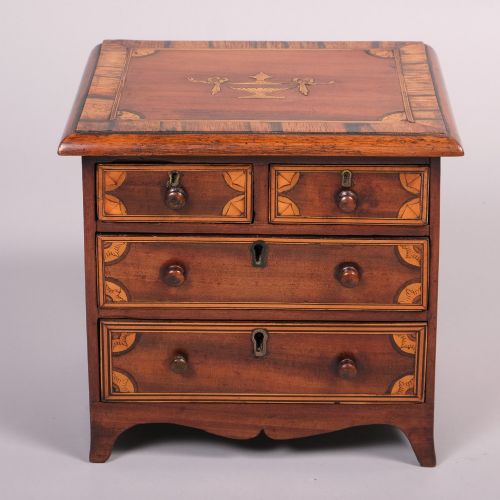
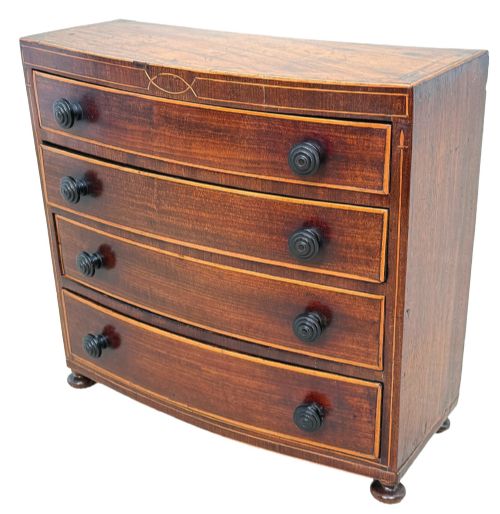
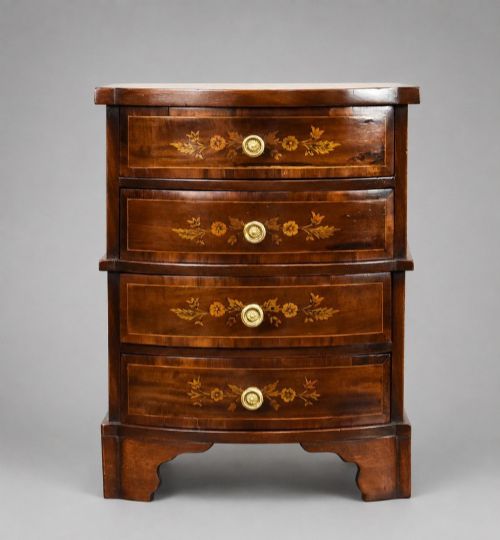
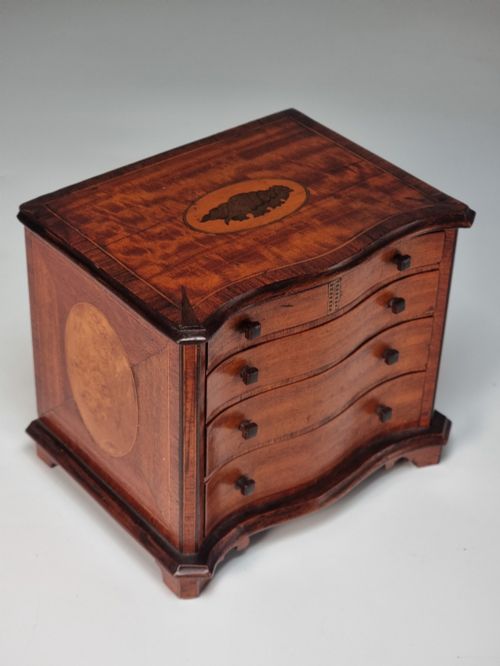
These inlaid apprentice chest examples are scale pieces of miniature furniture crafted by makers to demonstrate skill, built in periods from the Georgian era through to Edwardian times.
Inlaid Apprentice Chest
An inlaid apprentice chest is a scaled-down piece of furniture reflecting full-sized cabinet making traditions, spanning periods like Georgian, Victorian, and Edwardian. The forms seen most often are miniature chests of drawers and miniature cabinets, sometimes taking alternative shapes such as tea caddies or storage trunks.
Makers constructed these miniature pieces using varied structural woods and decorative finishes, often incorporating intricate marquetry or contrasting stringing. They function historically as display items or demonstration works rather than domestic storage for full-scale garments.
Materials and construction
Constructed primarily from timbers such as mahogany, walnut, satinwood, and rosewood, these miniature chests rely on traditional joinery scaled down to fractions of standard furniture dimensions. Cabinet makers incorporated secondary woods and delicate framing to maintain structural integrity across the smaller frame.
Decorative surfaces utilise contrasting details like boxwood, bone, and brass fittings, alongside marquetry patterns inlaid into the primary wood veneer. Certain pieces feature applied mother of pearl elements or specialised grain selection to emulate full-scale high-style furniture.
Inlaid Apprentice Chest Retail Price Guide 2026
Typical asking prices for inlaid apprentice chest among the pieces listed under this phrase on Sellingantiques today, from the lower quarter to the upper quarter. They describe what is for sale here now, not the wider market.
Listings feature examples built across the eighteenth, nineteenth, and early twentieth centuries, utilising mahogany, walnut, satinwood, and decorative marquetry.
Assessing craftsmanship and proportion
Quality in an inlaid apprentice chest rests upon the precision of the miniature joinery and the fidelity of the proportions relative to full-sized examples. Finer pieces demonstrate exact dovetailing in the drawer construction and careful alignment of inlaid wood details.
The sophistication of the timber selection and the complexity of the inlay work distinguish standard workshop exercises from master demonstrations. Condition of the delicate veneers and original brass hardware further influence the integrity of each piece.
A. F. Lloyd, Bideford
The Inlaid Apprentice Chest Glossary
- Marquetry
- Decorative veneer work forming pictures or geometric patterns by assembling thin pieces of wood, shell, or bone. It appears frequently on cabinet fronts to create visual contrast.
- Bowfront
- A convex curved cabinet or chest front that swells outward at the centre. This curved profile requires specialised shaping of both the frame and the drawer boxes.
- Serpentine
- A furniture front shape characterised by a central convex curve flanked by two concave curves. The flowing outline demands precise woodworking skill.
- Stringing
- Thin lines of contrasting wood inlaid into the surface of furniture to create decorative borders. It outlines panels and drawer edges on many pieces.
Inlaid Apprentice Chest: Frequently Asked Questions
What is an apprentice chest?
An apprentice chest is a small-scale model of a full-sized chest of drawers, traditionally made by trainees to demonstrate their joinery skills to a guild or master. These pieces replicate every structural detail of domestic furniture in miniature.
Over time, these objects transitioned from trade test pieces into decorative items for collectors. Their compact proportions made them suitable for tabletops and specialised display cabinets.
How old are these miniature chests?
The pieces span multiple historical periods, primarily dating from the Georgian and Victorian eras, with some examples reaching back to the eighteenth century or forward into Edwardian times. Each period imparts distinct stylistic markers to the design.
Wood choice and construction techniques often align with the dominant furniture fashions of their specific decade of origin. Examining the secondary timbers and hardware helps determine the manufacturing era.
Were these used for storage?
Due to their diminutive size, these chests were not intended for storing standard clothing or household goods. Instead, they served as decorative display items, salesman samples, or repositories for small trinkets and keepsakes.
Certain specialised forms, such as tea caddies configured like chests of drawers, held dry goods or collections. Their primary purpose remained visual appreciation of scale cabinet work.
How do I care for inlaid wood?
Inlaid wood surfaces require stable environmental conditions with minimal humidity fluctuations to prevent the delicate veneers and stringing from lifting. Gentle dusting with a dry, soft cloth preserves the finish without harming the aged timber.
Avoid placing these pieces in direct sunlight or near heat sources, which can dry out the historic adhesives beneath the inlay. Wax polishing should be done sparingly using traditional formulations suitable for antique furniture.