



Industrial Storage Boxes
Industrial storage boxes are rugged containers built for utility, offering functional organisation with heavy-duty character.
Industrial Storage Boxes
Industrial storage boxes encompass robust trunks, chests, bins, and tins originating from the nineteenth and early twentieth centuries. These utilitarian objects were designed for transport, trade, and workshop organisation rather than domestic display.
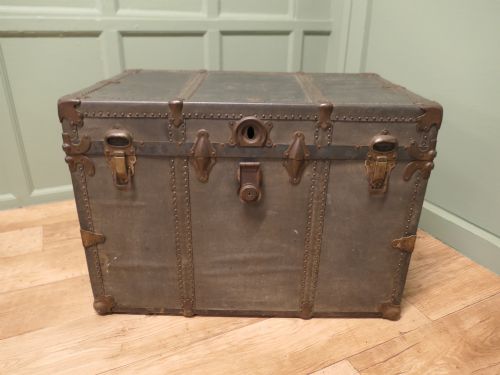
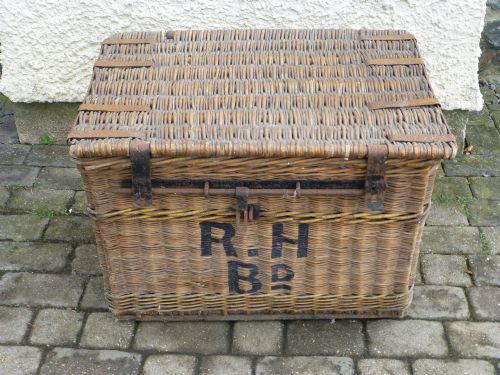
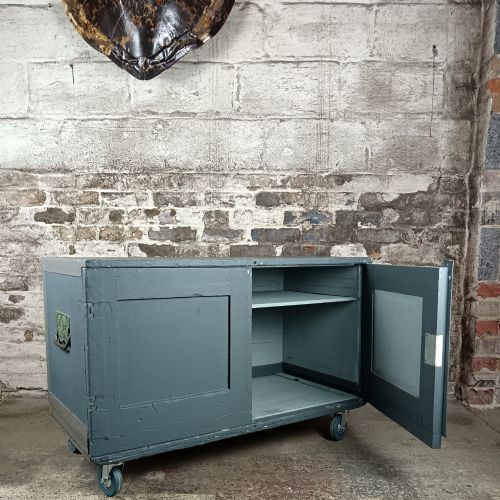
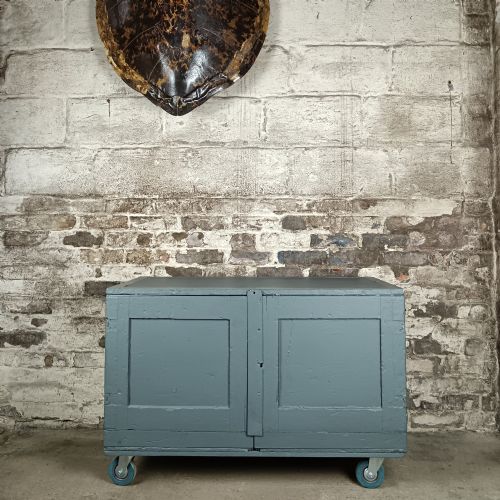
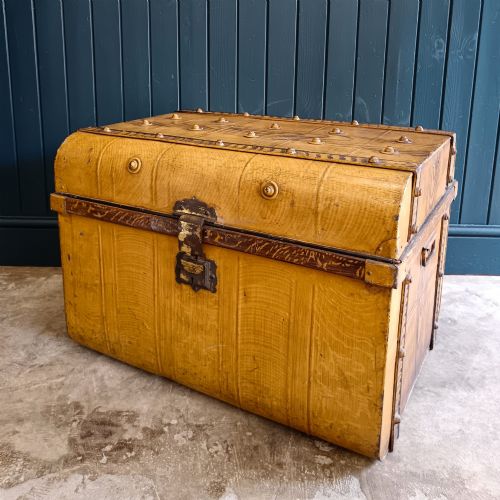
The pieces available on this page lean heavily toward utilitarian pine carpenters chests, metal steamer trunks, campaign chests, and mill bins. You will also encounter specialised items such as steel deed boxes and tobacco storage tins.
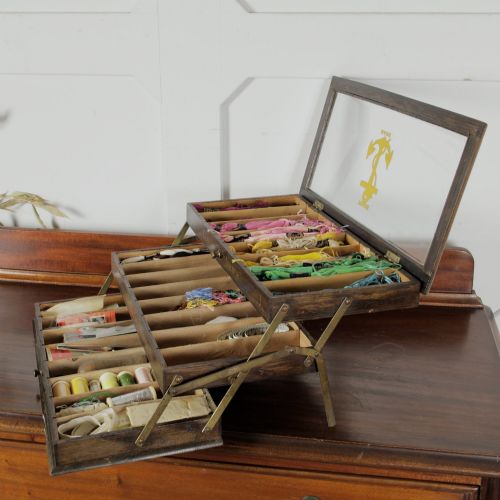
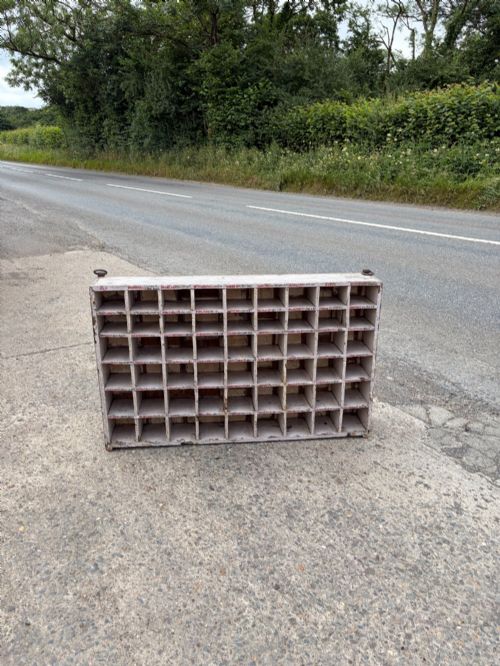
Dating primarily from the Victorian, Edwardian, and 1920s eras, these items reflect the heavy industrial and military demands of their time. Their forms are strictly dictated by function, ranging from large floor-standing trunks to compartmentalised pigeon holes.
Materials and construction
Construction relies heavily on durable timbers such as pine and solid wood, frequently reinforced with iron, brass, and sheet metal bindings. Handles, locks, and hinges are typically forged from heavy metals to withstand rigorous handling.
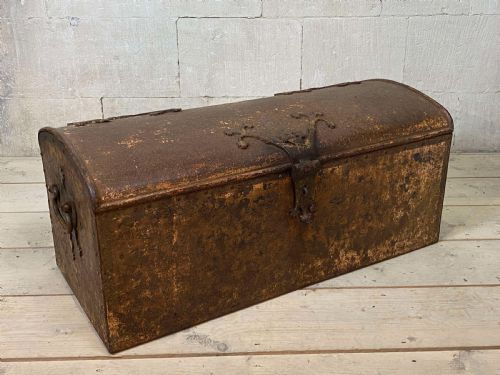
Many surfaces feature original paint, black canvas, or leather bindings, while others showcase plain wood construction bearing the marks of active trade. Blacksmith-made elements and reinforced corners demonstrate the practical engineering required for transport and storage.
Industrial Storage Boxes Retail Price Guide 2026
Typical asking prices for industrial storage boxes among the pieces listed under this phrase on Sellingantiques today, from the lower quarter to the upper quarter. They describe what is for sale here now, not the wider market.
Listings span from the 19th century through the 1920s, featuring pine, iron, steel, and brass across various military and industrial forms.
Judging quality
Quality in these utility pieces rests upon the integrity of the original construction, the robustness of the hardware, and the character of the surface wear. Surviving original paint finishes, functioning brass locks, and intact internal compartments elevate a piece above standard utilitarian examples.
The distinction between standard workshop boxes and superior pieces often lies in specific provenance, such as military campaign origins or named manufacturing lines like Cunard or Gnome Et Le Rhone. Substantial iron strapwork and maker-specific details separate ordinary storage items from exceptional survivals.
The Industrial Storage Boxes Glossary
- Campaign chest
- A sectional storage chest designed to split into separate modules for easy transport by military officers. These items feature recessed brass handles and corner brackets to prevent damage during transit.
- Deed box
- A secure metal container, often constructed from steel with a fall front, used for storing legal documents and valuable papers. They frequently include functional locks and brass handles.
- Mill bin
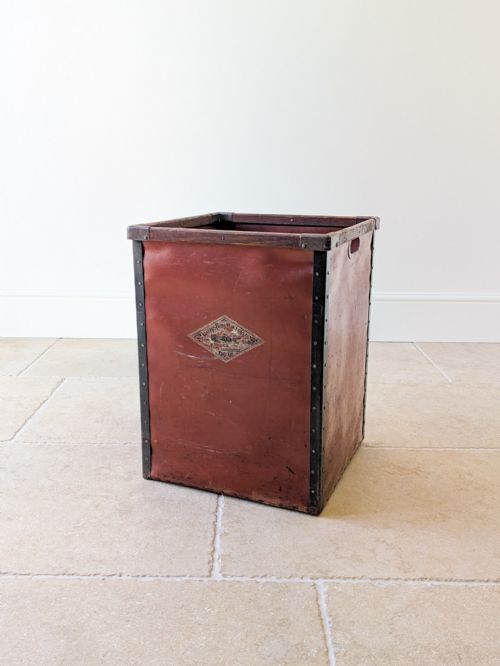
- A deep industrial storage container utilised in textile mills and factories for holding materials or components. They are typically fashioned from heavy timber or metal to endure industrial environments.
- Pigeon holes
- A set of open compartmentalised shelving units designed for sorting mail, documents, or small parts. Early twentieth-century examples are commonly built from timber with numerous small cubbies.
Industrial Storage Boxes: Frequently Asked Questions
What were industrial storage boxes originally used for?
These boxes served practical roles in factories, military campaigns, and transit, holding tools, documents, and personal belongings.
Their robust construction allowed them to endure heavy daily use in demanding commercial and industrial settings.
How do I clean a metal and wood trunk?
Wipe wooden and painted surfaces gently with a dry or slightly damp cloth to remove surface dust.
Avoid harsh chemical cleaners that might strip original patinas, aged paint, or historical surface finishes.
Can I use these trunks as coffee tables?
Sturdy pine chests and flat-topped trunks work well as low coffee tables while providing hidden interior storage.
Ensure the lid is stable and level before placing items on the surface.
How do I identify the period of a trunk?
Examine the construction materials, lock types, and hardware fastenings such as hand-forged iron versus machine-made steel.
Styles span the nineteenth century through the 1920s, showing shifts from heavy timber and brass to sheet metal and steel.