
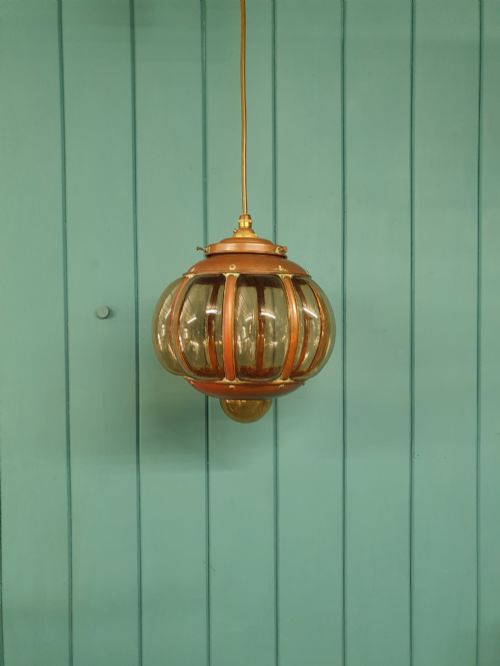


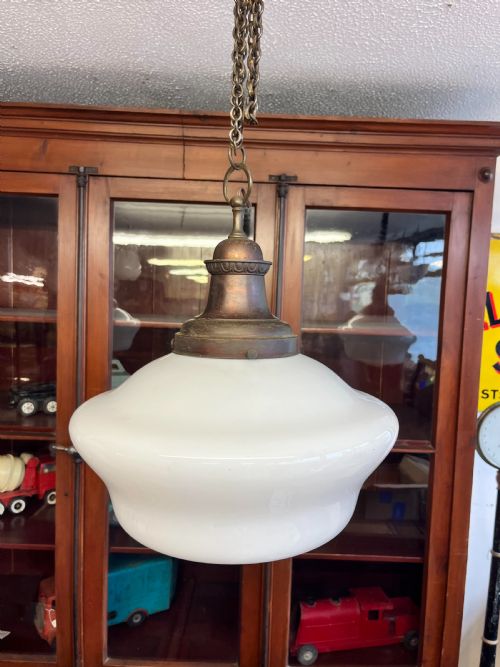
Industrial Glass Pendant
Industrial glass pendant lights are robust utilitarian fixtures that bring honest illumination and functional character to contemporary interiors.
Industrial Glass Pendant
Industrial glass pendant fittings comprise hanging ceiling lights designed for factories, railways, ships and trade premises during the Victorian, Edwardian and mid-century periods. These fixtures combine utilitarian shades with sturdy metal galleries made to withstand demanding working environments.
The versions most commonly met on this page span the 1920s, 1930s and 1940s, alongside earlier Victorian and Edwardian examples. They typically take the form of pendant lighting and ceiling lights featuring specialised glass diffusers.
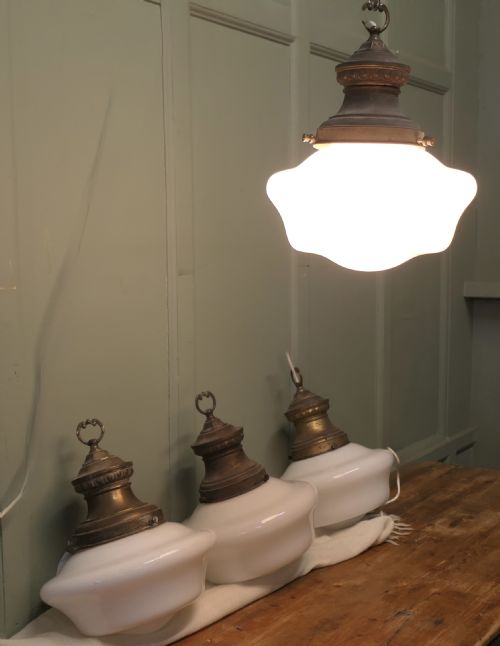
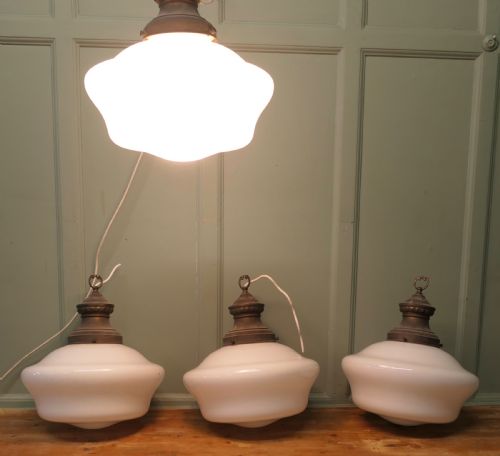
Makers and designers utilised durable components such as prismatic glass, opaline glass, mercury glass and smoked glass paired with brass, copper, chrome and metal mountings. These durable materials ensured long working lives in industrial settings before finding new homes in domestic spaces.
Materials and Manufacture
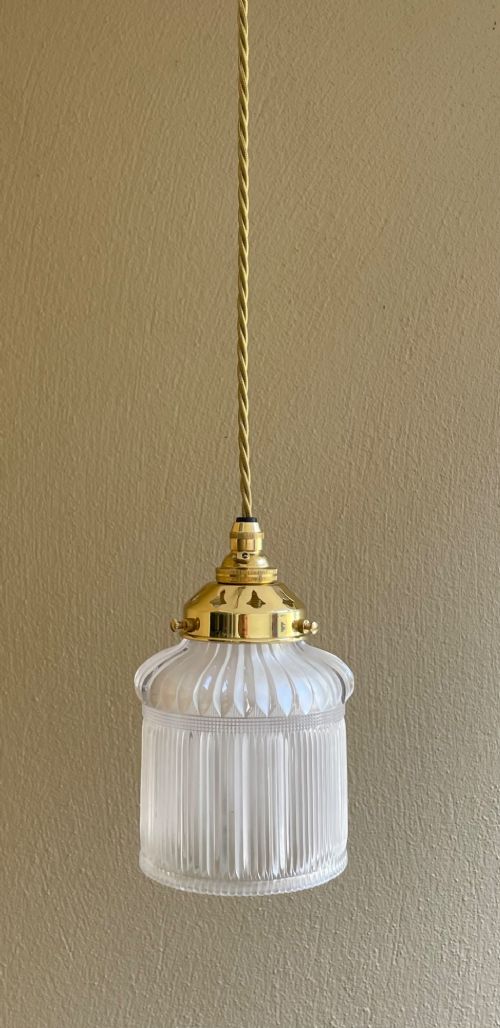
Shades are formed from pressed, moulded or blown glass, including specialised prismatic and opaline types designed to diffuse intense light efficiently. Mercury mirrored glass and smoked glass variants offer alternative reflective or subdued aesthetic qualities.
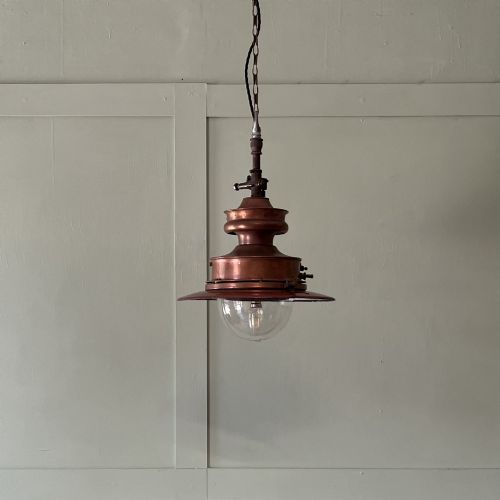
Metal galleries, chains and holders constructed from brass, copper, chrome and general metalwork secure the glass shades safely. These structural elements reflect the heavy-duty manufacturing standards of their respective periods, from Victorian workshops to 1940s trade production.
Listings feature items spanning the Victorian era through the 1940s, utilising brass, copper, chrome and multiple glass varieties.
Assessing Quality
Quality rests upon the purity and finish of the glass components, particularly the complexity of moulding seen in double prismatic and opaline shades. Finer examples display crisp optical properties and substantial weight in both glass and metal galleries.
The integrity of the original metal hardware, whether brass, copper or chrome, distinguishes standard utility pieces from those retaining high-grade period mountings and galleries.
Holophane
The Industrial Glass Pendant Glossary
- Prismatic glass
- Glass moulded with precise geometric ribs or prisms designed to refract and diffuse light evenly while reducing glare. This optical innovation is frequently found on factory and street lighting.
- Opaline glass
- A milky, translucent white glass that softens light sources while creating an even, glowing illumination. It was widely favored for industrial and institutional interiors.
- Gallery
- The metal collar or fitter that grips the top of a glass shade and connects it to the suspension rod or chain. Galleries provide both structural support and aesthetic framing.
- Mercury glass
- Double-walled glass silvered on the interior to create a reflective, mirror-like exterior sheen. This technique produced a distinct metallic lustre without using actual mercury.
- Nautical pendant
- A heavy-duty hanging light originally manufactured for marine use on ships and docks. These pieces incorporate protective metal cages and weather-resistant copper or brass components.
Industrial Glass Pendant: Frequently Asked Questions
What is an industrial glass pendant?
An industrial glass pendant is a utilitarian ceiling light originally built for factories, railways or marine environments during the 19th and 20th centuries.
These fixtures combine robust metal galleries with durable glass shades designed to withstand demanding workspaces.
How do I hang a ceiling light?
Ceiling lights suspend from wiring connected to a secure ceiling junction box using matching chains, rods or flex cords.
Professional electrical installation ensures the weight of the metal gallery and glass shade is safely supported.
How do I date an antique pendant?
Dating relies on identifying period-specific materials, manufacturing techniques and stylistic traits such as Victorian copper work or 1920s prismatic glass.
Comparing the metal galleries and glass types helps place the fixture within the Edwardian, Victorian or mid-century eras.
Where should I place these lights?
These pendant fittings suit kitchens, dining tables and hallways where direct, functional illumination is required.
Their utilitarian forms complement both traditional and modern interior schemes by adding historical character.