

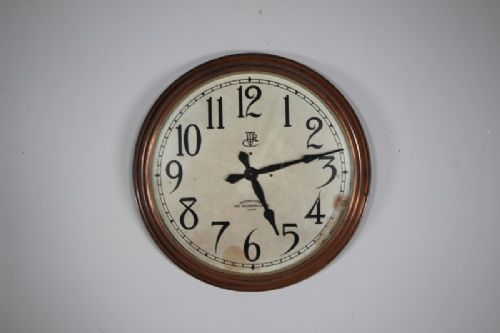


Industrial Clock Dial
Industrial clock dial pieces are heavy functional faces rescued from railways, factories, and offices, offering striking utilitarian geometry for modern walls.
Industrial Clock Dial
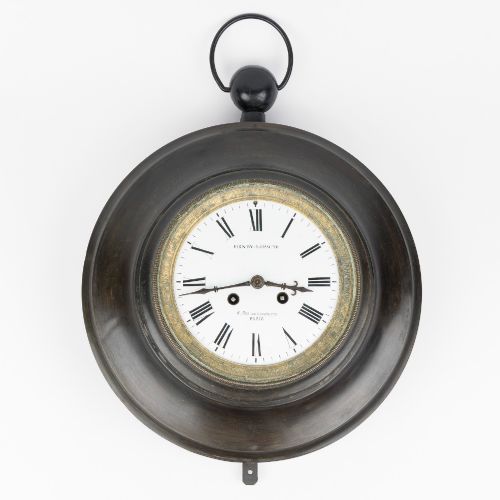
When you search for industrial clock dial options, you encounter large circular faces stripped from their original working movements or mounted as wall pieces. The selection spans straightforward utility designs originating from British railways alongside French enamel turret faces.
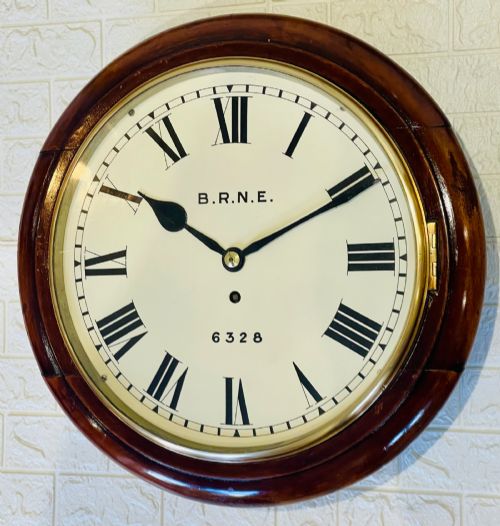
You are most likely to meet railway and factory examples produced during the Victorian, Edwardian, and mid-twentieth-century eras. These range from heavy brass-rimmed dials to substantial enamel and copper faces designed for public legibility.
Origins heavily influence the character of these objects, connecting them to specific transit networks, post offices, and municipal buildings. Their enduring appeal lies in bold typographic layouts and robust construction materials built to withstand industrial environments.
How they were made
Makers constructed these dials using durable base materials like iron, brass, copper, and heavy glass to endure harsh working conditions. Enamel surfaces were fired onto metal substrates to ensure longevity and prevent fading in soot-heavy railway stations and factories.
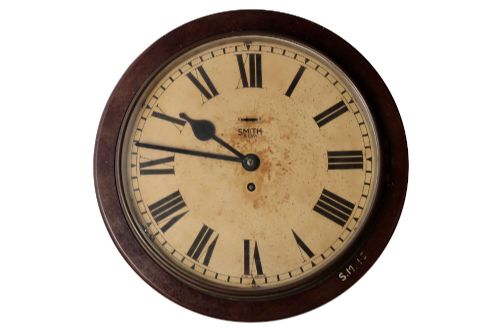
Surrounds frequently incorporate turned mahogany timbers, cast brass bezels, and robust bakelite casings for functional protection. Craftsmen painted stark Arabic or Roman numerals directly onto white enamel or metal grounds to maximise distant visibility.
Industrial Clock Dial Retail Price Guide 2026
Typical asking prices for industrial clock dial among the pieces listed under this phrase on Sellingantiques today, from the lower quarter to the upper quarter. They describe what is for sale here now, not the wider market.
Listings feature materials spanning glass, brass, iron, mahogany, bakelite, enamel, and copper across Victorian, Edwardian, and mid-twentieth-century periods.
What varies in quality
The distinction between standard utility items and exceptional survivals rests upon original patination, maker provenance, and dial legibility. Clear lettering commissioned for specific railway companies or municipal clockmakers elevates the aesthetic weight of a piece.
Substantial scale and integrated brass bezels or heavy cast iron frames indicate high-grade institutional commissioning rather than standard commercial production. Preservation of the untouched metal surfaces and original painted numerals dictates the overall desirability of the object.
Smith·Henry-Lepaute·Joyce Whitchurch·John Walker·Smiths Empire·Smiths London
The Industrial Clock Dial Glossary
- Fusee
- A conical pulley mechanism inside certain wall clocks that equalises the driving force of the mainspring as it winds down. This ensures accurate timekeeping over the duration of the 8-day run.
- Turret clock
- A large clock mounted on the exterior or tower of a public building, church, or factory. Their dials were built on a massive scale for outdoor visibility.
- Bakelite
- An early synthetic thermosetting plastic used for durable clock surrounds and casings from the early twentieth century onwards. It provides a distinct dark, smooth finish.
- Bezel
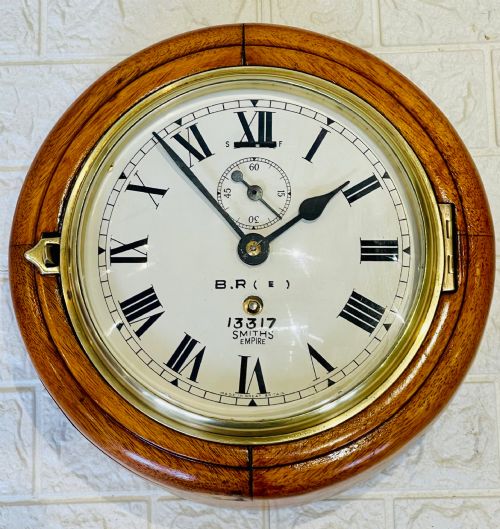
- The metal ring that holds the glass face in position over the clock dial. Brass and copper bezels often feature hinged latches for interior access.
- Bulkhead clock
- A rugged timepiece originally designed for mounting on ship walls or maritime bulkheads. They typically feature heavy waterproof housings made of brass or copper.
Industrial Clock Dial: Frequently Asked Questions
What is an industrial clock dial?
An industrial clock dial is the circular painted face salvaged from a large wall, station, or turret clock. They were originally manufactured for factories, railways, and municipal buildings.
These pieces showcase bold typography, robust metal bezels, and durable enamel grounds built for public visibility. Today they function as striking wall art.
How were railway clock dials used?
Railway clock dials governed train departures and station operations across extensive transit networks. Station masters and passengers relied on their clear numerals for precise timing.
Mounted high on platform walls or booking halls, these faces endured decades of steam and industrial grime. Their robust construction reflects strict utilitarian railway standards.
How do I date an antique clock dial?
Dating relies on typeface styles, construction materials, and company provenance recorded on the dial face. Victorian and Edwardian examples often feature hand-painted numerals and cast brass bezels.
Mid-century pieces frequently incorporate bakelite surrounds or specific railway abbreviations like B.R. Cross-referencing named makers and transport boards provides a reliable production window.