



Industrial Cast Iron Base
An industrial cast iron base provides the sturdy, utilitarian foundation needed to anchor a heavy timber table top or workspace in a modern room.

Industrial Cast Iron Base
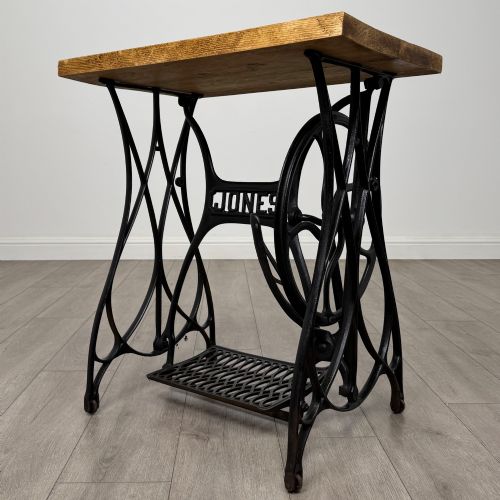
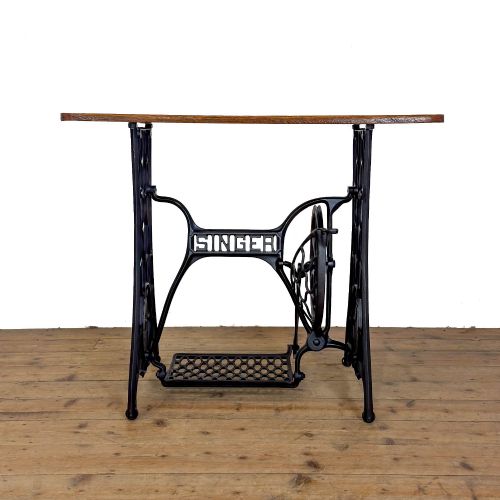
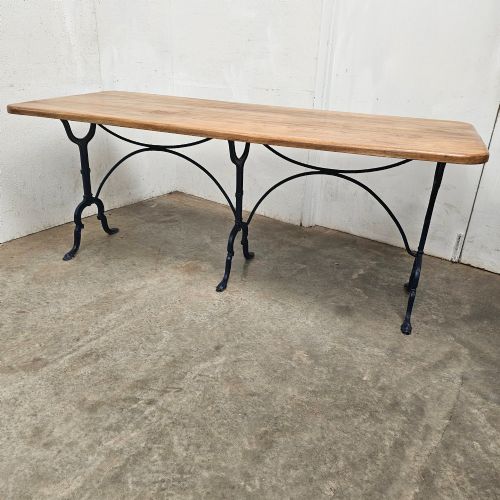
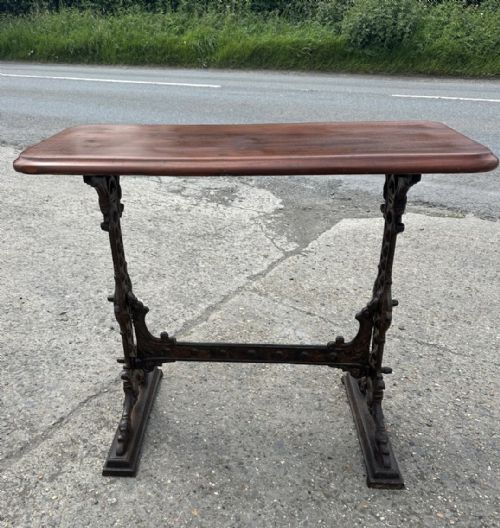
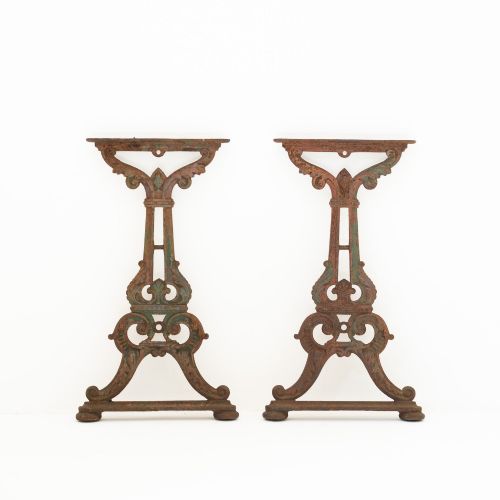
An industrial cast iron base appears across various practical objects, most frequently supporting pub tables, bistro tables, and sewing machine frames from the Victorian and Edwardian eras. These heavy components originate from factories, public houses, and workshops where durability was paramount for daily use.
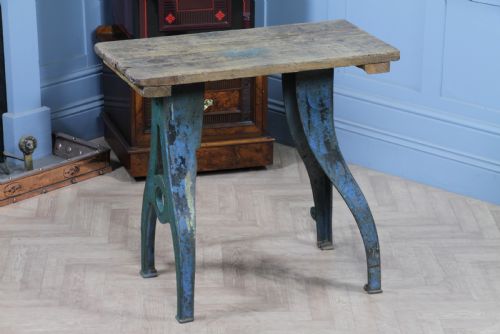
Many listings pair these metal supports with wooden surfaces such as oak, pine, mahogany, and elm to create functional side tables, coffee tables, and dining desks. The surviving examples showcase the transition of industrial salvage into domestic and commercial interior design.
Evaluating Quality and Integrity
The distinction between superior examples lies in the crispness of the casting detail, the integrity of the original manufacturer's markings, and the balance of the overall structure. Pieces retain greater appeal when their metal components remain unmodified and retain their honest surface wear from decades of service.
The relationship between the base and its top significantly influences desirability, particularly where original mahogany, oak, or elm boards match the age of the iron support. Adaptations involving modern replacement tops or mixed periods alter the character of the piece compared to entirely untouched survivals.
Industrial Cast Iron Base Retail Price Guide 2026
Typical asking prices for industrial cast iron base among the pieces listed under this phrase on Sellingantiques today, from the lower quarter to the upper quarter. They describe what is for sale here now, not the wider market.
Listings feature items spanning from the Victorian period through the 1940s, constructed primarily from cast iron, oak, pine, and brass.
Singer Sewing Machine·Carters of London·Hawkins
The Industrial Cast Iron Base Glossary
- Cast iron
- An iron-carbon alloy poured into moulds to create rigid, heavy components with high compressive strength. This material forms the primary structural support for industrial furniture and pub tables.
- Britannia
- A specific style of heavy cast iron pub table base featuring figural or ornate moulded decoration. These Victorian supports commonly carry circular wooden tops of mahogany or pine.
- Up-cycled
- The process of adapting a salvaged industrial base, such as a sewing machine frame, to hold a newly sourced timber top. This method creates functional household tables from redundant commercial hardware.
- Bistro table
- A small commercial table featuring a central metal pedestal base and a wooden top. These pieces originated in French and British hospitality venues for dining and drinking.
Industrial Cast Iron Base: Frequently Asked Questions
How do I clean a cast iron base?
Remove surface dust with a dry cloth and apply a light coat of neutral wax or oil to protect the metal without altering its patina. Avoid harsh chemical cleaners that strip the original dark finish.
Ensure the surrounding timber top receives appropriate care suited to its specific wood type, keeping moisture away from unsealed joints.
Are these bases heavy to move?
Cast iron is exceptionally dense and heavy, meaning these bases require two people to lift and position safely within a room. Their substantial weight is what originally kept workshop machinery and pub tables stable during heavy use.
Felt pads attached to the underside help protect modern flooring from the rigid metal feet.
Can I use an industrial base outside?
While cast iron withstands outdoor conditions well, prolonged exposure to moisture leads to oxidation and rust formation on unprotected metal surfaces. Garden tables benefit from winter storage under cover to preserve their structural condition.
Timber tops paired with the iron require weather-resistant treatments if kept permanently outdoors.
How do I date a cast iron base?
Examine the complexity of the casting, any maker's name or patent numbers cast into the metal, and the overall style associated with periods like the Victorian era or 1930s. Fasteners, bolt types, and the method of attachment to the tabletop offer further clues to the manufacturing decade.
Wear patterns and the depth of the metal patina corroborate the age suggested by the design.