




Industrial Apothecary Drawers
Industrial apothecary drawers bring genuine workshop utility and historic character into a room through multiple small compartments.
Industrial Apothecary Drawers
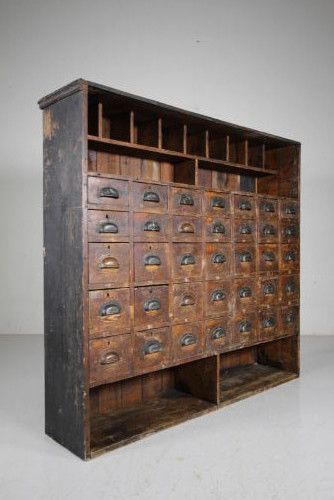
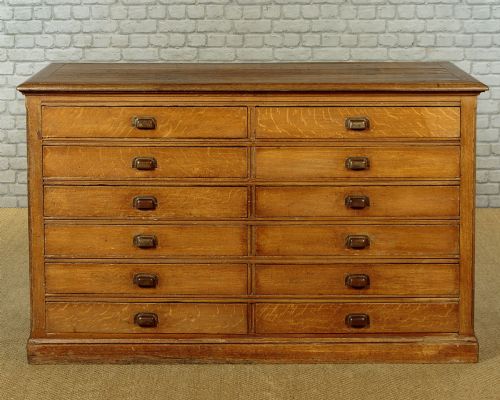
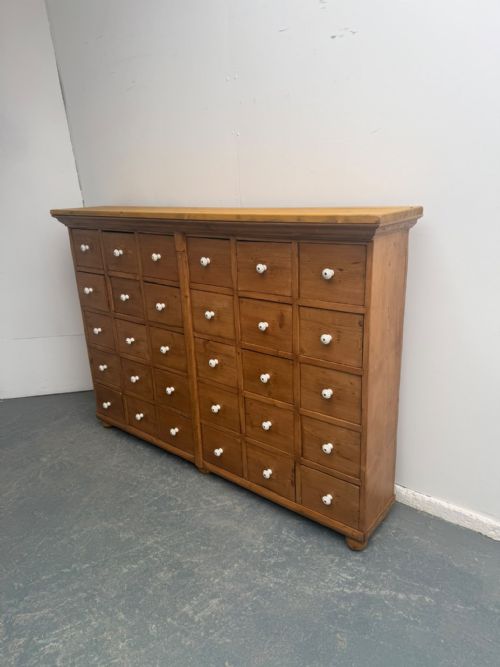
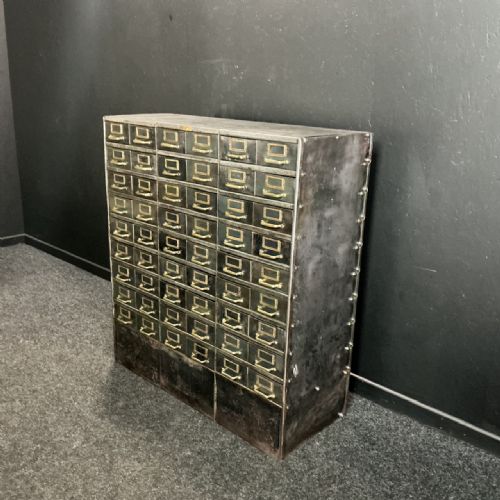
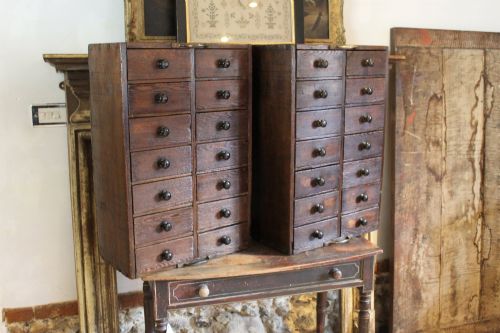
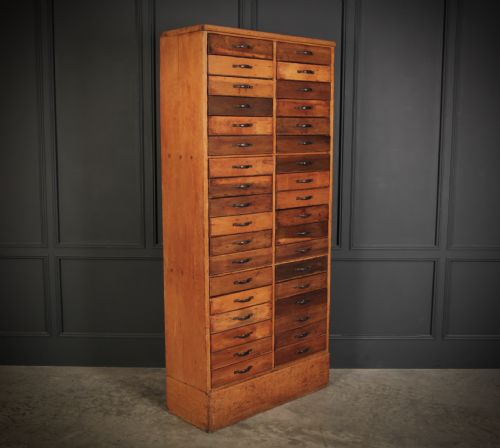
Industrial apothecary drawers are substantial storage pieces designed for commerce and trade, appearing primarily as banks of drawers and chests from the Victorian and Edwardian eras. Buyers searching for these items encounter large multi-drawer units originating from English shops, French workshops, and commercial premises.
The forms span tall watchmakers cabinets, extensive haberdashery storage, and shop fittings featuring numerous small pulls. These pieces adapt easily to modern interiors for organising smaller items while displaying visible age and utility.
Construction and Materials
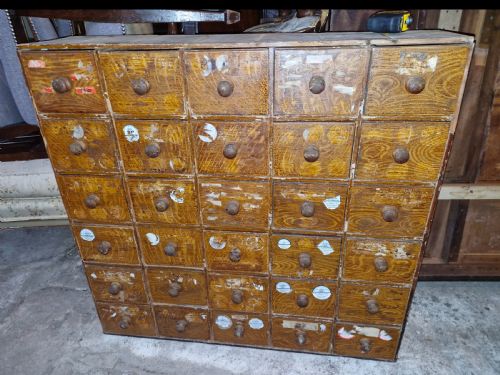
Carpenters built these heavy storage units using durable timbers such as pine, fruitwood, and mahogany to withstand daily commercial use. Workshops integrated metal, iron, steel, and brass for handles, label holders, and structural reinforcement.
Surfaces often retain their original paint finish or aged wood patination developed through decades of practical service in shops and offices.
Industrial Apothecary Drawers Retail Price Guide 2026
Typical asking prices for industrial apothecary drawers among the pieces listed under this phrase on Sellingantiques today, from the lower quarter to the upper quarter. They describe what is for sale here now, not the wider market.
The listings span pieces built from pine, mahogany, and fruitwood, reinforced with brass, iron, and steel hardware.
Assessing Quality
Quality rests in the scale and proportion of the drawer banks, where pieces featuring higher counts of matching compartments command greater interest. Original hardware, such as brass pulls and iron label frames, preserves the integrity of the piece.
The choice of timber creates a distinct hierarchy, with dense fruitwood and mahogany standing apart from utility pine carcases. Surviving original paint finishes also elevate the character compared to stripped or modernised surfaces.
D Napier and Sons·Luxmore's of Ilfracombe
The Industrial Apothecary Drawers Glossary
- Bank of drawers
- A large multi-compartment storage unit designed for commercial or trade use. These pieces contain numerous small drawers originally meant for organising stock.
- Haberdashery drawers
- Shop storage cabinetry built with shallow compartments for textiles and small wares. They often feature glass fronts or numerous small wooden pulls.
- Shop fitting
- Permanent or semi-permanent commercial furniture built for retail environments. These items include heavy timber counters and banks of storage designed for daily trade.
- Patina
- The surface sheen and wear developed on wood and metal over decades of use. It shows the age and working history of the piece.
Industrial Apothecary Drawers: Frequently Asked Questions
What were industrial apothecary drawers originally used for?
These large storage banks served in shops, pharmacies, and workshops to organise small inventory, hardware, and dry goods. Merchants relied on the numerous small compartments to keep trading stock sorted and accessible.
Over time, commercial premises upgraded their storage, releasing these heavy timber drawer units into the decorative market where their practical compartment layout found new domestic uses.
How do I date a bank of drawers?
Dating relies on timber selection, construction methods, and the style of accompanying hardware like brass pulls and iron label holders. Pieces from the nineteenth century often feature heavier pine carcases and hand-cut joinery.
Reference points include specific decades noted in the titles, such as the eighteen-eighties or nineteen-twenties, alongside regional characteristics from English and French workshops.
Are these drawer units suitable for modern homes?
The compact multi-drawer format makes these pieces exceptionally practical for organising everyday items in studies, kitchens, or living spaces. Their shallow compartments suit paperwork, stationery, and collections.
Placing a heavy bank of drawers requires measuring wall space and floor load capacity, as these commercial timber units are exceptionally heavy and deep.