




Industrial Tool
These industrial antique tool pieces are robust workshop instruments and trade implements shaped by heavy use.

Industrial Tool
When you search for an industrial antique tool, you encounter heavy trade equipment, workshop implements, and functional devices from the nineteenth and twentieth centuries. The selection spans utilitarian objects from diverse trades, including millinery, carpentry, farriery, and metalworking.
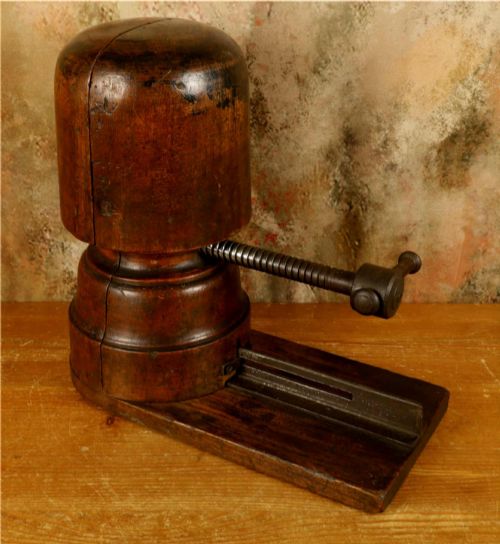
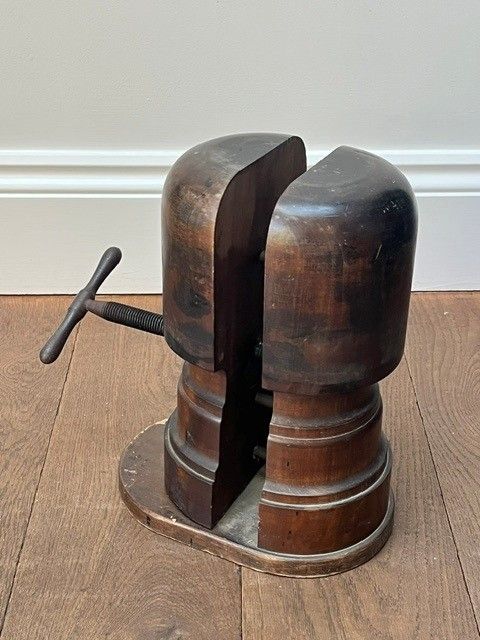
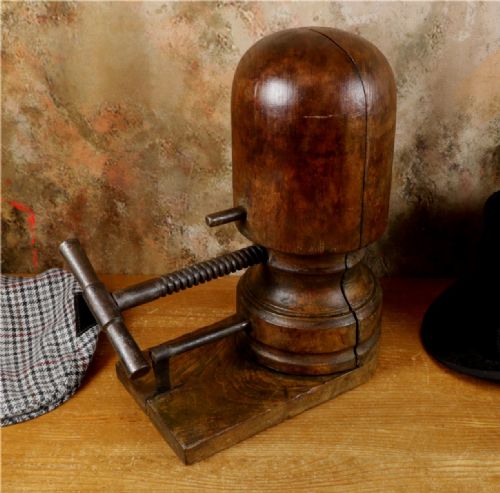
Millinery equipment forms a significant part of the selection, featuring wooden and aluminium hat blocks, stretchers, moulds, and sizers dating from the Edwardian era and the early twentieth century. These items were originally utilised in hat-making workshops to shape and size headwear.
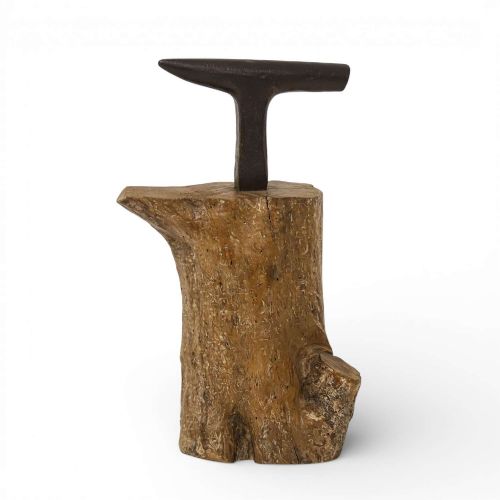
Metalworking and heavy trades are represented by blacksmiths' cast iron anvils, cobblers' leg anvils, a farrier's anvil mounted on a fruitwood trunk, and miners' pickaxes. Other functional workshop survivals include carpenters' pine chests, engineer tool boxes, and specialised corkers.
The objects originate from British, French, and railway contexts, spanning periods from the Victorian era through to the nineteen-forties. Many pieces reflect vernacular industrial utility, combining robust construction with sculptural qualities suited for modern interiors.
Materials and Construction
Cast iron and wrought iron provide the heavy foundations for anvils, vices, and mechanical corkers, offering immense durability and structural weight. Aluminium appears in twentieth-century millinery moulds and stretchers, providing a lighter yet resilient alternative to traditional timber.
Construction methods rely on robust joinery, metal casting, and functional assembly designed to withstand demanding manual labour. Rivets, iron braces, and fitted joints hold the diverse elements together without decorative concealment.
Industrial Tool Retail Price Guide 2026
Typical asking prices for industrial tool among the pieces listed under this phrase on Sellingantiques today, from the lower quarter to the upper quarter. They describe what is for sale here now, not the wider market.
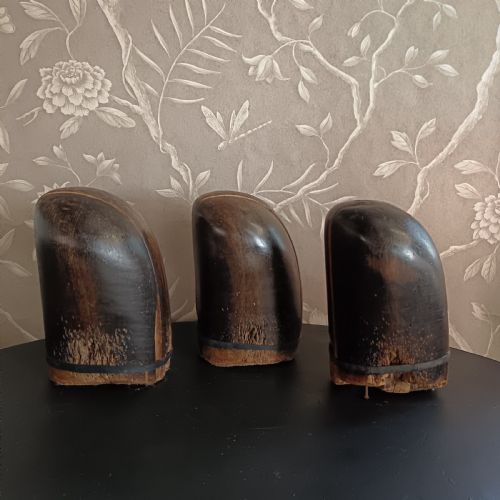
Military bearskin caps required specialised hat blocks to maintain their imposing regimental shape.
Evaluating Quality
Quality in these workshop pieces rests upon the integrity of the surviving material and the honesty of the wear. Examples that retain their original working mechanism, untouched surface patination, and clear structural form stand apart from heavily altered items.
The degree of specialised craftsmanship also dictates distinction, particularly in hand-carved wooden hat blocks or cast iron foundry work where maker details or clean casting lines remain intact. Utility and proportion govern the appeal, as tools designed for specific trades often possess striking sculptural presence.
The preservation of original fixtures, such as iron mounts on wooden trunks or intact numbering on aluminium moulds, separates standard utility items from more complete collector examples.
Gnome Et Le Rhone Engine Company·Smith
The Industrial Tool Glossary
- Hat block
- A carved wooden or cast form used by milliners to shape and dry hats during manufacture.
- Anvil
- A heavy iron or steel block with a flat top upon which metal is hammered and shaped.
- Farrier
- A specialist craftsman who trims hooves and shoes horses with iron plates.
- Cobbler
- A traditional artisan who repairs and constructs footwear using specialised hand tools.
- Millinery
- The design, manufacture, and sale of hats and headwear.
Industrial Tool: Frequently Asked Questions
What trades used these tools?
The pieces originate from a variety of traditional occupations, including carpentry, blacksmithing, farriery, shoe repair, and hat-making.
Each trade required specialised implements built from durable materials to withstand daily workshop demands.
How were hat blocks used?
Hat blocks served as solid forms over which wet felt, straw, or fabric was stretched, shaped, and pinned during the millinery process.
Once dried, the hat retained the precise contours of the wooden or aluminium mould.
Are these items still functional?
While many metal tools and wooden chests retain their mechanical soundness or storage utility, most pieces are now appreciated as decorative objects.
Their robust construction allows them to be repurposed safely within modern interior settings.
How do I identify the period?
Dating relies on material shifts, such as the transition from heavy cast iron and timber in the nineteenth century to aluminium in the early twentieth century.
Stamped manufacturer marks, railway agency labels, and construction styles also offer chronological markers.