



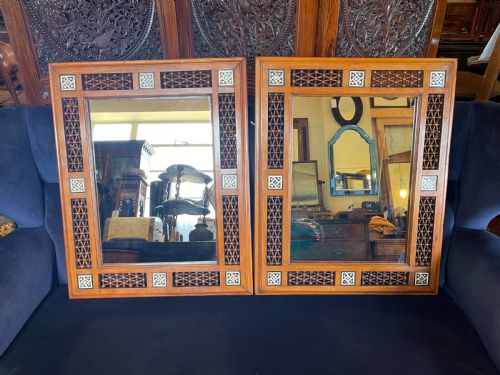


Indian Wooden Wall Mirror
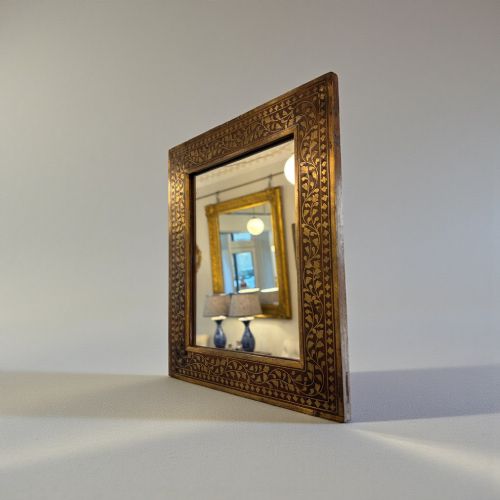
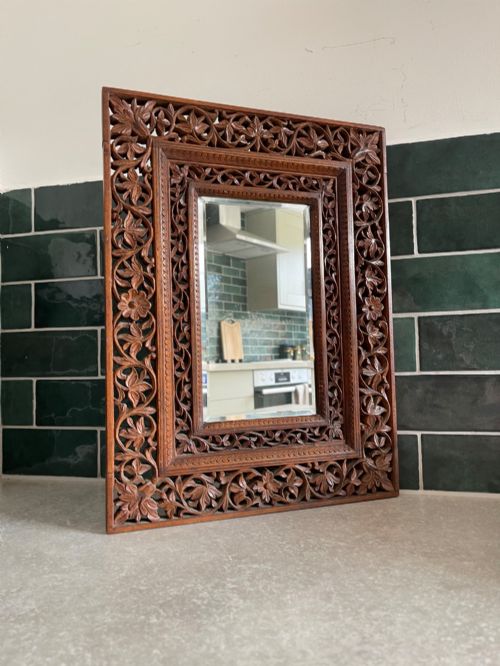
An Indian wooden wall mirror brings rich carved detail and warm timber tones into a room.
Indian Wooden Wall Mirror
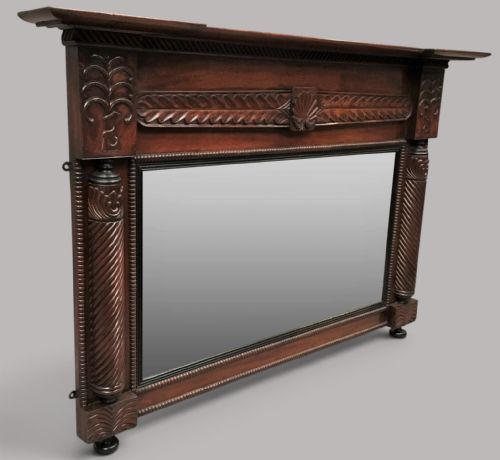
An Indian wooden wall mirror forms a striking focal point with deep carving and inlaid details. These pieces originate from distinct periods including the nineteenth century and the early twentieth century.
Makers utilised various timber species and decorative techniques, resulting in items that range from compact frames to large statement pieces. Each object reflects the traditional woodworking skills of its specific origin.
How they were made
Artisans carved dense timbers such as teak, rosewood, shisham, and walnut to create intricate surface relief and geometric patterns. These foundational woods provided the necessary durability for detailed chisel work.
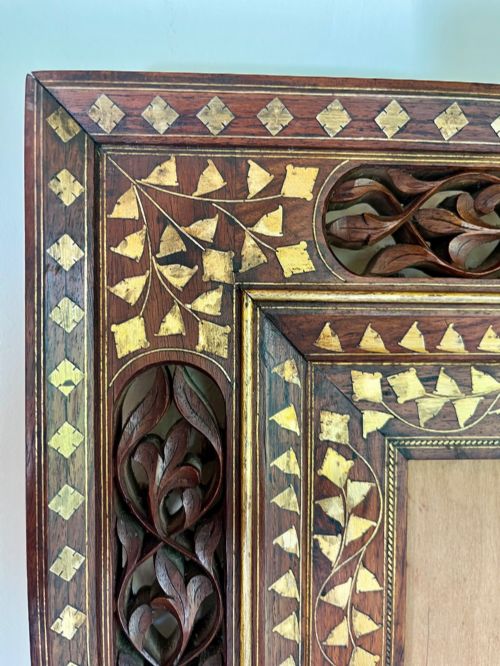
Craftsmen enriched the timber surfaces through careful inlay work utilising brass, bone, and ivory. Mirror glass was then fitted into the hand-carved wooden frames to complete the wall pieces and sconces.
Indian Wooden Wall Mirror Retail Price Guide 2026
Typical asking prices for indian wooden wall mirror among the pieces listed under this phrase on Sellingantiques today, from the lower quarter to the upper quarter. They describe what is for sale here now, not the wider market.
Some nineteenth-century mirrors arrived in Britain via officers who preferred their hallways to reflect the intricate warmth of North Indian carving.
What varies in quality
The refinement of the hand-carved ornament dictates the visual success of the piece, with sharper chisel work and deeper relief marking out superior examples. Simpler frames display broader carving with less intricate depth.
The complexity and completeness of the metal or bone inlay further separate standard items from finer works. Denser hardwoods like rosewood and teak also contribute to a more substantial and enduring object.
The Indian Wooden Wall Mirror Glossary
- Anglo-Indian
- A style describing furniture and decorative objects made in India during the British period, often combining traditional eastern carving with western forms. These items frequently utilise native hardwoods.
- Hoshiarpur
- A town in Punjab renowned for intricate woodwork and inlay techniques. Pieces from this centre typically feature dense geometric patterns in brass, bone, or ivory.
- Sheesham
- An Indian rosewood prized for its rich grain and durability. Carvers utilised this timber for detailed panels and mirror frames.
- Moorish Revival
- An architectural and decorative style drawing on Islamic design elements. It appears in these mirrors through cusped arches and intricate lattice patterns.
- Sconce
- A wall-mounted fixture designed to hold candles or lights, sometimes incorporating a mirror plate. These pieces combine illumination with decorative reflection.
Indian Wooden Wall Mirror: Frequently Asked Questions
How do I hang a heavy carved mirror?
These wooden frames carry substantial weight due to dense timbers and glass plates. Ensure your wall fixings engage securely with structural supports.
Professional mirror hangers recommend using robust brackets or french cleats rated well above the weight of the object. Check the security of the original wooden frame before mounting.
What is Hoshiarpur inlay work?
Hoshiarpur is a major centre in northern India famous for intricate inlay craftsmanship. Artisans press small pieces of brass, bone, or ivory into hand-carved recesses in the timber.
This technique creates striking geometric and floral patterns across the surface of the mirror frame. The contrast between the dark hardwood and the pale inlay defines the aesthetic.
How do I clean an antique wooden frame?
Dust the carved recesses regularly using a soft dry brush to prevent dirt accumulation. Avoid harsh chemical cleaners that might strip the aged patina of the timber.
Apply a light microcrystalline wax occasionally if the wood appears dry. Keep moisture away from both the carved timber and the edges of the mirror glass.
Are these mirrors from the nineteenth century?
Many examples date from the nineteenth century and the early decades of the twentieth century. Specific periods recorded in the evidence range from the late eighteen-eighties to nineteen-twenty.
Stylistic markers like Moorish Revival motifs and regional carving styles help identify these eras. The choice of timbers such as teak and rosewood also aligns with historical production.