

Indian Inlaid Tables
These indian inlaid tables bring intricate geometry and rich woods into a room, offering surface space defined by careful handwork.
Indian Inlaid Tables
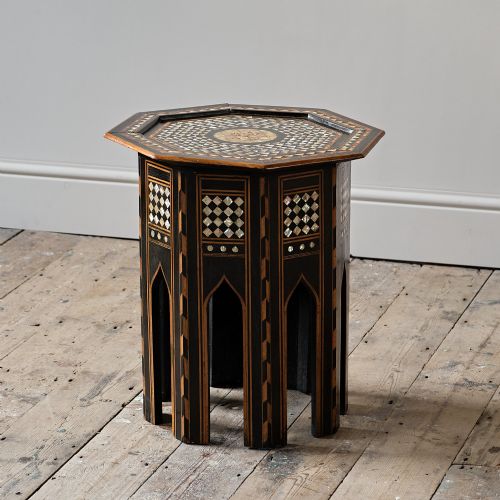
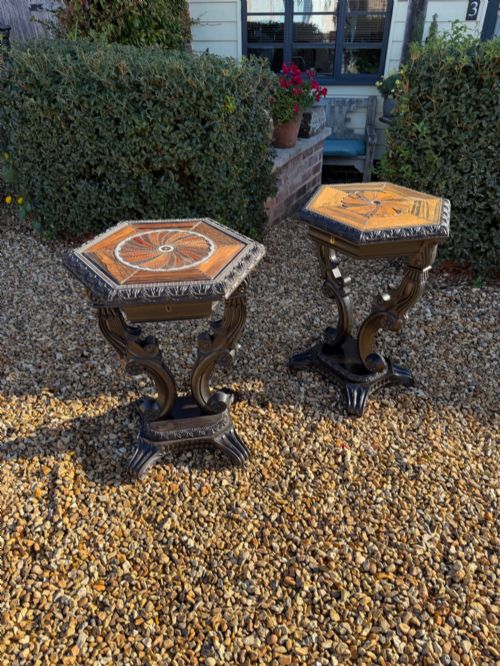
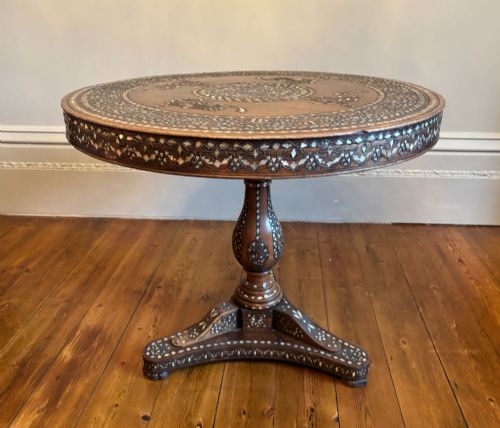
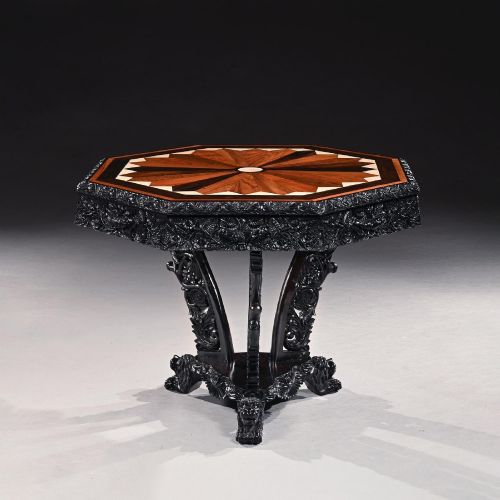
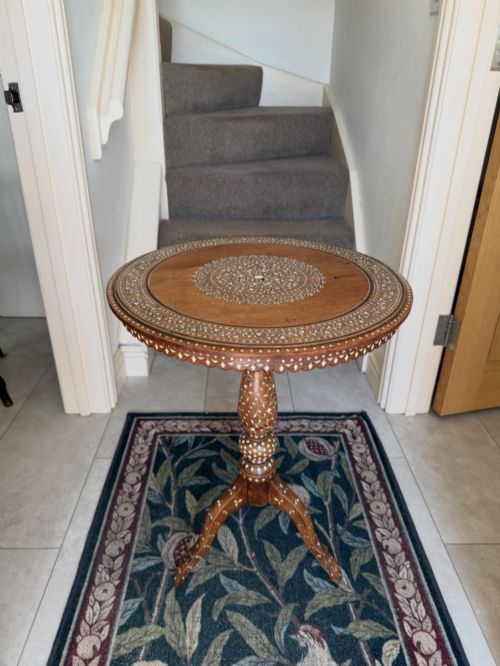
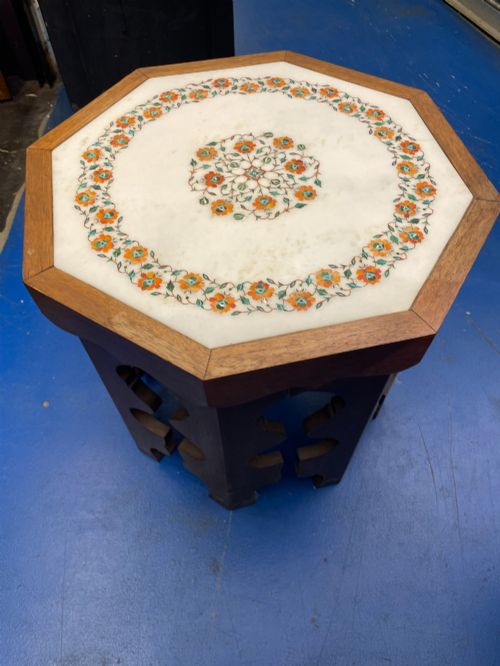
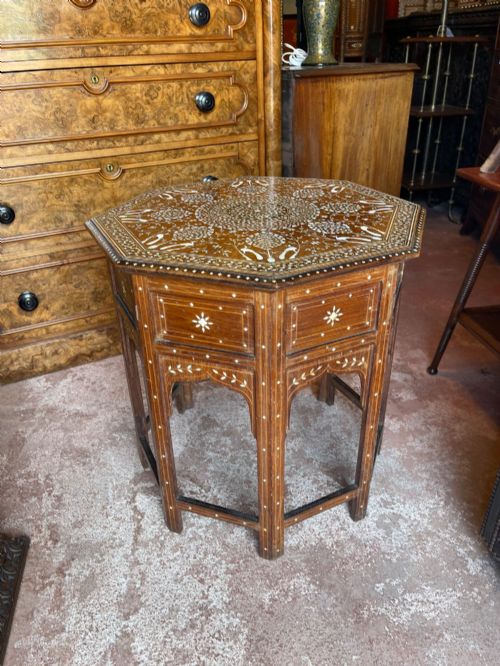
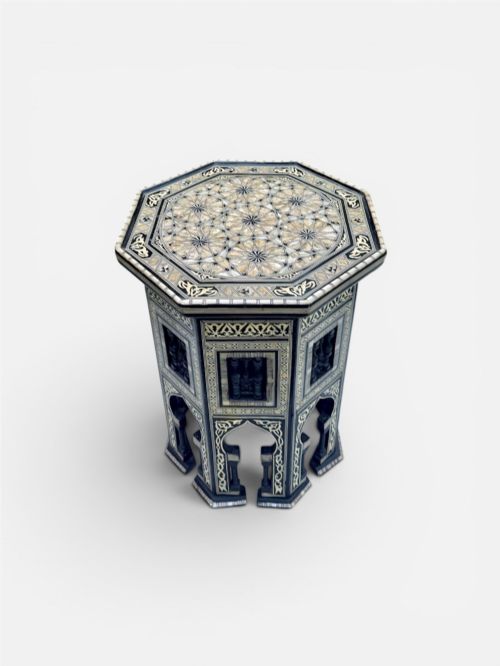
When searching for indian inlaid tables, buyers encounter a variety of forms designed for domestic use, ranging from compact occasional pieces to large centre tables. Side tables and octagonal coffee tables dominate the selection, often taking geometric shapes that suit corners or conversational groupings.
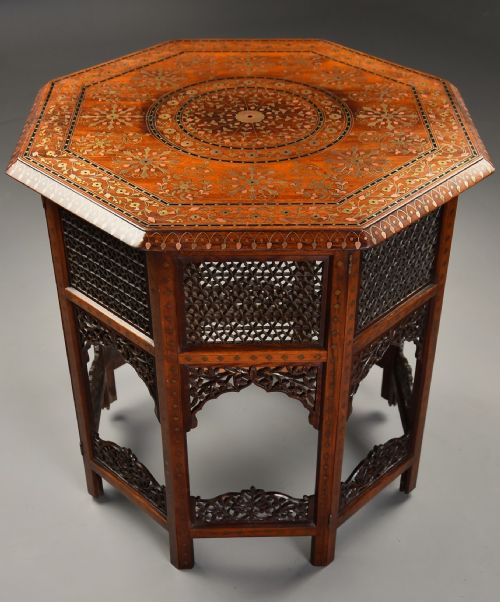
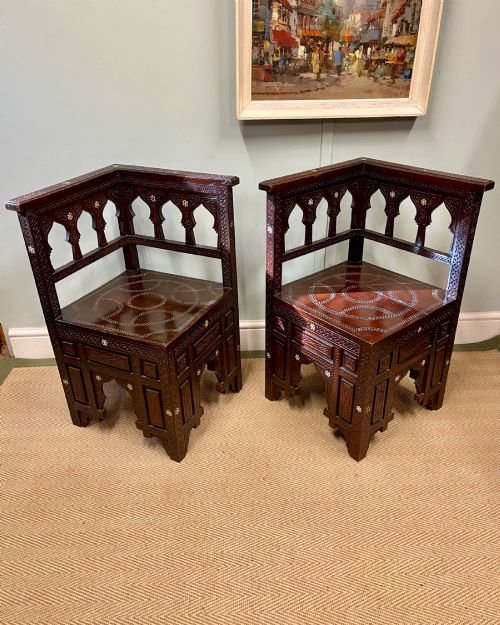
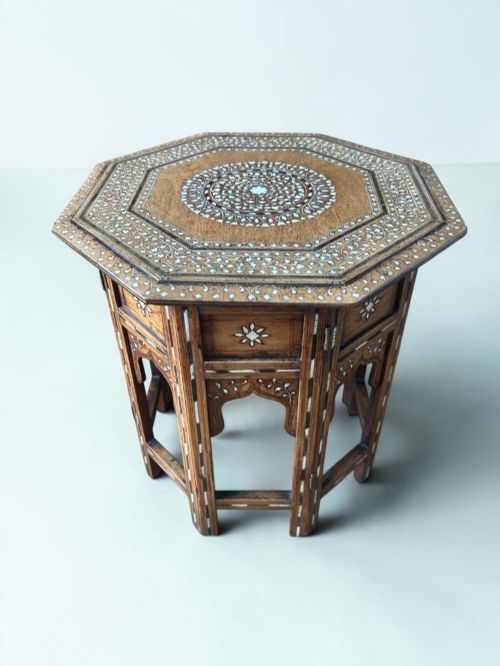
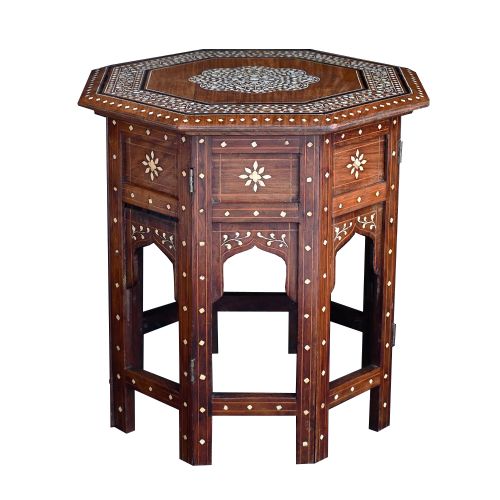
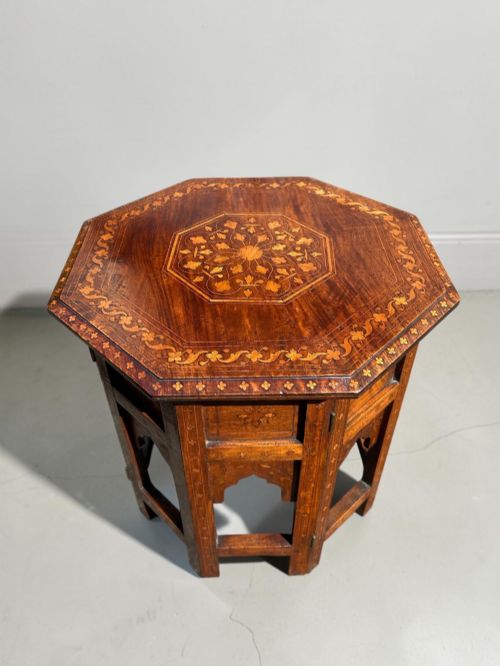
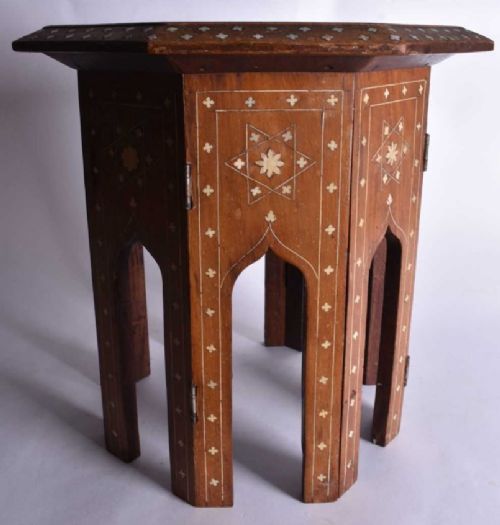
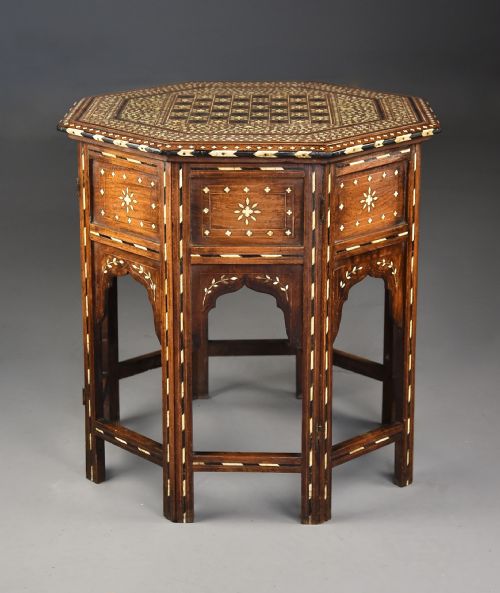
Originating largely from the nineteenth and early twentieth centuries, these examples include Anglo-Indian colonial pieces alongside Moorish Revival and Damascus designs. Workshops in centres such as Hoshiarpur produced many of the octagonal folding tables and pedestal forms seen here today.
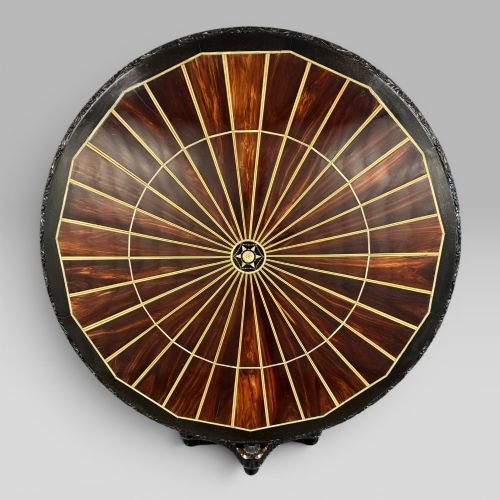
Function varied widely across the eras, with specialised forms like chess top tables, work tables, and table screens appearing alongside standard occasional tables. Teak, rosewood, and ebony form the primary structures, providing a sturdy base for complex surface decoration.
How they were made
Maker-artisans built the foundations of these tables using dense hardwoods such as teak, rosewood, and ebony, sometimes employing ebonised timber or exotic specimen woods. These woods provided a stable canvas capable of holding intricate geometric arrangements without warping unduly over time.
Surface decoration relies on meticulous inlay work utilising bone, mother-of-pearl, and sheet brass, often combined within a single panel. Carved elements in relief surround the inlaid motifs, creating textural contrast across the octagonal or square tops and folding bases.
Indian Inlaid Tables Retail Price Guide 2026
Typical asking prices for indian inlaid tables among the pieces listed under this phrase on Sellingantiques today, from the lower quarter to the upper quarter. They describe what is for sale here now, not the wider market.
Materials recorded across the inventory include ebony, teak, rosewood, mother-of-pearl, and black marble.
What varies in quality
The precision and density of the bone, brass, and mother-of-pearl inlay separate finer examples from simpler production pieces. Tightly fitted geometric patterns require considerable skill to execute without visible gaps or excessive filler around the edges.
The depth and crispness of the surrounding wood carving indicate the maker's mastery. Sharp, deeply undercut floral and geometric carving elevates a table above shallower, more routine surface work.
Liberty & Co
The Indian Inlaid Tables Glossary
- Hoshiarpur
- A city in Punjab known for producing distinctive wooden tables with intricate bone and brass inlay work. Pieces from this region frequently feature folding octagonal frames.
- Inlay
- A technique where pieces of contrasting material such as bone or mother-of-pearl are inserted into depressions flush with the surrounding wood surface. This creates smooth, patterned table tops.
- Damascus table
- An octagonal or hexagonal folding table utilising mother-of-pearl and bone inlay within Islamic geometric designs. These pieces originate from Middle Eastern and Syrian craft traditions.
Indian Inlaid Tables: Frequently Asked Questions
How do I fold an octagonal table?
Many Hoshiarpur and Damascus tables utilise an ingenious interlocking folding base carved from a single piece of wood or hinged panels. Lifting the top slightly allows the collapsible wooden frame to fold flat for storage or transport.
Care must be taken when opening or closing these frames to align the wooden hinges properly and avoid stressing the inlaid panels or delicate carved joints.
How should I clean inlaid surfaces?
Bone and mother-of-pearl inlay requires gentle maintenance using a soft, dry cloth to remove dust from the intricate recesses. Moisture can loosen the adhesive holding small inlay pieces or damage the underlying wood.
Applying a minimal amount of appropriate paste wax helps preserve the timber without clouding the polished surface of the bone or brass elements.
Are these tables strictly for display?
While highly decorative, these tables were built for functional domestic use as occasional furniture, tea tables, or games surfaces. Their sturdy hardwood construction handles normal daily use quite well.
Placing coasters on the surface protects the polish and delicate inlay materials from liquid rings or heat damage during everyday enjoyment.