
Indian Inlaid Furniture
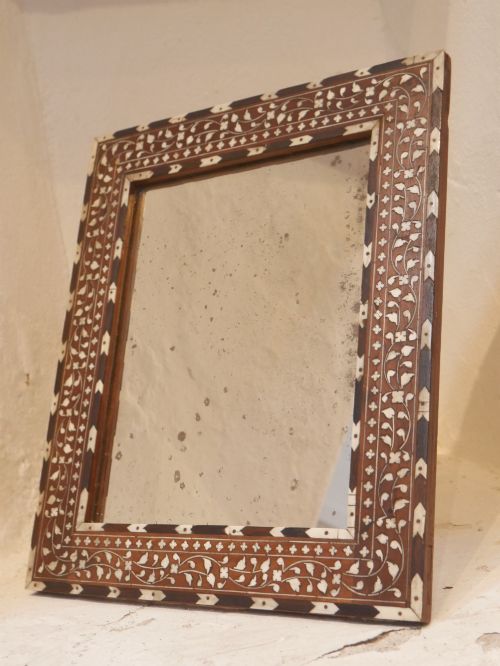
Indian inlaid furniture brings intricate geometric patterns and exotic hardwoods into a room through tables, chests and mirrors.
Indian Inlaid Furniture
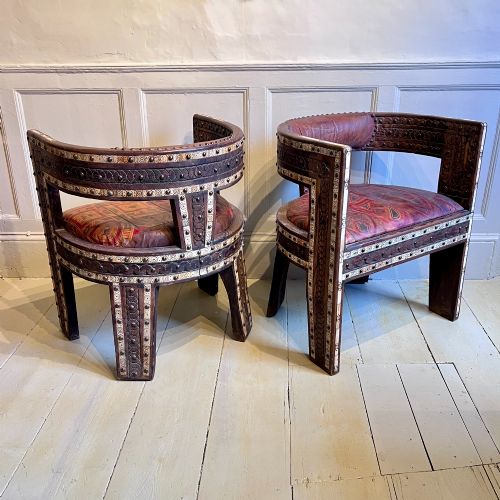
Indian inlaid furniture comprises decorative tables, chests, armchairs and mirrors produced during the nineteenth and early twentieth centuries. Buyers seeking indian inlaid furniture commonly encounter pieces originating from Hoshiarpur, alongside wider Anglo-Indian and Ceylonese productions.
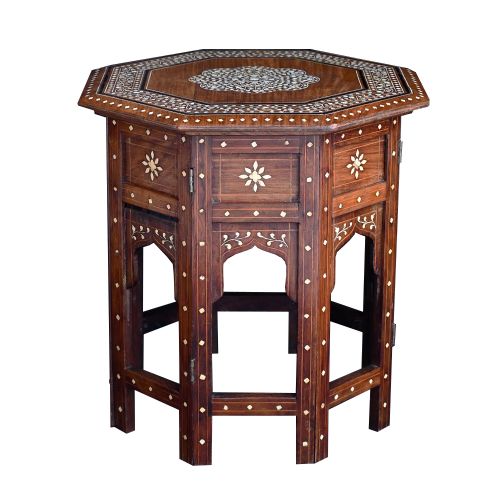
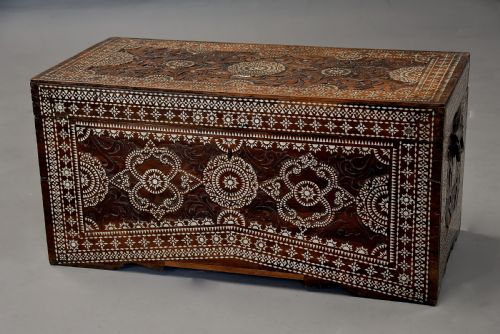
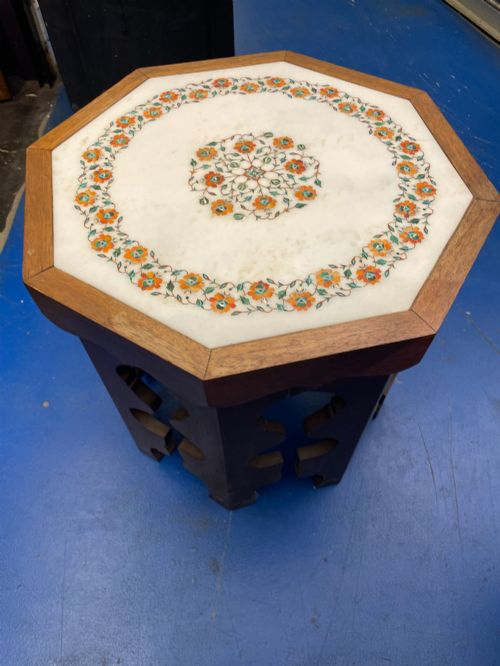
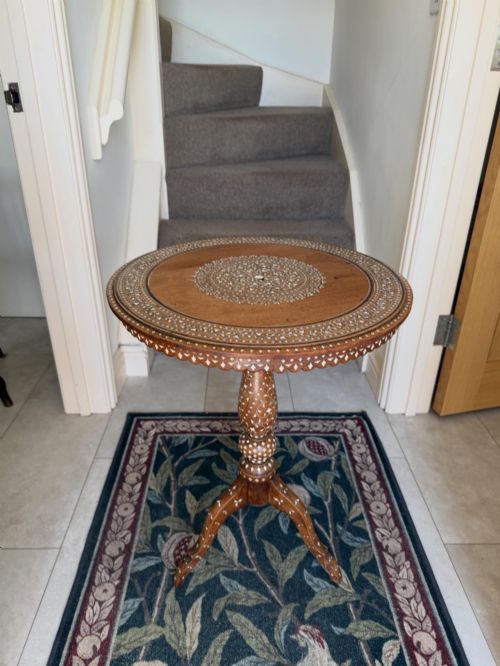
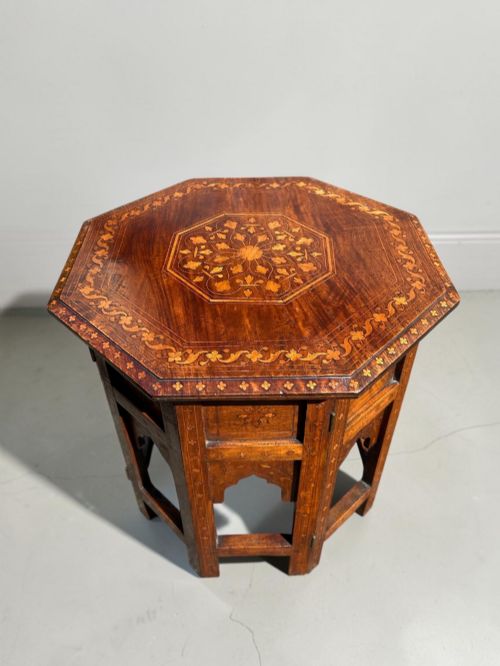
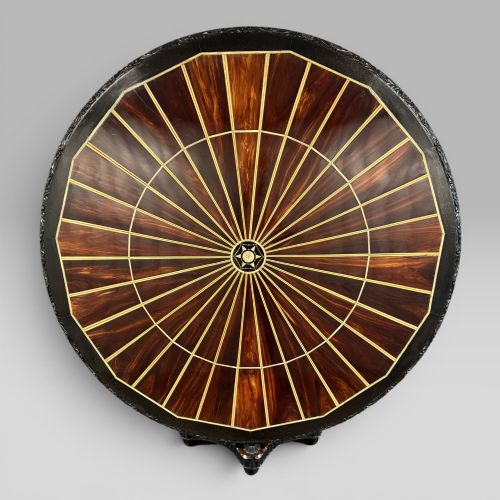
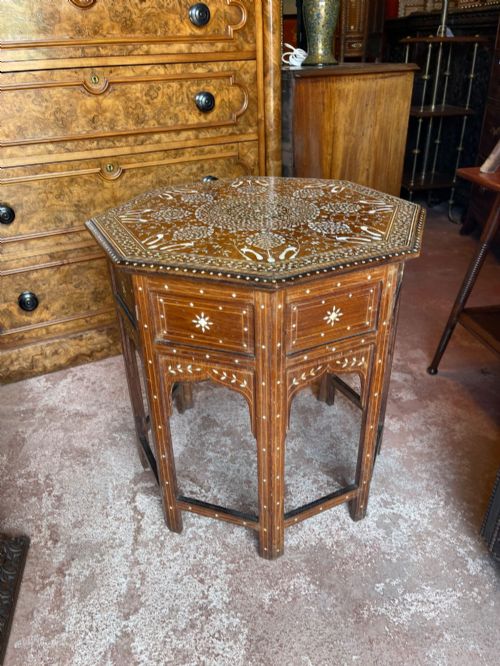
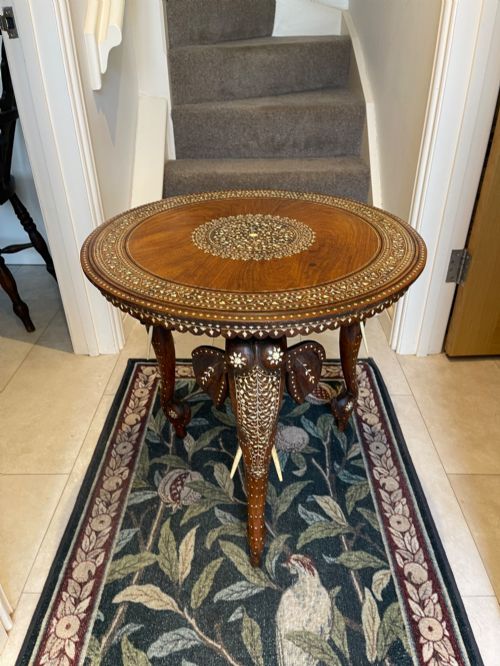
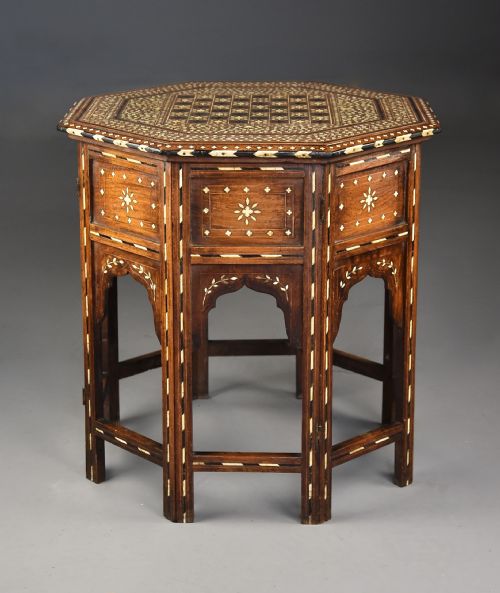
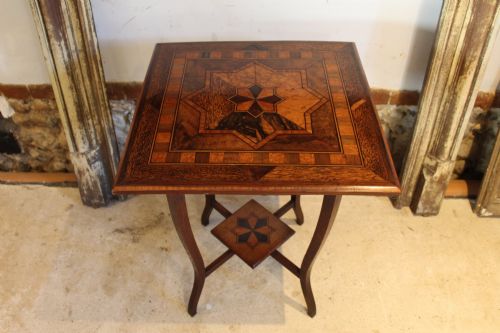
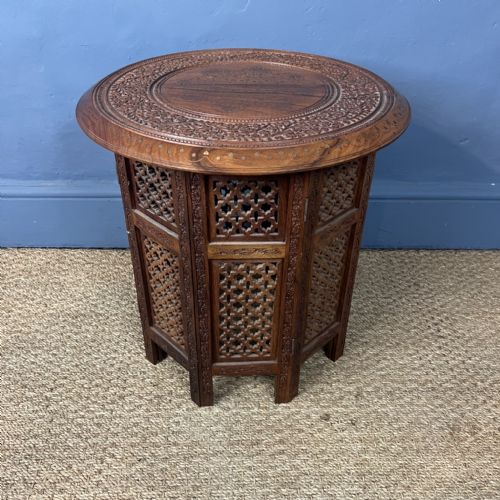
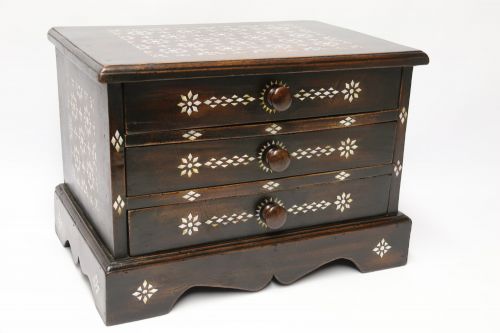
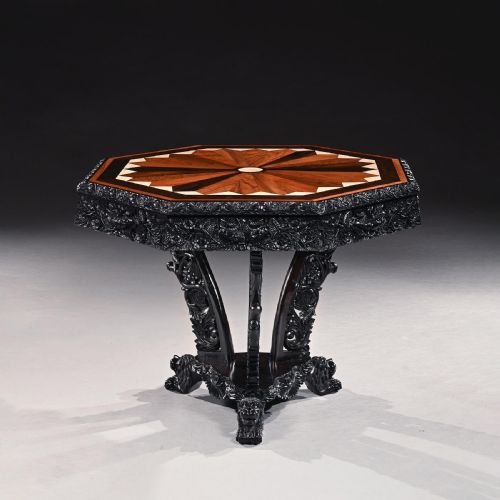
The selection on this page centres on occasional tables, octagonal stands, and storage chests rendered in dense timbers. Side tables and pedestal forms dominate the available repertoire, often demonstrating regional carving traditions.
Origin points span Victorian interpretations through to the early decades of the twentieth century. These items reflect both traditional craft centres and colonial aesthetic exchanges.
Materials and construction
Workshops utilised durable hardwoods such as teak, rosewood, ebony, padouk and satinwood as the structural foundation for tables and cabinets. These sturdy timbers supported dense surface decoration without warping.
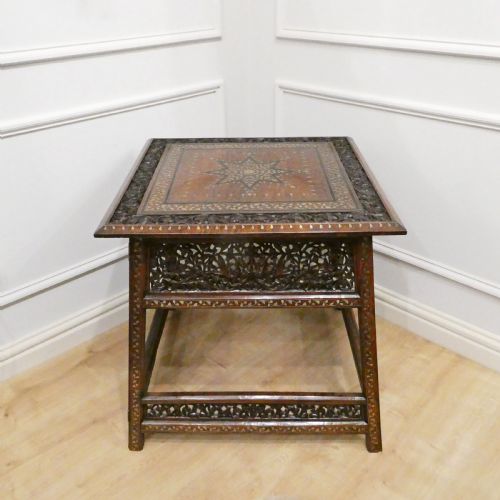
Surface patterns rely on meticulous hand-cut insertions of bone, mother-of-pearl and brass wire into carved recesses within the wood. Artisans also integrated contrasting specimen woods and leather elements to build up complex geometric and floral motifs.
Certain occasional tables incorporate hidden compartments and folding tripod bases designed for easy dismantling by nineteenth-century travellers.
Quality variations
Excellence in indian inlaid furniture rests upon the tightness of the joinery and the precision of the inlay work. Finer examples display minimal gaps between the bone, brass or mother-of-pearl inserts and the surrounding hardwood ground.
Depth of carving and complexity of the geometric lattice patterns differentiate standard utilitarian items from masterworks. Superior pieces maintain crisp edges along carved panels and employ denser arrangements of contrasting natural materials.
Hoshiarpur workshops·Ceylonese carvers·Anglo-Indian craftsmen
The Indian Inlaid Furniture Glossary
- Hoshiarpur
- A northern Indian town renowned for intricate wood carving and inlay work using bone and shesham wood. Pieces from this region frequently display dense geometric floral patterns.
- Inlay
- A decorative technique where small pieces of contrasting materials such as bone, brass or mother-of-pearl are embedded into the surface of a wooden object to form a pattern.
- Octagonal
- Having eight sides. This geometric shape appears frequently in the tabletops and stands found within this category.
- Specimen wood
- Various decorative timbers chosen for their contrasting colours and grain patterns, often arranged in geometric compositions across tabletops or cabinet fronts.
- Moorish Revival
- An architectural and decorative style popular during the nineteenth century that incorporated Islamic design elements, including arched motifs and intricate surface patterning into furniture.
Indian Inlaid Furniture: Frequently Asked Questions
What is Hoshiarpur furniture?
Hoshiarpur furniture originates from the Punjab region of India, specifically known for dense wood carving and intricate bone or brass inlay work.
These pieces typically utilise regional hardwoods decorated with complex geometric or floral compositions across tables, screens and boxes.
How do I care for inlaid wood?
Inlaid surfaces require minimal moisture and stable indoor humidity to prevent the timber from shrinking and loosening the embedded bone or brass.
Apply a microcrystalline wax sparingly to nourish the hardwood without seeping into the porous inlay materials.
Are these tables sturdy enough for daily use?
Most occasional tables and octagonal stands handle everyday placement of lamps or decorative objects safely.
Heavier loads should be avoided on folding or intricate tripod table bases to protect the joinery.
What is Anglo-Indian furniture?
Anglo-Indian furniture describes items produced in India under British colonial influence, combining traditional local craftsmanship with European forms.
These works frequently merge local timber varieties like teak and rosewood with Western furniture archetypes such as campaign desks and centre tables.