

Indian Carved Wood
Indian carved wood brings dense foliage, deep relief and architectural precision into domestic spaces.
Indian Carved Wood
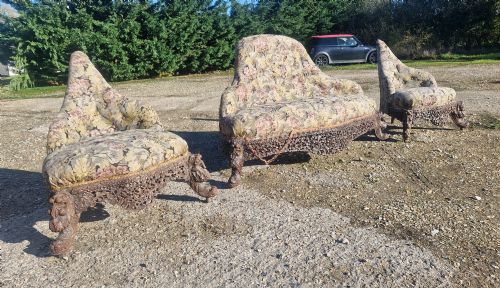
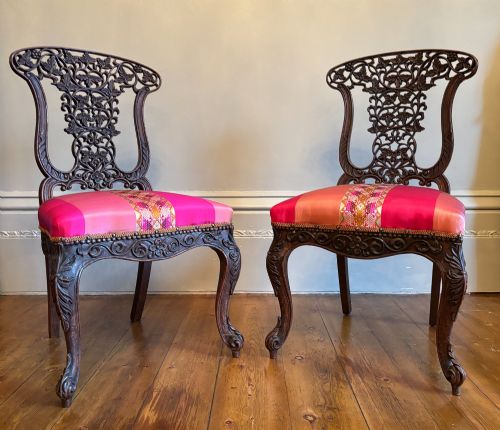
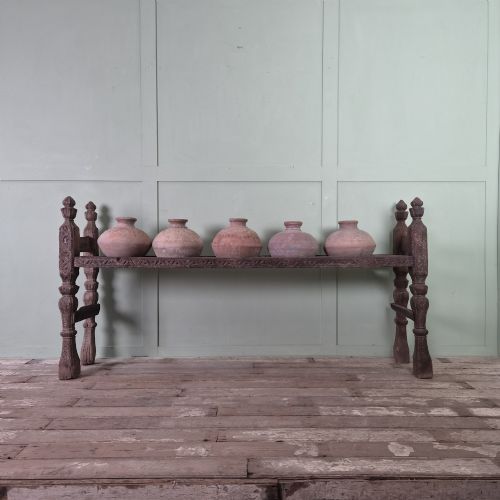
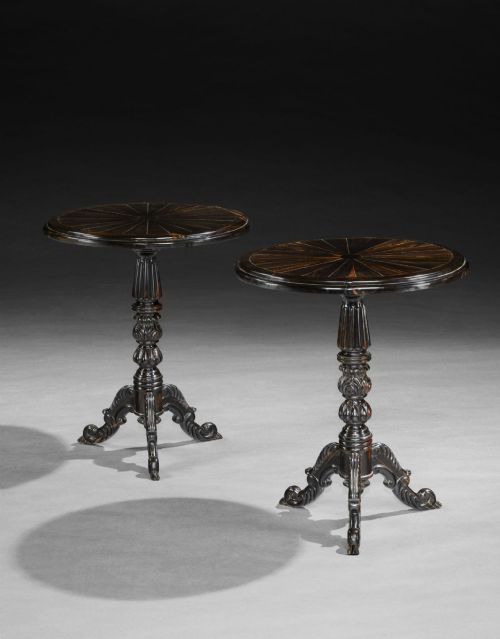
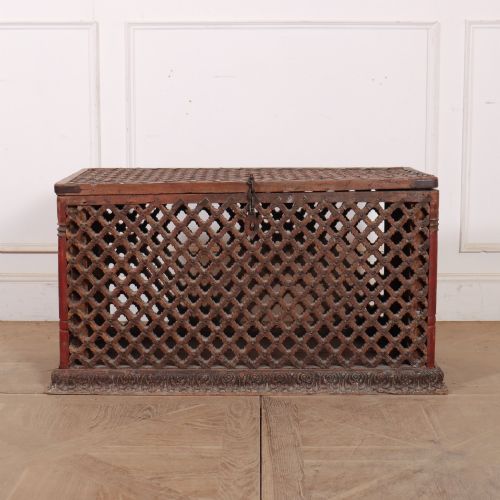
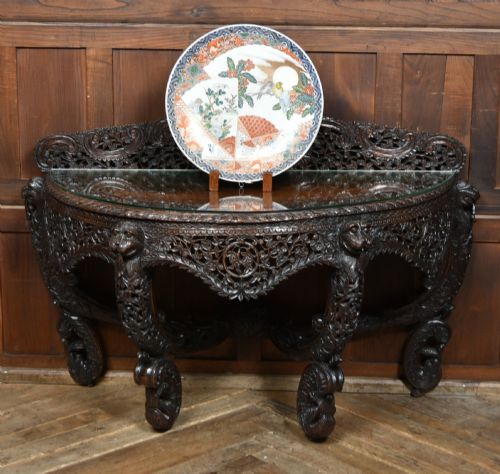
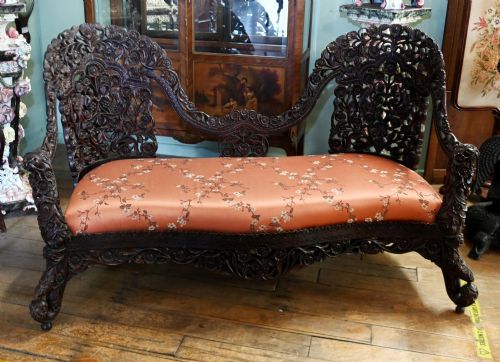
When you search for indian carved wood, you encounter an array of occasional tables, centre tables, mirrors, and seating spanning the nineteenth century into the early twentieth century. These pieces reflect both local domestic production and items made specifically for the colonial export market under British influence.
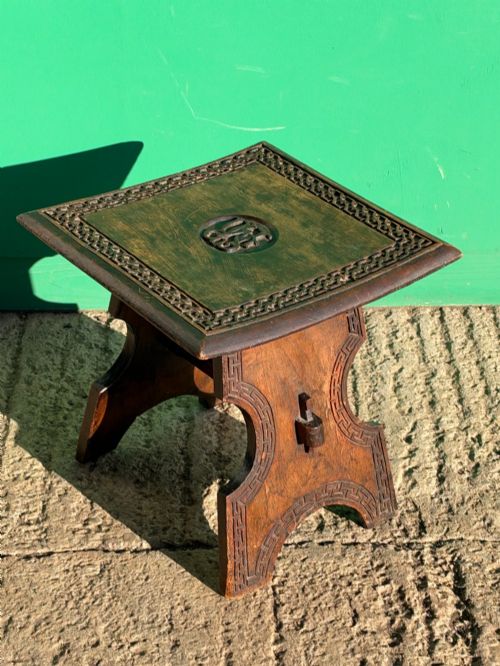
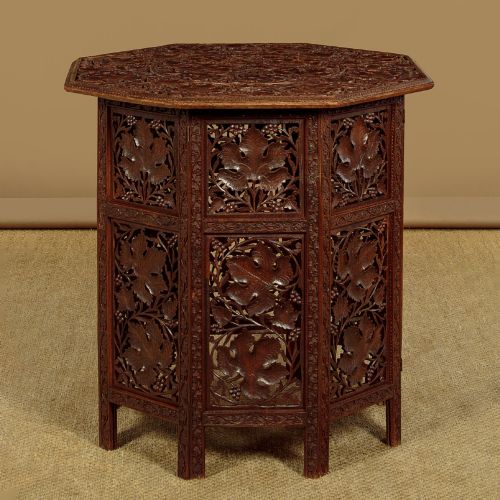
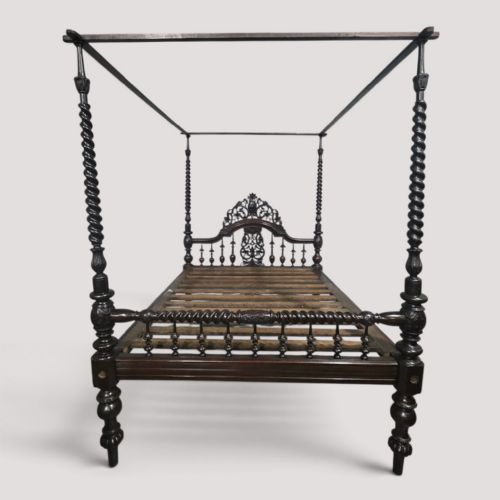
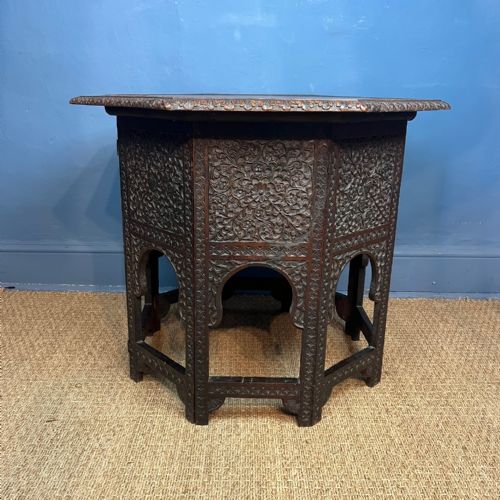
Side tables and octagonal tables dominate the selection, often featuring folding bases or intricate surface relief. Alongside these smaller items, heavier furniture such as four-poster beds, cabinets, and seating suites demonstrate the broader scope of craftsmanship from regions including Bombay, Burma, and Ceylon.
The aesthetic merges traditional regional carving motifs with forms suited to European Victorian and Edwardian drawing rooms. Anglo-Indian and Ceylonese variations sit alongside Burmese and Kashmiri items, each region contributing distinct wood selections and ornamental vocabularies.
Materials and technique
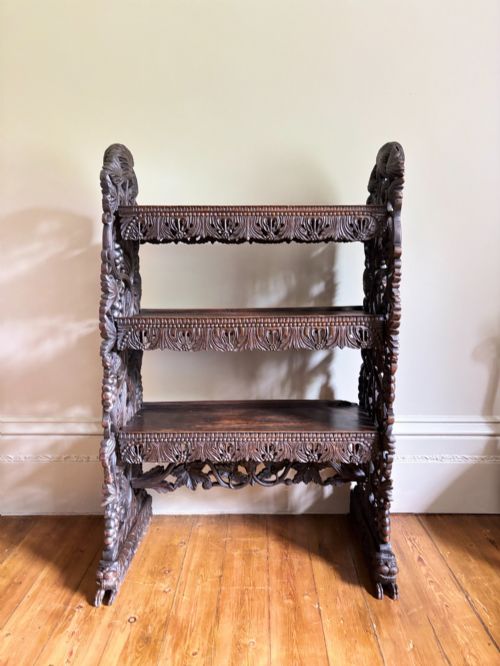
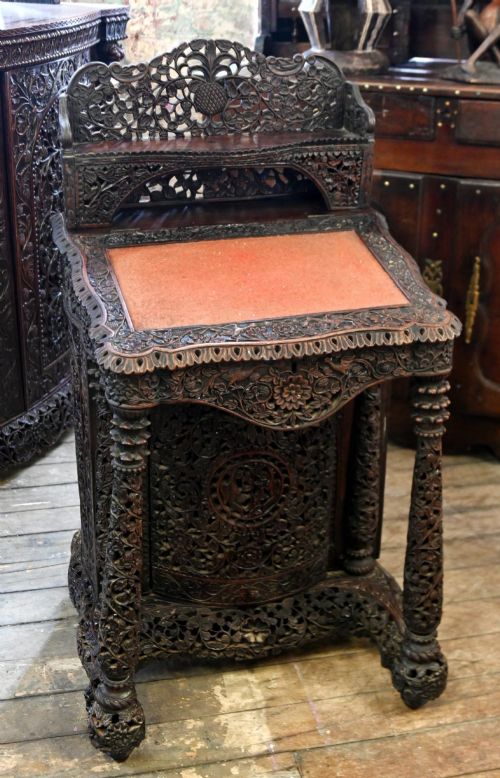
The makers relied on dense tropical hardwoods capable of holding microscopic detail under the chisel, notably teak, padouk, rosewood, calamander, and ebony. These timbers provided a stable, heavy canvas for deep undercutting and pierced foliage work that defines the aesthetic.
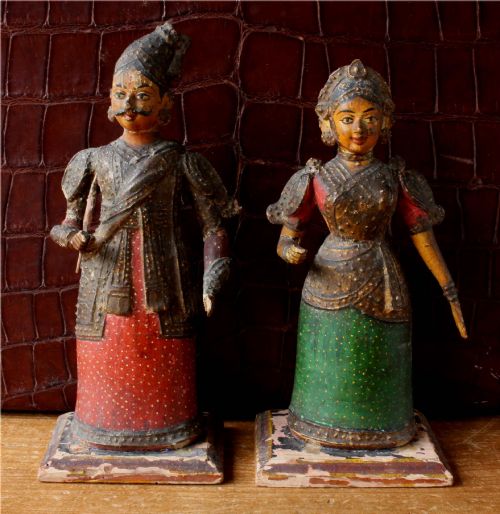
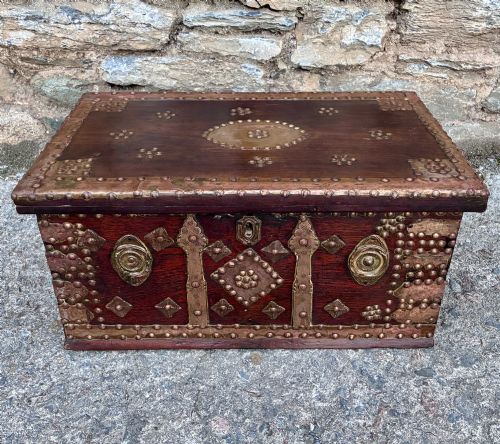
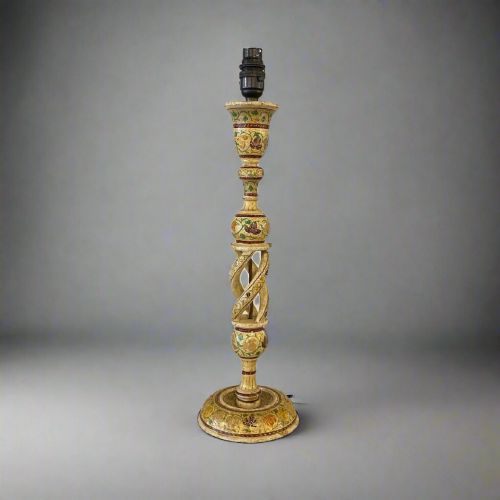
Surface embellishment frequently involved contrasting materials inset into the timber ground, such as brass wire, copper plates, bone, and mother of pearl. Artisans also utilised hand painting, silver leaf, and intricate turning alongside manual carving to achieve varied texture across panels, trays, and table tops.
Indian Carved Wood Retail Price Guide 2026
Typical asking prices for indian carved wood among the pieces listed under this phrase on Sellingantiques today, from the lower quarter to the upper quarter. They describe what is for sale here now, not the wider market.
Listings feature 19th-century and early 20th-century items utilising teak, padouk, rosewood, brass, and bone inlay across Anglo-Indian and Burmese styles.
Standards of execution
Quality rests in the depth of relief and the crispness of the chisel work rather than the mere presence of decoration. Superior examples display undercut foliage where leaves lift clearly from the background timber, while lesser pieces rely on shallow surface scratching.
The selection of timber significantly alters the character and integrity of the object, with dense native hardwoods or heavy calamander holding structural joints more rigidly than softer alternatives. Furthermore, the precision of geometric inlay and the stability of folding table bases distinguish workshop execution.
The Indian Carved Wood Glossary
- Anglo-Indian
- Furniture made in India during the British colonial period, combining local timber and carving styles with European forms. It bridges domestic Indian design and British domestic requirements.
- Padouk
- A heavy, durable tropical hardwood with a reddish hue favoured for nineteenth century tables and cabinetry. It provides exceptional stability for intricate relief carving.
- Hoshiarpur
- A region in Punjab renowned for intricate inlay work using brass, bone, or wire set into dark wood grounds. Pieces from here are instantly recognised by dense geometric patterns.
- Tilt top
- A table mechanism allowing the top to pivot vertically for storage when not in use. This construction is common among nineteenth century occasional and centre tables.
Indian Carved Wood: Frequently Asked Questions
How do I care for carved wooden furniture?
Dust surfaces regularly with a soft, dry brush to prevent accumulation within deep recesses. Avoid modern silicone polishes and instead apply a sparing amount of pure beeswax to nourish the timber.
Keep pieces away from direct heat sources and radical humidity shifts to prevent the dense hardwoods from splitting or joints from loosening.
Where were these pieces originally made?
Production spanned diverse workshops across the Indian subcontinent, Burma, Ceylon, and Kashmir. Specific stylistic cues point towards regional centres such as Bombay, Galle, or Hoshiarpur.
Many items were produced for British expatriates and export markets, blending indigenous joinery techniques with familiar European furniture archetypes.
How do I distinguish regional styles?
Burmese pieces often feature deep, figural or floral relief executed in heavy teak or hardwood. Ceylonese furniture frequently utilises ebony or calamander with distinct scrolling borders and dense floral motifs.
Kashmiri items often showcase painted decoration or marquetry on lighter walnut timbers, whereas Hoshiarpur work relies heavily on intricate brass and bone inlay.
Are these tables structurally stable?
Many smaller tables utilise clever folding or collapsible bases designed for portability. While structurally sound for everyday display, care should be taken when moving them.
Heavier centre tables and cabinets possess solid frame construction using dense native timbers, though joints should be checked periodically for natural drying movement.