
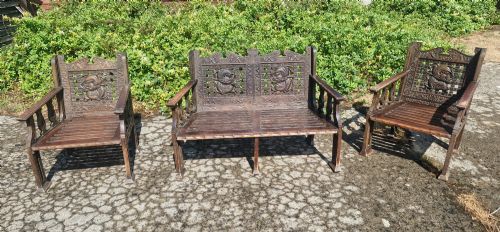
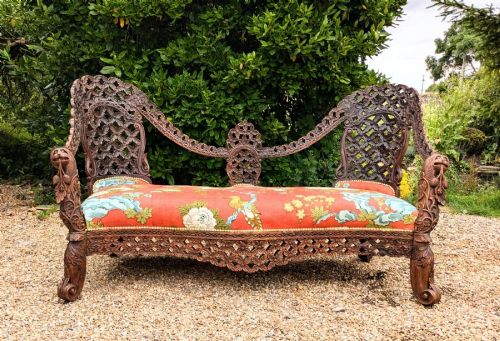


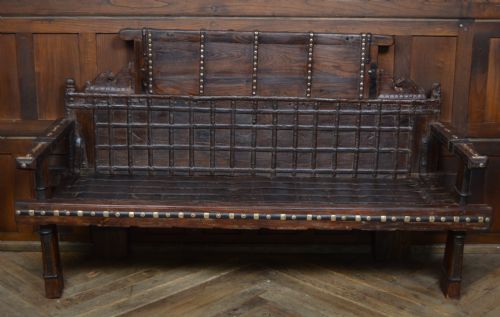
Indian Carved Wood Bench
An indian carved wood bench brings intricate craftsmanship and rich global history straight into a room.
Indian Carved Wood Bench
An indian carved wood bench encompasses seating forms created across the nineteenth and early twentieth centuries, including Anglo-Indian, Moorish Revival, and Syrian styles. These items range from large veranda benches and settees to window seats and daybeds, reflecting diverse regional aesthetics.
Buyers browsing this selection will most frequently encounter nineteenth-century pieces alongside items from around nineteen twenty. Forms span from substantial cane settees to ornate carved stools and bullock cart benches.
Originating from traditions spanning India, Ceylon, and Burma, these seating options incorporate distinctive architectural motifs and sculptural elements like elephants. They serve equally well as functional furniture and as focal points in a conservatory or hallway.
How they were made
Maker workshops utilised dense tropical timbers such as teak and general hardwood, often shaping the frames with deep relief carving. Structural integrity was combined with decorative dexterity, utilising natural cane inserts for seating surfaces.
Surface enrichment involved detailed inlay work using mother-of-pearl and bone to create geometric and floral patterns against the dark wood. Joinery techniques relied on traditional framing methods suited to regional climates and heavy daily use.
Several pieces feature sculptural elephants with carved bodies and real tusks, guarding the seat while you rest.
What varies in quality
Quality rests upon the depth, crispness, and complexity of the chisel work across the timber frame. Pieces with deeply undercut foliage and fully realised figural elements demonstrate a higher tier of artisan skill.
The integrity of the structural joinery and the survival of delicate inlaid materials like mother-of-pearl distinguish exceptional examples. Furthermore, the harmonious integration of cane work and secondary timbers influences the overall coherence of the object.
The Indian Carved Wood Bench Glossary
- Anglo-Indian
- Furniture made in India during the British colonial period for both local European residents and export to Britain. It frequently blends British furniture forms with traditional Indian carving techniques.
- Cane
- Woven material derived from the peeled bark of rattan palms, utilised here for resilient and breathable seat panels. It provides a light textural contrast to heavy carved hardwood frames.
- Moorish Revival
- An architectural and decorative style popular in the nineteenth century that drew inspiration from Islamic North Africa and Spain. It is characterised by intricate geometric lattice work and arched motifs.
- Veranda Bench
- A long seat designed specifically for placement on open-air porches or verandas in warm climates. These pieces typically feature sturdy teak construction to withstand humid conditions.
Indian Carved Wood Bench: Frequently Asked Questions
Where should I place an indian carved wood bench?
These benches suit spacious hallways, sunrooms, and conservatories where their carved details can be appreciated without clutter. They also function well as statement seating in living rooms or at the foot of a bed.
Ensure the chosen spot protects delicate materials like inlaid bone or mother-of-pearl from direct, harsh sunlight. Ambient placement highlights the deep relief carving and rich timber tones.
How do I care for antique hardwood seating?
Maintain the wood by dusting regularly with a soft, dry cloth and applying occasional quality beeswax to nourish the grain. Avoid placing furniture near direct heat sources which can cause timber and cane to dry out.
Handle inlaid sections with care and avoid harsh chemical cleaners that might loosen mother-of-pearl or bone elements. Gentle treatment preserves the historic patina developed over generations.
What defines an Anglo-Indian piece?
Anglo-Indian items combine traditional British furniture shapes, such as nineteenth-century settees and daybeds, with intricate local carving traditions. They reflect the cross-cultural exchange of the colonial era.
These works often feature dense foliage motifs, exotic hardwoods like teak, and occasionally woven cane inserts. Their distinct aesthetic sets them apart from standard domestic European furniture of the same period.
How can I tell the age of these benches?
Dating relies on examining the timber species, construction methods, tool marks left by the maker, and stylistic indicators such as Moorish Revival or Victorian colonial influences. Nineteenth-century pieces display hand-cut joinery and aged patination.
Comparative analysis of decorative motifs, such as specific elephant carvings or floral patterns, also helps narrow down the period of origin. Material wear patterns provide further physical clues to an item's age.