




Colonial Teak Seat
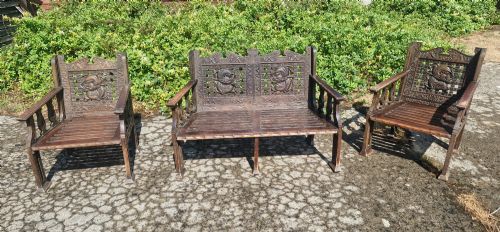
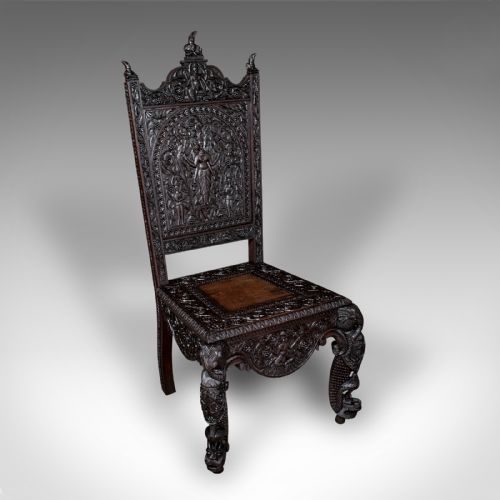
These colonial teak seat examples bring architectural scale and dense regional carving straight into a room.
Colonial Teak Seat
A colonial teak seat serves as a functional and decorative anchor, drawing the eye with heavily carved frames and substantial timber construction. When exploring a colonial teak seat, buyers encounter a mix of armchairs, folding chairs, plantation chairs, and benches originating from diverse regional workshops.
The pieces span several decades from the mid-nineteenth century through the art deco era, reflecting shifts in British colonial design across India, Burma, Ceylon, and Batavia. Common forms include reclining plantation chairs with extended arms, low stools, window benches, and elaborate conservatory suites.
Anglo-Indian and Burmese influences dominate the selection, bringing distinct regional carving traditions together with heavy hardwood frames. Buyers most frequently meet nineteenth-century examples and 1900s productions utilising traditional joinery and local timbers.
What varies in quality
The depth and clarity of the hand carving separate simpler utility items from masterwork seating pieces. Crisp, deep relief work across the crest rails and arm terminals shows superior artisan skill compared to shallow or mechanical surface decoration.
The integrity of the structural timber and the retention of original woven cane, rush, or leather panels define the grade of survival. Pieces retaining their early organic seating materials and firm joinery demonstrate higher craftsmanship and better preservation.
Several heavy hardwood elephants stand guard among the seating, doubling as carved study sculptures and hall bench supports.
The Colonial Teak Seat Glossary
- Anglo-Indian
- A design style combining British domestic forms with traditional Indian decorative carving and joinery. This aesthetic defined much of the furniture produced for colonial officials during the nineteenth century.
- Plantation chair
- A large seating form featuring an inclined back and wide, flat extending arms designed for resting feet. These chairs were built for deep verandahs and domestic comfort in hot climates.
- Cane seat
- A seating surface formed by weaving split rattan through holes drilled around the wooden frame. This technique allowed air circulation in warm regional environments.
- Box settle
- A high-backed wooden bench featuring a storage compartment concealed beneath the seat. This form provided both seating and secure vessel storage in colonial interiors.
- Batavian baroque
- A regional furniture style produced under Dutch influence in Java, merging European baroque curves with tropical timbers. It showcases robust proportions and ornate carved details.
Colonial Teak Seat: Frequently Asked Questions
How do I date a colonial teak seat?
Dating relies on stylistic markers, construction methods, and recorded periods such as Victorian production or the 1900s. Art deco influences point toward the 1930s, while heavy turned members and plain joined frames often indicate mid-nineteenth-century origins.
Changes in regional carving depth and the integration of brass hardware also help place pieces within specific decades. Comparing joinery techniques against dated provincial examples clarifies the timeline.
Where were these chairs used originally?
These seats furnished the deep verandahs, conservatories, and reception rooms of colonial residences, administrative offices, and country houses. Their robust construction and breathable cane or rush inserts were designed for warm climates.
Later pieces transitioned into domestic British interiors as conservatory suites or statement hallway furniture. Their grand scale suited large entrance spaces and drawing rooms.
How should I care for teak furniture?
Teak is a dense, oily hardwood that requires minimal intervention to maintain its structural stability. Keeping pieces away from direct heat sources prevents the timber from drying out and splitting.
Gentle dusting with a dry cloth preserves the patina on carved surfaces. Original woven cane or rush seating benefits from occasional light conditioning to remain flexible.
What is a plantation chair?
A plantation chair is a wide-armed reclining seat built for resting the legs on extended wooden paddle arms. They were designed for maximum relaxation on shaded verandahs during the nineteenth century.
Many examples feature adjustable backs and heavy teak frames. Their distinctive proportions make them striking focal points in modern living spaces.