




Indian Carved Elephant Table
An indian carved elephant table brings a distinct colonial presence into a room, supported by carved wooden beasts.
Indian Carved Elephant Table
When you search for an indian carved elephant table, you encounter small occasional tables, side tables, and coffee tables resting upon figural animal supports. These pieces emerge primarily from late nineteenth-century and early twentieth-century periods, spanning Victorian, Edwardian, and Art Deco eras.
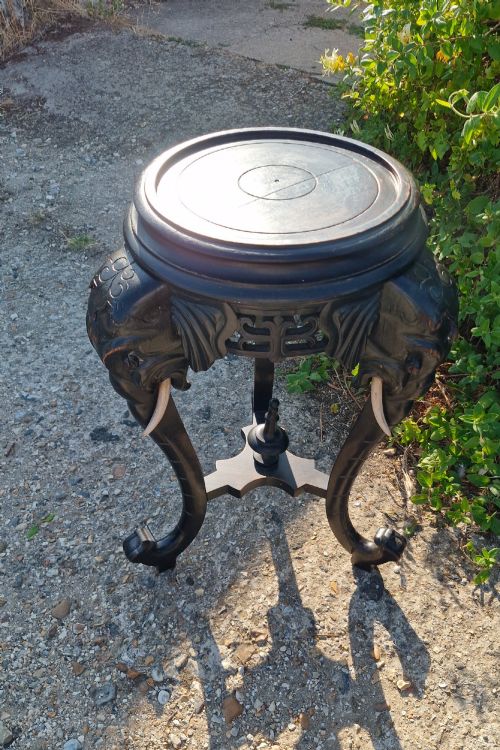
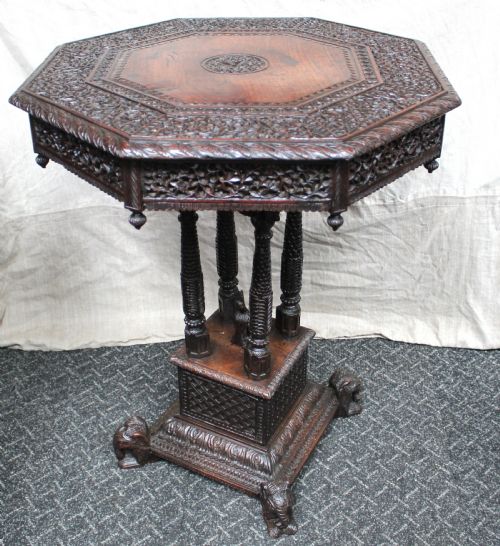
The most common form on this page is a circular or octagonal top held by carved wooden elephants acting as legs. Alongside tables, related objects such as pedestals, plant stands, and occasional benches incorporate the same zoomorphic motifs.
Geographic origins cluster around the Bombay Presidency, Hoshiarpur, and Burma, reflecting distinct regional carving traditions. Makers utilise dense timbers to construct practical furniture that doubles as decorative sculpture.
Materials and construction
Carpenters build an indian carved elephant table using solid timbers like teak, rosewood, and hardwood. These heavy woods allow carvers to execute deep, intricate relief work across the table aprons and animal figures.
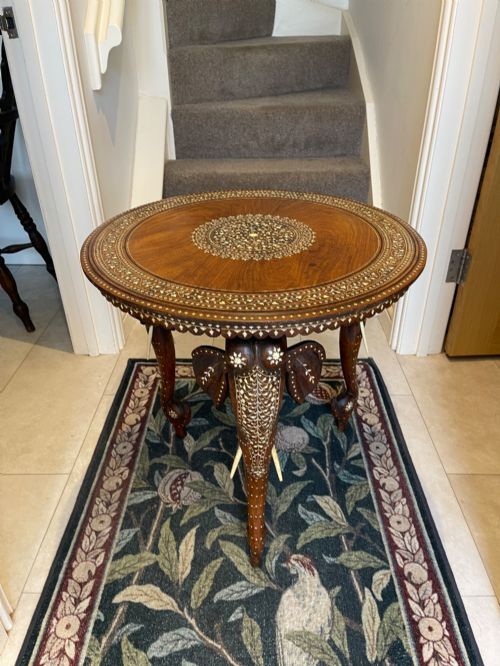
Surface decoration frequently incorporates bone inlay, painted details, and lacquer. Artisans shape separate tusks from wood or bone, attaching them to the sculpted elephant heads that form the structural supports.
Indian Carved Elephant Table Retail Price Guide 2026
Typical asking prices for indian carved elephant table among the pieces listed under this phrase on Sellingantiques today, from the lower quarter to the upper quarter. They describe what is for sale here now, not the wider market.
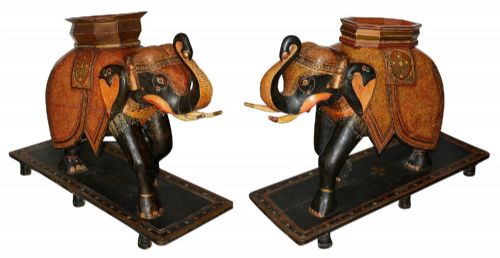
Several examples feature painted wooden tusks, ensuring the elephants remain fully equipped without relying on fragile bone.
Qualities that distinguish examples
Choice of materials also alters the character of a piece. Dense, figured rosewood or intricate bone inlay indicates a higher level of workshop ambition than plain painted wood.
Hoshiarpur workshop
The Indian Carved Elephant Table Glossary
- Hoshiarpur
- A town in Punjab known for its distinct woodwork. Pieces from this centre typically display intricate micro-mosaic inlay using bone or brass.
- Bombay Presidency
- A large administrative division of British India famous for heavy teak furniture. Workshops here produced intricate occasional and centre tables with deep relief carving.
- Occasional table
- A small, light table designed to be moved around a room as needed. These form the majority of the elephant-supported group.
- Caparison
- An ornamental covering or harness spread over a horse or elephant. Carved examples on these tables add texture and traditional pattern to the animal supports.
Indian Carved Elephant Table: Frequently Asked Questions
What is an indian carved elephant table?
An indian carved elephant table is a small piece of furniture supported by carved wooden elephant figures acting as legs.
These tables date largely from the nineteenth and early twentieth centuries, originating in regions like the Bombay Presidency and Burma.
How were these tables used?
They served as occasional tables, side tables, or coffee tables in colonial and Victorian drawing rooms.
Their decorative nature meant they functioned as display pieces for lamps or ornaments as well as functional furniture.
What woods are used in these tables?
Carvers utilised dense regional hardwoods such as teak, rosewood, and general hardwood.
These heavy timbers provided the structural strength needed to support the table top while allowing for deep, intricate relief carving.
How can I tell the period?
Dating relies on stylistic clues, construction methods, and materials recorded in the nineteenth and early twentieth-century listings.
Victorian and Art Deco influences often shape the overall design and choice of inlay or painted highlights.