

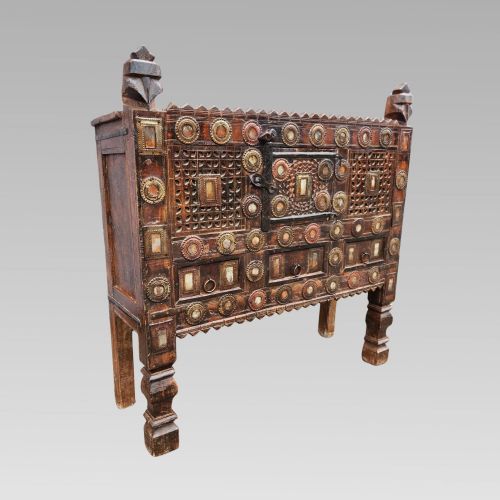


Indian Carved Cupboard
An indian carved cupboard brings dense, expressive timberwork and traditional joinery straight into a room.
Indian Carved Cupboard
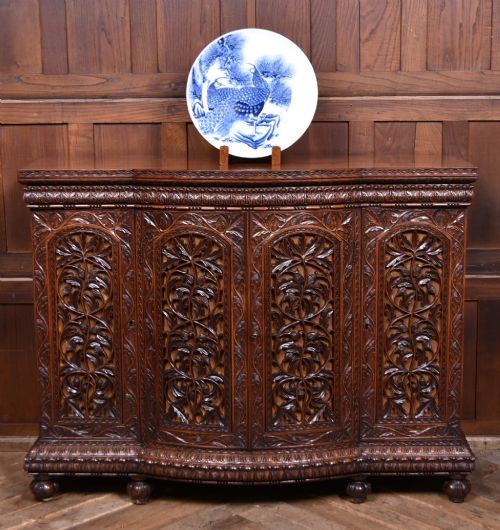
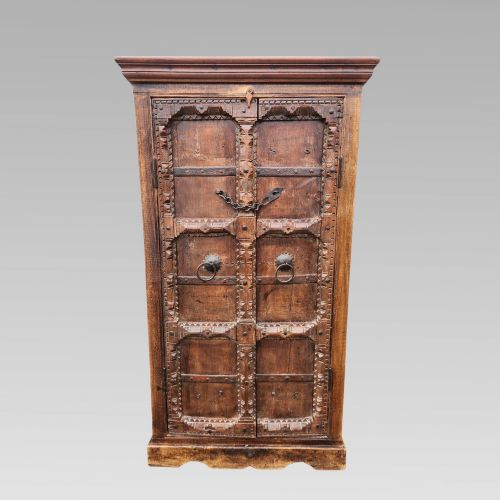
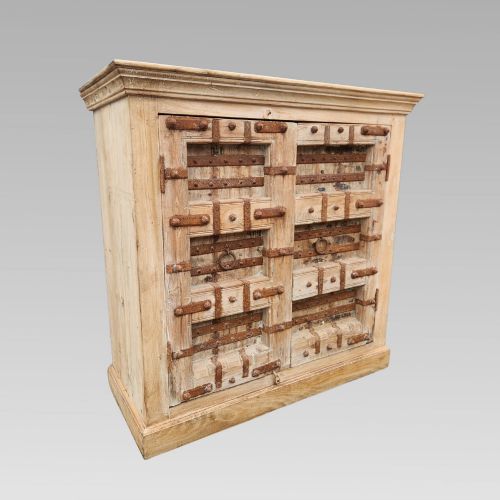
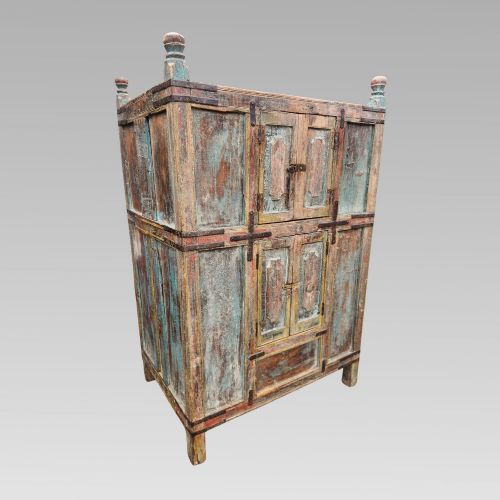
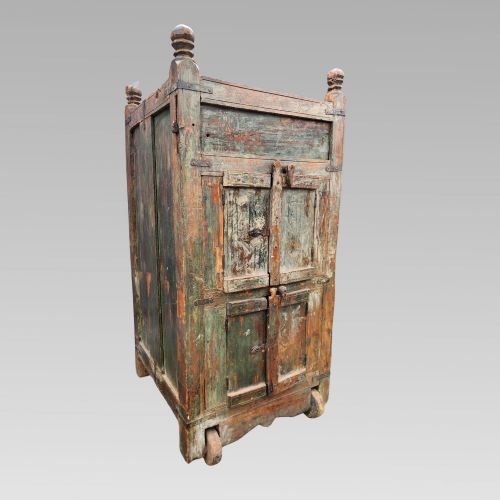
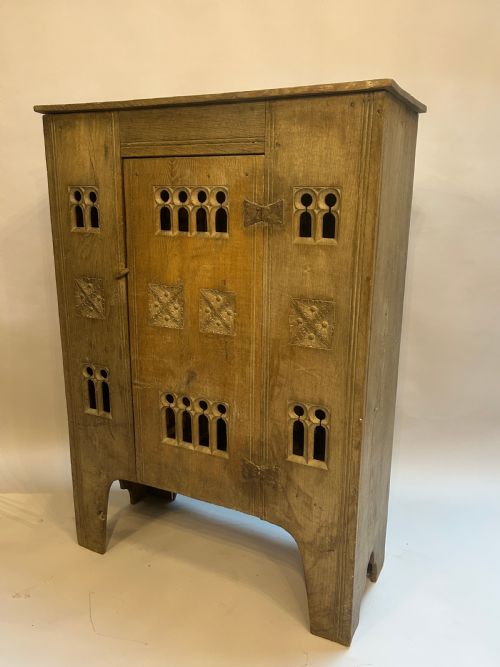
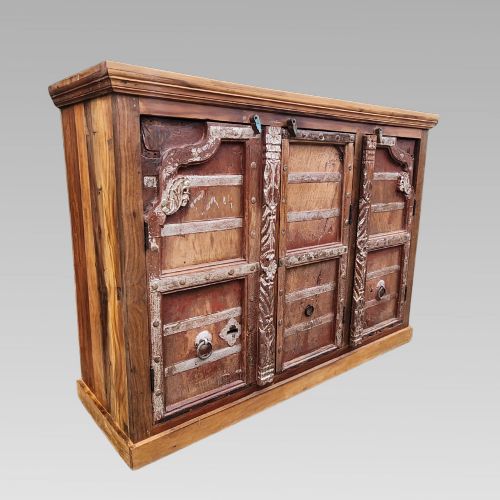
An indian carved cupboard encompasses storage cabinets, almirahs, damchiyas, and sideboards originating from the nineteenth and early twentieth centuries. These pieces reflect diverse regional traditions, ranging from folk art painted surfaces to intricate colonial designs.
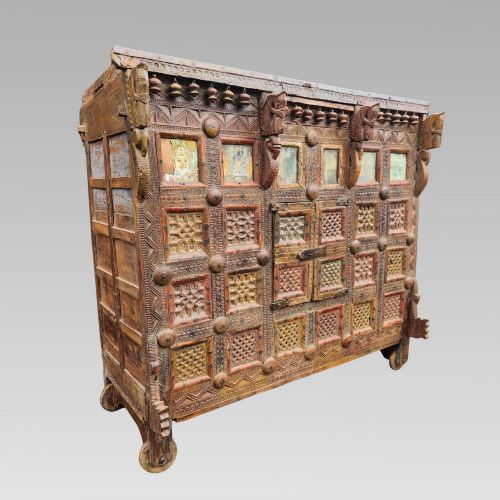
The version most commonly met on this page is the nineteenth-century teak or padouk storage cabinet featuring heavy relief carving. Buyers also encounter damchiya dowry chests and tall shelved cupboards influenced by British tastes.
Materials and construction
Construction relies heavily on dense timbers such as teak, padouk wood, rosewood, satinwood, and cedar. Artisans worked these hard boards using traditional joinery, often incorporating iron hinges and brass fittings.
Surface ornamentation combines deep chisel work with occasional painted highlights. Panels display traditional motifs executed entirely by hand before assembly into freestanding storage furniture.
Some nineteenth-century cabinets carry stories of colonial verandas, once holding evening gin bottles behind locked teak doors.
Quality differences
Depth and crispness of the chisel work separate standard examples from superior pieces. Fine carvings retain sharp relief and clean tool marks across every panel.
Integrity of the timber and the retention of original hardware heavily influence overall standard. Reclaimed elements and substantial solid hardwoods distinguish heavier architectural items.
The Indian Carved Cupboard Glossary
- Almirah
- A freestanding cupboard or wardrobe used for storage. These upright cabinets often feature panelled doors and internal shelving.
- Damchiya
- A traditional low dowry chest or cabinet featuring ornate carved panels. These storage pieces typically lift or open from the front.
- Padouk
- A heavy, durable tropical hardwood with a reddish hue. Artisans utilised this dense timber for carved sideboards and cabinets.
- Anglo-Indian
- A design style blending British furniture forms with traditional Indian craftsmanship. These pieces date from the nineteenth and early twentieth centuries.
Indian Carved Cupboard: Frequently Asked Questions
How were damchiya chests used?
A damchiya functioned historically as a dowry chest for storing household goods and textiles. Families utilised these heavily carved low cabinets within domestic interiors.
Today, collectors appreciate them as statement storage furniture with distinct regional character.
What is Anglo-Indian furniture?
Anglo-Indian furniture combines British cabinet forms with traditional South Asian carving techniques. These items were produced during the nineteenth and early twentieth centuries.
They display dense floral and geometric relief work on dense timbers.
Which woods are used?
These pieces utilise dense tropical hardwoods including teak, padouk wood, rosewood, and satinwood. Artisans selected these durable timbers to support deep chisel carving.
Iron and brass hardware frequently accompany these primary woods.