




Teak Wooden Sideboard
These teak wooden sideboard options bring substantial regional character and heavy hardwood storage into a room.
Teak Wooden Sideboard
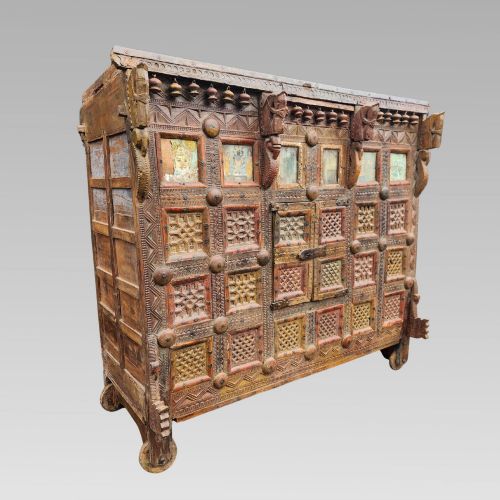
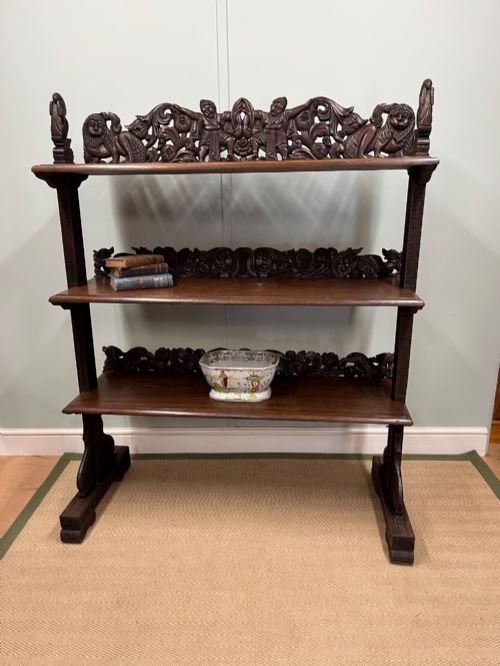
A teak wooden sideboard serves as a practical storage piece rooted in regional traditions, spanning utility cupboards and ornate dowry chests. When searching this phrase, a buyer meets examples that range from tall cabinets to three-tier buffets.
The pieces on this page draw heavily from nineteenth-century origins through to the early decades of the twentieth century. Traditional Indian, Anglo-Indian, and provincial workshop styles dominate the forms currently available.
How they were made
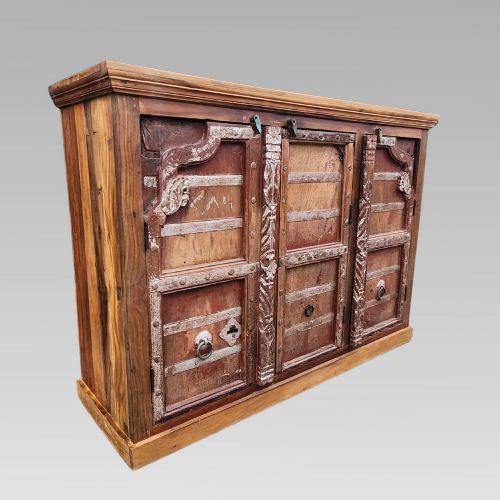
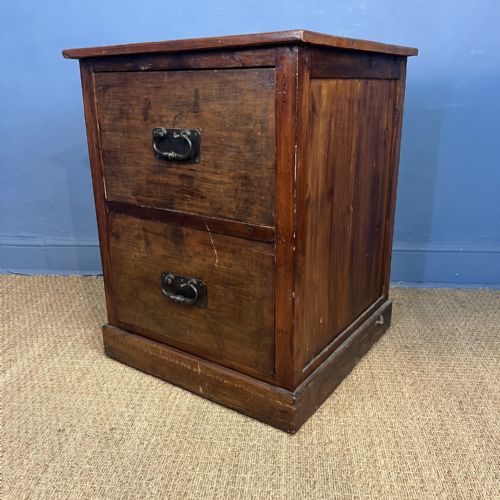
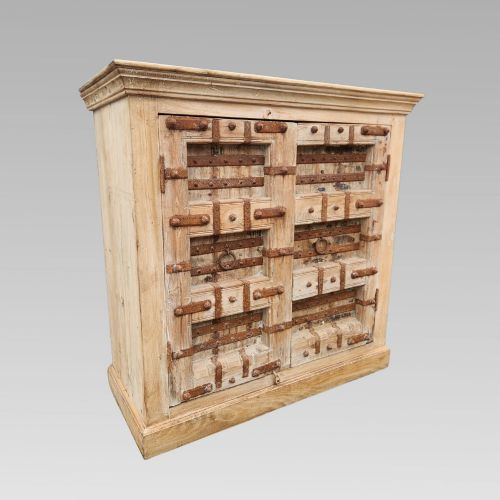
Construction relies upon durable teak and mixed hardwoods, often incorporating reclaimed timber alongside primary structures. Metal elements such as iron and brass appear regularly in hardware, hinges, and drawer pulls.
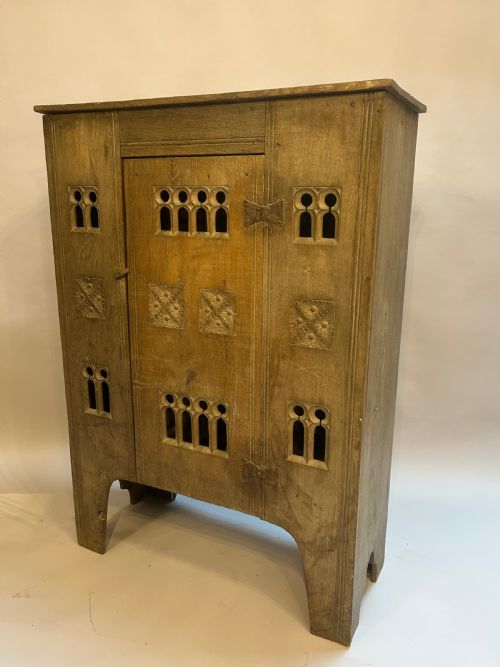
Carving defines the surface treatment of these items, displaying intricate regional patterns across doors and panels. Selected pieces integrate contrasting materials like glass, marble, and rosewood accents to complete the design.
Teak Wooden Sideboard Retail Price Guide 2026
Typical asking prices for teak wooden sideboard among the pieces listed under this phrase on Sellingantiques today, from the lower quarter to the upper quarter. They describe what is for sale here now, not the wider market.
Materials across these entries extend beyond pure teak to include iron fittings, brass hardware, marble inserts, and occasional rosewood details.
What varies in quality
Depth and crispness of hand-carving separate standard utility pieces from exceptional examples. The complexity of regional motifs and the crisp execution of relief work dictate the upper tier of the range.
The integrity of the reclaimed timber and the substance of the fitted hardware influence overall permanence. Superior items maintain solid structural joinery alongside well-preserved original drawer configurations.
The Teak Wooden Sideboard Glossary
- Damchiya
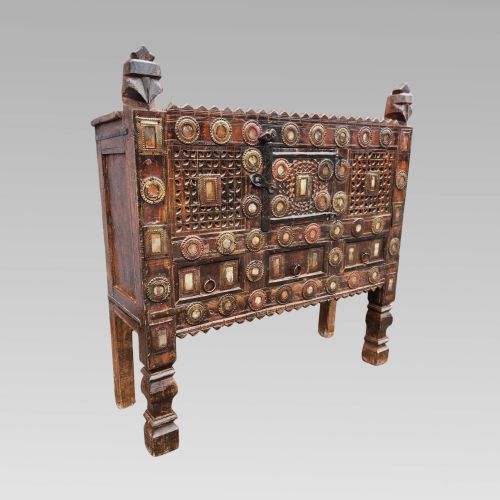
- A traditional low dowry chest originating from India, typically featuring deep relief carving and hinged top or front access. These storage cabinets form a distinct subset of the sideboard family.
- Anglo-Indian
- A descriptive term for furniture made in India during the British period, combining local craftsmanship with European forms. Such pieces often display hybrid decorative schemes.
- Buffet
- A sideboard or cabinet designed primarily for the storage and serving of food. In older forms, this translates to multi-tiered shelving units constructed in heavy hardwoods.
- Reclaimed teak
- Salvaged plantation timber reused in the construction of storage cupboards and sideboards. This material retains distinct weathering and historical marks from its prior structural life.
Teak Wooden Sideboard: Frequently Asked Questions
What is a damchiya?
A damchiya is an ornate dowry chest traditionally used for household storage in Indian households. These pieces often incorporate heavy carving and specialised compartment layouts.
They function well today as decorative storage cabinets in living spaces or hallways. Their distinct proportions set them apart from standard Western sideboards.
How do I date these cabinets?
Dating relies upon examining construction methods, hardware materials, and stylistic markers recorded across the nineteenth and early twentieth centuries. Structural wear and regional design shifts provide reliable chronological clues.
Cabinetry from the nineteenth century frequently displays deeper hand-carving and distinct joinery compared to later 1930s utility pieces.
Where were these pieces made?
These items originate primarily from Indian provincial workshops and Anglo-Indian colonial centres. Artisans utilised locally available teak and hardwoods native to the region.
The resulting furniture reflects a blend of indigenous folk art traditions and colonial administrative requirements.
How do I care for teak?
Teak requires minimal maintenance due to its natural oil content and dense grain structure. Regular dusting and occasional treatment with suitable wood balms preserve the finish.
Keep these heavy hardwood items away from direct heat sources to prevent timber movement over time.