

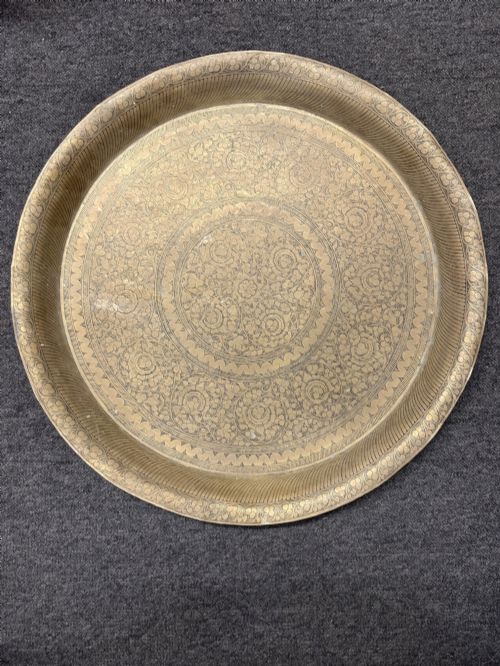

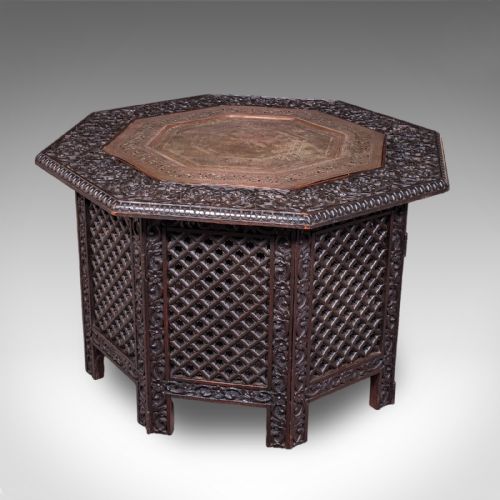
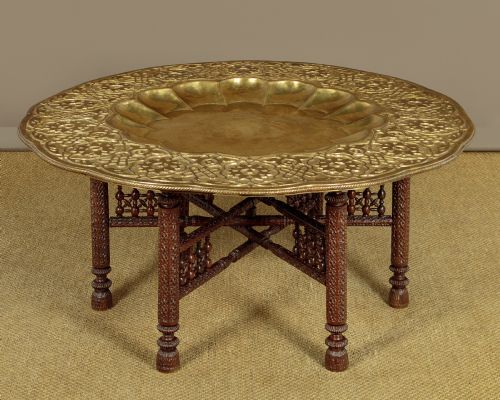
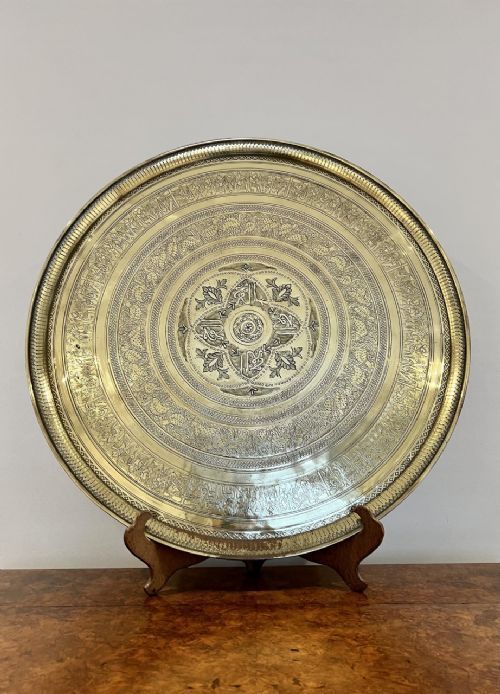
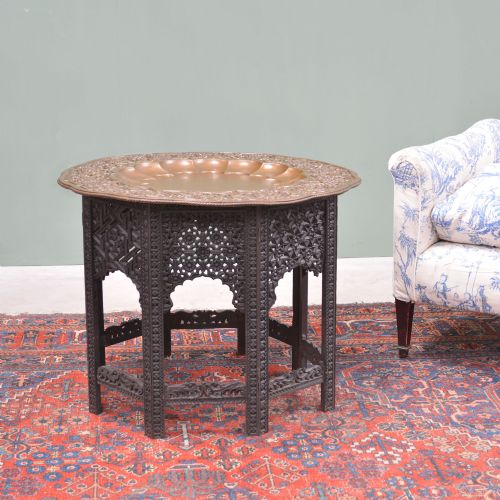


Indian Brass Tray Table
An Indian brass tray table brings warmth and intricate pattern into a room, offering a portable surface that folds away easily when not needed.
Indian Brass Tray Table
When you search for an indian brass tray table, you encounter low occasional pieces designed for flexible living and display. Most examples on this page date from the late nineteenth century into the early decades of the twentieth century.
The form typically combines a removable or folding metal top with a collapsible wooden base. These objects served utilitarian and decorative purposes in domestic spaces, often linked to Anglo-Indian trade and interior tastes.
How they were made
The construction relies on sturdy timbers such as teak, hardwood, and general wood for the folding stands, which often feature intricate hand-carved detailing. The surfaces consist of hammered brass, copper, and mixed metal plates secured onto the wooden frames.
Metal tops display deep engraving, chasing, and occasionally inlaid elements that showcase traditional metalworking techniques. Stands are engineered to collapse flat for storage and transport without requiring modern hardware.
Indian Brass Tray Table Retail Price Guide 2026
Typical asking prices for indian brass tray table among the pieces listed under this phrase on Sellingantiques today, from the lower quarter to the upper quarter. They describe what is for sale here now, not the wider market.
Keep an eye out for tables featuring the signs of the zodiac, turning your morning coffee spot into an accidental astrology reading.
What varies in quality
The depth and clarity of the hand-engraving on the metal surface distinguish standard production from superior artistry. Crisp lines and detailed motifs demonstrate greater skill than shallow, machine-assisted stamping.
The weight and stability of the wooden base, alongside the precise fit of the folding mechanism, dictate the overall durability and tactile satisfaction of the piece.
The Indian Brass Tray Table Glossary
- Anglo-Indian
- A style describing furniture and decorative objects made in India during the British period, often blending local craftsmanship with European forms. These pieces frequently incorporate regional carving traditions.
- Tray top
- A removable metal tray that sits upon a folding wooden base to form a low table. This design originated to facilitate easy serving and compact storage.
- Chasing
- A metalworking technique where the pattern is hammered into the front surface rather than cut away. This pushes the metal to create low relief designs without removing material.
- Collapsible stand
- A wooden base constructed with interlocking or hinged legs that fold together flat. It supports the removable tray top securely when open.
Indian Brass Tray Table: Frequently Asked Questions
How do I clean a brass tray top?
Dust the surface regularly with a soft, dry cloth to prevent grime accumulation in the engraved grooves. Avoid harsh chemical polishes that strip away the aged patina.
Apply a gentle metal cleaner sparingly only if necessary, ensuring no moisture seeps into carved crevices or underlying wooden elements.
Are the tray tops removable?
Most tops lift completely off the folding wooden base to allow independent transport of the metal surface and the stand.
This practical design feature reflects their original function as serving trays before being placed onto stands for use as coffee or occasional tables.
What woods were used for the bases?
Makers utilised dense timbers such as teak and various local hardwoods to ensure the folding frames could support heavy metal tops.
These woods were chosen for their durability and suitability for intricate hand-carving along the legs and supports.
How do I date an older table?
Examine the style of the hand-engraving, the construction of the wooden hinges, and the overall weight of the metals used.
Earlier nineteenth-century examples often display denser, more meticulous chasing compared to later twentieth-century production.