


Indian Brass Stand
An Indian brass stand brings warm metalwork and intricate surface pattern into a room, offering both practical display space and distinct cultural character.
Indian Brass Stand
An Indian brass stand encompasses various forms designed to elevate objects or serve as occasional furniture, ranging from small tables to lamp standards and planter supports. The selection includes occasional tables, tray tables, folding coffee tables, and jardiniere stands.
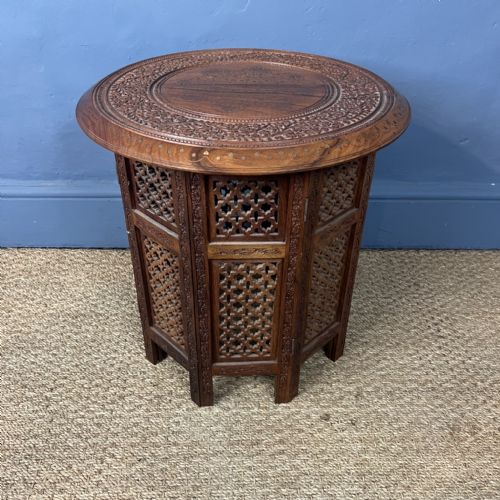
The objects span from the eighteenth century through the Victorian era and the early decades of the twentieth century, with styles covering Anglo-Indian, Persian, and Anglo-Indian Colonial designs. Buyers frequently encounter circular or octagonal tables featuring detailed metal inlay alongside dedicated plant and lamp stands.
How they were made
The construction typically combines a wooden structural base of teak, hardwood, padouk, or teak with extensive metalwork elements. Artisans hammered, etched, and embossed sheet brass or bronze to create surface patterns, often incorporating wire inlay directly into the timber.
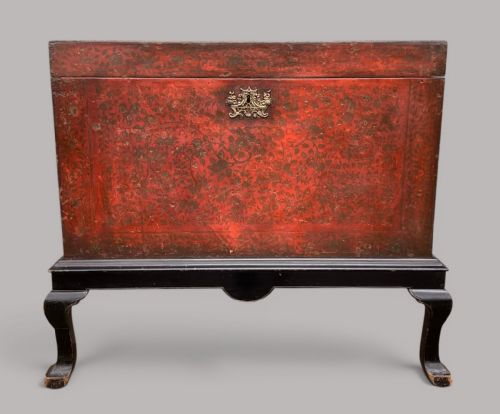
Secondary materials such as bone, copper, and red lacquer appear across various pieces to accent the primary metal and wood structure. Folding mechanisms and removable trays demonstrate precise woodworking and metal-fitting skills suited to portable furniture.
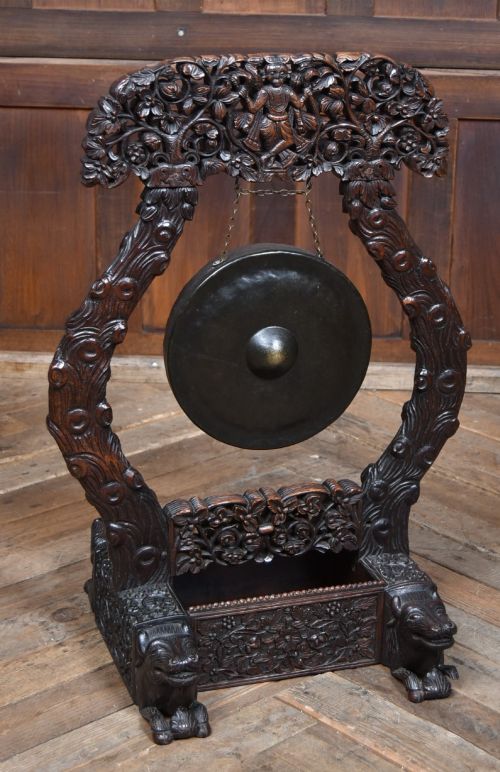
Object forms include occasional tables, tray tables, jardiniere stands, gongs, and lamp standards alongside carved animal bookends.
What varies in quality
The refinement of the surface decoration largely dictates the distinction between standard and superior pieces, particularly in the depth and clarity of the hand-etched or embossed motifs. Dense, precise metal inlay set flush into hardwood demonstrates greater craftsmanship than simpler surface applications.
Structural integrity of the wooden frames and the preservation of the original lacquered or patinated surfaces influence the overall standard. Pieces retaining their matching trays, complete folding actions, or integrated metal components command stronger interest.
The Indian Brass Stand Glossary
- Anglo-Indian
- Descriptive term for furniture and decorative arts made in India during the British colonial period, often combining British furniture forms with local craftsmanship. It reflects a distinct cross-cultural aesthetic.
- Jardiniere
- A decorative pot or stand intended for holding plants or flowers. In these listings, they frequently appear with brass liners and embossed surface decoration.
- Padouk
- A dense tropical hardwood known for its reddish-brown colour and durability, used frequently in eighteenth-century and colonial furniture. It provides a stable base for detailed inlay work.
- Bidri ware
- A metalwork technique originating from India involving an alloy of zinc and copper inlaid with thin sheets of pure silver or brass. It creates high-contrast geometric and floral patterns against a dark metal ground.
- Cellarette
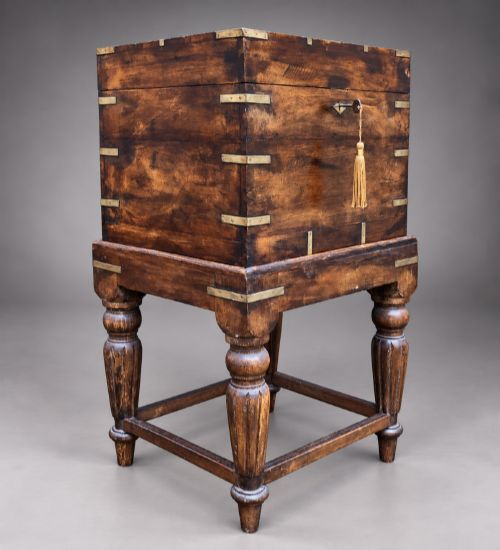
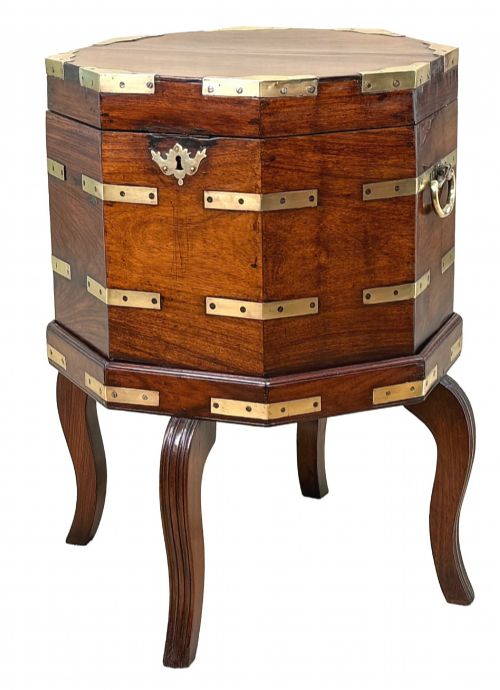
- A lockable container or cabinet designed to hold wine bottles, often mounted on a stand or legs. Examples in the records feature extensive brass work and colonial timber construction.
Indian Brass Stand: Frequently Asked Questions
How do I clean an antique brass stand?
Dust the surface regularly with a soft, dry cloth to prevent dirt accumulation in the recessed patterns. Avoid harsh chemical polishes that strip the historic patina from the metal.
For the wooden sections, apply a neutral wax sparingly to nourish the timber without affecting any embedded metal wire or lacquer.
Are these folding tables sturdy?
Many tables utilise traditional folding bases designed for portability and easy storage. While stable when fully opened, they suit lighter decorative uses rather than heavy weight-bearing tasks.
Check the hinge pins and wooden joints periodically to ensure the folding mechanism locks securely into place.
What woods were commonly used?
Teak and padouk appear frequently in the construction of these stands, providing a dense and durable foundation for metal inlay. Hardwood and occasional lacquer or teak elements also support the brass tops.
These timbers resist warping well, which helps secure the delicate metal wire and sheet inlays over decades of use.
How can I date an Indian brass stand?
Dating relies on stylistic markers, construction methods, and material combinations seen across Victorian and early twentieth-century examples. Eighteenth-century pieces typically show heavier padouk framing and simpler, deep-relief carving.
Later pieces from the nineteen-tens and twenties often incorporate intricate brass wire inlay and specific regional techniques like Hoshiarpur work.