



Indian Bone Inlay Furniture
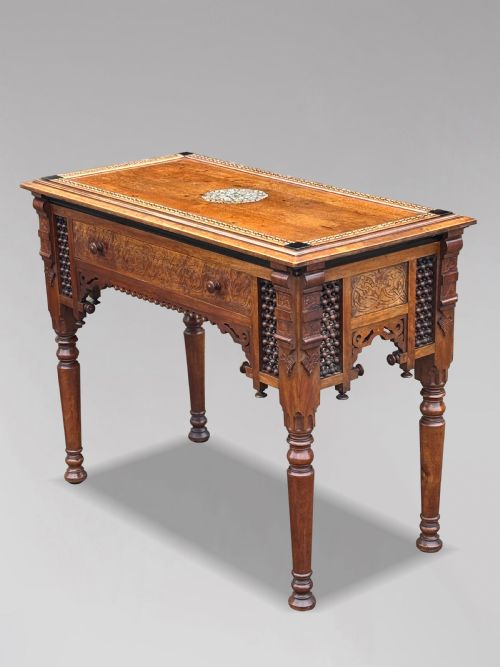
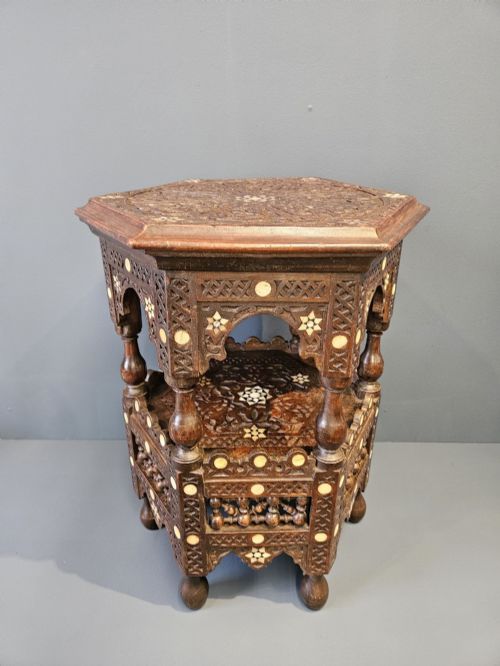
Indian bone inlay furniture brings intricate geometric patterns of bone and mother of pearl into hardwood tables, mirrors and chests.
Indian Bone Inlay Furniture
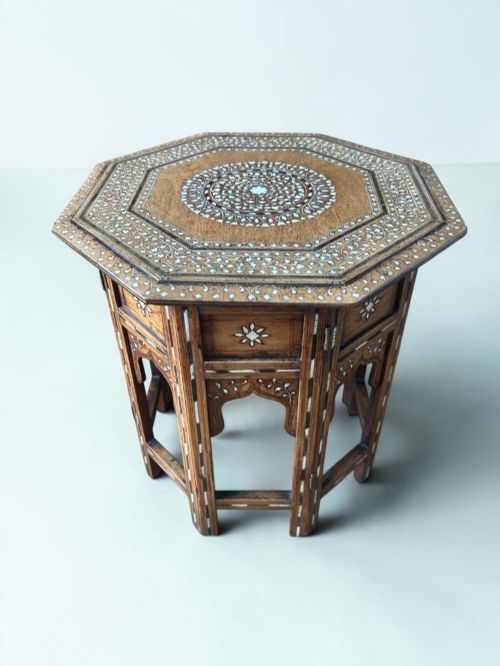
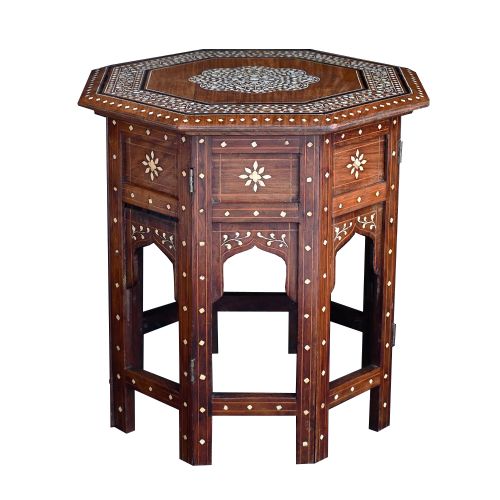
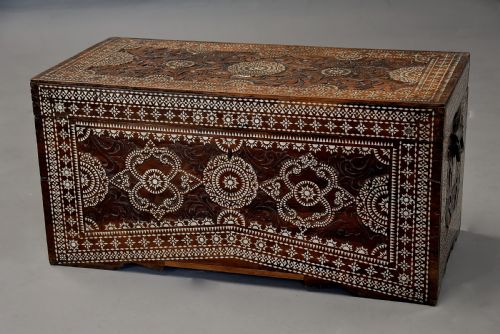
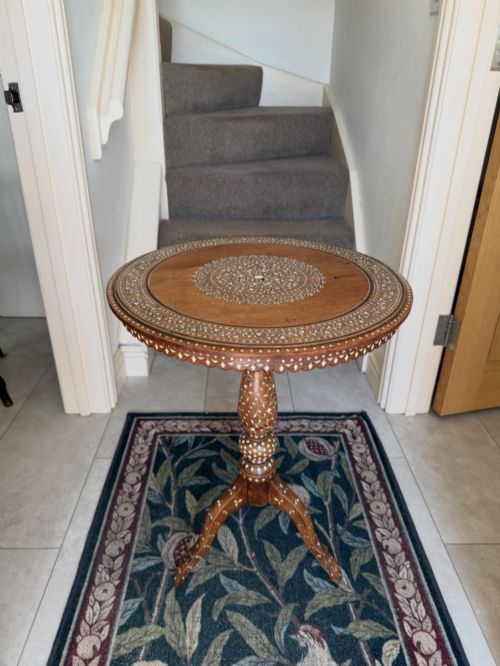
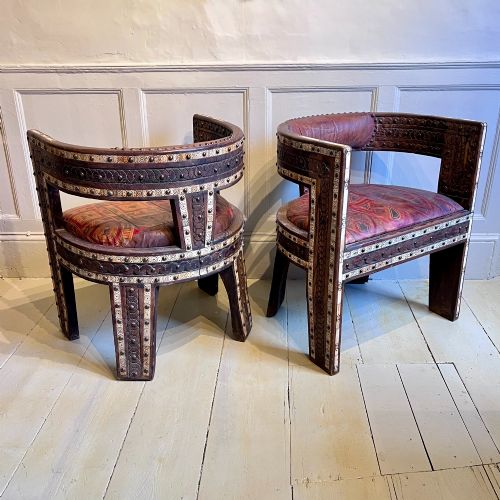
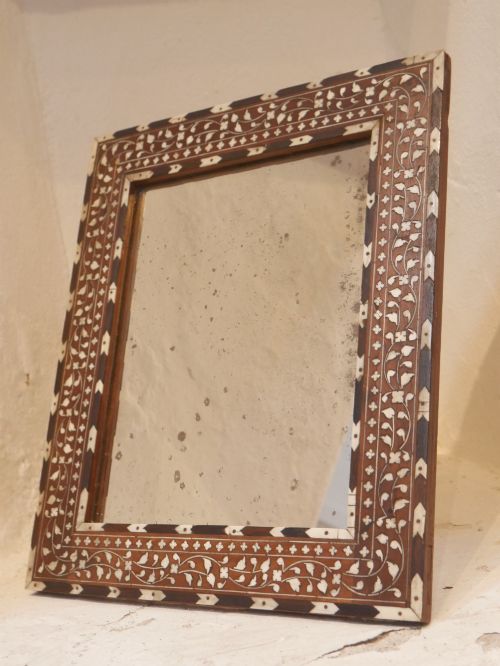
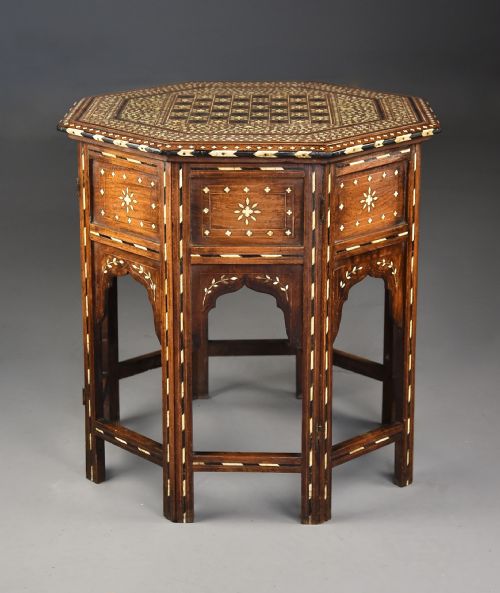
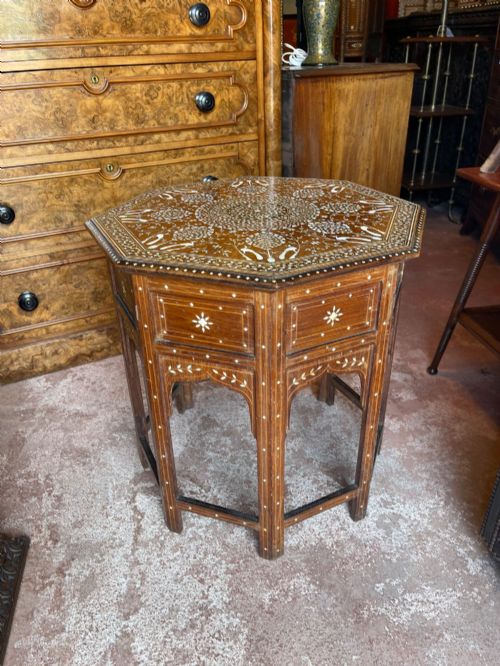
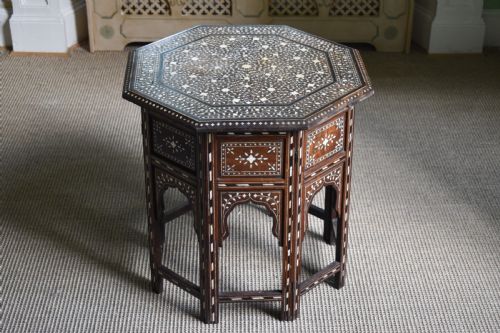
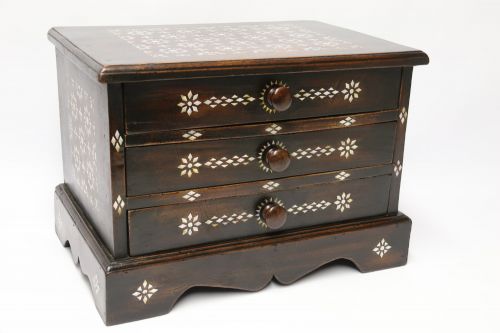
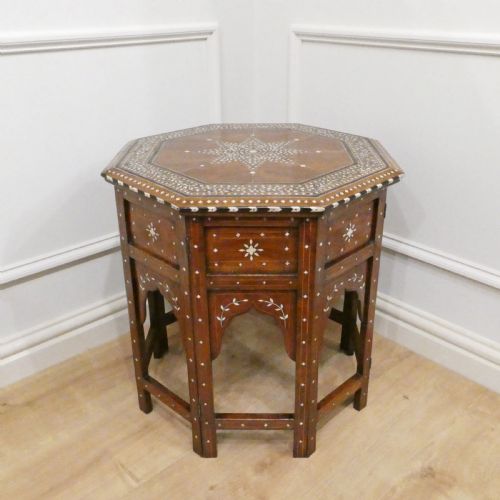
Indian bone inlay furniture comprises tables, mirrors, trunks and seating created across the nineteenth and early twentieth centuries in styles including Anglo-Indian, Moorish Revival and Ottoman. Buyers encounter octagonal occasional tables, folding tables and pedestal tables alongside larger collector chests, cabinets and armchairs.
The Hoshiarpur tradition dominates the selection, producing intricate wooden frames densely decorated with inlaid panels. Alongside these, items from Syrian, North African and Moorish workshops appear, incorporating mother of pearl and abalone alongside bone.
Most pieces date from the nineteenth century or the early decades of the twentieth century, constructed from dense timbers such as teak, rosewood, ebony and sheesham wood. These functional household items range from small lamp tables to full-size tables and sofas.
How they were made
Craftsmen shaped bone, mother of pearl and abalone into precise geometric or figural fragments before pressing them into hand-carved recesses within hardwood foundations. The underlying structure relied on durable timbers including teak, rosewood, ebony and sheesham wood, often heavily carved with dense floral or geometric motifs.
Additional detailing involved contrasting dark woods, brass wire inlay and leather upholstery, particularly in armchairs and settees. Surfaces were smoothed and polished to set the bone flush with the surrounding timber grain.
Indian Bone Inlay Furniture Retail Price Guide 2026
Typical asking prices for indian bone inlay furniture among the pieces listed under this phrase on Sellingantiques today, from the lower quarter to the upper quarter. They describe what is for sale here now, not the wider market.
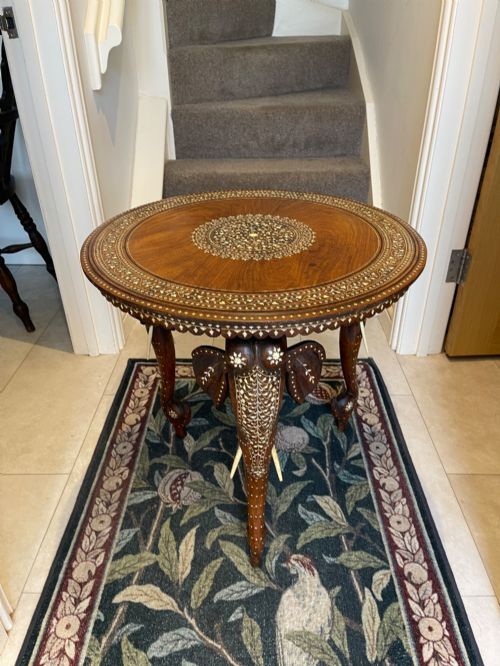
Among the tables and mirrors, elephant tables and porcupine sofas introduce wonderfully distinct animal motifs to the inlay tradition.
What varies in quality
Quality rests upon the density and precision of the inlay work, where tightly fitted bone and mother of pearl segments demonstrate superior craftsmanship compared to sparse or simpler arrangements. The intricacy of the surrounding wood carving also distinguishes finer examples.
The choice of primary timber influences the character of a piece, with dense exotic hardwoods such as ebony and rosewood marking out more ambitious commissions alongside standard teak and sheesham.
The Indian Bone Inlay Furniture Glossary
- Hoshiarpur
- A historic centre in Punjab renowned for intricate wood carving and bone inlay work. Items originating from here typically feature dense floral and geometric patterns covering every visible surface.
- Anglo-Indian
- A design style combining traditional Indian craftsmanship with British colonial forms and domestic requirements. Tables and chests from this category often merge local carving techniques with European furniture shapes.
- Moorish Revival
- An architectural and decorative style popular in the nineteenth century that utilised Islamic geometric motifs, horseshoe arches and intricate inlay. Pieces reflect influences from North Africa and the Middle East.
- Sheesham
- An Indian rosewood utilised extensively for structural frames in inlaid furniture. Its durability and grain made it ideal for supporting intricate surface decoration.
- Mother of pearl
- An iridescent inner layer of mollusc shell incorporated alongside bone to create contrast and shimmer within inlaid panels. It appears frequently in Middle Eastern and Syrian cabinet work.
Indian Bone Inlay Furniture: Frequently Asked Questions
What woods are used in Indian bone inlay furniture?
Makers utilised dense hardwoods including teak, rosewood, ebony and sheesham wood for the primary structures. These timbers provided stable foundations capable of supporting heavy carving and intricate surface inlay.
Lighter secondary woods also appear in internal framework and secondary components, though the exterior surfaces showcase the chosen exotic timber alongside contrasting bone and mother of pearl elements.
How do I date an inlaid Hoshiarpur table?
Dating relies on timber selection, construction methods and stylistic markers associated with nineteenth and early twentieth-century production. Pieces spanning the Victorian era through to the nineteen-twenties exhibit subtle shifts in turning, joinery and the complexity of the inlaid motifs.
Earlier nineteenth-century examples often display deeper, sharper carving in the hardwood substrate, while pieces from the nineteen-twenties sometimes incorporate simpler folding mechanisms or lighter construction.
Where were these inlaid items made?
Production centred heavily on Hoshiarpur in the Punjab region of India, which became famous for specialised wood carving and inlay workshops during the colonial period. Other pieces originated in Syrian, Ottoman and North African workshops.
Workshops in these diverse regions shared techniques involving bone and mother of pearl insertion, though stylistic details varied between Anglo-Indian colonial designs and Moorish Revival aesthetics.
How should I care for bone inlay furniture?
Maintenance requires keeping pieces away from direct heat sources and sudden humidity changes to prevent the hardwood from moving and loosening the delicate bone fragments. Gentle dusting with a dry cloth preserves the polished surface.
Avoid liquid cleaners and excessive moisture, which can penetrate the unsealed joints between the bone and the surrounding timber, affecting the adhesive and the wood grain.