

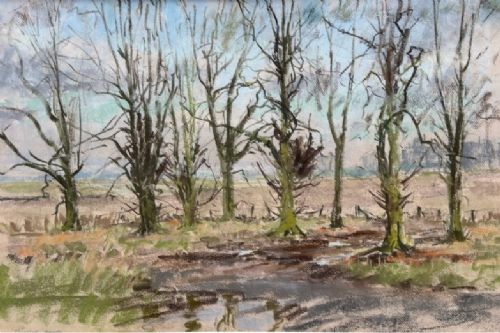
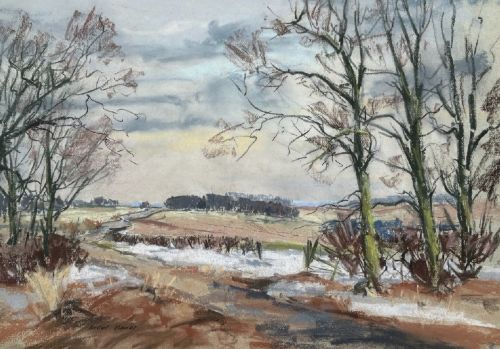

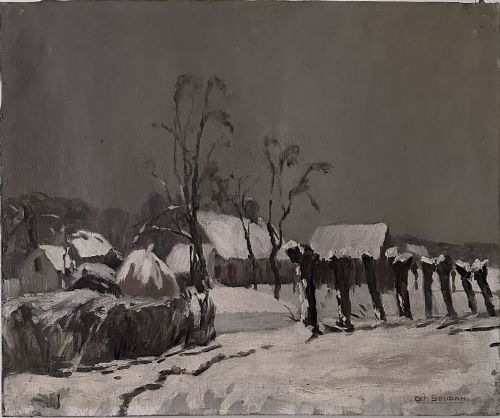


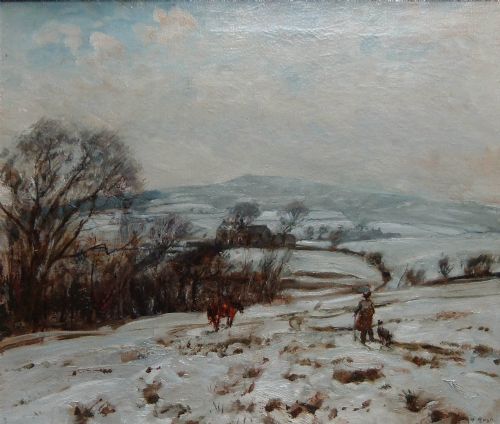


Impressionist Winter Scene
An impressionist winter scene brings cold air and frost into a room through quick, textured brushwork.
Impressionist Winter Scene
An impressionist winter scene captures the chill and light of the colder months using loose brushwork and varied palettes. You will find that these works range from French school townscapes to quiet British pastoral views and Dutch rural scenes.
The pieces listed here appear across several decades, running from the late nineteenth century through to the middle of the twentieth century. Painters often turned their attention to snow-covered villages, frosty pastures and quiet urban streets during this era.
Oil paint on canvas or board forms the core of what you will encounter, alongside watercolours and pastels on paper. These mediums allow artists to record shifting light on snow and grey winter skies with immediate effect.
Materials and methods
Artists built these surfaces using oil paint, watercolour, gouache or pastel applied to canvas, wood panels or paper. Oil paint allowed for thick impasto to suggest heavy snow, while watercolours captured thin, translucent winter washes.
Framing often involves traditional wood and gesso frames that protect the edges of the canvas or paper supports. These surrounds range from simple wooden battens to ornate moulded frames appropriate to the period.
Impressionist Winter Scene Retail Price Guide 2026
Typical asking prices for impressionist winter scene among the pieces listed under this phrase on Sellingantiques today, from the lower quarter to the upper quarter. They describe what is for sale here now, not the wider market.
Listings feature works from the nineteenth century up to the 1950s, created using oil paint, watercolour, pastel, and gouache.
Assessing quality and execution
The strength of the composition and the confidence of the brushwork mark the difference between a standard record and a striking work. Stronger pieces use colour and tone to convey cold light rather than relying on heavy outlines.
The handling of the medium itself reveals the skill of the painter, whether through layered oil pigment or the deft control of watercolour on paper. Condition of the underlying canvas or paper also plays a role in how well the work survives.
A. McDonald·Gaston Cornil·Arthur Winter Shaw·Herbert Royle·W. Tatton Winter·Ernest Higgins Rigg·Anthonij Anton Mauve·Matthew Hale·William Cave Day
The Impressionist Winter Scene Glossary
- Impressionism
- A style of painting that focuses on capturing the visual impression of a moment, especially regarding shifting light and atmosphere. Artists use small, thin yet visible brush strokes.
- Impasto
- The process of applying paint thickly on to a canvas so that it stands out from the surface. This technique often helps render the texture of drifted snow.
- Gouache
- A water-based paint consisting of pigment and a heavier binding agent, creating an opaque finish. It appears alongside watercolour in several works on paper.
- Gesso
- A plaster-like mixture applied to wood or canvas as a base for painting or used in moulding frames. It provides a smooth, stable ground for the artist.
- Hague School
- A group of artists from the late nineteenth century who worked in the Netherlands and painted in a realistic style with sombre tones. Their influence appears in several pastoral and rural views.
Impressionist Winter Scene: Frequently Asked Questions
What is an impressionist winter scene?
These artworks depict cold weather, snow and winter landscapes using the loose, expressive techniques associated with the impressionist movement. Painters focus on natural light and atmosphere during the colder months.
You will find examples executed in oil, watercolour and pastel across the nineteenth and twentieth centuries.
How should I hang a winter painting?
Keep works on paper and canvas away from direct sunlight and damp conditions to protect the pigments and supports. Proper placement ensures the delicate tones of winter light remain clear.
Pairing the piece with a suitable period frame helps anchor it visually on the wall.
How do I date these winter scenes?
Dating relies on the artist's active period, stylistic clues, and the materials used in the support and framing. Many works carry signatures or dates inscribed by the painter.
Comparative study with other works from the same school provides further chronological context.
Are these works on paper fragile?
Watercolours and pastels require glass protection and careful handling to prevent damage from moisture or pressure. They benefit from stable indoor environments.
Oils on canvas or board are generally more robust but still need sensible placement away from heat sources.