




Impressionist Street Painting
Impressionist street painting captures bustling urban life through brisk brushwork, offering a window into historical cityscapes from the nineteenth century onwards.
Impressionist Street Painting
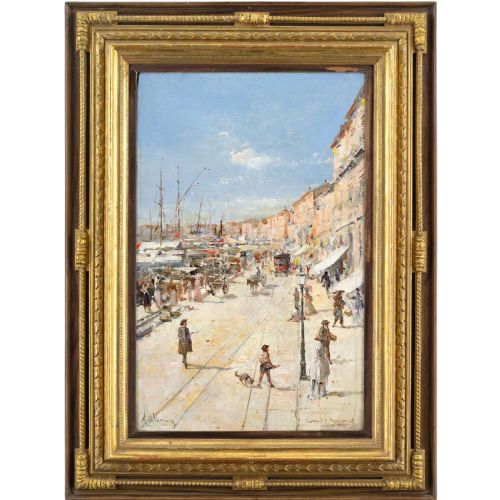
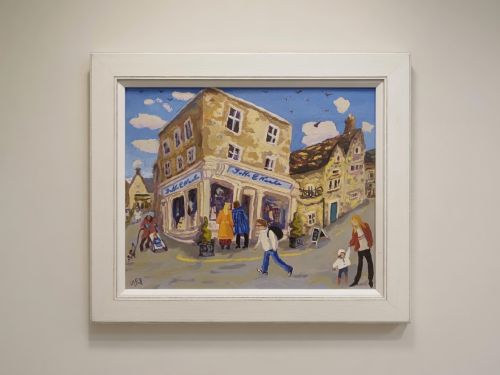
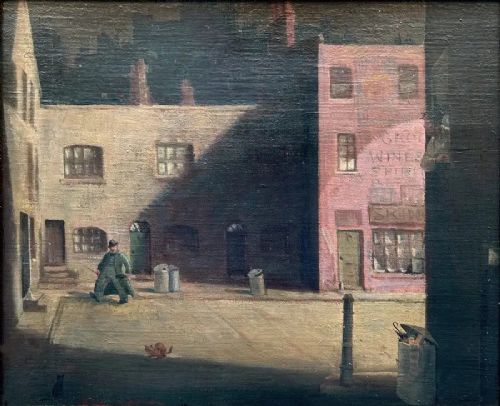
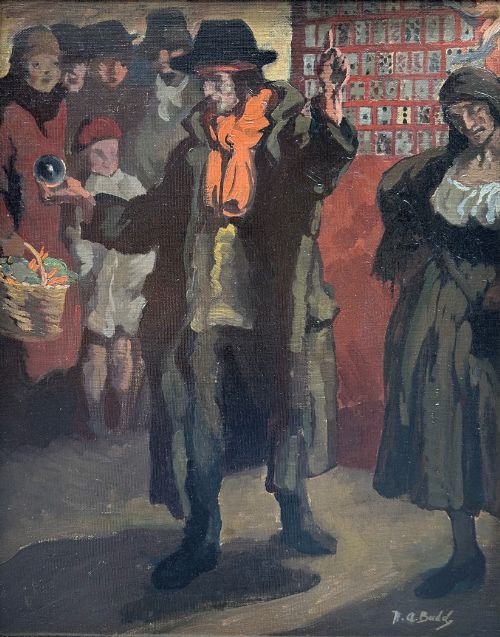
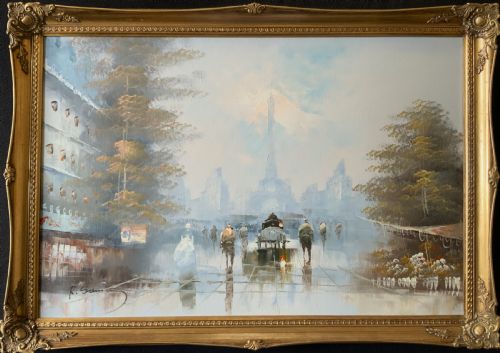
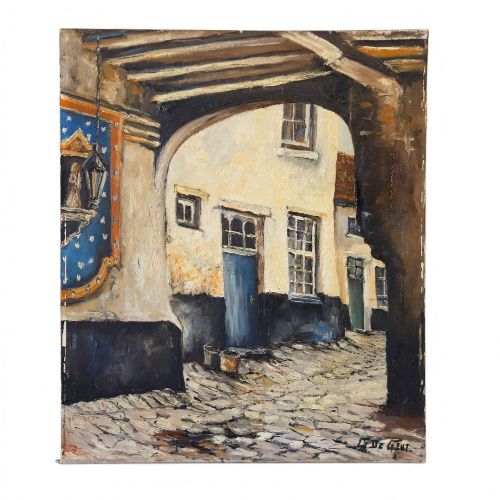
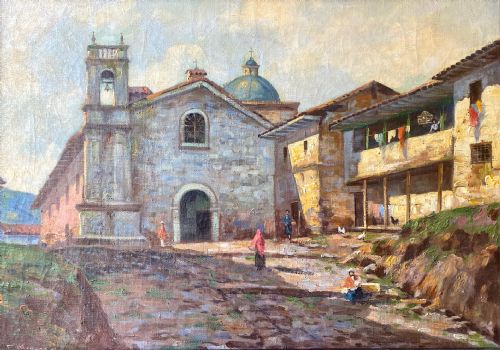
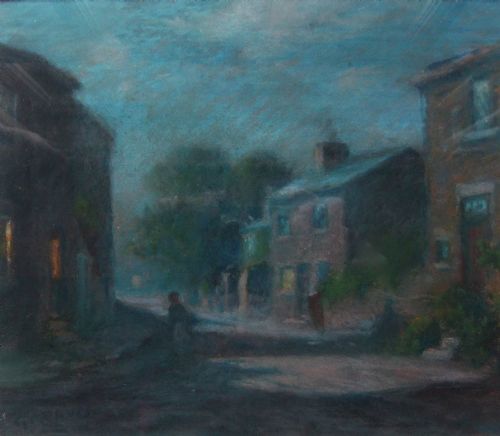
An impressionist street painting depicts public thoroughfares, squares and architectural facades, capturing the kinetic energy of pedestrians, cabs and markets. These works often focus on Paris, London and various European or Latin American towns during daylight, twilight or winter.
The pieces on this page span from the nineteenth century through the mid-twentieth century, encompassing Impressionism, Post-Impressionism, Belle Epoque and Mid-Century Modern movements. Buyers most frequently encounter oil on canvas, oil on board and watercolour formats housed in vintage gilded wood frames.
How they were made
Artists applied oil paint or watercolour onto prepared canvas, wood boards or thick paper to record fleeting atmospheric conditions and natural light. Brushstrokes remain loose and visible, prioritising overall mood and colour harmony over rigid topographical accuracy.
Many surviving examples retain their original or period-appropriate frames, often constructed from carved and gilded wood that complements the warm tones and painted highlights of the composition.
Listings feature oil on canvas, oil on board, paper, watercolour and pastel across nineteenth-century, Belle Epoque and mid-century periods.
What varies in quality
Quality rests upon the artist's ability to manipulate light and perspective, transforming a static urban view into a dynamic scene full of depth. Stronger works demonstrate confident, purposeful handling of oil paint or pastel that defines figures and architecture without relying on heavy outlines.
The cohesion of the palette and the preservation of the painted surface dictate the visual impact of the piece. Works that retain vibrant colour relationships and original framing elements sit at the upper end of the range.
Augusto Alberici·Lucy Pratt·Francisco Sancha·Herbert Ashwin Budd·Caroline Burnett·William Greaves·Victor Gabriel Gilbert·Charles James Lauder·Merio Ameglio·Cecil R. Doyly-John·Eduard Leon Cortes·Albert Guillaume·Rowland Henry Hill·Cuthbert Crossley·Donald Wood·Paul Paul·Matthew Hale·Christiaan Pieter Snyders·Letitia Marion Hamilton·Antal Berkes
The Impressionist Street Painting Glossary
- Impressionism
- A nineteenth-century art movement characterised by relatively small, thin yet visible brush strokes and an emphasis on accurate depiction of light.
- Post-Impressionism
- A predominantly French art movement that developed from Impressionism, extending its limitations while retaining its use of vivid colours and thick application of paint.
- Gilt Wood
- Wood that has been treated with a thin layer of gold leaf or gold-coloured pigment, frequently used for traditional picture frames.
- Canvas
- A closely woven fabric used as a surface for oil paintings, typically stretched over a wooden frame.
- Watercolour Painting
- Artworks created using water-soluble pigments on paper, valued for their translucent washes and delicate luminosity.
Impressionist Street Painting: Frequently Asked Questions
What subjects appear in these paintings?
These works typically depict urban thoroughfares, Parisian boulevards, crowded markets and architectural landmarks populated by figures and horse-drawn cabs or early automobiles.
Scenes range from sun-drenched Mediterranean plazas to misty evening streetscapes in London and Paris.
How do I identify the period?
Dating relies on stylistic clues, clothing fashions of the depicted figures, architectural details and framing materials. Signatures and exhibition labels on the reverse also provide precise chronological markers.
Earlier nineteenth-century examples often favour more subdued palettes, while mid-century pieces embrace bolder colourist approaches.
How should I frame these works?
Many pieces arrive in their original or period-appropriate gilded wood frames, which complement the tonal qualities of the artwork. Preserving these existing frames maintains the historical context of the painting.
If framing an unframed canvas or board, select mouldings appropriate to the mid-nineteenth or mid-twentieth-century aesthetic.
Where should I hang a street painting?
These artworks suit rooms with good ambient lighting that enhances the visible brushwork and luminous oil or watercolour pigments. Placing them at eye level in living areas or hallways allows close appreciation of the architectural detail.
Keep pieces away from direct sunlight to protect the integrity of the paint surface and paper supports.