



Impressionist Seascape
When you search for an impressionist seascape, you enter a world of coastal light and painted water captured across the nineteenth and twentieth centuries.
Impressionist Seascape
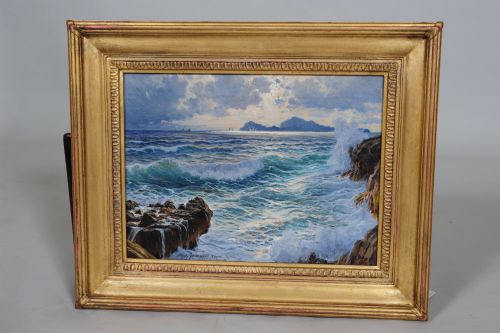
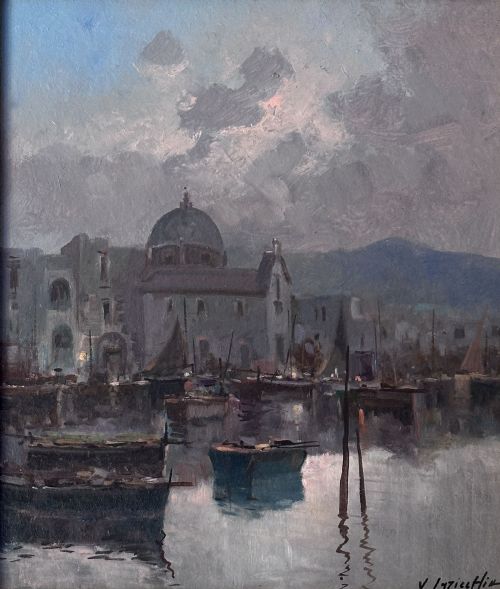
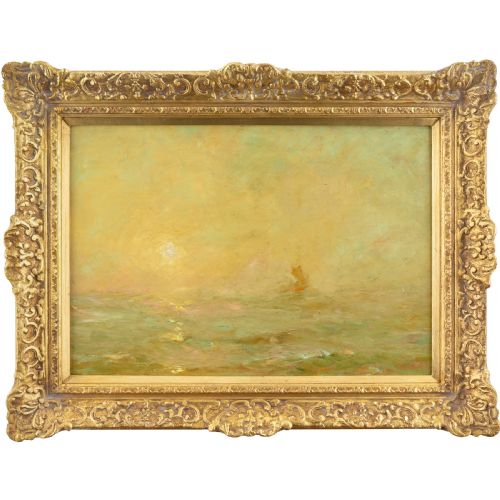
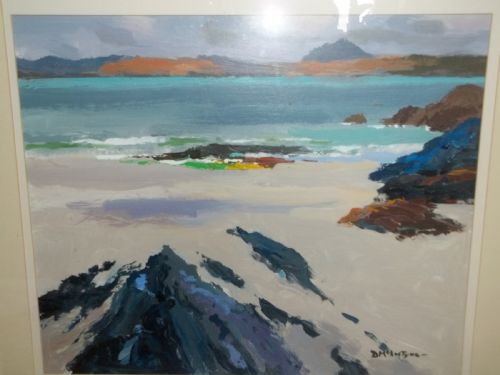
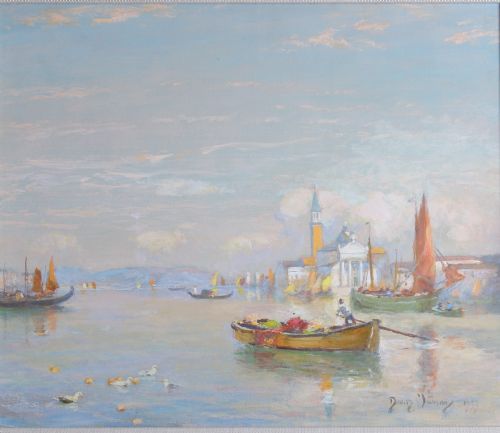
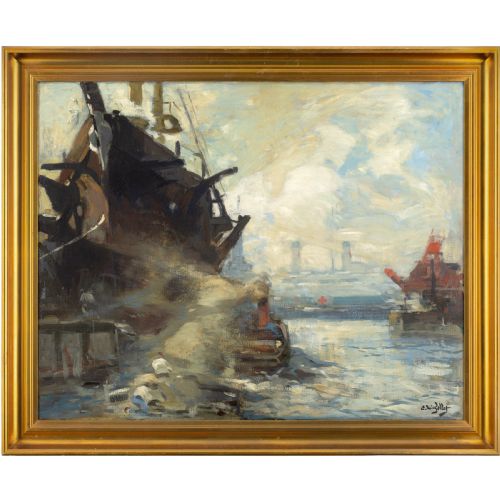
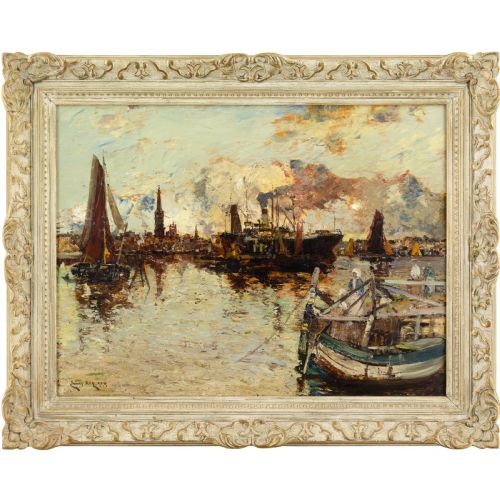
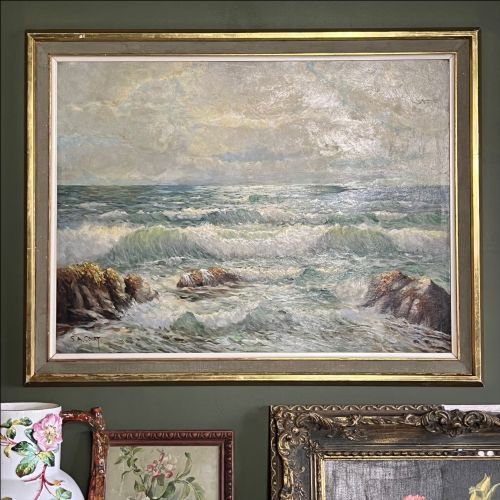
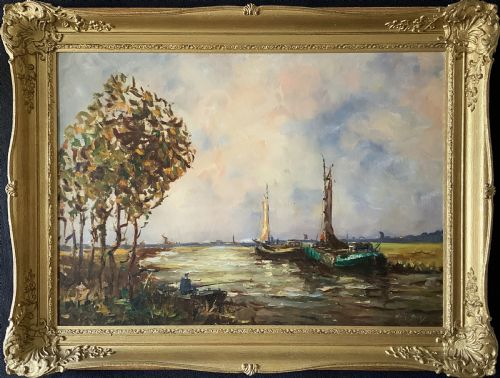
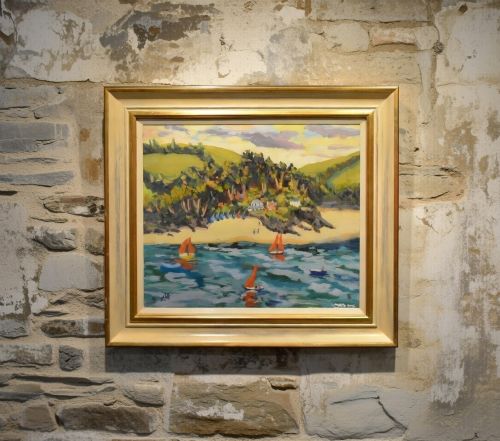
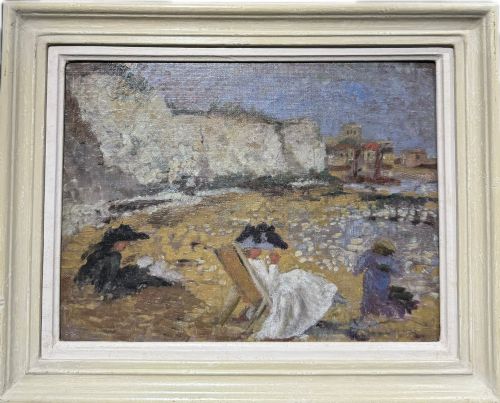
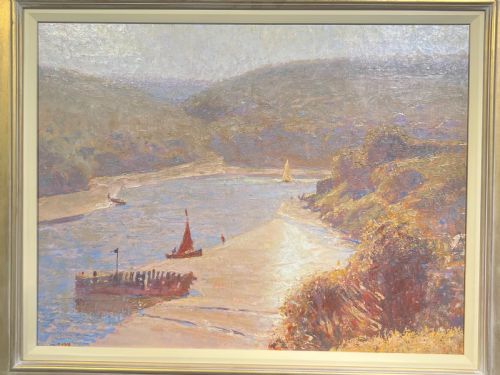
An impressionist seascape captures marine views, harbours, and coastal shores through the lens of British Impressionism, Post-Impressionism, and mid-century movements. These works focus on the transient effects of light on water rather than precise topographical detail.
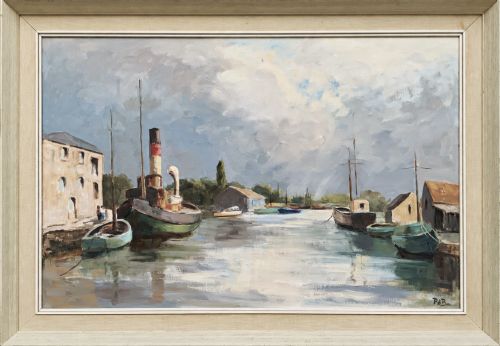
The pieces on this page span from the late nineteenth century through to the 1960s, showing how artists recorded coastal life in Cornwall, Venice, France, and beyond. Common subjects include fishing boats, calm shorelines, and bustling ports rendered in oil or watercolour.
Buyers will encounter oil paintings on canvas and board alongside delicate watercolours on paper. These range from intimate studies painted outdoors to large exhibition canvases.
Materials and methods
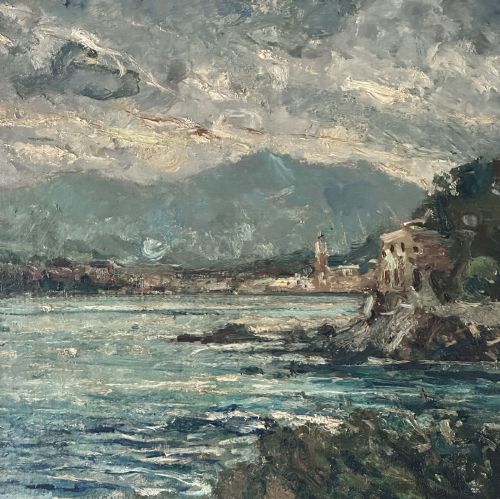
Artists relied primarily on oil paint applied to canvas, wood panels, or board, often working en plein air to capture immediate atmospheric conditions. This technique involved visible brushwork and impasto layers that built texture into the surface of the water and sky.
Watercolour on paper formed another vital medium, allowing artists to record fleeting coastal light with translucent washes. Gilt frames frequently complemented the finished paintings, adding a traditional border to the modernist palette.
Impressionist Seascape Retail Price Guide 2026
Typical asking prices for impressionist seascape among the pieces listed under this phrase on Sellingantiques today, from the lower quarter to the upper quarter. They describe what is for sale here now, not the wider market.
Several artists packed their easels to brave salty Cornish winds, capturing harbour tides while local seagulls undoubtedly watched on.
Assessing quality and execution
Quality rests upon the artist's handling of light, tone, and spatial depth within the marine composition. Stronger works demonstrate confident, purposeful brushstrokes that convey movement in the water without relying on rigid outlines.
The success of a piece depends on the balance between colour harmony and atmospheric perspective. Superior examples capture the specific air and weather of a location, whether a Cornish harbour at low tide or a sunlit French port.
Sir David Murray RA·Donald McIntyre·Hans Harlander·Eugène-Louis Gillot·Sidney A Court·William Banks Fortescue·James Kay·Clive Browne·Hector Caffieri·Lucy Pratt·Ethel Sands·Willem Bos·Cecil Allan Mould·Erich Mercker·Thomas Hodgson Liddell·John Holland·Elisabeth Bardon·Louis Suire·Gustave Vidal·Gyrth Russell·Jean-Baptiste Olive·Raymond Picque·William Lee Hankey·George Turland Goosey·Norman Lloyd
The Impressionist Seascape Glossary
- En plein air
- Painting outdoors to directly observe the landscape and changing light. This method allowed artists to record rapid shifts in weather and atmosphere.
- Impasto
- Paint applied thickly to a canvas or board, standing out from the surface. This technique creates a textured quality that often represents sparkling water or clouds.
- Post-Impressionism
- An artistic movement following Impressionism that explored emotion and symbolic content through bolder colours and structural forms. Artists broke away from strict naturalism.
- Watercolour
- A painting method where fine pigment is suspended in a water-based solution on paper. It produces translucent washes that catch the light.
Impressionist Seascape: Frequently Asked Questions
What subjects appear in these seascapes?
The works depict coastal scenes ranging from quiet Cornish harbours and Venetian lagoons to busy French ports and open ocean views. Artists focused on marine life, fishing boats, and shorelines.
Subjects also capture specific times of day, including peaceful evenings, low tides, and bright morning light over the water.
How do I care for an oil painting?
Keep oil paintings away from direct sunlight and steady humidity levels to protect both the canvas and the wooden stretcher bars behind it. Dust the surface gently with a soft, dry brush.
Avoid using water or cleaning solutions on the paint layer. Professional framing helps shield the edges of the canvas from environmental wear.
Where were these coastal scenes painted?
Many artists travelled to established maritime communities such as St Ives in Cornwall, Honfleur in Normandy, or various spots along the Mediterranean coast. They sought out active fishing ports and scenic harbours.
Other works record urban waterways and lagoons in Venice, Rotterdam, and Antwerp during the early and mid-twentieth century.
How can I tell a watercolour from an oil?
Watercolours are painted on paper, often showing the texture of the sheet beneath translucent colour washes, and require glass for protection. They have a flat, matte appearance.
Oil paintings use thicker mediums on canvas or wood panel, often displaying visible brush texture and impasto without needing glass over the surface.