



Impressionist Landscape Wall Decor
Impressionist landscape wall decor brings natural light and loose brushwork into a room through historic canvases and watercolours.
Impressionist Landscape Wall Decor
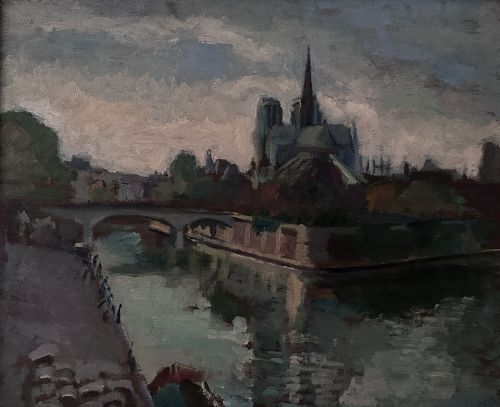
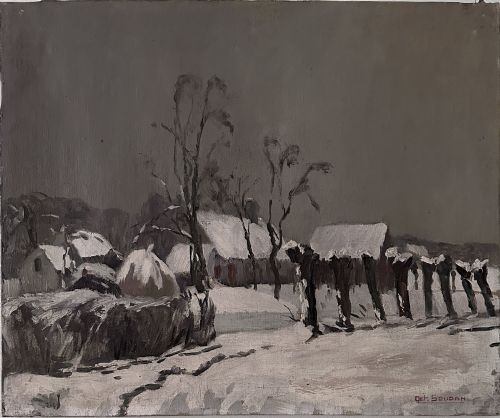
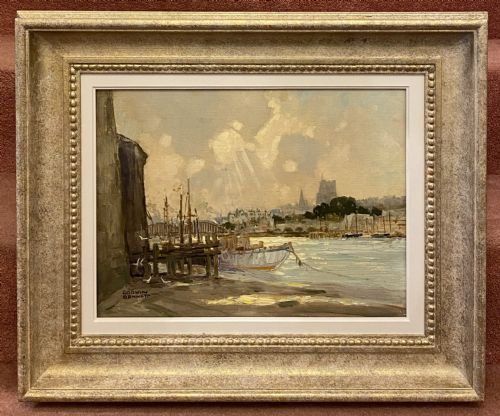
Impressionist landscape wall decor encompasses framed artworks that capture fleeting outdoor scenes, harbours, and rural views through expressive paint application. These works span from the nineteenth century through the mid-twentieth century, capturing rural and urban subjects across Britain and France.
The version most commonly met on this page is the oil painting on canvas, frequently housed in wood or gilt wood frames. Subjects range from Cornish harbours and Normandy farmyards to Parisian cityscapes and northern river scenes.
Materials and technique
Painters utilised oil paint applied to canvas, wood panels, or paper, often building thick impasto layers to create texture and movement. Watercolours on paper also appear, offering lighter washes and delicate atmospheric effects.
Finished works are typically housed in wooden surrounds, with many period pieces set within gilt wood frames that complement the luminous palettes of the painted surfaces.
The listings show oil on canvas as the dominant medium, supplemented by watercolours and mixed media works spanning the nineteenth to mid-twentieth centuries.
Distinctions in execution
The upper tier of works demonstrates confident brushwork and a sophisticated understanding of light that brings spatial depth and movement to the canvas. Lesser examples rely on rigid composition and flat colour application that lacks atmospheric resonance.
Framing also separates works, as period wooden and gilt mouldings chosen or made specifically for the canvas enhance the visual coherence of the piece, unlike later replacement surrounds.
Edward Matthew Elliott·Raimond Louis Lecourt·Sir David Murray RA·John Atkinson·Herbert Royle·Rowland Henry Hill·H. Hadfield Cubley·Godwin Bennett·Augustus William Ennes·Paul Paul
The Impressionist Landscape Wall Decor Glossary
- Impressionism
- A style of painting emphasising light, visible brushstrokes, and ordinary subject matter. It prioritises the overall visual effect over fine detail.
- Impasto
- Paint applied thickly to a canvas, leaving brush or palette knife marks standing high above the surface. This technique adds tactile depth and catches ambient light.
- Gilt wood
- Wood coated with a thin layer of gold leaf or metallic paint. It provides a reflective border that frames and separates the painted scene from the wall.
- Mixed media
- An artwork combining more than one material or medium, such as watercolour and bodycolour on paper. It allows artists to experiment with varied textures within a single composition.
Impressionist Landscape Wall Decor: Frequently Asked Questions
How do I date these paintings?
Dating relies on stylistic shifts, canvas preparation, and framing techniques recorded across the nineteenth and twentieth centuries. Signatures and biographical details of the listed painters also provide clear chronological anchors.
Comparison with documented works from specific decades helps place undated rural scenes or cityscapes within periods such as British or mid-century Impressionism.
Where should I hang these?
These works suit traditional and modern interiors alike, functioning well as focal points above mantelpieces or within living spaces. Their natural subjects bring a sense of openness and light to smaller rooms.
Protection from direct sunlight and damp conditions preserves the oil pigment and canvas over time.
What is British Impressionism?
British Impressionism refers to the adoption of continental loose brushwork and plein air painting methods by British artists from the late nineteenth century onward. Painters focused on coastal harbours, rural fields, and northern industrial towns.
This regional school often combined French luminous techniques with a distinctly British tonal palette.
Are these works signed?
Many pieces feature artist signatures, inscriptions, or period exhibition labels on the canvas or frame. Unsigned works are attributed through stylistic analysis and recorded subject matter.
Documentation on the reverse of the stretcher bars sometimes reveals historical titles and previous exhibition locations.