


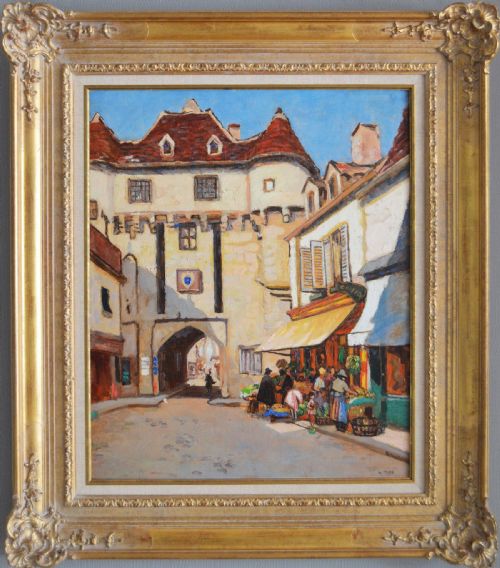
Antique European Street Scene
These antique european street scene pieces capture bustling townscapes and quiet architectural views, offering an evocative glimpse into historic urban life.
Antique European Street Scene
An antique european street scene encompasses painted townscapes, architectural views, and market days executed across the nineteenth and twentieth centuries. Works range from late Georgian urban landscapes to Flemish Impressionism, Post-Impressionism, and twentieth century realism.
Buyers will most commonly encounter oil on canvas paintings and watercolours depicting continental locations such as France, Belgium, and Flemish towns. These works span distinct periods including Edwardian, Victorian, and mid-twentieth century creations by various named artists.
How they were made
Artists utilised traditional mediums such as oil paint on canvas or board, alongside delicate watercolours on paper, to render exterior urban environments. Pigments capture the play of light on historic buildings, market stalls, and cobbled thoroughfares.
Framing often complements the artwork through the use of wood, giltwood, and gold leaf frames that enhance the visual depth of the architectural composition.
Staithes Group member Paul Paul ventured across the channel, proving that Yorkshire artists also enjoyed a bustling Belgian market day.
What varies in quality
The sophistication of brushwork and the handling of atmospheric light distinguish finer examples within Impressionism and realism from simpler decorative works. Mastery in depicting perspective across complex architectural facades and bustling market crowds elevates a composition.
The integrity of the original canvas, board, or paper surface alongside the preservation of the accompanying wood or giltwood frame contributes significantly to the standing of an individual piece.
L. De Gent·William George Meadows·Lewis J Wood·Joseph W. Milliken·Paul Paul·Christiaan Pieter Snyders·Letitia Marion Hamilton
The Antique European Street Scene Glossary
- Oil on canvas
- Pigment mixed with drying oil applied to a stretched fabric support. This traditional medium allowed artists to build rich textures and deep tones.
- Watercolour
- A painting method where fine pigment is suspended in a water-based solution on paper. It creates luminous, translucent washes suitable for delicate landscape and townscape details.
- Impressionism
- A style focused on capturing the visual impression of a moment, particularly through shifting light and unblended brushstrokes. Artists applied this approach extensively to urban street views.
- Giltwood
- Wood carved and treated with a thin layer of gold leaf. Frames finished in this manner provide a polished historical boundary for fine art paintings.
Antique European Street Scene: Frequently Asked Questions
What periods do these street scenes cover?
The available artworks span from the late Georgian era through the nineteenth century, Edwardian period, and into the twentieth century. Examples include works dated from the 1870s up to the 1960s.
This broad chronological range incorporates diverse artistic movements such as early realism, Impressionism, and Post-Impressionism.
Where are these townscapes typically set?
The locations predominantly feature continental European settings, including specific towns and cities in France and Belgium. Scenes often capture recognisable elements like cathedrals, market squares, and architectural arches.
Artists frequently recorded local daily life, such as market days in Lannion or village scenes with figures.
What mediums were used for these paintings?
The primary mediums recorded are oil paint and watercolour. Oils appear on both canvas supports and wooden boards.
Watercolours on paper are also represented, offering a distinct, lighter treatment of architectural and landscape views.
How should I frame and display an oil painting?
Many of these works come housed in period wooden, giltwood, or gold leaf frames that complement the aesthetic of the painting. Displaying them away from direct sunlight helps preserve the integrity of the oil pigments and paper supports.
Ensuring stable indoor humidity protects both the canvas and the historic frame mouldings.