


Impressionist Garden Painting
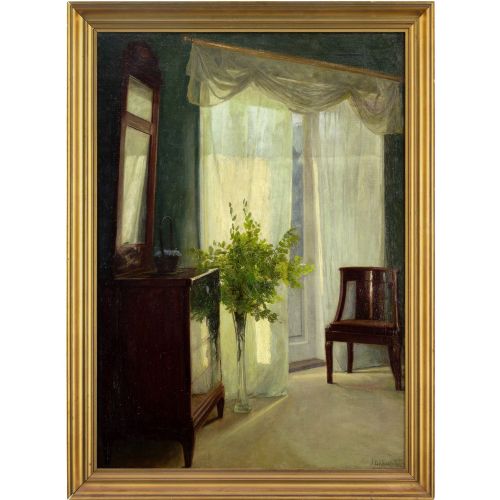
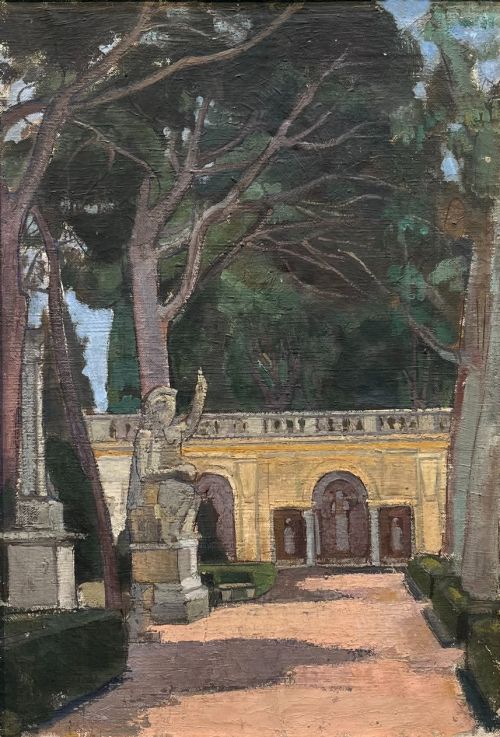
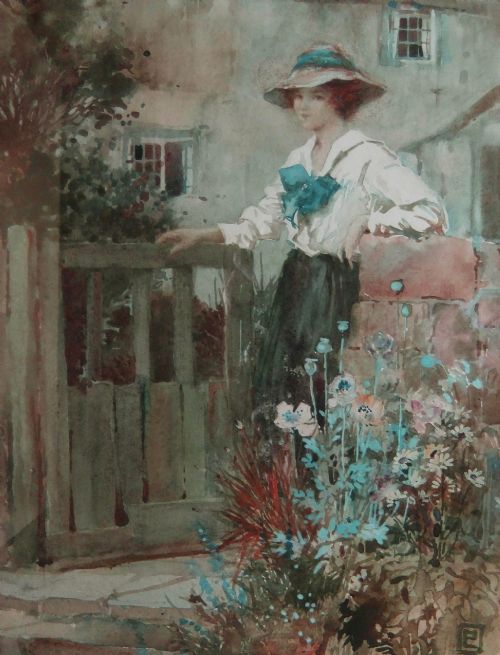
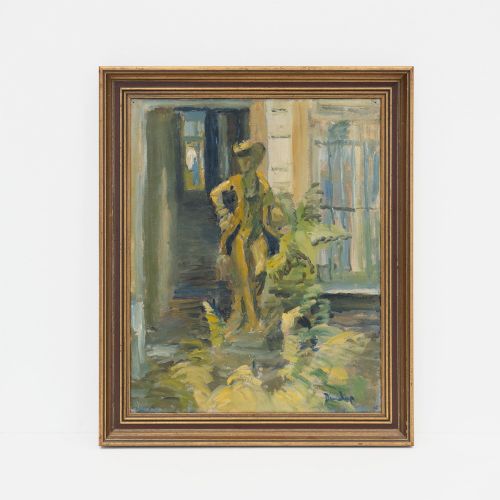
Impressionist garden painting brings light, colour and foliage into a room through works executed on canvas, paper and wood.
Impressionist Garden Painting
An impressionist garden painting captures outdoor scenes, floral settings and domestic grounds through loose brushwork and a focus on natural light. The examples gathered here span from the late nineteenth century through to the middle of the twentieth century, reflecting varied interpretations across decades.
Most pieces on this page take the form of framed oil paintings or delicate watercolours on paper. Subjects range from English cottage gardens and walled enclosures to continental parklands and French landscapes.
The origins of these works bridge British and European traditions, incorporating movements such as Edwardian painting, Scandinavian Realism and French Impressionism. Buyers will encounter both named artists and anonymous school works representing familiar domestic and foreign garden views.
Materials and technique
Artists relied primarily on oil paint applied to canvas or wood panels, alongside watercolour pigment worked onto paper surfaces. Mixed media applications also appear in the record, combining different pigment types to achieve surface texture.
Techniques centre on rapid, expressive brushstrokes designed to record momentary effects of sunlight and shadow rather than rigid botanical detail. Supporting elements such as gold leaf occasionally accent the primary painted composition.
Gardens have a way of looking just as sunny indoors when captured on canvas by artists dodging British rain.
Judging quality
Quality rests upon the sureness of the brushwork and the artist's command of light and atmosphere across the composition. Stronger pieces use colour harmoniously to unify foliage, architecture and figures within a convincing space.
The preservation of the pigment and the condition of the support material also dictate overall standing. Works that retain vibrant tones and stable surfaces without excessive retouching command greater regard among collectors.
John Lübschitz·Percy Lancaster·Ronald Ossory Dunlop·Rowland Henry Hill·Owen Bowen·Ernest Higgins Rigg·Kershaw Schofield·Lilian Stannard·Charles E Cundall·John Henry Inskip·William Hatherell·David Woodlock·Herbert Royle·Lester Sutcliffe·Edgar Bundy·Hermoine Hammond·George Frederick Nicholls·Beatrice Parsons·William Greaves·Fred Merriman
The Impressionist Garden Painting Glossary
- Oil paint
- A slow-drying medium composed of pigments suspended in a drying oil, usually linseed. It allows painters to build rich surface textures and blend tones directly on the support.
- Watercolour pigment
- A water-soluble medium applied in translucent washes onto paper. It relies on the white of the paper shining through the pigment to create luminous effects.
- Canvas
- A closely woven fabric stretched across a wooden frame to serve as a rigid support for oil painting. It remains the most common ground for nineteenth and twentieth-century works.
- Wood panel
- A rigid wooden board utilised as a painting support instead of canvas. Artists frequently employed mahogany panels for cabinet-sized works and still life compositions.
- Impressionism
- A nineteenth-century artistic movement characterised by relatively small, thin yet visible brush strokes and an emphasis on accurate depiction of light. The style prioritises the open-air capture of everyday scenes and gardens.
Impressionist Garden Painting: Frequently Asked Questions
What periods do these paintings cover?
The selection spans from the late nineteenth century through to the nineteen-fifties, capturing several decades of changing artistic interpretation.
Most pieces date from the early nineteen-hundreds to the period surrounding the Second World War, showing consistent engagement with outdoor themes.
How should I frame an old watercolour?
Watercolour paintings on paper require conservation-grade mounting to keep the pigment away from direct contact with the glass. Acid-free materials prevent yellowing and deterioration over time.
Keep framed works out of direct sunlight to protect delicate water-soluble pigments from fading.
What is the difference between oil and watercolour?
Oil paint utilises a drying oil base on canvas or wood, allowing for thick impasto marks and deep colour saturation. It forms a robust surface that stands up well to indoor environments.
Watercolour uses water-soluble pigments on paper, creating light, transparent washes that require protective framing under glass.
Where were these garden scenes painted?
Locations range widely across British country houses, Yorkshire gardens, London parks and continental European landscapes including France and Italy. Artists frequently painted en plein air in domestic or public gardens.
Some works record specific named properties, while others capture anonymous rural and urban retreats.