




Impressionist Fishing Boat Painting
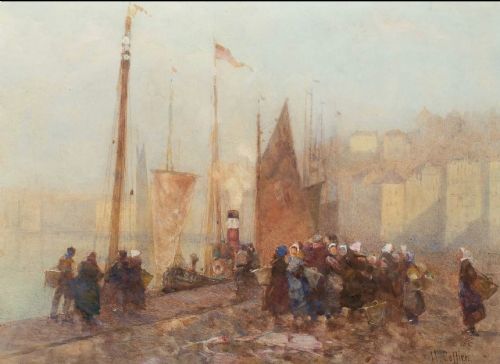
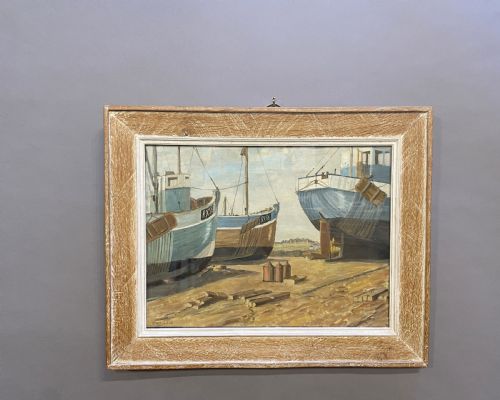
An impressionist fishing boat painting captures coastal light and working vessels, offering buyers a vivid window into maritime history through loose brushwork and vibrant atmosphere.
Impressionist Fishing Boat Painting
An impressionist fishing boat painting focuses on harbours, moored vessels, and coastal life through the lens of late nineteenth and twentieth-century movements. Buyers will frequently encounter British Impressionism, Post-Impressionism, and Modern British interpretations across these listings.
The works span periods from the nineteenth century through the mid-twentieth century, capturing scenes from Cornish fishing ports to French and Brazilian harbours. Painters record low tides, busy boat yards, and sunrise over fishing ports with varied regional character.
Most examples present coastal views using oils or watercolours on canvas, board, and paper. Smaller harbour scenes sit alongside large seascapes, each reflecting the distinct coastal topography of places like St Ives, Whitby, and Normandy.
Materials and technique
Artists relied primarily on oil paint applied to canvas or board, alongside watercolours and gouache on paper. These mediums allowed painters to build textured surfaces or fluid washes that translated shifting coastal light onto the support.
Brushwork remained loose and expressive rather than hyper-realistic, capturing the movement of water and the hulls of working boats. Painters frequently worked en plein air or developed studio pieces from direct observations of harbour life.
Several artists clearly found that painting working boats required capturing just enough rigging to suggest motion without getting bogged down in nautical engineering.
Assessing quality
Quality rests on the confidence of the brushwork and the artist's ability to render atmosphere, light, and maritime topography convincingly. Stronger works demonstrate assured handling of water reflections and vessel proportions rather than rigid draftsmanship.
Provenance and documentation elevate certain pieces, particularly those bearing signatures, exhibition histories, or attribution to recognised practitioners of impressionist and post-impressionist marine painting.
Hector Caffieri·Edward Matthew Elliott·William Lee Hankey·Frederick William Hattersley·William Lambert Bell·Owen Bowen·Antonio Godoy·Fred Mayor·Hendrik Yan Wolter·Henri Ottman·Frank Rousse·Robert Leslie Howey·Augustus William Enness·Alec Caruthers Gould·John W Gilroy·Maurice Sijs
The Impressionist Fishing Boat Painting Glossary
- Coble
- An open traditional fishing boat with a flat floor, common to the northeast coast of England and frequently featured in marine watercolours.
- Plein air
- Painting outdoors to capture direct natural light and atmospheric conditions on the spot. This approach defined much of impressionist practice.
- Post-Impressionism
- An art movement following impressionism that explored emotional response and structural form through bolder colour and defined brushstrokes.
- Gouache
- An opaque watercolour medium that yields bright, solid colour application. Artists often combined it with traditional watercolour for highlights on paper.
Impressionist Fishing Boat Painting: Frequently Asked Questions
How do I date an impressionist fishing boat painting?
Dating relies on stylistic clues, framing, artist lifespan, and sometimes inscriptions left on the reverse of the canvas or board. Nineteenth and twentieth-century coastal works often carry signatures or dates that anchor them to specific periods like the Edwardian era.
Examining the materials, such as canvas stamps and framing techniques, provides additional confirmation of the era in which the work was produced.
Where were these harbour scenes usually painted?
Artists painted working harbours across Britain and continental Europe, recording locations from St Ives and Whitby to Normandy and the French Riviera. These coastal communities offered active boat yards and distinct tidal landscapes that suited impressionist techniques.
Many painters travelled specifically to fishing ports to capture the local vessels, such as cobles and luggers, at low tide or returning with the catch.
What is the difference between oil and watercolour versions?
Oil paintings on canvas or board provide heavier texture and allow artists to build up thick layers of pigment to represent sea spray and hull timbers. Watercolours on paper offer a more translucent quality, relying on the white of the paper to generate light.
Both mediums were utilised by impressionist painters to capture coastal scenes, though oils generally suited larger compositions.
How should I frame and display these maritime paintings?
Period frames complement antique oils and watercolours, though conservation framing helps protect works on paper from light damage and humidity. Displaying pieces away from direct sunlight preserves the integrity of both watercolours and oil pigments.
Harbour scenes suit spaces with good natural light, echoing the maritime illumination captured by the artists.